|
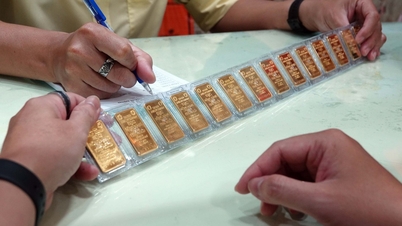
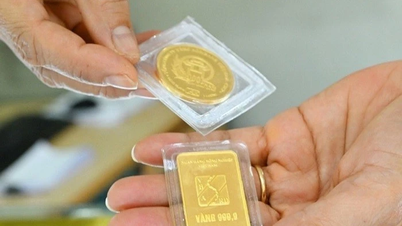
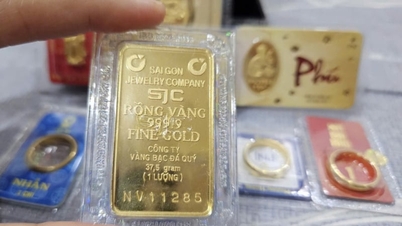
According to experts, differences in their roles as a store of value, volatility levels, and market characteristics mean that silver cannot yet replace gold in long-term investment portfolios. Photo: Reuters . |
Earlier this year, the price of 1 kg of silver ingots reached a historical high of over 123 million VND/kg. However, the price has now dropped to the 58-60 million VND/kg range, meaning it has lost more than 50% of its value in just half a year.
According to Mr. Nguyen Khanh Long, Head of Market Research and Analysis at Phu Quy Group, the price of silver has decreased significantly compared to the peak set in early 2026. However, compared to the same period in 2025, the current price level is still about 66% higher.
Is the drop in silver prices a positive sign?
The Head of Market Research and Analysis at Phu Quy Group believes that the current correction in the silver market is an inevitable development after a period of excessively rapid growth at the end of 2025 and the first few months of 2026. According to Mr. Long, after each strong growth cycle, the market needs time to adjust and establish a new, more sustainable price level.
A survey from Phu Quy's business system – a company currently holding over 50% of the domestic investment silver market share – shows that while silver prices have fallen significantly recently, compared to the same period in 2025, the current price level is still about 66% higher, indicating that silver remains one of the asset classes with outstanding returns compared to many other investment channels.
Notably, despite the sharp drop in silver prices, demand for the precious metal has not weakened but rather tends to increase, particularly among investors pursuing long-term accumulation strategies.
 |
Mr. Nguyen Khanh Long, Head of Market Research and Analysis Department, Phu Quy Group. Photo: Provided by the interviewee. |
Explaining this, experts at Phu Quy believe that the adjustment in silver prices has made the price level more accessible, especially for those who habitually accumulate silver on a monthly basis. In addition, the large difference between the buying and selling prices of silver also creates opportunities for a segment of short-term investors to take advantage of deep corrections to seek profits.
"Different investor groups will have different investment strategies during periods of price volatility. However, we believe that for long-term store-of-value products like silver, holding on for the long term remains the preferred strategy in Vietnam," Mr. Long emphasized.



From a business perspective, Mr. Nguyen Khanh Long believes that the addition of a silver bullion market in Vietnam provides investors with another valuable asset-saving channel at a reasonable cost. Currently, silver has become an alternative option for small-capital investors, particularly attracting young customers, novice investors, or those seeking regular savings but lacking the financial capacity to accumulate gold.
Gold is difficult to replace.
From a more cautious perspective, gold and silver expert Chu Phuong believes that silver still possesses many characteristics that prevent it from replacing gold in long-term investment portfolios.
According to experts, from a physical standpoint, silver has a significantly greater mass than gold when converted to the same asset value. This results in higher costs and storage requirements, especially for investors who need to accumulate large quantities over a long period.
Furthermore, historical data also shows that silver is a more volatile asset than gold. According to Ms. Chu Phuong's observations, after each bull market cycle, silver often experiences very deep corrections, sometimes even falling by as much as 80% from its peak. This means that investors participating in the silver market need a high risk tolerance, the ability to withstand significant volatility, and a strategy of holding for a longer period.
The expert also noted that the accumulation and recovery period for silver is typically longer than that of gold. While the long-term outlook remains supported by demand in various industries, particularly green energy and artificial intelligence (AI), and supply deficits in the international market, these factors are unlikely to quickly translate into a strong upward trend in the short term.
“What we are expecting is that demand from the industrial sector, green energy, and AI will continue to support silver prices. With the current supply deficit, I still believe silver has the potential to recover in the medium and long term. However, it is unlikely that silver prices will return to the peak levels set in 2026 anytime soon,” Ms. Chu Phuong commented.
Assessing the outlook for the silver market in the near future, Mr. Long believes that the recent sharp downward corrections have not changed the long-term upward trend. The fundamental factor continuing to support the outlook for silver comes from the persistent imbalance between supply and demand in the global market.
Current data from the Silver Institute indicates that 2026 is likely to be the sixth consecutive year of supply deficit. The cumulative deficit during this period is projected to exceed 23,700 tons, equivalent to more than 90% of global silver mining output in a year. This is considered a factor that could provide significant support for silver prices in the medium and long term.
Furthermore, the increasing industrial demand is also considered a sustainable growth driver for this metal. Unlike gold, which is largely stored and can be recirculated in the market, a large amount of silver, after being used in fields such as solar cells, electronics, or high technology, is difficult to recover or recycle economically . This leads to a shrinking supply of silver in circulation, while demand for consumption and storage continues to increase.
"According to forecasts, the demand for investing in and accumulating silver this year could increase by about 18%," Mr. Long said.
In the short term, the outlook for global silver prices is becoming more cautious as several major financial institutions revise down their forecasts. ING Bank has lowered its forecast for the average global silver price in the second half of 2026 to $68 /ounce in the third quarter and $74 /ounce in the fourth quarter, significantly lower than its previous forecasts of $79 /ounce and $84 /ounce, respectively.



Meanwhile, the World Bank (WB) forecasts the average price of silver in 2026 to reach approximately $70 per ounce, an increase of about 76% compared to the previous year, but may be revised down by about 7% in the following year.
Source: https://znews.vn/ly-do-bac-chua-the-thay-the-vang-post1663400.html