

'Don't sing, scream. Scream so loudly that Puccini can hear. Scream so loudly that the ugly, hunched-over old Onassis can hear.'
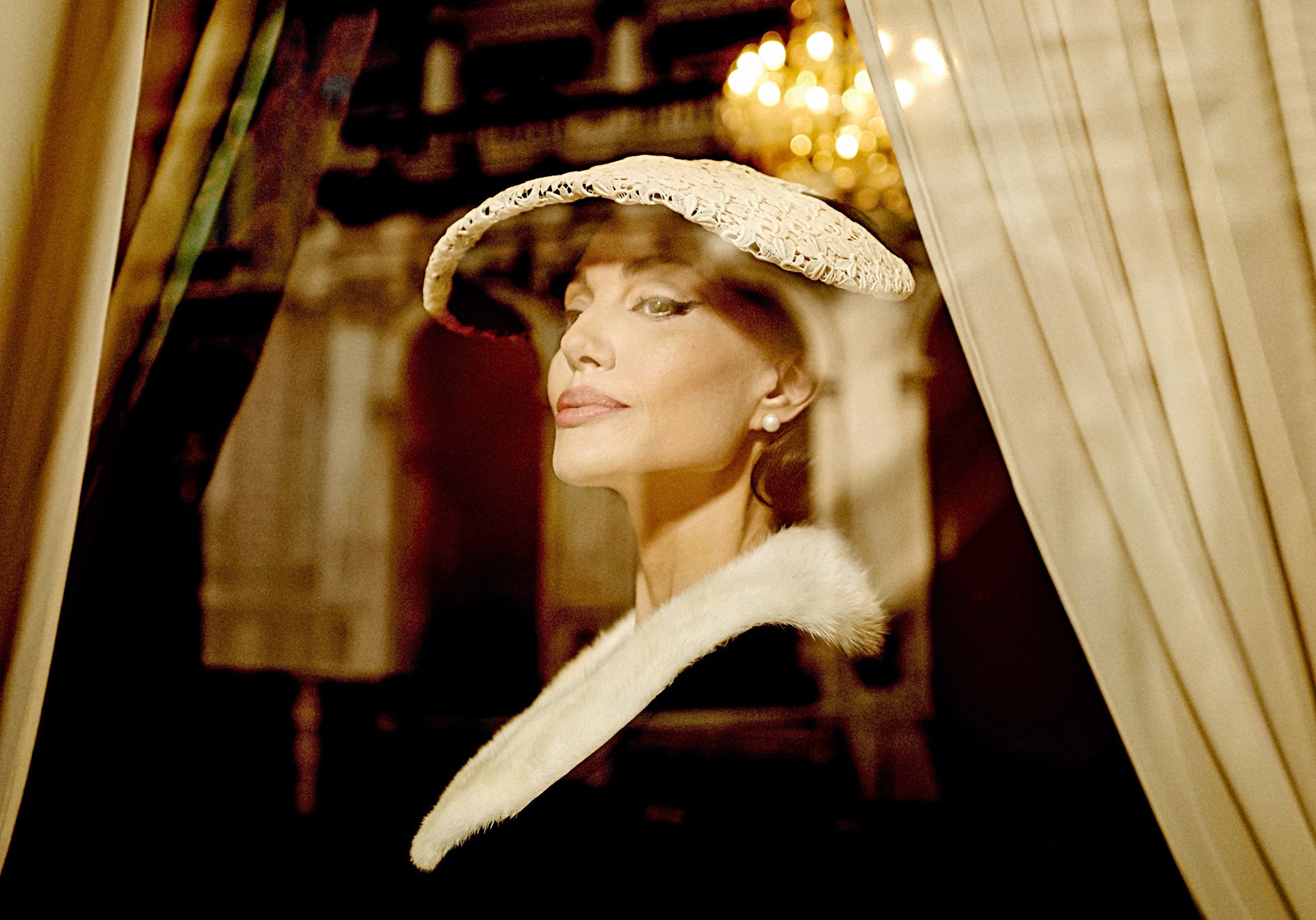
Angelina Jolie delivered a superb performance as the titular character in the film - Maria - Photo: IMDb
A musical collaborator tells opera singer Maria Callas in Pablo Larraín's biographical film Maria that, in her final years, she expressed a desire to return to the stage.
Angelina Jolie's face, when playing Maria, is hidden in the shadows, her eyes deeply sunken.
Maria never listens to her own records.
In Larraín's portrayal of Princess Diana, there is also a scene of her standing in the gloomy castle, turning her face away from the light, with shadows enveloping her sunken eyes.
Even earlier, he also recreated Jackie Kennedy's sunken eyes as she returned home, changed out of her husband's blood-stained clothes, and contemplated John F. Kennedy's funeral arrangements.
Larraín's trilogy delves into that forbidden zone in the minds of graceful and insecure women, whose glittering, glorious facade isolates them within even greater suffering and fewer escapes.
There are frequent scenes of them pacing within the residence, as if pacing within the very mind they have already traversed millions of times. Pablo Larraín's Maria always lives within herself: her apartment as her castle, her music, her memories, her hallucinations.
Maria Callas was of Greek descent. Greeks think a great deal about death. Greek philosophy, which also began with Socrates, started with the belief that "philosophy is preparation for death."
When facing death, people often seek a support system for their crumbling lives. Maria never listened to her own records, because they were too perfect, and music shouldn't be perfect.
But in her final days, she opened those perfect records to listen to them. The records—which would live on even a hundred years after her death, which would forever fill the void left by her absence, a void she would never again sing as perfectly as she did on those recordings—perhaps more than anyone else, she understood that if she were immortal in the eyes of her fans, it was because those fragments of time had been preserved.

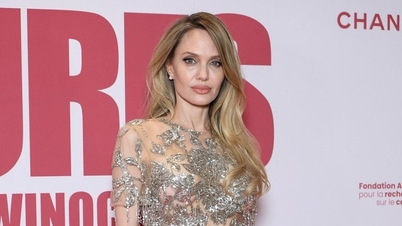
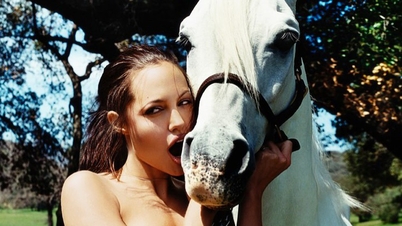
Angelina Jolie during a photoshoot for the film "Maria" - Photo: Reuters
It seems that now, it is the timeless, magnificent recordings that represent the true Maria Callas in the eyes of most audiences, while the real Maria Callas, unable to reach those soaring high notes as she once did, is merely a shadow of her former self.
But the opera still killed her with its own hands.
To resist her own perfect past is to live, the only foundation of life. Maria wants to return to the stage only because of the praise from the cook who had cared for her for so many years, a cook who knew nothing about opera, and whom she knew would always praise her no matter how she sang.
She stopped singing because she was no longer perfect; and now she sings because she knows she is no longer perfect. She insists on singing even when the doctor says that if she sings, she will die. The scene of her singing alone in her apartment in the middle of Paris, with passersby below who happen to hear and look up at the famous singer's apartment, evokes the image of a crowd suddenly seeing the Virgin Mary appear.
No one can record that imperfect song; it exists only for a moment. But it is precisely in its impermanence and imperfection that life triumphs over its beauty before death conquers it.
At the beginning of Maria, we see Maria Callas approaching a medical stretcher and singing Verdi's Ave Maria. It's a different Ave Maria from Schubert's familiar Ave Maria.
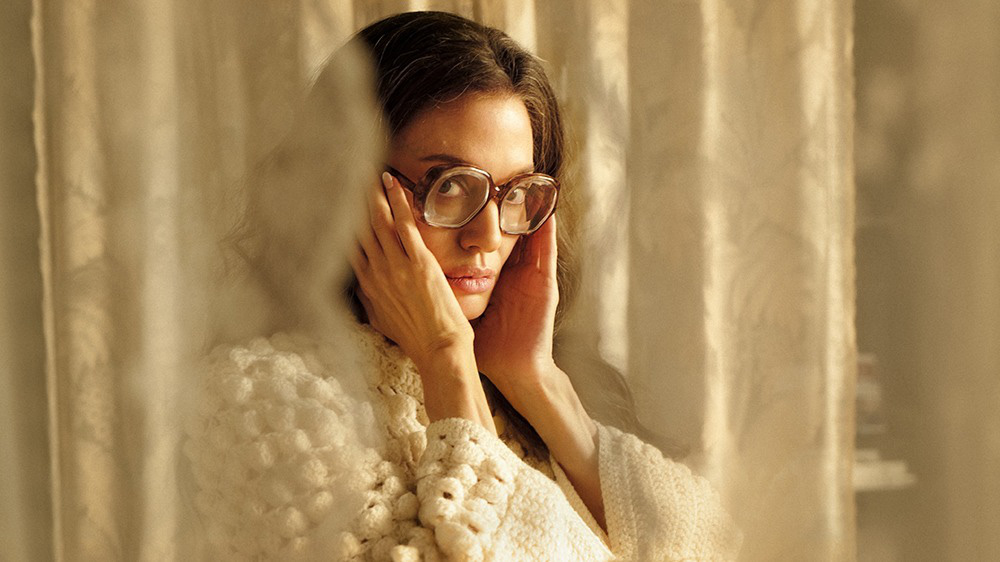
Although the film Maria wasn't highly rated, Angelina Jolie's performance still made a strong impression on many critics - Photo: IMDb
Verdi's music is from Shakespeare's opera Otello, depicting the scene where the faithful wife Desdemona prays for those who are suffering like herself, but despite this, she is still murdered by her husband Otello.
We will be revealed later that in this scene Maria is actually singing an elegy for herself.
She died singing alone in her Paris apartment, despite knowing that, with her failing health, music would be her death sentence. She loved opera so much, considering it her life, her only eternal marriage, yet opera still took her own life.
Was it a tragedy? Perhaps. But it's hard to imagine Maria wanting anything other than her life taken away.
The entire film is constructed as Maria's self-image, with Mandrax, the cameraman and conversationalist, following and talking to her, being an illusion, a personification of the tranquilizer/hypnotic drug she takes every day.
Source: https://tuoitre.vn/maria-va-ao-thi-cua-mot-danh-ca-20241222090200932.htm
![[Photo] National Assembly Chairman Tran Thanh Man attends the policy seminar to promote Vietnam-Türkiye cooperation.](https://vphoto.vietnam.vn/thumb/1200x675/vietnam/resource/IMAGE/2026/04/16/1776351415367_vna-potal-chu-tich-quoc-hoi-tran-thanh-man-du-toa-dam-chinh-sach-thuc-day-hop-tac-viet-nam-tho-nhi-ky-8705791-jpg.webp)





















![[Image] Bridges and roads connecting the eastern part of Ho Chi Minh City](https://vphoto.vietnam.vn/thumb/1200x675/vietnam/resource/IMAGE/2026/04/16/1776328595108_ndo_br_bh-vt5-jpg.webp)






























![[Infographic] Details of the Hanoi-Quang Ninh High-Speed Railway Project](https://vphoto.vietnam.vn/thumb/402x226/vietnam/resource/IMAGE/2026/04/16/1776338188424_anh-man-hinh-2026-04-16-luc-18-16-10.png)

![[Photo] National Assembly Chairman Tran Thanh Man meets with the Speaker of the Georgian Parliament](https://vphoto.vietnam.vn/thumb/402x226/vietnam/resource/IMAGE/2026/04/16/1776338494029_anh-man-hinh-2026-04-16-luc-18-21-21.png)




























Comment (0)