
With a majority of National Assembly deputies voting in favor, the National Assembly passed the amended Value Added Tax Law on the afternoon of November 26th. In the report explaining, accepting, and revising the draft amended Value Added Tax Law before its approval, the Chairman of the National Assembly's Finance and Budget Committee, Le Quang Manh, clarified many issues of concern to National Assembly deputies.
Fertilizers are subject to a 5% tax rate.
 Thời báo Ngân hàng•27/11/2024
| The VAT regulations for fertilizers must be appropriate to achieve multiple objectives. Fertilizers, agricultural machinery, and fishing vessels may be subject to a 5% tax. |
Regarding tax-exempt entities, some opinions agree with Clause 1, Article 5 of the draft Law and argue that allowing the exemption from output VAT while simultaneously deducting input VAT is contrary to the principles of VAT. Other opinions suggest maintaining the draft Law as submitted by the Government to the National Assembly at the 7th Session.
The Standing Committee of the National Assembly believes that, in reality, this policy is no longer appropriate or necessary because businesses have switched to using electronic invoices, and the Tax Authority has been able to improve the quality of control and overcome invoice fraud. In particular, the draft Law has added a provision on the conditions for tax refunds, stipulating that buyers are only entitled to a refund if "the seller has declared and paid VAT according to regulations for the invoice issued to the business requesting the refund." This creates a legal basis for the Tax Authority to only process refund applications when the seller has declared and paid the money to the State budget. Therefore, there will be no refunds for fake invoices when there is no transaction and no input tax has been paid to the budget. At the same time, on November 26, 2024, the Secretary General of the National Assembly sent two options for handling this issue to National Assembly deputies for their opinions. Based on the compiled opinions, 70.50% of the National Assembly delegates agreed with the proposal of the National Assembly Standing Committee to abolish the regulation allowing the exemption from output VAT but the deduction of input VAT for unprocessed or semi-processed agricultural products at the commercial stage. This is to ensure the principle of VAT that input VAT can only be deducted when the output is subject to VAT. This content is reflected in Article 5 of the draft Law.
You may also like

Raising the personal allowance for taxpayers: An urgent need.The Ministry of Finance has just submitted a draft resolution to the Standing Committee of the National Assembly on adjusting the personal income tax deduction for dependents, applicable to the 2026 tax year; however, according to experts, this is something that needs to be done immediately, because in the current difficult context, people urgently need practical support policies to ensure social security.

The AI wave is creating life-changing opportunities for electricians and plumbers.While many fear AI will take away jobs, Nvidia CEO Jensen Huang argues that the AI wave is creating enormous demand for electricians, plumbers, welders, and other technical workers.
Effective securities issuance creates momentum for sustainable growth.The Securities Commission supports businesses in developing plans for offering and issuing securities that are suitable for their development needs and improve the quality and efficiency of their capital raising activities.
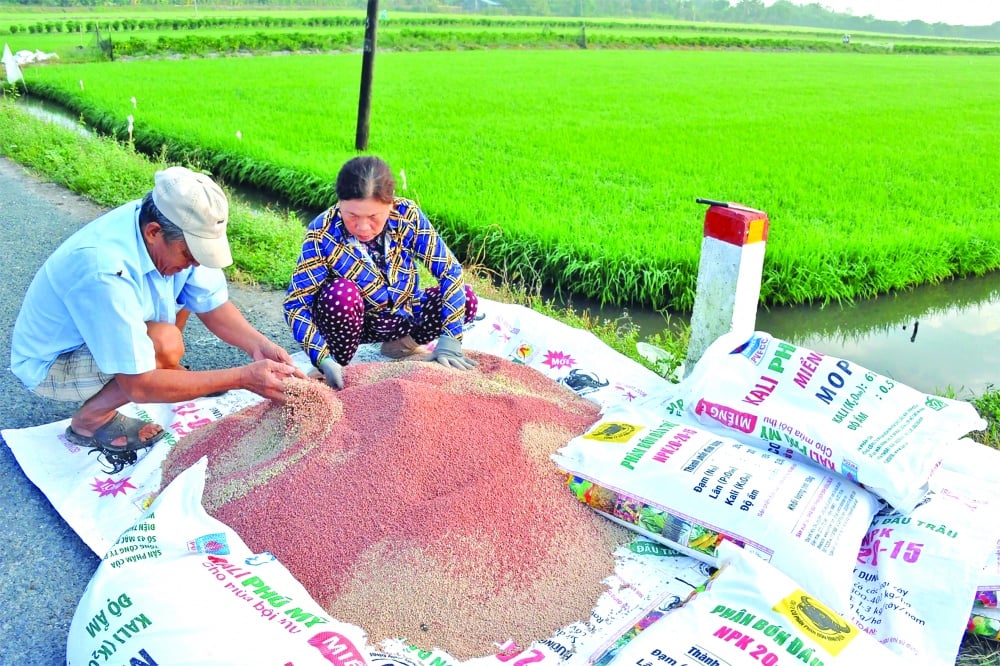 |
| The National Assembly unanimously agreed to move fertilizers from the tax-exempt category to the category subject to a 5% tax rate. |
Some opinions suggested raising the threshold for VAT-exempt revenue above 200 million VND; others proposed a range of around 300 million VND or 400 million VND for the coming years. The Standing Committee of the National Assembly stated that the current VAT Law stipulates a VAT-exempt revenue threshold of 100 million VND per year. According to calculations by the Ministry of Finance, if the VAT-exempt revenue threshold were 200 million VND per year, state budget revenue would decrease by approximately 2,630 billion VND; if it were 300 million VND per year, state budget revenue would decrease by approximately 6,383 billion VND. Therefore, to ensure a reasonable increase in the VAT-exempt revenue threshold, relatively consistent with the average GDP and CPI growth rates from 2013 to the present, the draft Law stipulates a threshold of 200 million VND per year as shown in the draft Law.
Regarding tax rates, many opinions agree with the proposal to apply a 5% tax rate to fertilizers. Some opinions suggest maintaining the current regulations; others propose applying a tax rate of 0%, 1%, or 2%. Some opinions suggest a comprehensive assessment of the impact of this regulation on farmers and agricultural and aquatic production. Some express concerns about the possibility of businesses exploiting the policy to raise prices, thereby negatively impacting farmers.
Regarding the proposal to apply a 0% (or 1%, 2%) VAT rate to fertilizers, the Chairman of the National Assembly's Finance and Budget Committee affirmed: As the National Assembly representative suggested, applying a 0% VAT rate to fertilizers would benefit both domestic fertilizer manufacturers and importers, as both would receive a refund of input VAT and would not have to pay output VAT. However, in this case, the State would have to spend budget funds annually to refund these businesses. Besides the drawbacks for the State budget, applying a 0% VAT rate to fertilizers contradicts the principle and practice of VAT, which stipulates that a 0% rate should only apply to exported goods and services, not to domestic consumption. This approach would disrupt the neutrality of tax policy, create a bad precedent, and be unfair to other industries. According to the drafting agency's explanation, adding a 2% tax rate would require restructuring the Value Added Tax Law, such as designing a separate section on tax rates and adding provisions for VAT refunds in this case. The provision of a 1% or 2% tax rate on fertilizers is also inconsistent with the goal of VAT reform, which is to reduce the number of tax rates, not increase the number of rates compared to current regulations, as explained to National Assembly deputies.
Based on the opinions of National Assembly deputies, in Report No. 1035/BC-UBTVQH15 dated October 28, 2024, the Standing Committee of the National Assembly explained and reported on the impact of transferring fertilizers from the tax-exempt category to the 5% tax rate category. The Government also issued Official Letter No. 692/CP-PL supplementing the explanation and providing specific supporting data.
To accurately reflect the National Assembly's stance on this issue, on November 26, 2024, the Secretary General of the National Assembly sent out two options for the opinions of National Assembly deputies: one was to apply a 5% tax rate, and the other was to maintain the current regulations. A summary of opinions showed that 72.67% of the total number of National Assembly deputies agreed with the proposal of the Standing Committee of the National Assembly and the Government to stipulate a 5% tax rate for fertilizers, machinery and equipment used in agricultural production, and fishing vessels. This content is reflected in Clause 2, Article 9 of the draft Law.

The Ministry of Foreign Affairs received a copy of the Letter of Credence for the U.S. Ambassador to Vietnam.On the afternoon of July 2nd, at the Ministry of Foreign Affairs headquarters, Mr. Le Cong Dung, Director of the State Protocol and Foreign Interpretation Department, received a copy of the Letter of Credence from Ms. Jennifer Wicks, Ambassador of the United States of America to Vietnam.

Ambassador Nguyen Quoc Dung visits and works in Minnesota, USA.From June 28-30, the Vietnamese Ambassador to the United States, Nguyen Quoc Dung, paid a visit and worked in Minnesota.

Vietnam encourages US businesses to expand investment in high technology.On the morning of June 26th, at the Government Headquarters, Deputy Prime Minister Ho Quoc Dung received Mr. Jeff Place, Supply Chain Director of Coherent Group (USA). During the meeting, the Deputy Prime Minister affirmed that Vietnam encourages US businesses to expand investment, especially in high-tech, innovation, and semiconductor industries.
Regarding VAT refunds, some opinions suggest clarifying the provision in Clause 3, Article 15, which states that in cases where production units manufacture both goods subject to a 5% tax rate and goods subject to a 10% tax rate, with input materials subject to a 10% tax rate, and revenue mainly comes from goods subject to a 5% tax rate, the enterprise will not be able to deduct the full amount of 10% input VAT and will not be eligible for a refund, causing difficulties for businesses.
Taking into account the opinions of National Assembly deputies, the Standing Committee of the National Assembly requests to revise the draft Law to allow tax refunds for production and service providers subject to both 5% and 10% tax rates, and to entrust the Government with the authority to regulate the determination of the amount of input VAT to be refunded according to the allocation ratio as stipulated in Clause 3, Article 15 of the draft Law...
Source: https://thoibaonganhang.vn/mat-hang-phan-bon-thuoc-dien-chiu-thue-suat-5-158175.html





Trending by Category




Most Read










Google Trends











Same author
![[Infographic] Cross-exchange rates for determining taxable value from July 2-8](https://vphoto.vietnam.vn/thumb/402x226/vietnam/resource/IMAGE/2026/07/02/1782981264352_if-ad301-quiz-m-20171101150355-120260702144711.jpeg)















































Quan Ho Boat Songs on Spring Day

Dong Nai City undergoes transformation.
