

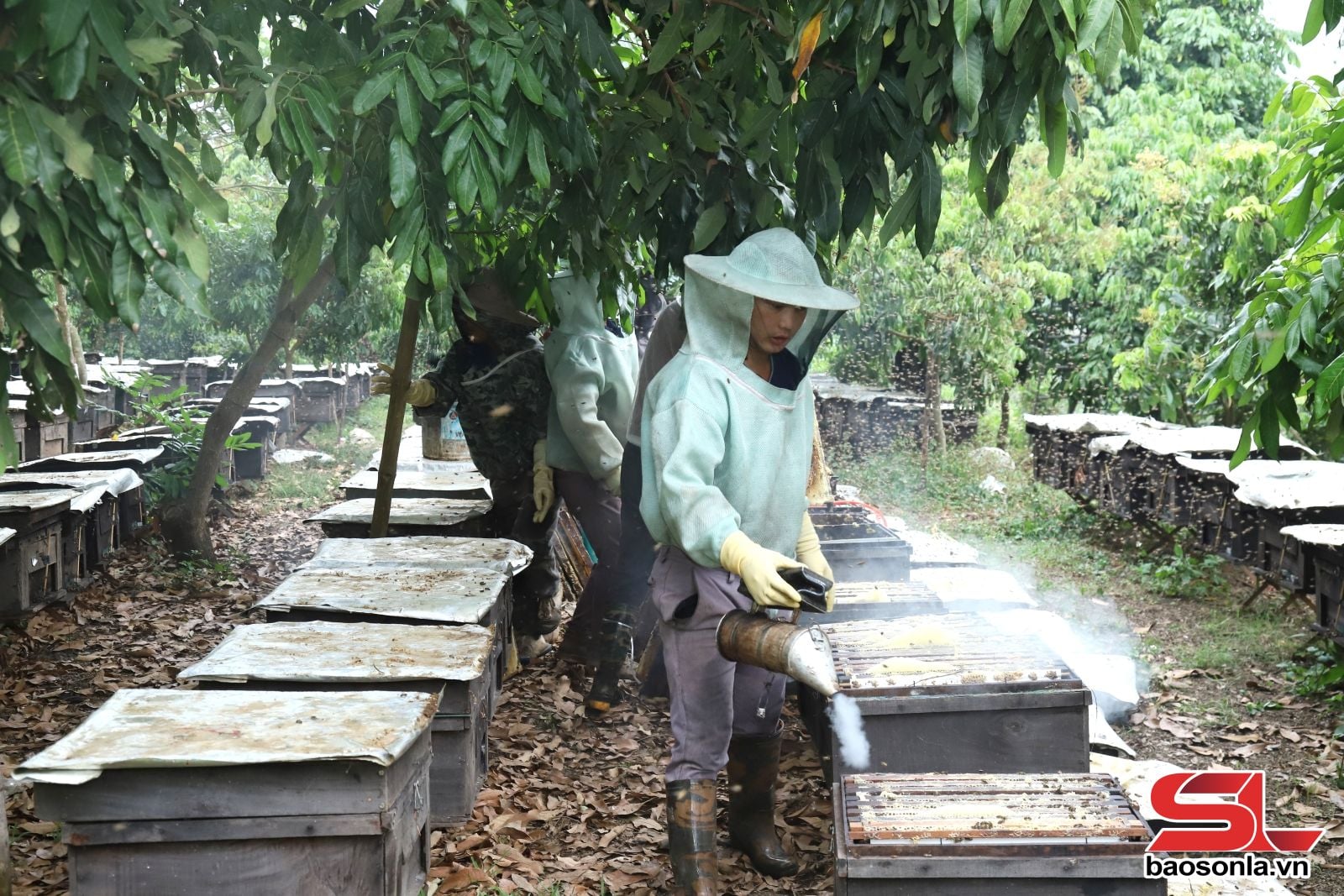
Possessing the largest bee colony in the area, with over 2,300 colonies, the Song Ma Beekeeping Cooperative has maximized its natural advantages and fruit tree plantations. Ms. Nguyen Thu Trang, Deputy Director of the Song Ma Beekeeping Cooperative, stated: "With the goal of building a distinctive local honey brand, the cooperative has connected its members to standardize beekeeping processes, invested in logo design, and created professional packaging. As a result, the cooperative's Quyet Thang Honey product has achieved OCOP 4-star certification, affirming its reputation nationwide. Currently, the cooperative harvests an average of 100 tons of various types of honey annually. The cooperative guides member households on standardized beekeeping procedures, supports the consumption of honey products, and ensures stable output. The cooperative also guarantees the purchase of products from beekeeping households in the area."
The biggest advantage of beekeeping in Song Ma is the ability to utilize abundant flower resources, optimizing investment costs and bringing economic efficiency. Mr. Pham Van Quang, a member of the Song Ma Honey Beekeeping Cooperative, said: "Having been in honey beekeeping for over 20 years, I currently maintain 400 bee colonies. My family just harvested this year's longan honey crop, yielding about 12 tons. With a selling price of 60,000 VND/kg, after deducting expenses, we earned a profit of about 300 million VND."
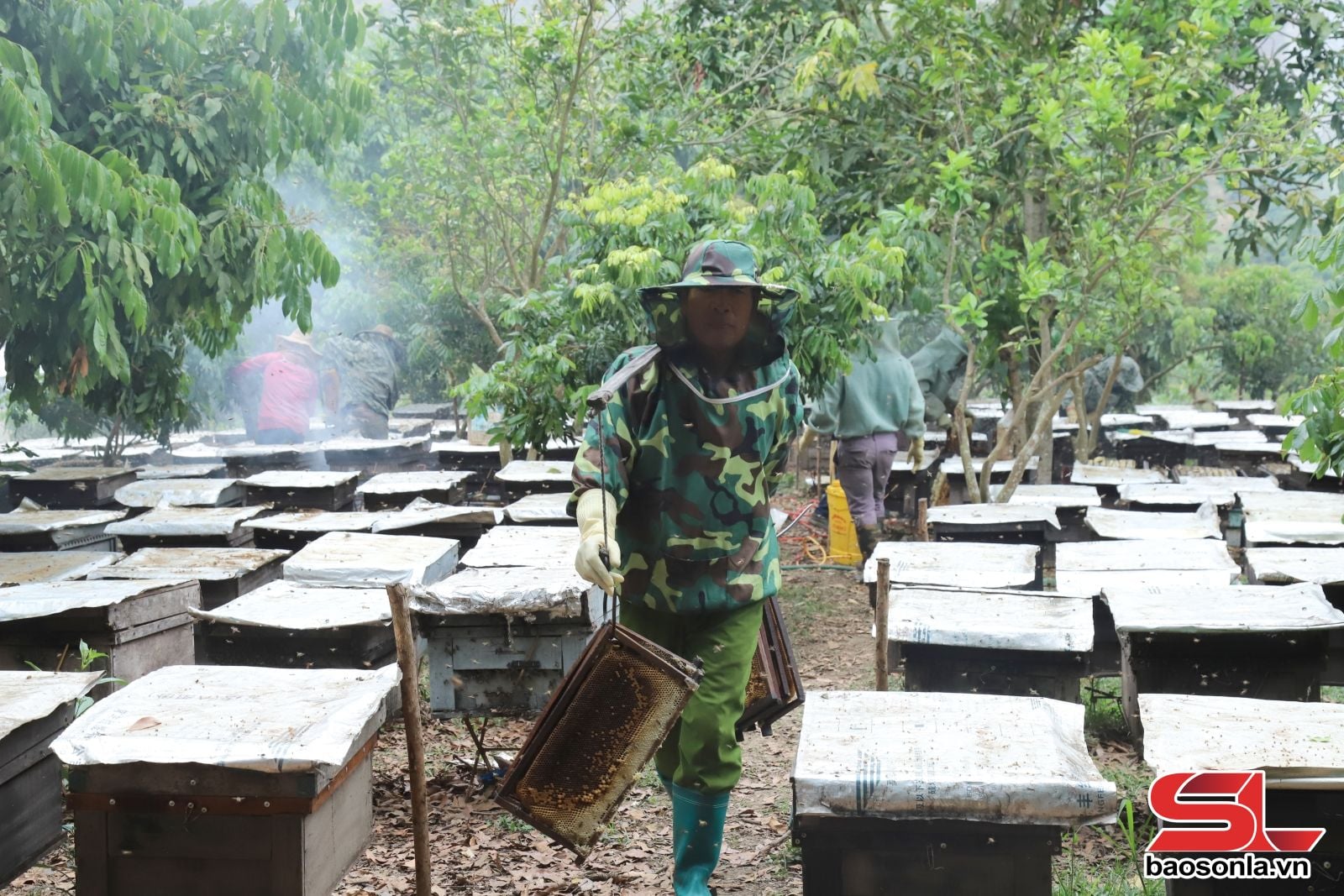
In addition, many member households have boldly invested on a large scale and implemented a model of migratory beekeeping across Vietnam. Mr. Nguyen Van Cuong, from Group 6, Song Ma Commune, shared: "With 20 years of experience in beekeeping, I initially raised bees on a small scale to exploit the resources of forest flowers and longan blossoms in the local area. When the size of the bee colonies increased and became my main livelihood, I started moving the colonies to different regions according to the flowering seasons to harvest natural honey. With 800 colonies, my family harvests about 35 tons of various types of honey each year, bringing in revenue of about 2 billion VND. Currently, after harvesting the longan blossom honey in the local area, I continue to move the bee colonies to the South to maintain and care for them and take advantage of the abundant natural honey resources from other fruit-growing regions throughout the country."
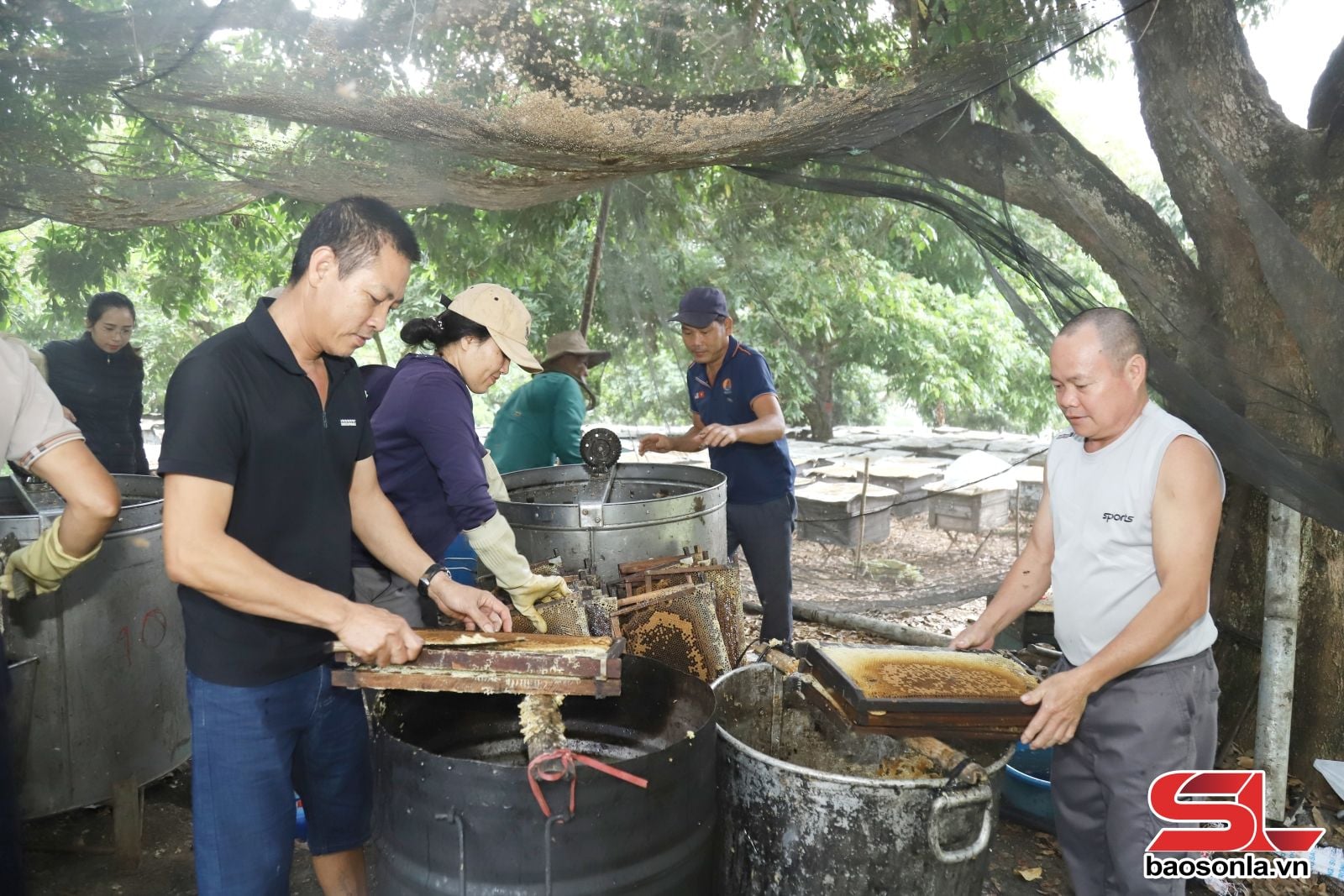
To date, Song Ma commune has developed a total of 3,500 bee colonies, producing approximately 140 tons of honey annually. Beekeeping has become a livelihood for the local people. Besides exploiting the local longan flower resources, many households have proactively implemented a "migratory beekeeping" model to harvest nectar throughout the year. Thanks to their meticulousness and understanding of the bees' biological characteristics, beekeepers always prioritize selecting key raw material areas such as concentrated longan and lychee or acacia and eucalyptus plantations to place their beehives. The harvesting cycle usually lasts from February to July, peaking in April and May, with honey harvesting frequency of 2-3 times per month. Beekeepers mastering the techniques of nest building and colony division, combined with experience in selecting suitable harvesting areas, is a crucial factor in increasing production and affirming the distinctive quality of the local honey.
The golden season of longan flower honey in Song Ma not only creates a distinctive, high-quality product but also provides employment for many seasonal workers. This also demonstrates the creativity and resourcefulness of the workers in utilizing the inherent advantages of the locality to increase their income.
Source: https://baosonla.vn/kinh-te/mat-ngot-song-ma-VzLzrbpDg.html

![[Infographic] Key indicators for the period 2026-2030 to achieve "double-digit" growth targets](https://vphoto.vietnam.vn/thumb/402x226/vietnam/resource/IMAGE/2026/04/06/1775450004801_fb4e219c8aa77c339a75ff13c44b2e595f8db215db15da7b4648b200deade68240d89ec5e4bd2e86c42f5ed9eeb-_ndo_br_chi-tieu-2-con-so-thumb-1.jpeg)





![[Photo] Prime Minister Pham Minh Chinh receives the Chinese Ambassador to Vietnam](https://vphoto.vietnam.vn/thumb/1200x675/vietnam/resource/IMAGE/2026/04/05/1775397481797_ndo_br_dsc-5512-jpg.webp)

































Comment (0)