



 |
The Norwegian players celebrate their goal against Senegal. |
This seemingly normal situation reflects a noteworthy reality of this year's tournament: the number of truly balanced and dramatic matches is lower than expected. While lopsided scores are commonplace, encounters where both teams are ready to attack, have equal chances of winning, and create breathtaking moments have become rare.
Why is a 3-2 score always considered a "beautiful score" in football?
In the minds of many fans, a 3-2 scoreline is almost synonymous with a captivating match. Unlike emphatic 4-0 or 5-1 victories, a 3-2 scoreline usually indicates that the two teams are relatively evenly matched, constantly exchanging blows and both pursuing the goal of winning. It's the kind of match that keeps the audience glued to the screen because the situation can change at any moment.
Higher scores like 4-3 or 5-4 are certainly exciting, but sometimes they give the impression that both teams are defending too loosely or that the game is unfolding in an unusual way. Meanwhile, 3-2 is considered the perfect balance between attacking quality, competitiveness, and drama.
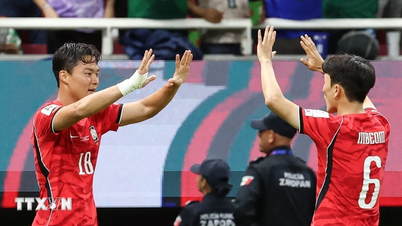
Therefore, it's quite surprising that the first 3-2 scoreline will only appear in the 43rd match of the 2026 World Cup . Not only are there a lack of 3-2 matches, but this year's tournament is also quite rare in terms of scores reflecting close contests. After more than 40 matches, only two have ended 2-1: South Korea's victory over the Czech Republic and Germany's win over Ivory Coast.
The number of 2-2 draws was limited to just three matches: Netherlands vs. Japan, Iran vs. New Zealand, and Uruguay vs. Cape Verde. These figures suggest that most matches at the 2026 World Cup did not follow a balanced scenario between two equally matched opponents.
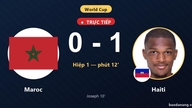
Instead, fans frequently witnessed dull matches (3 0-0 draws, 7 1-1 draws, and 6 1-0 draws) or one-sided games where one team completely dominated the other.
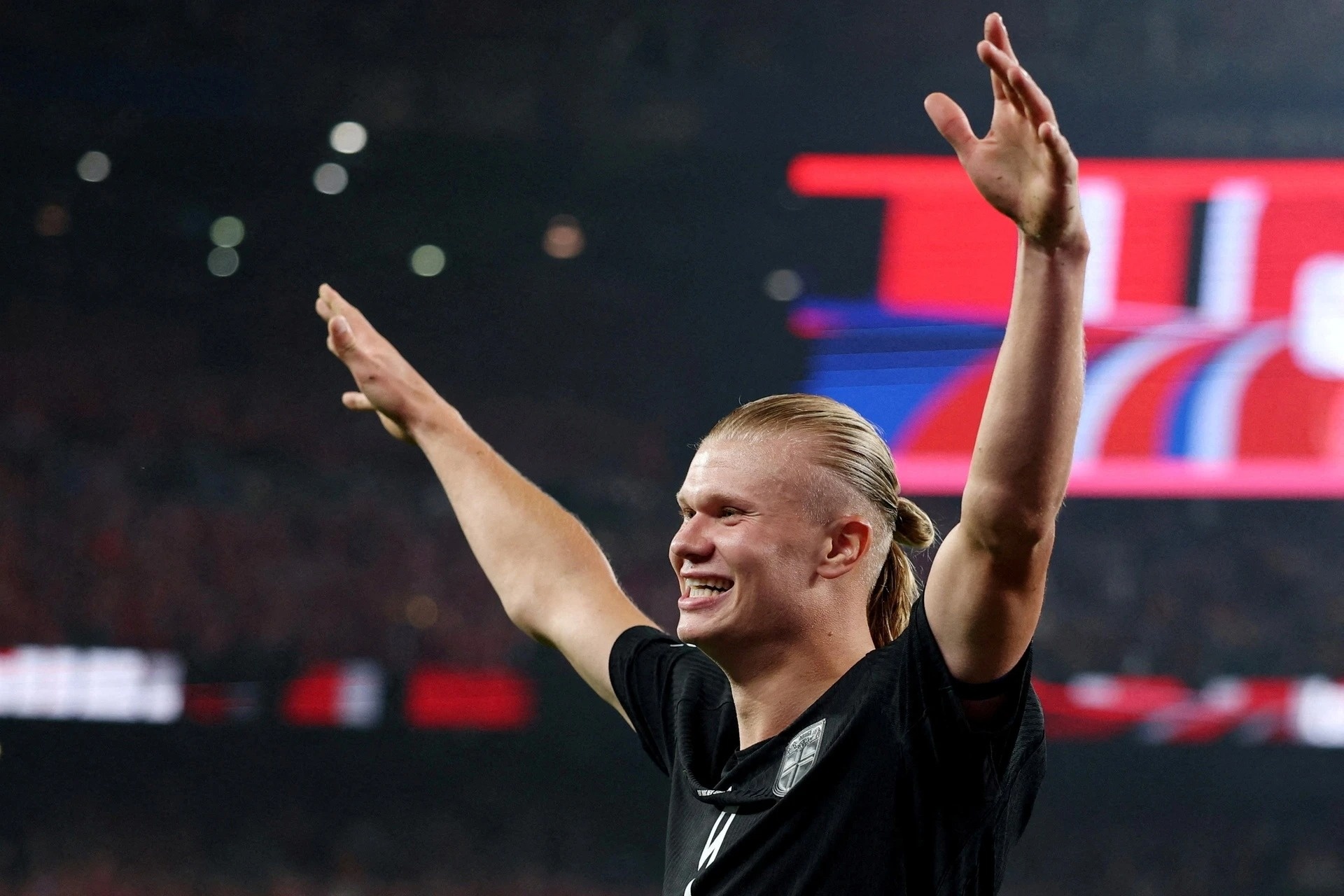 |
Haaland has scored two braces in a row. |
An expanded World Cup: A global festival at the expense of professional quality?
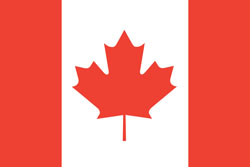
Looking at the statistics of the matches played so far, the disparity is very clear. There have been 12 matches that ended with a difference of three goals or more. These include three 3-0 wins, three 4-1 wins, two 4-0 wins, two 5-1 wins, and notably, crushing victories such as Canada's 6-0 thrashing of Qatar or Germany's 7-1 demolition of Curacao.
For Vietnamese viewers, the opportunity to witness the goals becomes even more vivid when VTV brings the biggest football event on the planet to television, with the support of VPBank . The presence of this brand doesn't change the professional aspects of the game, but it contributes to extending the World Cup experience to millions of fans, where each match is not just a contest between teams, but also an emotional rendezvous of football.
Such scores provide viewers with plenty of goals to enjoy, but they raise questions about the competitive quality of the tournament. The World Cup is traditionally seen as a gathering of the strongest teams on the planet. However, since FIFA expanded the number of participating teams from 32 to 48, the gap in skill levels between the teams has become increasingly apparent.
A prime example is the match between Germany and Curacao. On the FIFA rankings, the gap between the two teams is as much as 72 places. When teams with vastly different skill levels compete in the same tournament, one-sided matches are almost inevitable.
As a result, top strikers have had the opportunity to accumulate goals at an unprecedented rate. Lionel Messi scored 5 goals in just two matches, matching the achievement that Miroslav Klose needed an entire World Cup to win the Golden Boot in 2006. Kylian Mbappe and Erling Haaland also scored 4 goals in their two appearances.


These numbers reflect the outstanding form of the stars, but also show that the scoring environment is becoming easier than before. Of course, FIFA has its own reasons for expanding the World Cup. The organization's goal is to give more countries the opportunity to participate in the biggest football event on the planet. Teams like Curacao, Jordan, or Uzbekistan would have had little chance of participating if the tournament remained at 32 teams.
From a business perspective, disguised as promoting global football development, it's a logical step. Fans in many regions get the chance to experience the World Cup, and smaller football nations are encouraged to invest more heavily. However, the price to pay is that the professional quality of many matches is affected.
Compared to top club leagues like the Premier League, where the gap in skill levels between teams is narrowing, the 2026 World Cup is showing the opposite trend. It resembles a global football festival more than a tournament bringing together top-level clashes between equally matched teams.
Source: https://znews.vn/mat-trai-cua-world-cup-48-doi-post1662301.html


![[Photo] Opening Ceremony of the 13th National Congress of the Ho Chi Minh Communist Youth Union](https://vphoto.vietnam.vn/thumb/1200x675/vietnam/resource/IMAGE/2026/06/24/1782286753905_ndo_br_1-8510-jpg.webp)
![[Photo] The 13th National Congress of the Youth Union conducts personnel work.](https://vphoto.vietnam.vn/thumb/1200x675/vietnam/resource/IMAGE/2026/06/24/1782299943080_ndo_br_1-6868-jpg.webp)
![[Photo] General Secretary and President To Lam attends the Central Public Security Party Committee Conference](https://vphoto.vietnam.vn/thumb/1200x675/vietnam/resource/IMAGE/2026/06/24/1782302063612_a1-bnd-9302-9166-jpg.webp)