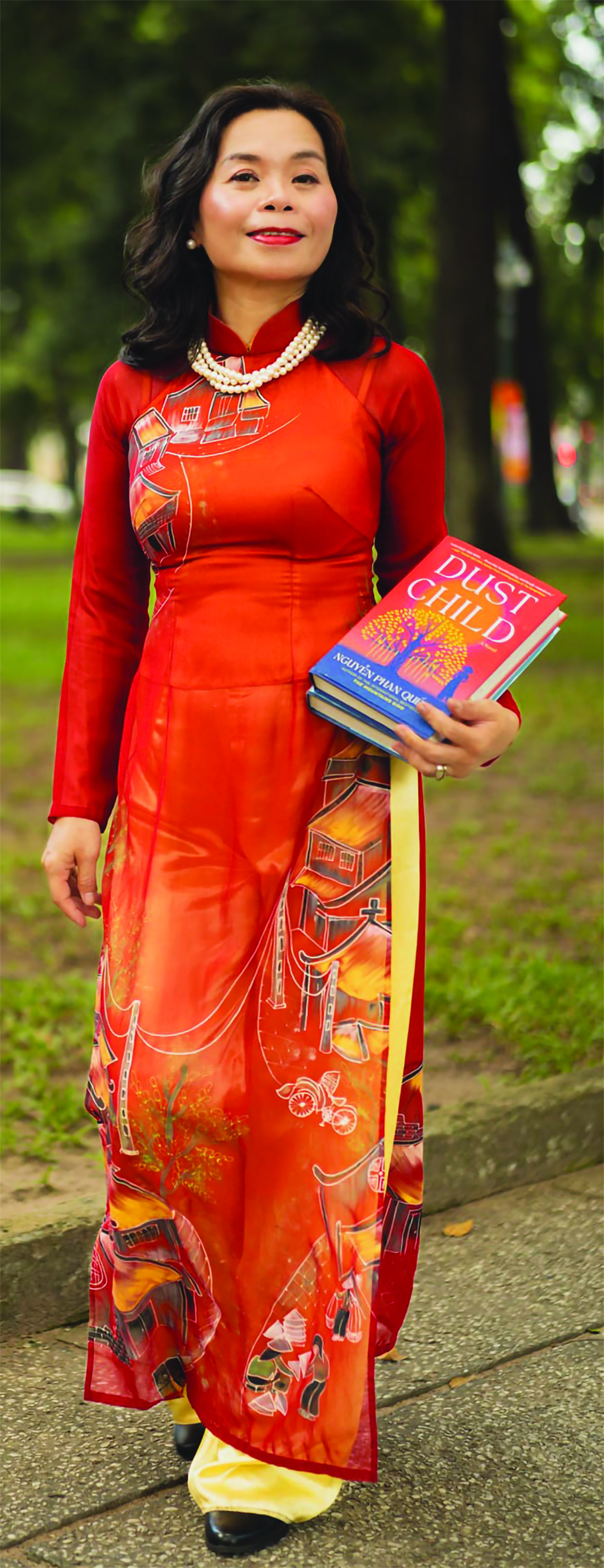
Writer Nguyen Phan Que Mai
There were many times when mothers, carrying their unborn children, jumped into personal bomb shelters to escape the bombs.
My mother recounted the times she had to take her students to evacuate to the high mountains, simultaneously avoiding bombs and teaching.
My mother recounted the long, arduous years she spent waiting for her older brother, Uncle Hai, who had joined the army and gone south to fight in the war.
My mother recounted the boundless happiness of April 30, 1975, when she received the news that the war had ended.
Bomb craters and the yearning for peace
I saw the yearning for lasting peace, not only in Vietnam but on earth, through the stories my mother told. That peace would ensure that no mother on Earth would lose a child to war.
I also saw the longing for eternal peace in the eyes of the grandmothers, mothers, wives, and sisters in my village of Khuong Du.
During my childhood, I silently watched those women standing at the gate every day, waiting for the men of their families to return from the war.
They waited, day after day, month after month, year after year. I saw the pain of war in the mourning scarves of families whose loved ones would never return, in the mutilated bodies of the veterans.
In 1978, six-year-old me boarded a train with my parents, traveling from North to South to establish a new life in the southernmost region of the country – Bac Lieu. Etched in my mind are the enormous bomb craters that still lie amidst the lush green rice fields.
As we crossed the Hien Luong Bridge, the bridge that divided Vietnam in two for 20 years of war, many adults around me burst into tears. In their tears, I saw the hope for peace, that Vietnam would never again suffer the bloodshed of war.
I longed for peace on my family's rice paddies in Bac Lieu. Those paddies were situated on a dike that my father, along with my mother and brothers, had personally cleared. That paddies used to be a shooting range for the South Vietnamese army. While clearing the land to plant rice and beans, we unearthed thousands of spent shell casings.
Touching the spent cartridges and even the unexploded bullets, I shuddered as if I were touching death itself. And I secretly wished that one day on this earth, everyone would put down their guns and talk to each other. And that love and understanding would resolve violence.
A journey to tell stories of peace.
In my memory of those early days in Bac Lieu, I see a woman selling sweet potatoes, alone with her heavily laden carrying pole, walking solitarily. It seemed as though she had traveled from a very distant place to reach the road that ran past my house.
Her feet were clad in worn-out, cracked, dusty flip-flops. My mother always bought them from her, knowing she had two sons who had gone to war and hadn't returned. She hadn't received her death notice and kept waiting. As the years passed, and her waiting wore thin, she chose to end her own life. One day, on my way to school, I saw her body hanging from a tree.
She carried her hopes to the other world . I stood there, silently gazing at her cracked, dry feet. And I imagined she had walked her whole life searching for peace. I carried her pain into the pages of my writing.
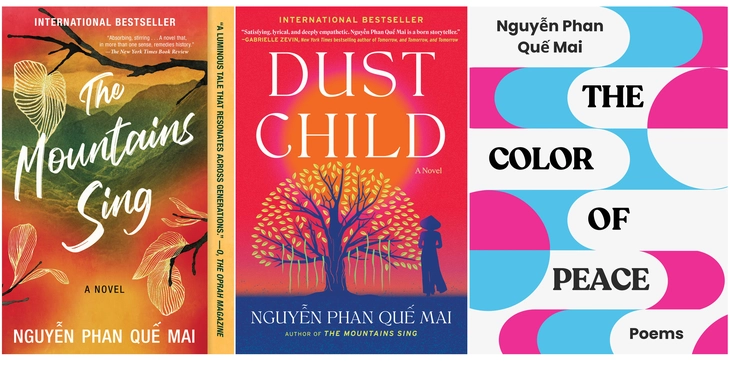
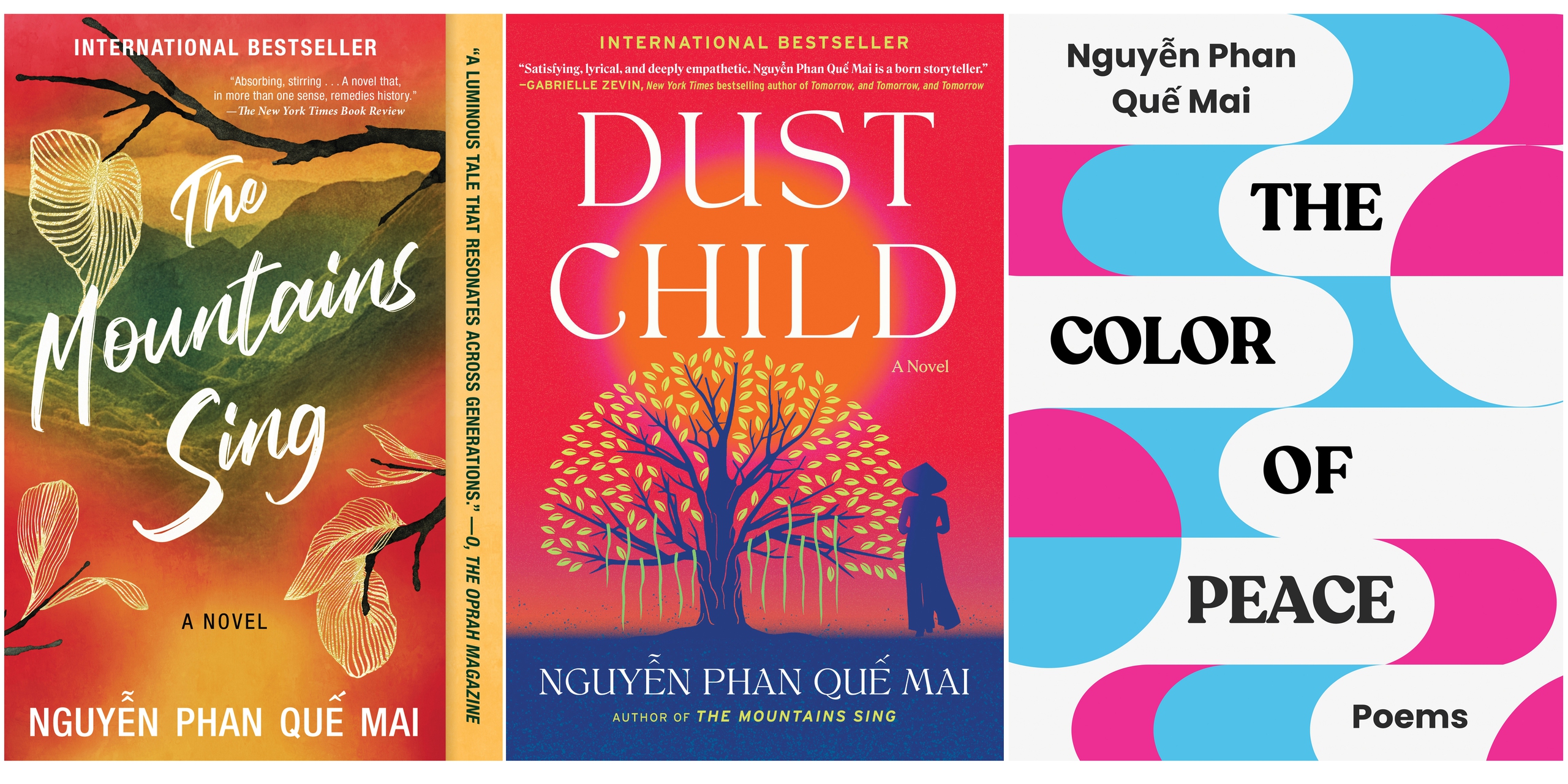
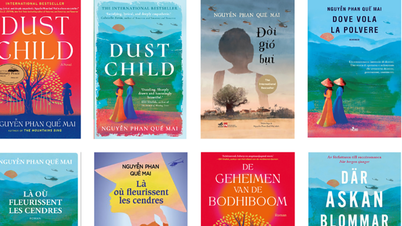
My first two novels, The Mountains Sing and Dust Child (tentative Vietnamese title: The Secret Under the Bodhi Tree), tell the story of the losses suffered by women during wartime, regardless of which side their loved ones fought for.
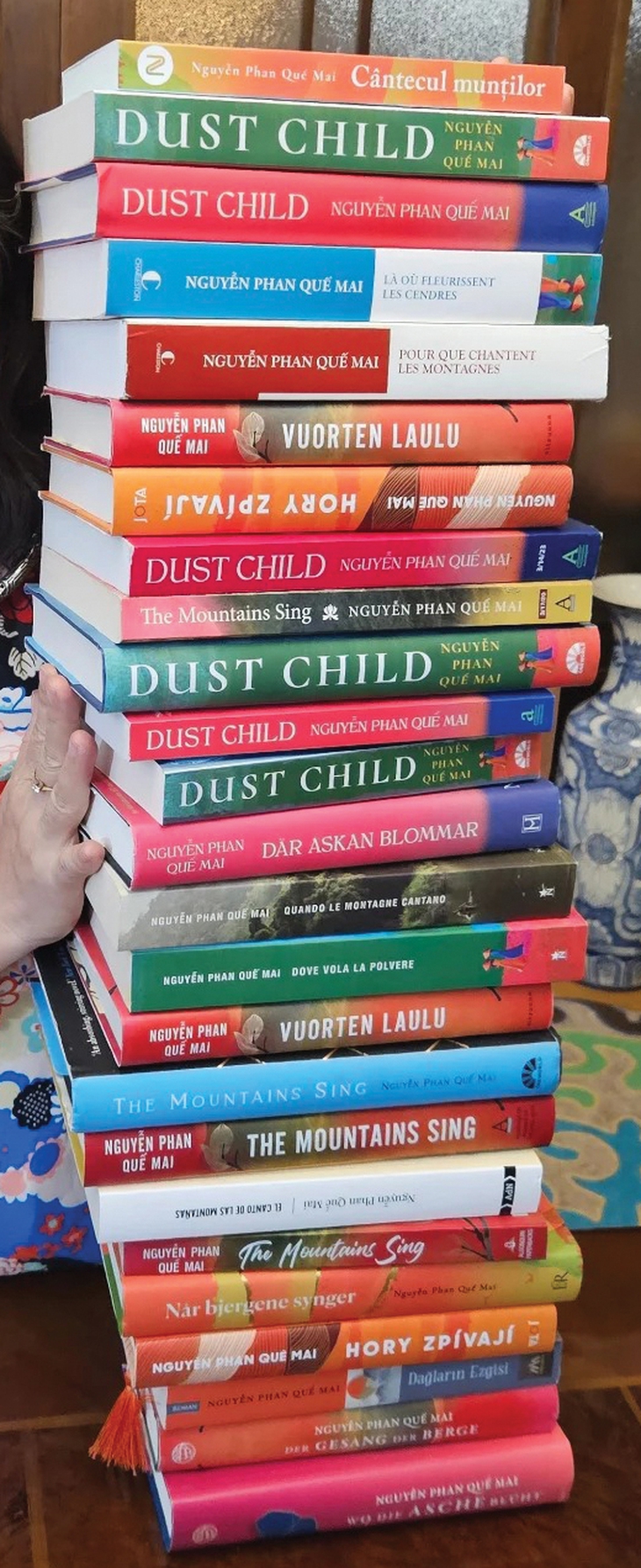
Nguyen Phan Que Mai's books have been translated into many languages.
The two books, *The Mountains Sing* and *Dust Child*, marked the beginning of my journey in sketching stories about peace. In *The Mountains Sing*, Huong, a 12-year-old girl, survives the American bombing raids on Hanoi in 1972. She longs to see peace because both her parents had to leave the family to participate in the war.
She told herself, "Peace is the sacred word on the wings of the doves painted on the wall of my classroom. Peace is blue in my dreams – the blue of reunion when my parents return home. Peace is something simple, intangible, yet most valuable to us."
I chose a 12-year-old girl as the storyteller of peace because, when people are young, their hearts are more open. Huong used to hate the Americans because they had bombed Kham Thien, where her family lived.
But then, while reading American books, she realized that both Americans and Vietnamese people cherish their families and value peaceful moments.
And she said to herself, "I wish that everyone on this earth would listen to each other's stories, read each other's books, and see the light of other cultures. If everyone did that, there would be no war on this earth."
In my book Dust Child, I have characters who have to go through the brutality of war to realize the value of peace.
The film features Dan Ashland, a former helicopter pilot who participated in the massacre of innocent children during the Vietnam War. Returning to Vietnam 47 years later, in 2016, he is deeply distressed and finds solace in the peace-loving and compassionate hearts of the Vietnamese people.
During the launch of these two books, I received hundreds of letters from readers – veterans and war victims. They shared with me images and stories of their experiences and those of their families. They showed me that I am not alone in my journey to tell stories of peace.
In recounting these stories of peace, I cannot help but mention the mothers, sisters, and grandmothers. Perhaps women are the ones who suffer the most from war.
I first encountered that suffering in the heart-wrenching scream of a woman the first time I visited Quang Tri . That day, I was resting at a roadside tea shop with my Australian friends – white, blonde-haired – when that scream startled us.
Looking up, I saw a naked woman running towards us, shouting at my foreign friends that they had to return her relatives to her. The villagers then dragged her away, and the tea vendor told us that the woman had lost both her husband and child in the American bombing raid on Quang Tri.
The shock was so great that she went mad, spending her days searching for her husband and son. The woman's tears have seeped into my writing, and I wish I could turn back time, to do something to alleviate her pain.
This April, marking the 50th anniversary of the end of the war, my poetry collection, The Color of Peace, which I wrote myself in English, is being released in the United States. The collection includes the poem "Quang Tri," with verses that echo the cries of a woman from many years ago: "The mother runs towards us / The names of her two children fill her eyes / She cries out, 'Where are my children?' / The mother runs towards us / Her husband's name is etched deep in her chest / She cries out, 'Give me back my husband!'"
The poetry collection "Colors of Peace" also brings the story of my friend, Trung, to international readers. I once witnessed my friend quietly lighting incense before his father's portrait. That portrait showed a very young man: Trung's father died in the war without ever seeing his son's face. For decades, Trung traveled far and wide to find his father's grave.
Countless journeys through the mountains and forests, countless efforts in vain. Trung's mother grew older, and her only wish before she passed away was to find her husband's remains. Trung's story inspired me to write the poem "Two Paths of Heaven and Earth," which appears in the collection "Colors of Peace."
TWO PATHS OF HEAVEN AND EARTH
The sky is white with nameless graves.
The ground is covered with white as the children search for their father's grave.
The rain poured down on them.
Children who have never met their father.
Fathers who cannot return home
The word "child" is still buried deep in my heart.
The call of "father" has haunted me for over 30 years.
Tonight I hear the footsteps of father and son from two different directions, heaven and earth.
The footsteps were hurried.
Finding each other again
Footsteps stained with blood
Separated across millions of miles.
Lost to each other across millennia.
How many cold, smoke-filled bodies lie beneath the earth with each foot I place on this land?
How many tears have been shed by those children who have yet to find their father's grave?
The white color of the Truong Son Cemetery always haunts me. I wish I could stay there longer, could light incense at each grave. There are countless white graves, some of them nameless. I sat next to a grave with two headstones: two families claimed this fallen soldier as their son.
In my poetry collection, *Colors of Peace*, I write about unmarked graves and the lingering pain that persists through generations. I want to speak about the horrors of war, to call on everyone to do more to work together to build peace.
The color of laughter
While writing about the pain of war, my poetry collection, "Colors of Peace," tells a story about Vietnam, a country with 4,000 years of civilization. Therefore, I begin the collection with an essay about Vietnam's poetic traditions, about Vietnamese Poetry Day, and about the contribution of poetry to preserving peace for the Vietnamese people.
The poetry collection concludes with the story of my father, a man who went through war, endured much pain and loss, and then became a literature teacher, instilling in me a love of peace and poetic inspiration.
With the help of peace-loving friends, I had the honor of participating in a "Color of Peace" journey through 22 American cities. I gave presentations at Columbia University (New York), Stanford University (San Francisco), UCLA (Los Angeles), Portland State University (Portland), UMASS Amherst (Amherst), and others.
At these events, and at other events in libraries, bookstores, or cultural centers, I tell stories about a peace-loving Vietnam, stories about the lingering wounds on the body of Mother Vietnam (unexploded bombs and mines, Agent Orange...).
It is an honor to have great friends from Vietnam accompanying me at these events. One of them is peace activist Ron Caver, who compiled and published the book *Fighting for Peace in Vietnam*.
I had conversations with photographer Peter Steinhauer, who lives in Washington DC but has traveled to Vietnam many times to photograph the country and its people. I was deeply moved when speaking with Craig McNamara, the son of Secretary of Defense Robert McNamara – considered the "chief architect" of America's involvement in the Vietnam War.
In his autobiography, *Because Our Fathers Lied*, Craig McNamara frankly called his father a war criminal. I also had a conversation with Professor Wayne Karlin, who was a helicopter gunner in Vietnam during the war, and after returning home, he actively participated in the anti-war movement and dedicated the rest of his life to translating, publishing, and promoting Vietnamese literature…
On several occasions, I invited the American veteran poet Doug Rawlings to read his English poem titled "The Girl in the Picture," which he wrote as a tribute to Phan Thi Kim Phuc, the woman featured in Nick Ut's "Napalm Girl" photograph.
And I read the Vietnamese translation of the poem, with its haunting lines: "If you are a Vietnam War veteran, a weary survivor/ she will come to you through the decades/ casting a shadow over the fading light in your dreams/ she is still naked and nine years old, horror etched in her eyes/ Of course you will have to ignore her/ if you want to survive through the years/ but then your daughter turns nine/ and then your grandchildren turn nine."
I also read the poems I wrote about Agent Orange and unexploded bombs, to call on Americans to join hands with organizations that are clearing landmines and helping Agent Orange victims.
Beyond discussing the lasting impact of war and what people can do to help alleviate suffering, I want to talk about the value of peace, about the Vietnamese people's love for peace, and about what we can do to build lasting peace on this earth: that is, to read to each other more, to understand each other more, to respect each other more, and to listen to each other's stories.
The poetry collection "Colors of Peace" carries my hope for lasting peace on Earth, and therefore one of the central poems in this book, "Colors of Peace," is dedicated to the people of Colombia, where armed violence still prevails.
During the Medelline Poetry Festival many years ago, I set foot on a hillside where hundreds of people had built makeshift huts to escape the violence in their villages. I was moved to tears watching them cook traditional dishes for us – the international poets – and read poetry with us.
And so I wrote these verses: "And suddenly I feel I belong here/ to this land/ the land torn apart by civil war/ the land filled with the ghost of opium/ When I and the children jump rope together/ with light steps of hope/ I know the dead are watching over us, protecting us/ And I see the color of peace/ transforming into the color of laughter/ ringing on the lips/ of the children of Colombia."
Fifty years have passed since the war ended. Someone said, "Let's stop talking about the war, the country has been at peace for a long time." Yet, the war still roars within me when I witnessed a family of a Vietnamese war hero spreading out a tarp, offering prayers and incense in the Plain of Jars, Xieng Khouang, in Laotian territory.
Incense sticks were lit amidst tears and sobs. Prayers were offered to heaven and earth, and to the spirits of the fallen soldiers, asking for their help in finding their father's grave.
The farmers I met that day had toiled for over 30 years to afford a vehicle and a guide to travel to Laos to find the grave of their father – a Vietnamese soldier who died in the Plain of Jars. Countless Vietnamese families are making the arduous journey to Laos to find the graves of their loved ones. With very little information, they still search with intense and burning hope.
Nguyen Phan Que Mai writes in both Vietnamese and English and is the author of 13 books. Many of her poems have been set to music and become popular songs, including "The Homeland Calls My Name" (music by Dinh Trung Can).
Her two novels in English, The Mountains Sing and Dust Child, which address war in call for peace, have been translated into 25 languages. She donates 100% of the royalties from her English poetry collection, The Color of Peace, to three organizations that remove unexploded ordnance and assist victims of Agent Orange in Vietnam.
Nguyen Phan Que Mai has received numerous national and international literary awards, including the second prize in the Dayton Prize for Peace (the first and only American literary award recognizing the power of literature in promoting peace).
Source: https://tuoitre.vn/mau-hoa-binh-2025042716182254.htm

























































Comment (0)