

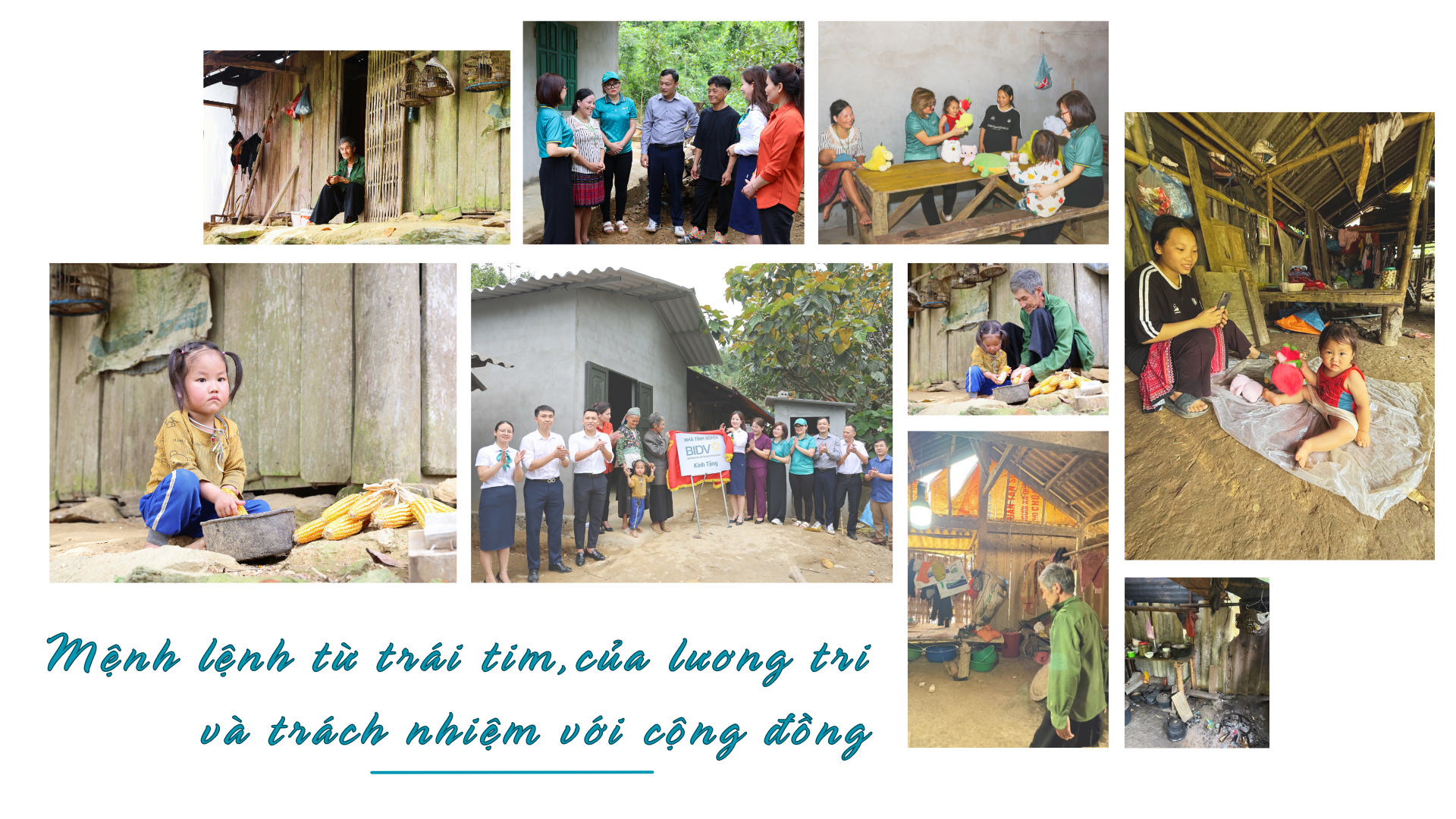
 |
According to Prime Minister Pham Minh Chinh , Head of the Central Steering Committee for the Eradication of Temporary and Dilapidated Houses: The program to eradicate temporary and dilapidated houses reflects the spirit of mutual support and solidarity of the entire nation, national affection, and fraternal love; it also demonstrates the responsibility of our Party and State towards vulnerable people, those in difficult circumstances, ethnic minorities in remote areas, border regions, and islands. Therefore, we should only discuss implementation, not retreat. This is a command from the heart, from conscience, and from responsibility to the community…
Joining hands with the whole country, BIDV is implementing a program to sponsor the construction and repair of dilapidated houses in provinces across the country such as Nghe An, Yen Bai , Quang Binh, Ha Giang, Khanh Hoa, Ca Mau… Following bank officials to a remote commune in Yen Bai province, we had the opportunity to witness and understand why the program to eliminate temporary and dilapidated houses is a heartfelt imperative.
 |
Departing from Hanoi at dawn, it only took us a little over three hours to reach Nghia Lo town in Van Chan district, Yen Bai province. However, to reach the home of Mr. Giang Vang Dinh in Pin Pe village, Cat Thinh commune, Van Chan district, we had to travel for over an hour on a winding mountain road with many hairpin bends, alternating between paved and dirt roads, uphill and downhill sections; we had to travel by vehicle and then on foot…
According to Mr. Giàng A Tủa, Secretary of the Party Branch of Pín Pé village: The entire Pín Pé village has 127 households with 727 inhabitants; of which 50 households are poor and 30 are near-poor. The main income of the people comes from cinnamon trees, ginseng plants, and gathering around the area. The average per capita income is 28-30 million VND/person/year – the target the commune is striving for.
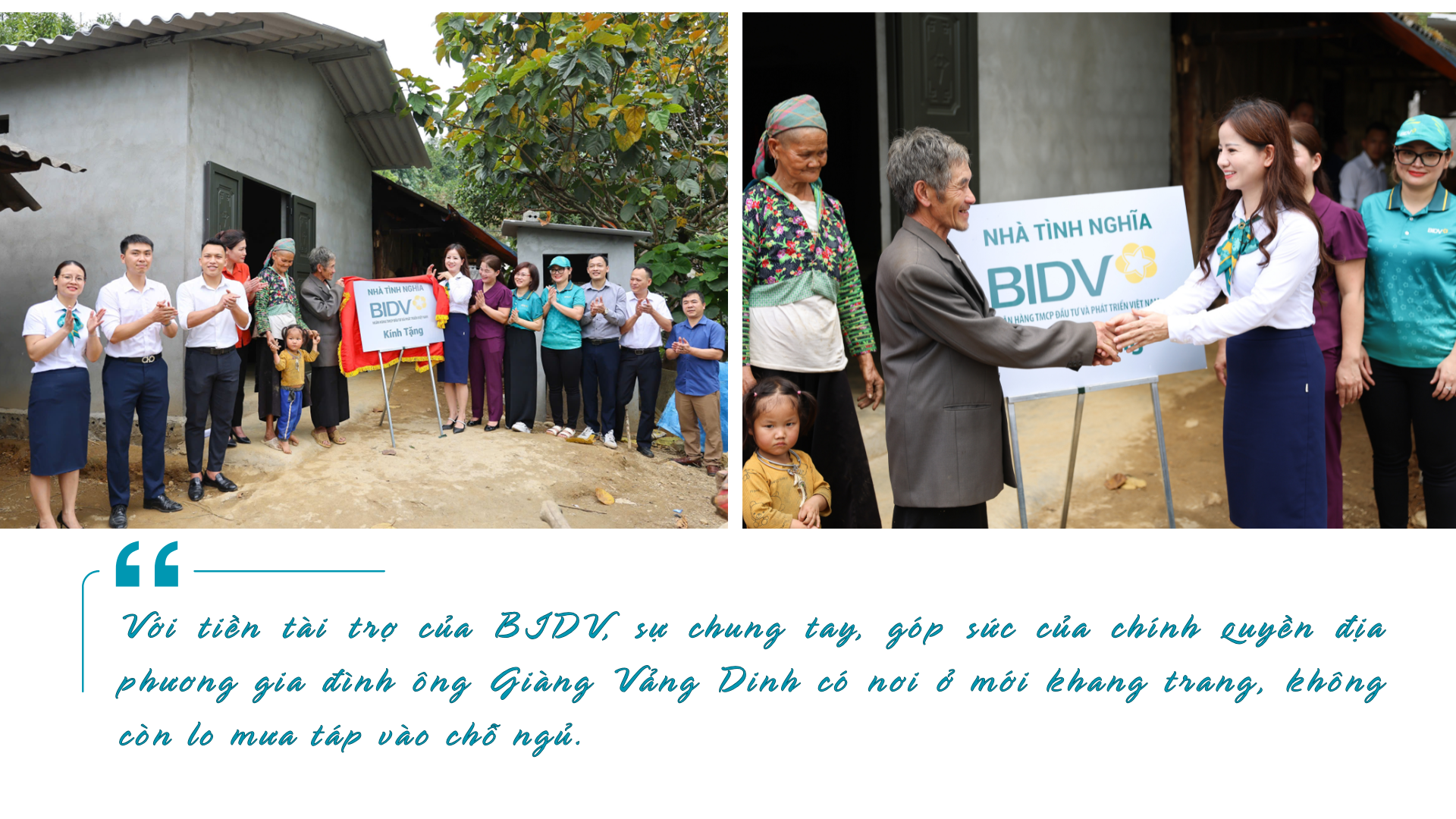
Mr. Giàng Vảng Dinh and his wife have nine children. Their youngest child is still unmarried. However, the difficulties are not limited to economic issues; despite their failing eyesight, slow gait, and limited mobility, they still have to care for their three-year-old grandson. Given their current circumstances, it is very difficult for the family to renovate their house.
 |
This child (pictured above) was orphaned at birth. Her father works far away, so she spends her days at home with her paternal grandparents. Looking into her eyes and thinking about her future, we can't help but feel worried.
Mr. Giàng Vảng Dinh's family belongs to the Hmong ethnic group, so some people understood and spoke broken Vietnamese, but others didn't understand what we were saying. To ask questions, the reporter had to ask Ms. Sổng Thị Sơ, an official from the Cát Thịnh Commune People's Committee, to translate. We didn't have much time to talk, but seeing the enthusiasm of the villagers made us happy too.
 |
 |
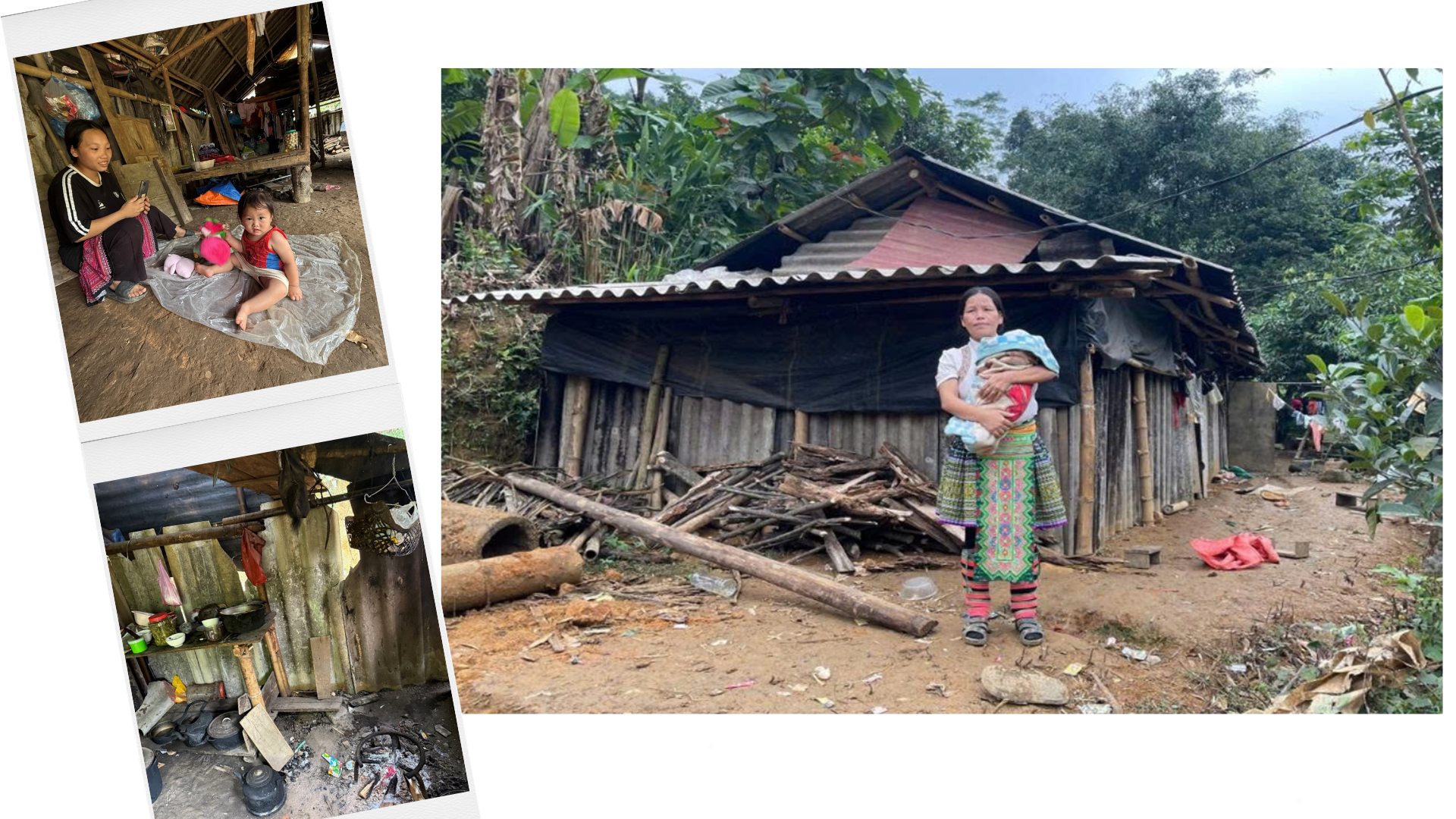
Leaving Mr. Giàng Vảng Dinh's house, we moved on to another household in Ba Chum Hamlet, Cát Thịnh Commune, Văn Chấn District. Cars could only stop on the national highway; we had to travel the remaining 2km by motorbike. Although Mr. Trần Tiến Dũng, Vice Chairman of Cát Thịnh Commune, had introduced us to this "exceptionally special" household, I couldn't imagine that people still live in such truly difficult circumstances.
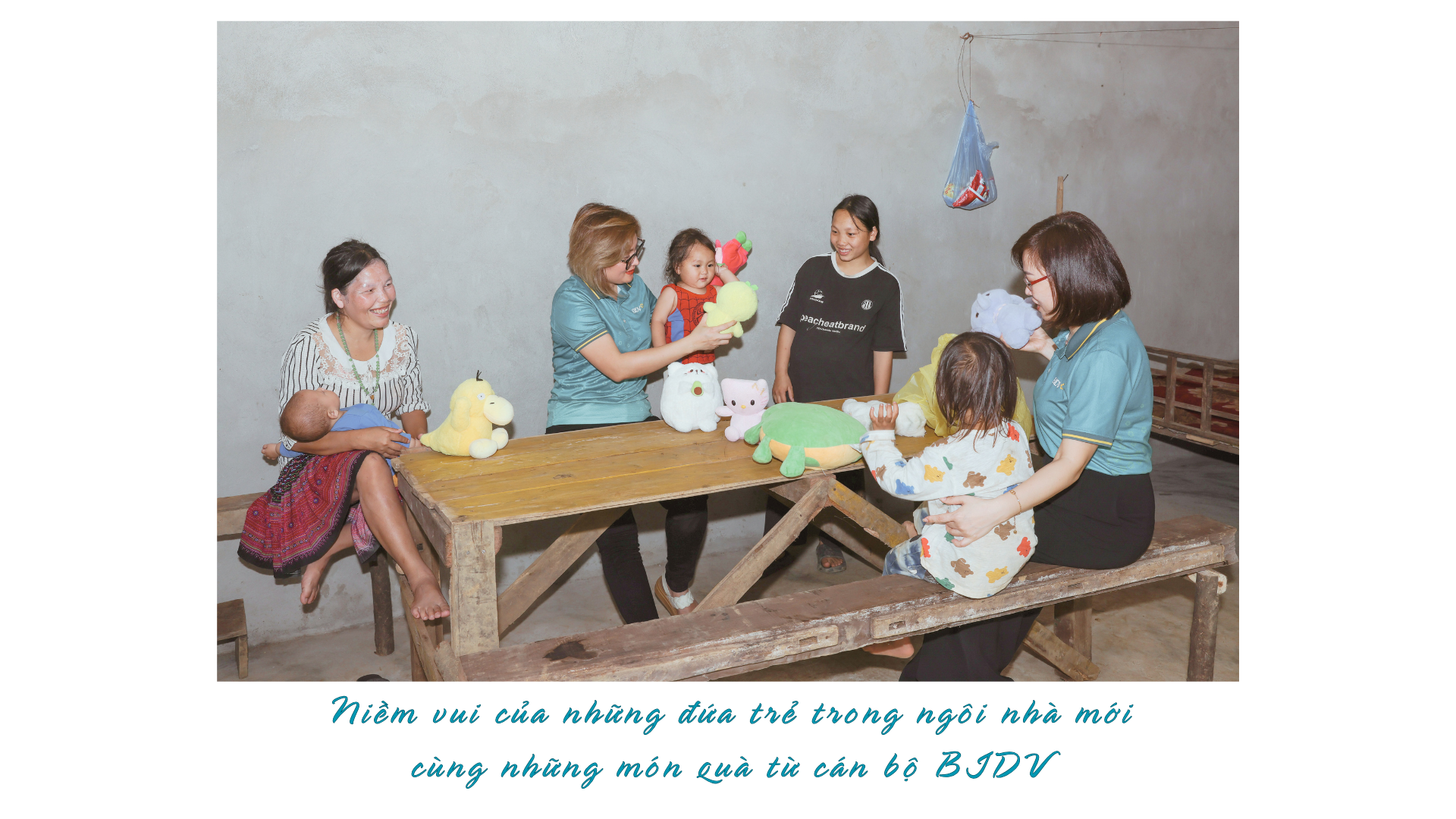
That was the family of Sung A Lu, born in 1984, and his wife, Giang Thi Le, born in 1989, of the Mong ethnic group. We bowed our heads before entering their dilapidated house with an earthen floor and walls made of old fiber cement sheets. The house was completely empty; we couldn't even identify the main door. Inside, four young children were playing with a pregnant woman (or rather, a little girl, because of her youthful face).
I only found out later that she was the landlord's daughter-in-law. She's only 19 years old this year, but she's carrying a 22-month-old baby in her arms and is already 7 months pregnant. The two children next to her, aged 3 to 5, are... her husband's younger siblings!!!
Seeing our astonished expressions, the Vice Chairman of the commune explained, as if trying to justify himself: "That's how they live. Just yesterday I had to help clean their house; if it were left as it was... And the worst part is, you can't even find a worn-out broom."
Ms. Giàng Thị Lề, born in 1989, married at the age of 13 and is currently holding her 12th child, who is only 5 months old. This "house" used to be home to 14 people. Besides four children attending daycare, one baby is being carried in her arms, while the other children of preschool age play on the bare ground.
We arrived at noon, but the kitchen was cold. There were only three pots: one contained water, another half-filled with white rice. Besides a box of pickled vegetables, the kitchen only had a packet of salt, no fish sauce. I asked Ms. Giang Thi Le, "Are the children hungry?" She hesitated, then replied in broken Vietnamese, "Well... sometimes we have rice, sometimes we don't." She said she bought four bags of rice at the beginning of the month, and now only two were left.
So, having rice sometimes and not other times is understandable. The family doesn't own any land. With so many people, they consume about 40 kg of rice per month. But with only two men working (Giang Thi Le's husband and their eldest son, who is over 20 years old), even just buying rice is difficult. The two women, considered adults, only gather and pick crops around the house. They don't even know the concept of "what crops to grow or what animals to raise" to make a living, because as soon as they have one child, they get pregnant with another.
 |
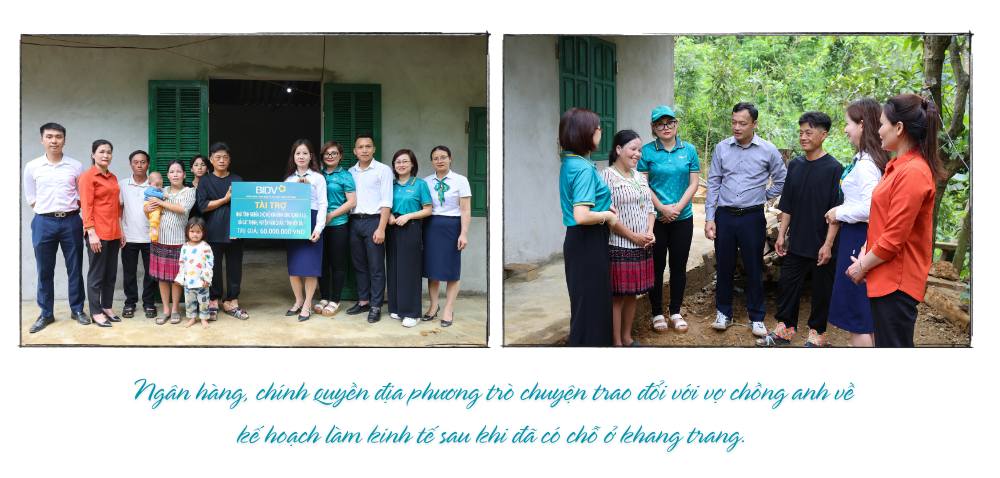
Mr. Tran Tien Dung, Vice Chairman of Cat Thinh commune, said: Cat Thinh has over 2,500 households, 12,000 people in 6 Mong villages, with a poverty rate of up to 99%. Implementing the national target program for sustainable poverty reduction, in phase I (2021 - 2025), the commune built over 40 houses, and according to surveys in 2025, 6 households are eligible to receive support to replace temporary or dilapidated houses.
It is expected that Cat Thinh commune will complete the plan by June 30, 2025, one month ahead of schedule. Each newly built house will meet the required scale with an area of 8-10 m2 per person and a minimum lifespan of 20 years. The province's program to eliminate temporary and dilapidated houses has received support from many businesses and philanthropists. However, "BIDV alone sponsored up to 60 million VND per house, allowing us to build toilets for the households. This is a very important point, as it is one of the criteria for a new rural commune. We know that in addition to this program, BIDV also supports healthcare, education, disaster relief, etc. BIDV is a very significant contributor to the local poverty reduction efforts."
 |
| Yen Bai province aims to eliminate 2,208 temporary houses by 2025; including building 1,815 new houses and repairing 393 houses. Currently, 2,087 houses have started construction, with 601 already completed. BIDV alone has provided 36 billion VND in funding to help Yen Bai eliminate 600 temporary and dilapidated houses for poor households, near-poor households, and families of war veterans. |
Ms. Nguyen Thi Lien Phuong, Deputy Director of BIDV Yen Bai Branch, said: "During our field survey, we were deeply moved to see the dilapidated houses, on the verge of collapse. This situation not only reflects the poor and makeshift shelters of the people but also shows their hardship and severe lack of material resources. A house is not just a place to live, but also a foundation for people to 'settle down and prosper.' With a solid house, people will have the premise and motivation to develop their economy and improve their quality of life."
Therefore, BIDV's participation in the program to eliminate temporary and dilapidated houses demonstrates its responsibility to the community and its commitment to contributing to building a just and sustainable society.
 |
| Resolution No. 42-NQ/TW of the 13th Central Committee of the Communist Party of Vietnam on continuing to innovate and improve the quality of social policies to meet the requirements of national construction and defense in the new period has set the goal of "completely eliminating temporary and dilapidated houses for poor and near-poor households and people affected by natural disasters and climate change" by 2030 (the 100th anniversary of the founding of the Party). The nationwide emulation movement to "eliminate temporary and dilapidated houses" was launched by Prime Minister Pham Minh Chinh in April 2024 with the goal of mobilizing resources to build and repair 170,000 houses for poor and near-poor households nationwide. The aim is to basically complete the goal of eliminating temporary and dilapidated houses nationwide by October 31, 2025, including all three programs: Housing support for people with meritorious services to the revolution; Providing housing support under national target programs; eliminating temporary and dilapidated houses for poor and near-poor households. Joining hands with the whole country, BIDV contributed 120 billion VND to support the following provinces: Nghe An (20 billion VND), Yen Bai (36 billion VND), Quang Binh (30 billion VND), Ha Giang (14 billion VND), Khanh Hoa (5 billion VND), Ca Mau (5 billion VND), Tra Vinh (1 billion VND), Hoa Binh (1 billion VND), and Bac Lieu (8 billion VND). From this amount, approximately 2,400 houses have been and will be repaired or newly built. |
Article: Thuan An Presented by: Le Thanh |
Source: https://thoibaonganhang.vn/menh-lenh-tu-trai-tim-cua-luong-tri-va-trach-nhiem-voi-cong-dong-163340.html
![[Photo] Prime Minister Pham Minh Chinh presides over the conference announcing the establishment of the International Finance Centre in Vietnam.](/_next/image?url=https%3A%2F%2Fvphoto.vietnam.vn%2Fthumb%2F1200x675%2Fvietnam%2Fresource%2FIMAGE%2F2025%2F12%2F21%2F1766309817714_ndo_br_dsc-3400-jpg.webp&w=3840&q=75)
![[Photo] Prime Minister Pham Minh Chinh presides over a meeting on private sector economic development.](/_next/image?url=https%3A%2F%2Fvphoto.vietnam.vn%2Fthumb%2F1200x675%2Fvietnam%2Fresource%2FIMAGE%2F2025%2F12%2F20%2F1766237501876_thiet-ke-chua-co-ten-40-png.webp&w=3840&q=75)





























































































Comment (0)