

Vinh Loc is a land rich in folk songs and dances, vibrant and diverse. The Ma River flows through many localities of Thanh Hoa province before emptying into the sea, but the songs and chants associated with the river, laden with the silt of the brilliant Dong Son culture, are not found in every locality along its course.
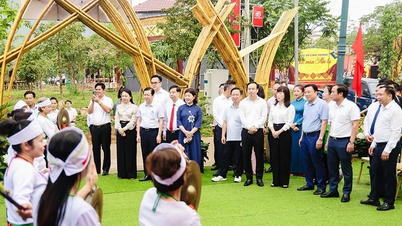
 Chanting during the water procession at the Bong Thuong village festival, Vinh Hung commune.
The Ma River reflects the Hung Linh mountain range, accumulating the spiritual energy of heaven and earth, spreading the resonant sound of gongs, whispering in the earth's veins, reflecting the majestic Ho Dynasty citadel, the ancient and sacred temples and shrines, and the people with their extraordinary courage yet gentle nature... From this people and land, the stirring folk songs of the Ma River resonate, stirring the soul, forever echoing across the land: "Come here, I will sing with you / Sing for six districts and ten villages to hear."
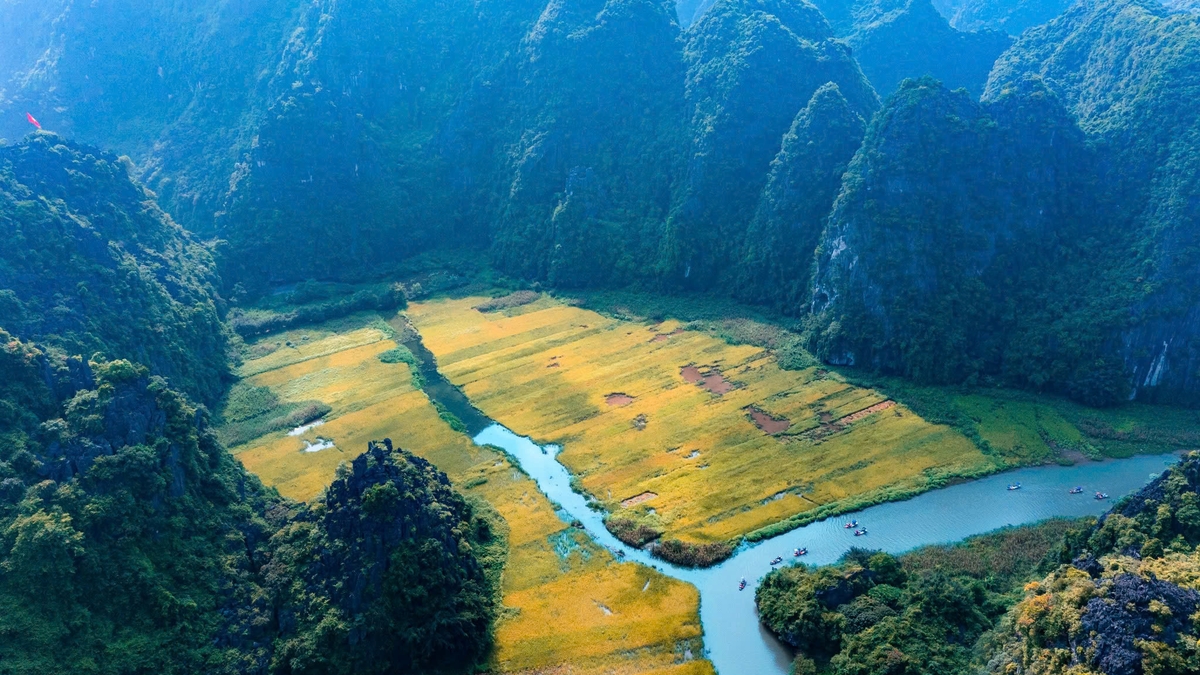
The Ma River flows through the heart of Vinh Loc and slowly flows towards the sea, passing through villages carrying the melodious folk songs of the Western Capital region: "Golden heartwood remains fresh in the water / Heroes in distress still smile and rejoice."
Folk songs in Vinh Loc also originate from agricultural labor and production, closely linked to the fertile river that nourishes the fields and plains, providing abundant fruits and flowers in all four seasons, and its cool, clean water that nurtures the physical and spiritual well-being of the people who have dedicated their lives to this cultural river. Along the banks of this river, various folk melodies emerged, known locally as: teasing songs, courtship songs, love songs, and call-and-response songs... From the lyrics to the melodies, they all bear the indelible mark of the riverine culture of the majestic and poetic Ma Giang River: “The boat has reached the shore, my dear/ Why don’t you build a bridge for me to come ashore?/ The boat has reached the shore, my love/ Anchor the pole firmly and come in to chew betel.”
The folk songs of the villages of Vinh Loc are closely linked to the river, to agricultural production, and to the planting seasons by the farmers – “simple, honest souls as gentle as the earth / The love of potatoes and cassava is so sincere,” hardworking, diligent, enduring the sun and rain, beautiful in both appearance and character. They not only produce the desired golden harvests, bringing prosperity to every home, but are also the creators of folk songs and melodies, often combining singing and dancing to captivate hearts: ... “The well in Du village is both clear and cool / The girls in Cong village are beautiful even without singing.”
Water is a vital element in life. Living along the Ma Giang River, a belief in water worship gradually formed. In the ritual of carrying water, prayers were made for national prosperity, peace, and abundance, accompanied by the sounds of folk songs and chants, combined with the rowing movements of the Bong Thuong village in Vinh Hung commune: “Floating, floating / On the dragon boat / With skillful hands, the girl steers / Overcoming big waves / Oh, rowing, rowing / The boat of Miss Ba Thoai / Gliding along the deep river / This is the Ma Giang River /... Before the scene of Bong Tien / The girl's steady hand rows / Making the boat glide through the waves / Oh, rowing, rowing”...
The Ma River flowing through Vinh Loc not only makes the villages and fields fertile, but also influences the perceptions and thinking of the people here, giving rise to a unique form of folk performance: Cheo Chai in Cam Hoang village (Vinh Quang), where "Le Mountain is covered in clouds, looking like brocade / Ma River shines under the moonlight like pearls," inspired by the poem of King Binh Dinh.
The Chèo Chải performance features a lead rower and rowers, along with a group of dancers singing and dancing while rowing. During the performance, they row on land and sing: “Today is the anniversary of our temple/ First, we offer sacrifices to the temple, then we row across the river to worship/ We row across the river with one oar/ To bring the doctor and the duke back to the village.” The Chèo Chải singing and dancing ceremony honoring the village guardian deity takes place in a sacred space, paying tribute to and expressing gratitude to the ancestors who pioneered and built the peaceful and prosperous village. Twelve beautiful and graceful village girls, dressed in pink bodices and silk skirts, around the age of fifteen, with lamps on their heads, fans in their hands, and oars skillfully performing dances: running, oar dancing, fan dancing, flag dancing, rowing, scarf dancing, pole dancing, and lamp dancing, accompanied by songs and musical accompaniment: "...With both hands, they lift the oars / Raising them evenly to pay homage to the Holy King / Today we celebrate the Holy Emperor's reign / Overseeing the good people of the four corners of the world / Farming and agriculture compete / Scholars study, martial arts practice / Commerce and industry flourish / Loving the people, singing songs of peace / So beautiful... beautiful... beautiful / We wish the Holy Emperor eternal wisdom." The dance is graceful and rhythmic, the song, sometimes slow, sometimes fast, exhilarating and captivating... it has the power to move the soul, taking viewers back to the roots of the nation, remembering the ancestors, reflecting the belief in praying for water, sunlight, and flood control... for ripe rice, golden ears of grain, and abundant harvests.
The Chèo folk singing and dancing performances at Tam Tong communal house and Tran Khat Chan temple (Vinh Tien commune) include: introductory songs, "Silently Catching the Oar," "Catching the Oar," "Catching the Oar in the Worship," Ha Thanh songs, songs celebrating the Saint... from the rituals, lyrics, and rhythmic dances, bearing the strong imprint of folk songs and performances from the Ma River region and court rituals: "Today is the anniversary of our temple/ The Saint of Dun Temple is worshipped in all three communes/ Connecting Dun Temple to Thanh Ho/ The old Cai Hoa road, the traces of the past remain undimmed...".
Along with folk songs about love for the homeland and country, praising heroes and tutelary deities who have contributed to the people and the nation, the villages along the Ma River also create and perform traditional folk songs such as "singing across the river" (Vinh Ninh), "singing in groups," and "singing with drums" (Vinh Thanh, Vinh Quang), expressing the emotions of working people connected to the fields, the river, and the mountains; intimately connected to the people and scenery of this place with passionate, fervent, and exhilarating lyrics.
Besides producing various forms of folk songs, some villages in Vinh Loc also have traditional folk singing traditions, notably Xuan Giai village in Vinh Tien commune, which still preserves this tradition. The road from the South Gate of Ho Dynasty citadel to Don Son, specifically Hoe Nhai street – the royal palace road of the Ho Dynasty – once resonated with the sounds of musical instruments, percussion, and the melodies of female singers. Within Vinh Loc district, the Tay Do citadel area and its surroundings boast 36 villages known for their traditional folk singing, with connections to many other provinces and cities. In Hai Phong , there is also Dong Mon village in Hoa Binh commune, Thuy Nguyen district, whose folk singing originated in Vinh Loc, Thanh Hoa, brought by Dinh Triet, son of Dinh Le, from the Tay Do region to this northeastern coastal area.
Along with folk singing, the creative forms of spoken and spoken singing in communal houses, and the scholarly Ca Tru, the land of Tay Do boasts a unique theatrical form: Tuong (traditional opera), performed in the ancient villages of Vinh Long and Vinh Thanh communes. Tuong is performed in communal houses, a courtly art form, yet also incorporating many folk elements. The Trong Quan singing in Xuan Giai village, Vinh Tien commune, during festivals and celebrations, is also lively and vibrant, with the rhythmic drumming blending with the heartfelt and warm lyrics, uplifting the spirits. Vinh Loc also offers a rich and distinctive collection of folk songs, such as Xuong, lullabies, and ritual folk songs of the Muong people, expressing subtle and heartfelt emotions, praising life and the natural landscape intertwined with the people and the land.
Folk songs are the voice of emotion and soul of the people and land of Vinh Loc, a tradition passed down through generations. The countryside, with the Ma Giang River – a verdant river brimming with fertile soil – and the sacred Hung Linh Mountain, is the origin and inspiration for folk songs, allowing them to soar, permeate the land, and resonate in people's hearts, spreading and stirring emotions. Folk songs – a form of intangible cultural heritage of the people and land of Tay Do – need to be preserved and their value promoted in life, not only yesterday, today, but also in the future.
Text and photos: Hoang Minh Tuong (Contributor)
Source: https://baothanhhoa.vn/mien-dat-cua-dan-ca-dac-sac-da-sac-mau-223721.htm
































































Comment (0)