Kinh Bac alluvial soil
The Kinh Bac region was formed by the alluvial deposits of the Red River and many other rivers in the area. Particularly noteworthy are the four rivers that all contain the word " Duc " (meaning virtue/virtue): Thien Duc (Duong River), Nguyet Duc (Cau River), Nhat Duc (Thuong River), and Minh Duc (Luc Nam River). From these layers of alluvial deposits, the Kinh Bac region of Bac Ninh has crystallized a rich cultural value system, a testament to the fact that "what withstands the weight of time becomes priceless."
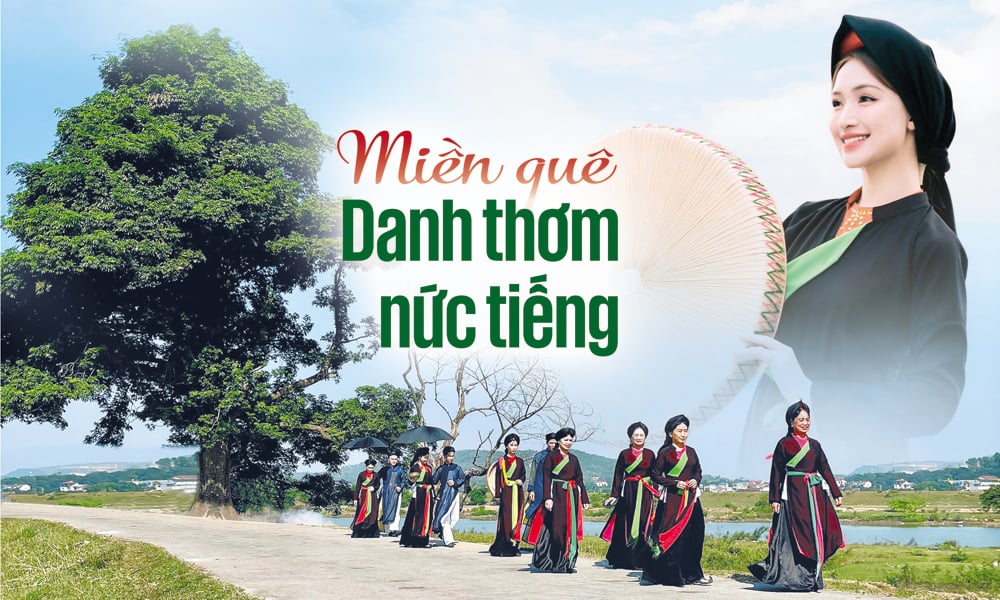 |
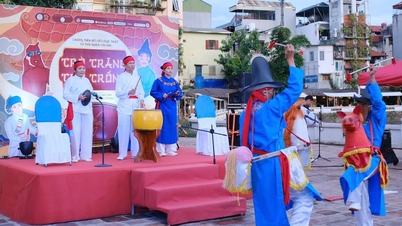
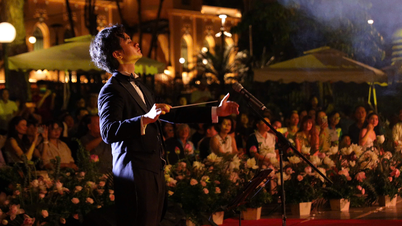
The shimmering Quan Ho culture. Photo: Tran Phan. |
In his *Historical Records of Dynastic Constitutions*, historian Phan Huy Chú (1782-1840) summarized: "The Kinh Bắc region has towering mountain ranges and many winding rivers, making it the northernmost part of our country. The scenery is more beautiful in Bắc Hà and Lạng Giang prefectures. Literature is more abundant in Từ Sơn and Thuận An prefectures. The fertile land is concentrated there, so there are many beautiful historical sites and a concentration of intellectual excellence, giving rise to many famous officials. Because it is imbued with the strong spiritual energy of the North, it is different from other places..."
The cultural heritage of Bac Ninh is immeasurable; it must be felt through its historical depth and the aspirations passed down from generation to generation. Looking back in time, today's generation cannot help but feel proud of the countless treasures that our ancestors painstakingly built and passed down in every village, historical site, through every folk song, ritual, and game... Amidst this vast treasure trove of heritage, Quan Ho shines brightly like a precious gem. More than just love songs, Quan Ho is a way of life, a philosophy of life brimming with morality and compassion.
Therefore, it is no coincidence that Quan Ho folk songs of Bac Ninh were honored by UNESCO as a Representative Intangible Cultural Heritage of Humanity. This is a recognition of a culture that takes kindness, politeness, and affection as guiding principles in communication, behavior, and community relationships. From Quan Ho, the qualities and character of the people of Kinh Bac have become a cultural symbol: both refined and subtle in their lifestyle, yet active and dynamic in commerce. A beauty that is both profound like the scholars of Bac Ha and elegant and refined like the lifestyle of the upper capital. The character of the people of Kinh Bac is like a brand, cherished and preserved as a timeless cultural constant...
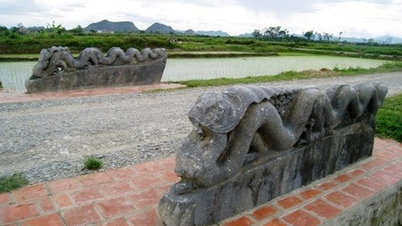
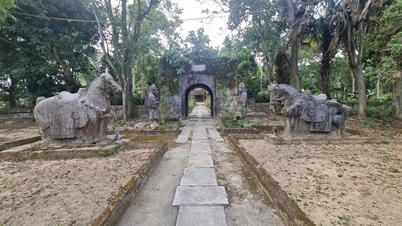
Along with its intangible cultural heritage, Bac Ninh is also a land marked by many glorious milestones, with countless illustrious names and glorious achievements still vividly imprinted on paper, and countless material traces from deep within the earth to temples, pagodas, shrines, tombs, and riverbanks that still stand solemnly and sacredly. These include the mausoleum and temple of King Kinh Duong Vuong, the ancient citadel of Luy Lau, Dau Pagoda – the oldest Buddhist center in Vietnam, Do Temple – a place of worship for the enlightened kings of the Ly dynasty who opened the Dai Viet civilization, the Nhu Nguyet battlefront with the stirring "Nam Quoc Son Ha" (Mountains and Rivers of the Southern Country), and the heroic Xuong Giang battlefield… Each historical site is an epic chapter, a living testament to the sacred spirit of the mountains and rivers converging.



Throughout the long history of nation-building and national defense, the national liberation movements from the Trung Sisters to Ly Nam De all ended in Luy Lau, Long Bien... although they achieved temporary independence, they forever etched the tradition of indomitable resilience. In the centuries that followed, Kinh Bac served as a solid bulwark for the capital Thang Long. The people of Kinh Bac developed the economy and culture of a region renowned for its elegance and refinement, while also contributing to the overall prosperity of the country. During the resistance against the French , outstanding sons and daughters with patriotic spirit such as Nguyen Cao, Hoang Hoa Tham... followed by Ngo Gia Tu, Nguyen Van Cu became exemplary figures embodying the heroic spirit of their homeland and laying the first bricks to initiate the revolutionary movement in this land.
A thousand years of history have left Bac Ninh today with its own unique values and beauty. If we had to name a silent yet enduring source that has shaped the character and depth of soul of the people of Kinh Bac - Bac Ninh, we could not fail to mention Buddhism. The light of compassion took root in the Luy Lau region more than two thousand years ago, then integrated, transformed, and spread, deeply permeating the thoughts, lifestyles, and subconscious of the Kinh Bac community.
During the Ly Dynasty, Buddhism not only flourished in thought but also thrived in architecture and art, becoming the national religion with magnificent temples imbued with the humanistic spirit of Dai Viet, such as Phat Tich Pagoda, Dam Pagoda, and Tinh Lu Pagoda. Zen Buddhism continued to reach its peak during the Tran Dynasty, when King Tran Nhan Tong, after twice defeating the Mongol army, abdicated the throne and went to Yen Tu Mountain to establish the Truc Lam Zen sect. The king, along with his two disciples, Phap Loa and Huyen Quang, founded an engaged Zen school, harmonizing religion and life with a profound, purely Vietnamese philosophy of "living in the world and finding joy in the Dharma" - living peacefully in the world while still finding joy in the Dharma.
Like an underground stream seeping into layers of cultural sediment, nourishing the spiritual life and worldview of the people of Kinh Bac, the flow of Buddhism is unbroken, continuing through historical periods with famous temples such as Vinh Nghiem, But Thap, Bo Da... Today, Buddhist thought continues to circulate, becoming a refuge for faith, for loving souls, for living slowly and understanding more deeply.
Aspiration for the future
The nation's history has witnessed significant turning points, from Ly Cong Uan's relocation of the capital to Thang Long, to Emperor Tran Nhan Tong's engagement in worldly affairs to propagate Buddhism, followed by major transformations during the period of reform... And today, Bac Ninh stands at a new beginning where unity, wisdom, resilience, and love for the homeland will determine its future.
| In the minds of the people of Kinh Bac, Bac Ninh and Bac Giang, despite periods of administrative boundary mergers and separations, have never been distant in their cultural connection, their sense of brotherhood, and their shared history spanning a thousand years – a land of exceptional people and rich history. |
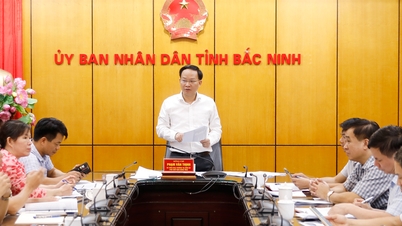
In the hearts of the people of Kinh Bac, Bac Ninh and Bac Giang, despite periods of administrative boundary changes and mergers, have never been distant in their cultural connection, their sense of brotherhood, and their shared history spanning a thousand years – a land of outstanding people and rich history. From the time it was officially named Bac Ninh province by Emperor Minh Menh in 1831, to Bac Giang being separated in 1895, then the two provinces merging into Ha Bac province in 1962, and finally separating again in 1997, after more than a quarter of a century, Bac Ninh and Bac Giang are now reunited.
The merger of the two provinces today is not simply a "return to the past," but a way to pave the way for the future. It is also an opportunity to break free from old habits, to build a balanced, humane, and liberating development model, where cultural traditions serve as both a spiritual foundation and a driving force for development, and where modernity is not merely about flashy growth figures but also about vision and the ability to awaken inner strength and foster sustainable innovation.

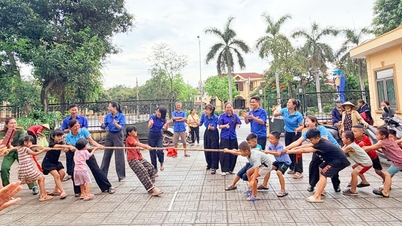
Bac Ninh currently possesses over 3,600 historical sites, of which nearly 1,500 are classified, including: 11 special national historical sites and clusters, 322 national historical sites, and 1,096 provincial-level historical sites; 24 national treasures; and 6 intangible cultural heritage sites recognized by UNESCO – the most in the country, including: Quan Ho folk songs; Ca Tru singing; the Huu Chap tug-of-war ritual and game; the practice of worshipping the Mother Goddess of the Three Realms by the Vietnamese people; the practice of Then ritual by the Tay and Nung people; and the woodblock prints of Vinh Nghiem Pagoda. Along with nearly 1,400 traditional festivals, dozens of unique craft villages, and a large number of intellectuals, artisans, and artists, these are important potential resources for developing a creative economy.
With a leadership team possessing strong character, cultural understanding, and excellent management skills, coupled with a desire to unleash the potential of its people, the new Bac Ninh province – a place where heritage, culture, and intellect are distilled – will surely enter a new chapter of prosperity and brilliance, affirming its rightful place as a "land of renowned fame" in the thousand-year-old cultural heritage of Vietnam.
Source: https://baobacninhtv.vn/mien-que-danh-thom-nuc-tieng-postid421012.bbg