


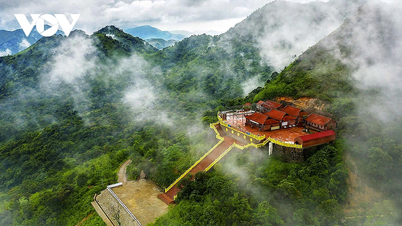
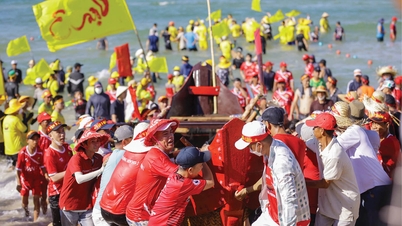
Currently, the province has over 800 religious establishments of diverse types, ranging from temples to shrines and pagodas. In addition, there are many relics dedicated to national heroes and cultural figures. The majority of these religious structures have been built and preserved by the people over many generations, serving both spiritual needs and as venues for traditional festivals. According to incomplete statistics, the province currently has nearly 100 traditional festivals associated with these religious establishments.
Along with preserving traditional values, the management and guidance of religious activities during festivals have always been a priority for all levels and sectors. Mr. Luu Ba Mac, Deputy Director of the Department of Culture, Sports and Tourism, stated: In recent times, the department has coordinated with communes and wards to strengthen propaganda and guidance on regulations regarding festival organization; at the same time, it has intensified inspections and promptly rectified violations in festival organization and superstitious practices in religious activities.
Accordingly, the organization of festivals is carried out in an orderly manner by communes and wards, with close coordination between local authorities, relic management boards, and functional forces to guide people in practicing their beliefs correctly during festivals in the area.
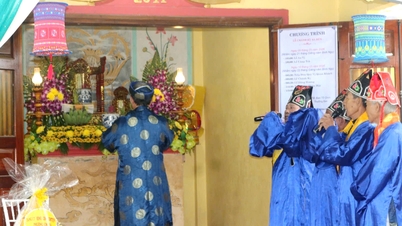
Ms. Be Thi Trang, Vice Chairman of the People's Committee of Dinh Lap commune, said: "At the beginning of spring, the commune has two traditional festivals: the Hang Slap communal house festival (on the 10th day of the first lunar month) and the Ta Hon communal house festival (on the 12th day of the first lunar month). From the end of 2025, when developing the plan for organizing activities to celebrate the Party and the Spring Festival, the commune identified these two activities as key priorities, while also promoting and encouraging the people to practice civilized behavior when participating in the festivals. In addition, in 2025, the commune Party Committee issued a specialized resolution on building a civilized lifestyle in the area, creating a basis for the synchronized implementation of solutions in practice. Thanks to this, the festivals in Dinh Lap commune are organized solemnly, according to traditional rituals, ensuring security, order, and environmental hygiene, contributing to a joyful and enthusiastic atmosphere among the people."
Besides government management, religious institutions also actively guide people in practicing their faith. Venerable Thich Ban Chung, Deputy Head of the Standing Committee of the Vietnam Buddhist Association in Lang Son province, said: "During religious ceremonies, lectures, and activities of the Executive Committee, we regularly propagate and encourage Buddhists and the people to correctly implement the Party's policies and the State's laws, to live 'a good life and a beautiful faith,' and to eliminate superstitious practices. On holidays, festivals, or major Buddhist holidays, we always guide Buddhists and visitors from all over to offer incense and worship Buddha; not to burn votive paper in the temple grounds, not to place small change on Buddha statues, and not to engage in fortune-telling or spirit summoning activities."
With the guidance of the government and the proactive efforts of the management boards of historical sites and religious establishments, people's awareness of civilized religious practices in festivals has been raised. In recent years, festivals associated with communal houses, temples, and pagodas in the province have been organized in an orderly and safe manner; religious activities have taken place solemnly and healthily. Ms. Nguyen Thi Thanh from Huu Lung commune shared: "When I go to worship, I only prepare incense, flowers, and a few simple offerings. Going to worship is mainly to pray for peace for my family, and it is also an opportunity for each person to remind themselves to live better lives."
Practicing religious beliefs in a civilized manner contributes to preserving the sanctity of historical sites and religious establishments, helping traditional festivals to properly promote their cultural values. When each citizen consciously practices religious beliefs appropriately, the spaces of communal houses, temples, and pagodas truly become places that nurture spiritual life and preserve the unique cultural identity of the Lang Son region.
Source: https://baolangson.vn/thuc-hanh-tin-nguong-van-minh-trong-le-hoi-5081218.html
![[Photo] The General Secretary works with the Executive Committee of the Hai Phong City Party Committee.](https://vphoto.vietnam.vn/thumb/1200x675/vietnam/resource/IMAGE/2026/03/16/1773629925474_vna-potal-tong-bi-thu-lam-viec-voi-ban-chap-hanh-dang-bo-thanh-pho-hai-phong-8644445-332-jpg.webp)










































Comment (0)