

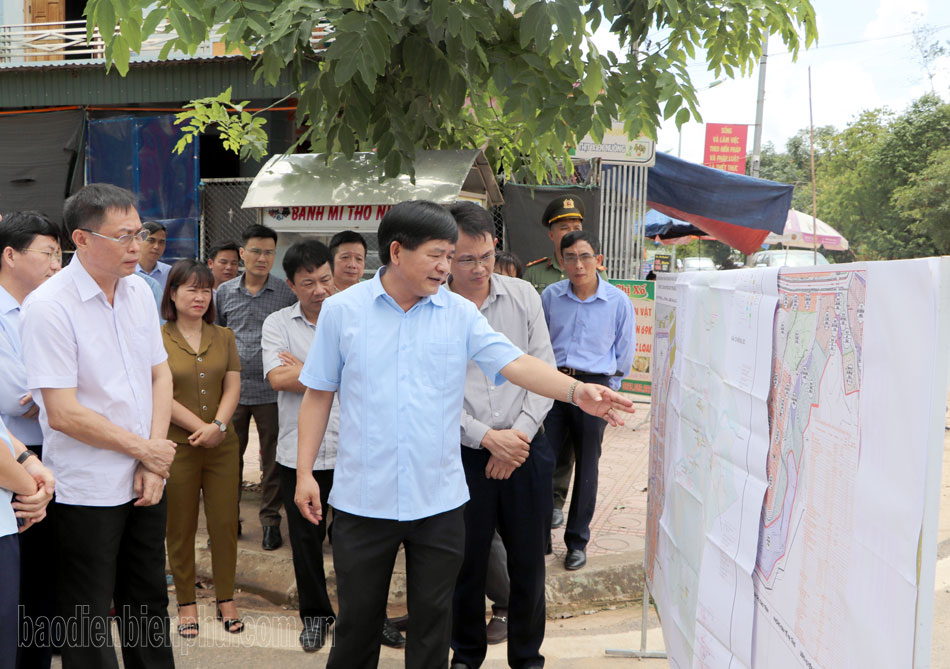
Over the years, the urbanization rate in the province has developed strongly, and the urban landscape has changed significantly, especially Dien Bien Phu City, which has gradually affirmed its position and role as a driving force and leading urban center for the province's socio -economic development. At the same time, the urban space, architecture, and landscape have become increasingly modern and synchronized; the environment has improved in a green, clean, and beautiful direction, and the quality of life for the people has been continuously enhanced.
Over the years, the urban system in the province has gradually improved and expanded, with an increasing urban population. Currently, the province has 7 urban areas, including 1 Type III urban area (Dien Bien Phu City), 1 Type IV urban area (Muong Lay Town), and 5 Type V urban areas (district towns of Muong Ang, Tuan Giao, Tua Chua, Dien Bien Dong, and Muong Cha districts). To date, 100% of urban areas and district centers have general planning or revised general construction planning.
However, urban development still faces many shortcomings. These include uneven urbanization across regions; the urbanization rate failing to meet the set target (reaching 28%), much lower than the national average; development primarily focused on expansion with low and dispersed density, leading to land waste and hindering economic accumulation. The province's cities are currently mostly small and medium-sized; the urban system is unbalanced, lacking linkages, and without clear delineation and sharing of functions within and between regions. Investment in urban development is scattered, lacking coordination, and has not effectively utilized and exploited the resources inherent in the cities themselves.
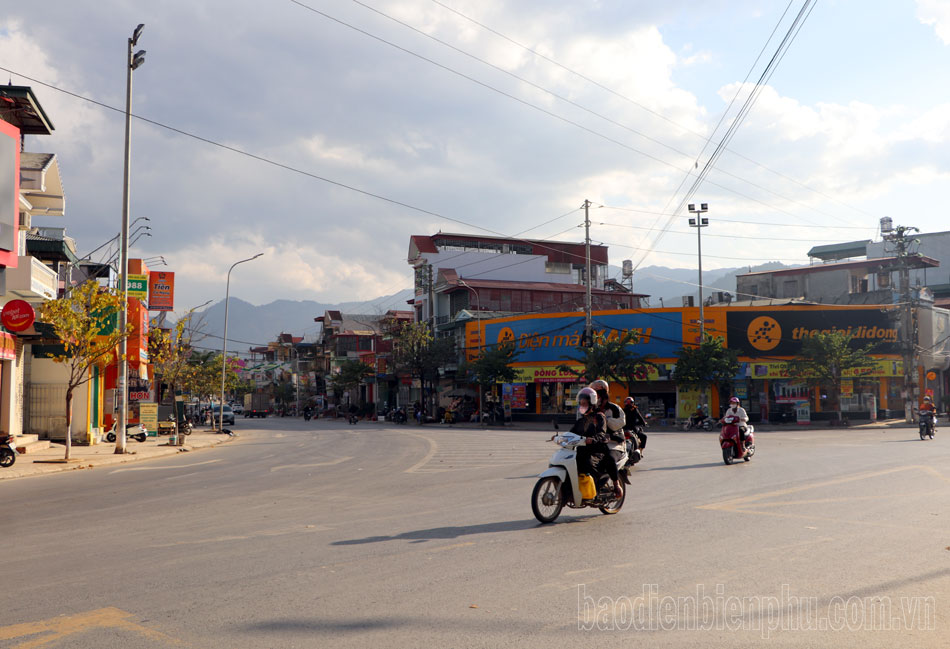
The reasons for these limitations stem from the fact that some localities have not paid enough attention to the position and importance of urban development; some localities have not yet developed urban development programs and urban classification schemes for approval and recognition. In addition, human resources and investment resources for urban development in many localities are still limited... For example, Tủa Chùa town, through practical management and development, still faces limitations: Some areas have detailed plans but lack funding for boundary markers; many urban areas still lack urban planning, design, and architectural management regulations… leading to difficulties in managing order and granting construction permits.
According to Mr. Nguyen Thanh Phong, Director of the Department of Construction: Towards the development of a synchronous and modern urban area, the provincial planning identifies that by 2030, the province's urban system will have 11 urban areas, including 1 type II urban area, 2 type IV urban areas, and 8 type V urban areas, with an urbanization rate of over 32%. Specifically, Dien Bien Phu City will be developed into a green, clean, and civilized urban area (type II); Tuan Giao town and Muong Lay town will be type IV urban areas; Dien Bien Dong, Muong Ang, Muong Cha, and Tua Chua will be type V urban areas; and four new type V urban areas will be formed, including the towns of Thanh Xuong (Dien Bien district), Nam Po (Nam Po district), Muong Nha (Muong Nha district), and Ban Phu urban area (Dien Bien district).
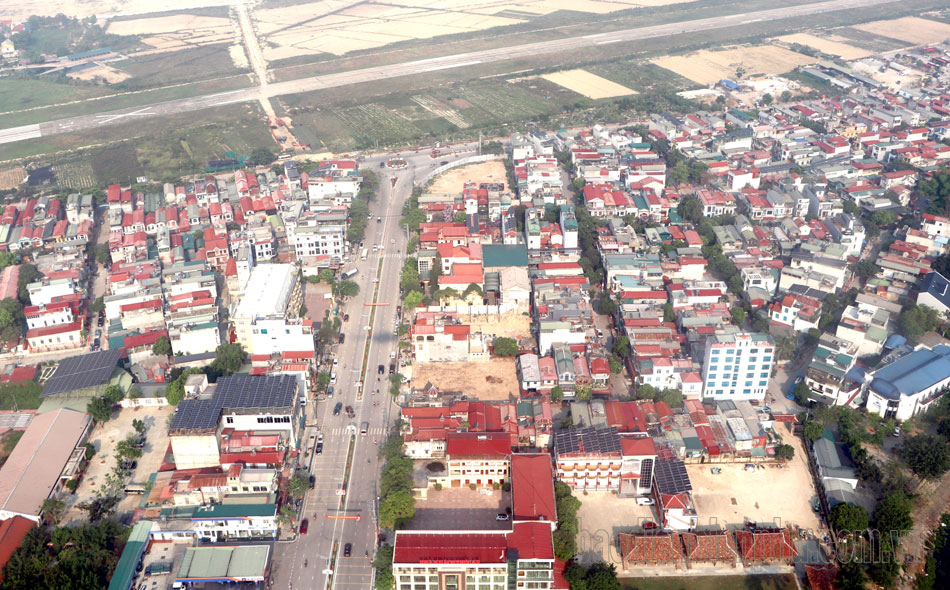
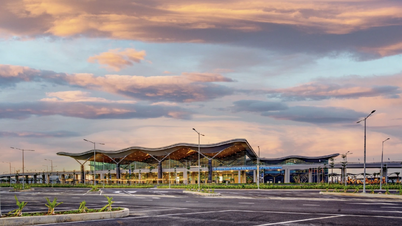
The plan clearly defines the development of the urban system towards the formation of large urban areas, aiming to increase population, services, and employment. Simultaneously, it connects urban development spaces with the socio-economic development spaces of the regions and key development axes. Focus is placed on developing the cities of Dien Bien, Tuan Giao, Muong Ang, and Dien Bien Phu City, linking them to the National Highway 279, the Dien Bien - Son La - Hanoi expressway, and Dien Bien Airport. This is the main and important development axis for the entire region, creating strong and seamless connections between Dien Bien and the Northwest provinces, the northern mountainous provinces, and Laos.
Similarly, provincial planning emphasizes urban development linked to key economic zones. For example, the Tủa Chùa economic zone focuses on urban development linked to agriculture, forestry, processing industries, and tourism. Based on this, Tủa Chùa district aims to achieve 50% of the standards for a Type IV or higher urban area by 2025. Tủa Chùa district focuses on implementing sustainable urban development solutions towards a green, smart, and distinctive urban environment. This includes accelerating infrastructure development, prioritizing the construction and completion of transportation and lighting systems, increasing the percentage of green space, and prioritizing the undergrounding of electricity and telecommunications systems. Urban development is also focused on leveraging the advantages of tourism and agriculture in the area. Furthermore, it aims to attract investment and effectively mobilize and utilize capital for urban development.
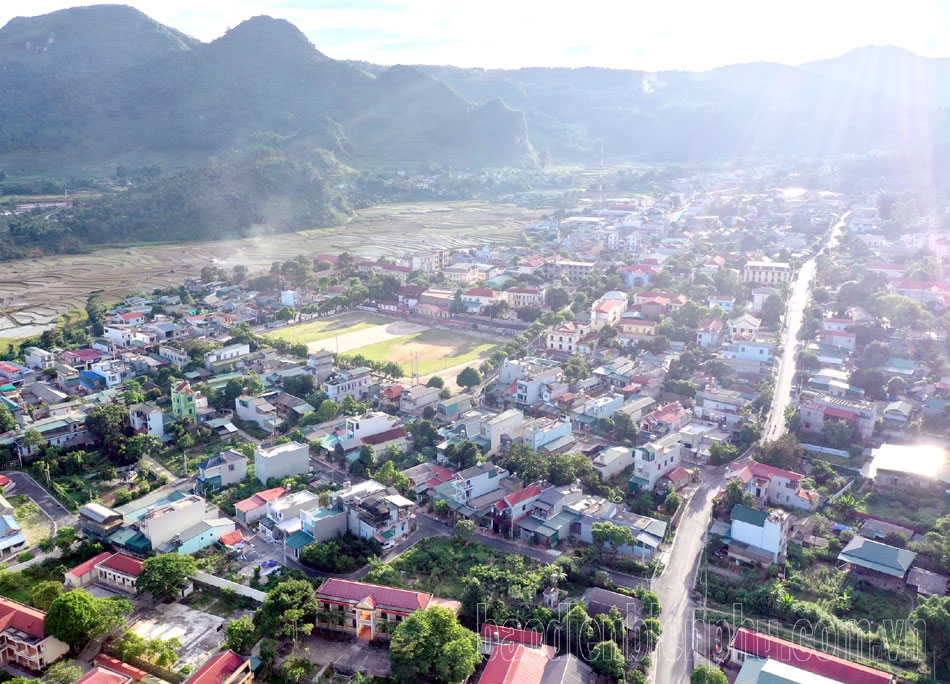
Provincial planning is a crucial legal basis for organizing and implementing synchronous and modern urban development, in line with the national urban system's orientation and the province's overall socio-economic, defense, and security strategic structure. Development should be focused on the formation of large cities, sustainable smart cities, and green cities that adapt to climate change. To achieve this goal, localities should concentrate on developing general plans, adjusting existing plans, urban development programs, and urban classification schemes. They should also promote investment attraction and mobilize all resources to implement priority projects within the urban development program. Investment should be made in upgrading urban infrastructure and improving its quality to meet the needs of population and socio-economic development in urban areas; and enhancing urban management and governance capacity to attract people to live in urban areas.
Source

![[Photo] Tran Cam Tu, Standing Member of the Secretariat of the Central Committee, presides over the first meeting of the Central Steering Committee on the Development of Vietnamese Culture.](https://vphoto.vietnam.vn/thumb/1200x675/vietnam/resource/IMAGE/2026/03/19/1773895004549_ndo-br-bnd-1195-2-jpg.webp)










![[Photo] The General Secretary and the Prime Minister attend the groundbreaking ceremony for multiple-level boarding schools in border areas.](https://vphoto.vietnam.vn/thumb/1200x675/vietnam/resource/IMAGE/2026/03/19/1773888999705_vna-potal-tong-bi-thu-va-thu-tuong-du-le-khoi-cong-dong-tho-dong-loat-cac-truong-noi-tru-lien-cap-bien-gioi-8649904-3885-jpg.webp)

































Comment (0)