The model brings together all the links in the value chain.
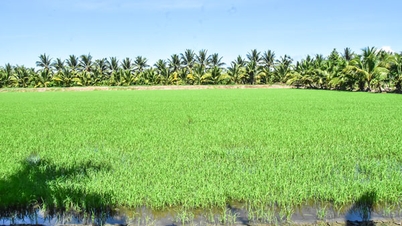
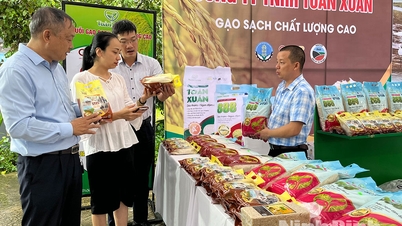
At Toan Thinh Cooperative (Phuong Thinh commune, Dong Thap province), the International Rice Research Institute (IRRI), in collaboration with the Vietnam Rice Industry Association (VIETRISA), the Department of Agriculture and Environment, and local authorities, recently held a ceremony to launch the "1 Million Hectare Linked Area for High-Quality, Low-Emission Rice Cultivation". This marks the official formation of a "linked area" where stakeholders in the rice value chain participate, commit to, and benefit from a unified production process.
This is a value chain linkage model from production to consumption, contributing to the foundation for realizing the "Sustainable Development of 1 Million Hectares of High-Quality, Low-Emission Rice Specialization Associated with Green Growth in the Mekong Delta by 2030" project. The first production season within the framework of the linkage will be implemented right at Toan Thinh Cooperative.
The model encompasses all links in the value chain, from cooperatives, farmers, agricultural input suppliers, mechanization enterprises, purchasing enterprises, to the system for evaluating and certifying low-emission Vietnamese Green rice.
The technical basis of the model is mechanized sowing technology with a border-effect system combined with fertilizer embedding. According to the process, seeds are buried at a depth of 1-2mm, while fertilizer is applied to the soil layer at 3-4cm. The arrangement of wide and narrow rows alternates, allowing for better aeration in the rice field, increasing photosynthesis and reducing pest and disease pressure.
This method not only promotes healthier rice plant growth but also significantly reduces the amount of seeds sown compared to traditional broadcast sowing. Fertilizer use is improved, rice plants are stronger, less prone to lodging, and post-harvest losses are reduced. These technical improvements also contribute to reducing greenhouse gas emissions during rice cultivation.
Associate Professor Dr. Nguyen Van Hung, Head of the Post-Harvest Mechanization Department of IRRI, believes that row sowing combined with burying fertilizer is not only a technical solution but also a change in mindset regarding input utilization. By combining precise sowing, burying fertilizer at the optimal depth, efficient water management, fertilization in specific areas, integrated pest management, and straw treatment in a circular agricultural manner, it is possible to reduce input costs, decrease emissions, increase productivity, profits, and added value from straw.
It's a win-win situation.
In this model, the pneumatic seed planter with fertilizer embedding is designed to meet the project's requirements. The machine can adjust the seed quantity to suit different production conditions, thereby reducing the amount of seed sown. The sowing method using the border effect, with wide and narrow rows, allows rice plants to receive more sunlight, increasing photosynthesis, promoting healthy growth, stronger stems, and reduced lodging. A more open rice field environment also reduces pests and diseases, thus decreasing the need for pesticides.
Another advantage is that during the sowing process, the machine simultaneously infuses fertilizer directly into the root zone, minimizing fertilizer loss and improving nutrient utilization efficiency. Fertilizer is applied to the soil at the beginning of the season, ensuring a constant supply of nutrients for the rice plants, especially during the tillering stage, promoting strong growth from the very start.
Mechanizing the sowing process also helps to increase labor productivity many times over compared to manual methods. Machines simultaneously perform both sowing and fertilization with an amount of fertilizer equivalent to the first two applications in the conventional farming process, thereby significantly reducing production costs.
Associate Professor Dr. Nguyen Van Hung stated that, based on pilot models implemented by IRRI in collaboration with the Ministry of Agriculture and Environment, many businesses and cooperatives have recognized the effectiveness and have responded by allocating resources to participate in building linked production areas. Businesses directly partnering with cooperatives, bringing technology directly to the fields, and supporting farmers throughout the production process will contribute to expanding the model in a substantive way, avoiding development driven by trends but lacking long-term effectiveness. From the producers' perspective, participating in the model means farmers are no longer alone but receive comprehensive support from technology, materials, machinery, to product distribution, creating opportunities to increase income and improve their living standards.



In the context of export markets increasingly demanding traceability, green development, and emission reduction, the formation of large-scale integrated farming areas is considered a suitable direction for Vietnam's rice industry; combining farming techniques with consuming businesses, linked to low-emission standards, so that rice meets the requirements of international markets.
Source: https://baophapluat.vn/mo-hinh-lien-ket-canh-tac-lua-chat-luong-cao-phat-thai-thap.html