Initial effectiveness
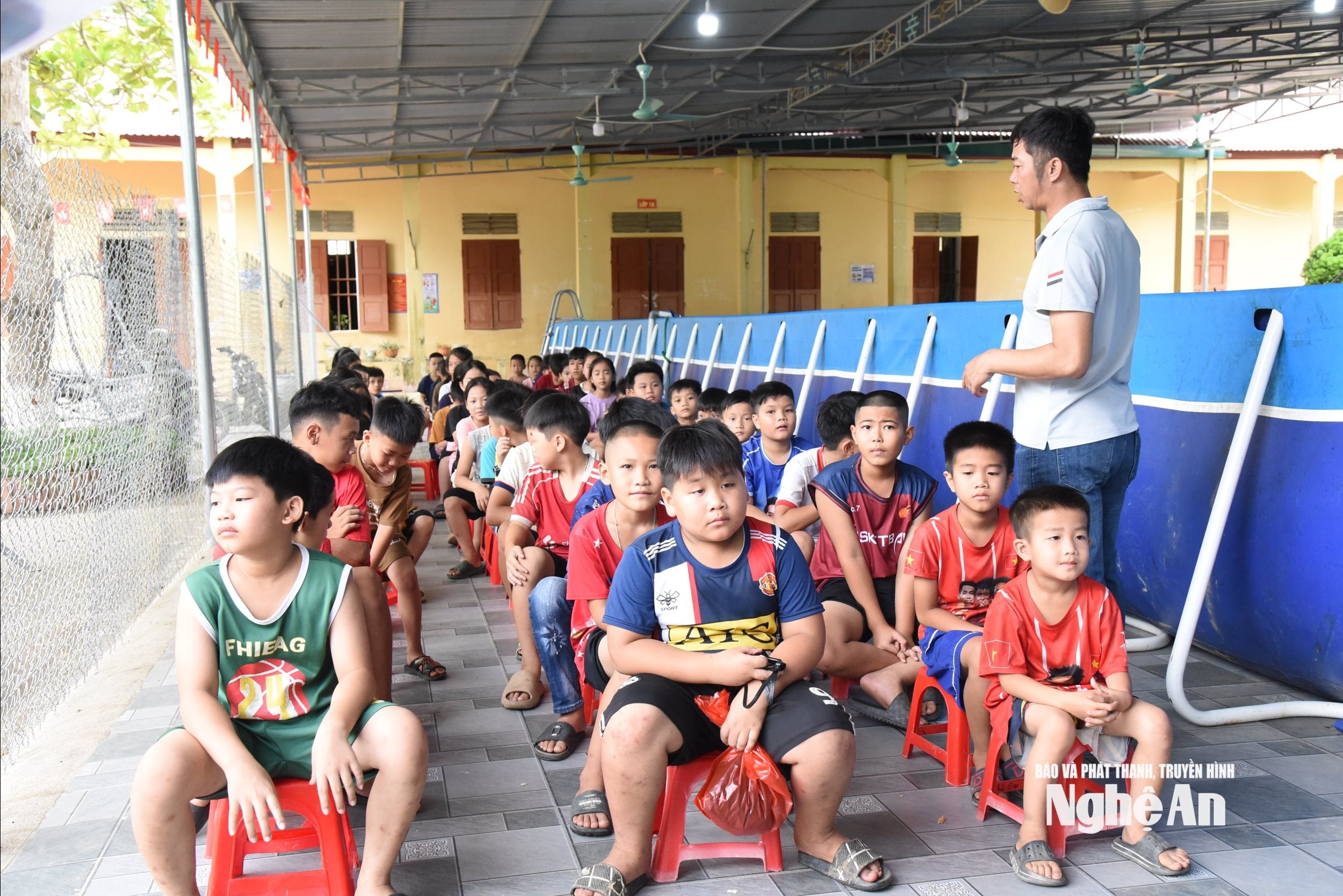
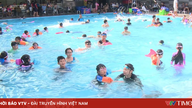
Thanh Binh Tho commune inaugurates its 2026 summer swimming classes. Photo: HT
Amidst the scorching early summer heat, the mobile swimming pool at Thanh Son Primary School in Thanh Binh Tho commune has become a familiar destination for many students in the area. For many of the children here, this is the first time they have learned to swim properly right in their local community. Just a few years ago, learning to swim was still a difficult thing for many students here.
Wanting their children to be equipped with water safety skills, many parents have to take them to the district center to attend commercial swimming classes. The long distance, travel costs, and time spent commuting make it difficult for many families, despite recognizing the importance of learning to swim, to consistently enroll their children in classes.
Therefore, when localities receive investment support for swimming pools from Resolution No. 09/2023/NQ-HĐND, the change is not only reflected in the appearance of an additional sports facility in the schoolyard. What people feel more strongly is that the opportunity to learn swimming skills has been brought closer to children right where they live.
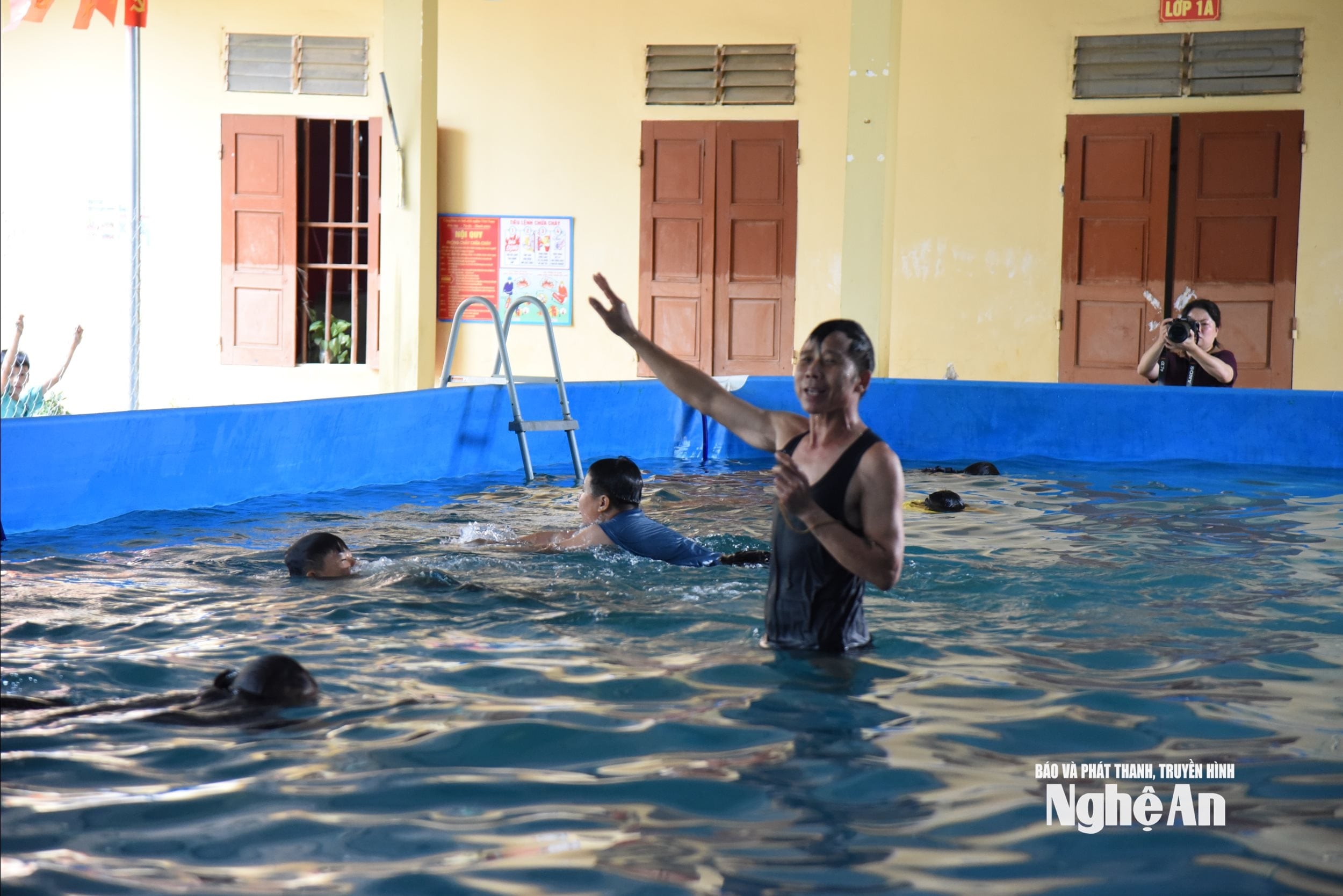
This swimming pool was funded by Resolution No. 09/2023/NQ-HĐND of the Provincial People's Council with a budget of 100 million VND. Photo: TP
Ms. Phan Thi Thao, from Thanh Binh Tho commune, has two children in grades 4 and 6. She said that in previous years, her family had to take the children to swimming lessons far away, despite the hardship. “The risk of drowning is now a serious concern, so no matter how difficult it is, we have to try our best to send our children to swimming lessons. Since the commune has a swimming pool, parents are very happy because the children can learn right near home, which is much more convenient,” she shared.
That joy is also what the local authorities hoped for when they started implementing the policy. According to Mr. Le Quang Thanh, Deputy Head of the Culture and Social Affairs Department of Thanh Binh Tho commune, this area has many ponds, lakes, and streams, and is frequently affected by flooding, so the risk of drowning for children is always present.
Having a swimming pool in the local area not only provides more recreational space for students during the summer but, more importantly, equips them with essential water safety skills, which are crucial in high-risk areas like Thanh Binh Tho. While previously, learning to swim depended primarily on family finances or access to swimming facilities, this opportunity is now expanding to more children, especially those in rural and mountainous areas.

The policy of supporting swimming pools in localities is very practical in enhancing skills for students and children. Photo: HT
According to Mr. Le Van Lam, a former official of the Culture and Information Department of the former Anh Son district, when implementing Resolution 09 of the Provincial People's Council, eight communes in the district registered to install swimming pools. Among them, some communes still maintain operation today, such as Tho Thanh (now Thanh Binh Tho), Tuong Son (now Vinh Tuong commune), etc. Mr. Lam affirmed that the policy of supporting swimming pools for localities to enhance skills for students and children is very practical and has been positively received by the people. It is regrettable that other communes at that time, for various reasons, were unable to implement the program.
In the former Ky Son district, where the terrain is fragmented by high mountains and streams, and economic conditions are still challenging, organizing systematic swimming lessons for students has been a long-standing desire of the local education and training sector, but it could not be widely implemented due to a lack of facilities. Therefore, when the resolution was issued, the district proactively provided matching funds to install 16 swimming pools in schools throughout the area.
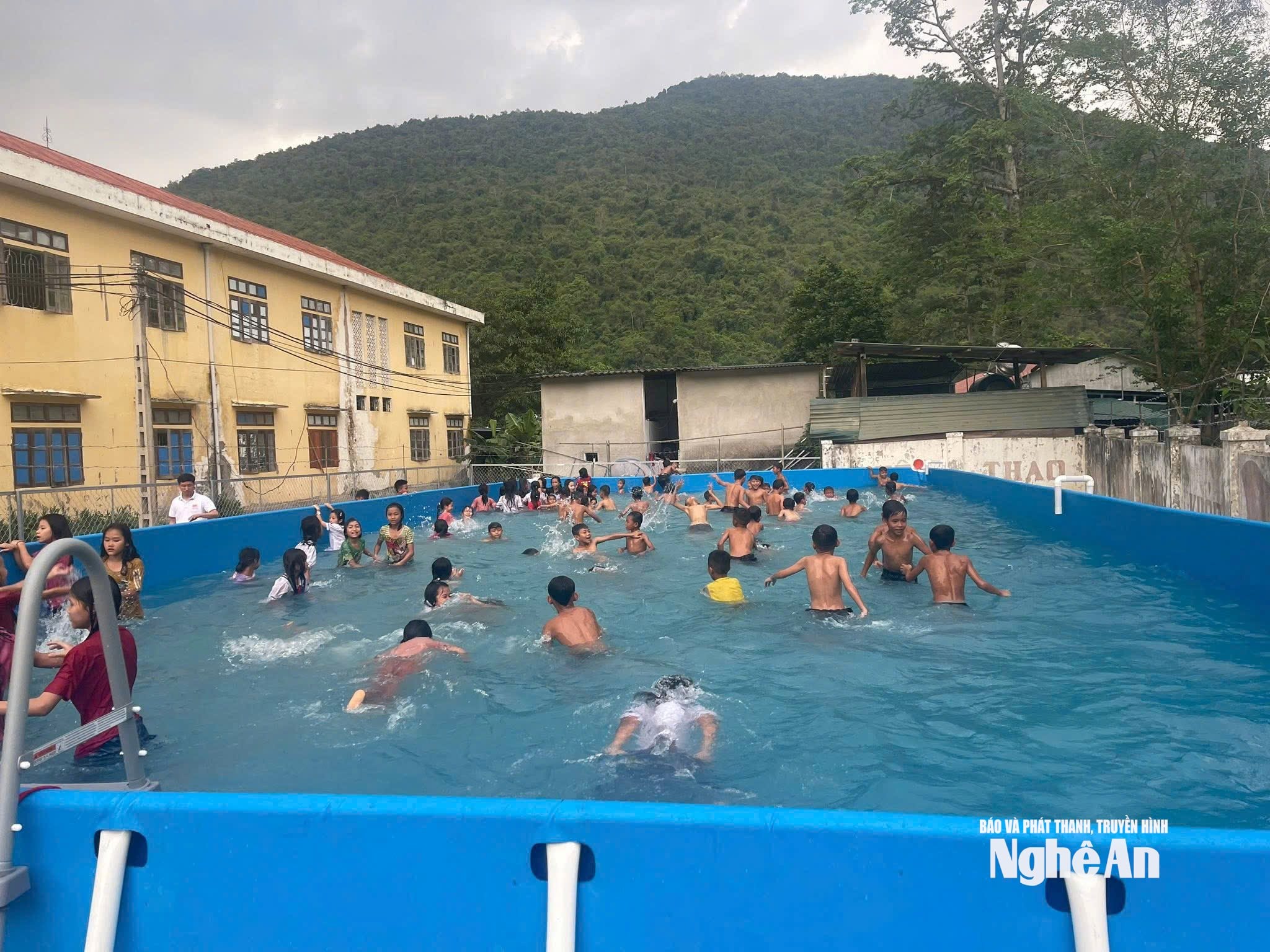
A portable swimming pool at Chieu Luu 1 Ethnic Boarding School. Photo: HT
According to Mr. Pham Viet Phuc, former Head of the Education and Training Department of Ky Son district, the selection of installation locations prioritized schools with a large number of students, ensuring long-term and effective operation. After more than two years of use, many swimming pools have performed well, becoming familiar places for students to learn and train during the summer.
You may also like

U11 Viet Hung Thanh Hoa officially secures a spot in the final round.U11 Viet Hung Thanh Hoa drew 2-2 against U11 Gia Lai in the highlight match of the Quang Ngai group stage of the 2026 Nestlé MILO National U11 Football Tournament, held on the afternoon of June 18th. This result, along with the defeat of U11 TTTT Lam Dong against U11 Quang Ngai, has officially secured Thanh Hoa's place in the final round with one match remaining. 
UFM Hue Campus: Expanding opportunities for high-quality education in Central Vietnam.HNN - The establishment of the Hue branch of the University of Finance and Marketing (UFM) not only opens up more opportunities for students in the Central region to access high-quality higher education but also contributes to supplementing the local high-quality workforce. Regarding the development direction of the new branch, our reporter had an interview with Assoc. Prof. Dr. Pham Tien Dat, Rector of the UFM Hue branch, about the strategic goals, opportunities, challenges, and expectations for the future. Among them, Chiêu Lưu 1 Ethnic Boarding Primary School is a prime example. With over 400 students, including more than 120 boarding students, the swimming pool is not only a place to teach swimming skills but has also become an integral part of the school's daily life. According to Mr. Đào Công Quang, the school's principal, from the very first year of operation, all boarding students have learned to swim. Many students only needed a few days to get used to the water before they could perform basic skills.
For children growing up in mountainous areas with numerous streams and frequently facing storms, flash floods, and landslides, knowing how to swim means far more than just a sport. It's a skill that helps them protect themselves from potential risks in daily life. From that perspective, the swimming pools invested in under this resolution are not simply facilities for physical activity, but also a solution for preventing drowning accidents early on, at the grassroots level.
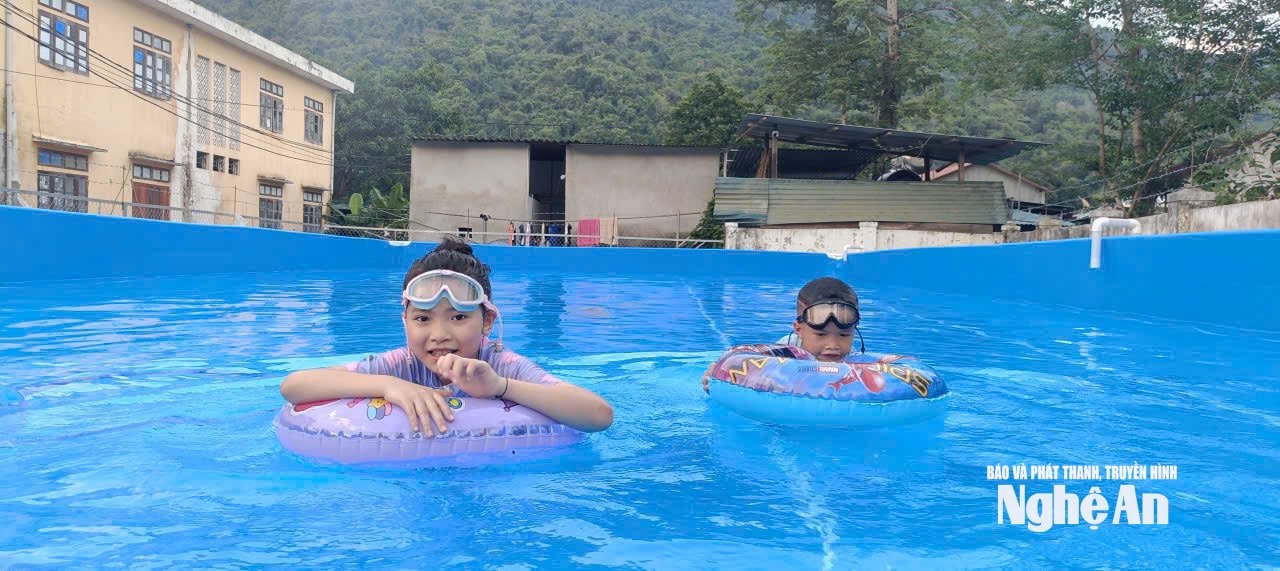
Learning to swim helps children protect themselves from potential risks in daily life. Photo: TP
Resolution 09 sets targets for 2025
- 50% of children aged 9-16 know how to swim and have water safety skills.
- 100% of districts, cities, and towns have implemented the models "All children in the commune know how to swim" and "All students in the school know how to swim".
- Reduce child deaths due to drowning by 5-10%.
- Providing support of up to 100 million VND per mobile swimming pool for mountainous communes and areas inhabited by ethnic minorities.
- Provide support of up to 20 million VND/commune/year to organize swimming lessons for poor and near-poor children.
Bottlenecks arising from practice

However, operating swimming pools and teaching children to swim presents many challenges. Photo: TP
However, behind the positive results at the grassroots level, the implementation of the resolution has also revealed difficulties and obstacles that have prevented the goal of universal swimming for children from spreading evenly throughout the province. According to Mr. Vu Van Nam, Deputy Head of the Sports Management Department, Nghe An Department of Culture, Sports and Tourism, Resolution No. 09 is considered a correct policy, creating an important impetus for the movement of teaching and learning swimming at the grassroots level. However, the actual implementation results have not met expectations, as in 2024, out of 99 units that received funding from the Provincial People's Committee, only over 60 units invested in installing swimming pools; in 2025, this number further decreased to 49 units.
“Besides the initial results, the most difficult challenge remains the ability of local authorities to meet the resource requirements. In addition to matching funds, localities must also proactively secure land, water supply and drainage systems, and other supporting facilities to ensure the swimming pool can operate effectively. Mobilizing social resources to maintain operations after investment is also not easy, especially in areas facing many difficulties.”
Mr. Vu Van Nam, Deputy Head of the Sports Management Department, Nghe An Department of Culture, Sports and Tourism.
Furthermore, the implementation of the two-tiered government model in 2025 has had a certain impact on the procurement and installation of swimming pools. Because the funding is allocated through the district level before being transferred to the communes that register for implementation, disbursement in some areas has been delayed, causing delays. As a result, some localities, despite needing and being eligible for the policy, have been unable to implement the project within the planned timeframe.
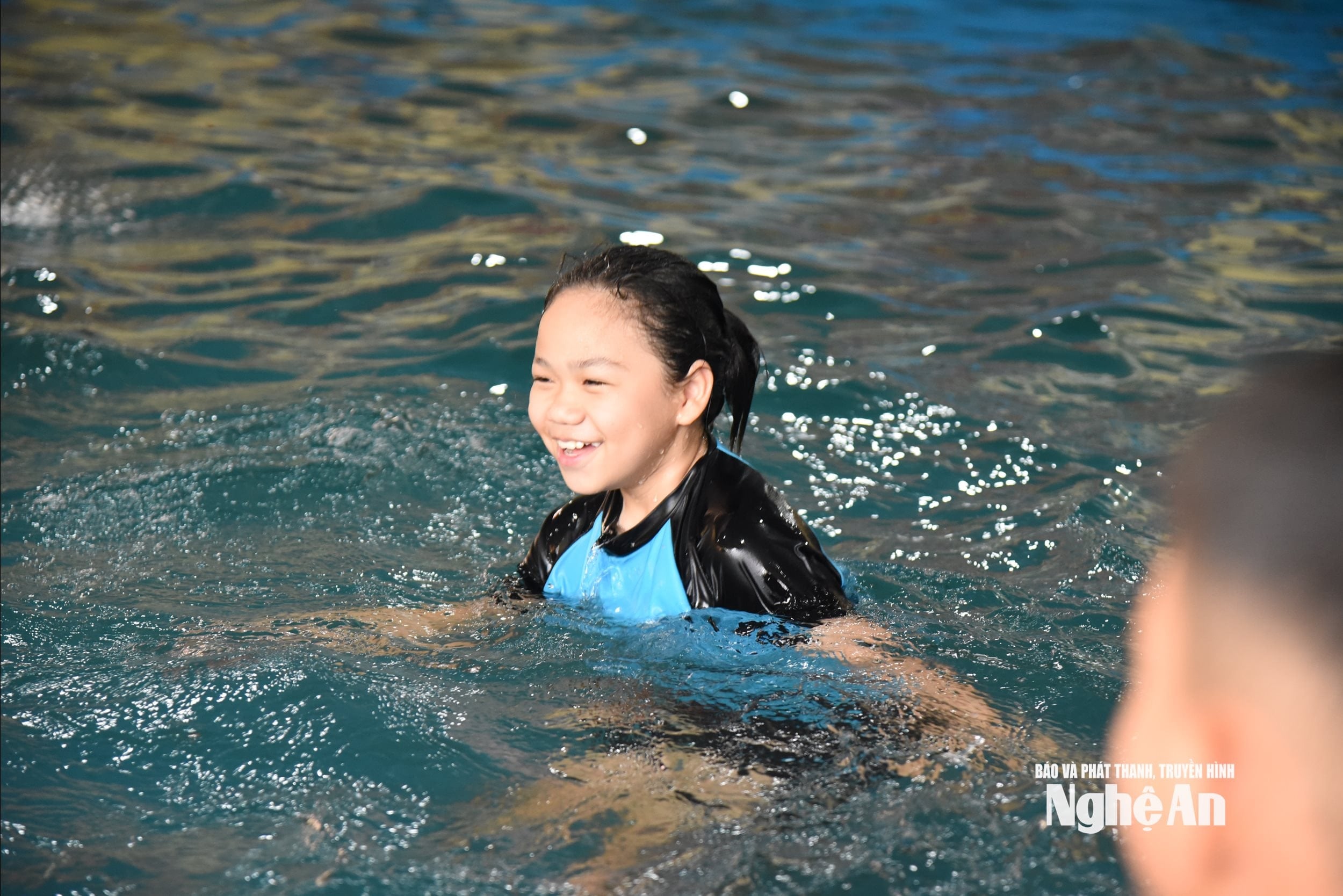
In addition to matching funds, local authorities must also proactively secure land, water supply and drainage systems, and other supporting facilities to ensure the swimming pool can operate effectively. Photo: HT
These difficulties arose not only during the investment phase but also persisted throughout the operation. In the former Ky Son district, after the swimming pools were put into use, many schools began to face practical challenges. In some highland communes, access to clean water was already scarce, especially during the hot season. Schools had to utilize water from streams or other natural sources to operate the pools, while also regularly treating sediment and disinfecting them to ensure student safety.
According to teacher Dao Cong Quang, the amount of water needed to operate a swimming pool is quite large, resulting in significant costs for electricity, water, and treatment chemicals. Meanwhile, current support mainly focuses on initial investment. This forces schools, especially in mountainous areas, to balance their own budgets to maintain regular operations. Therefore, although the school very much wants to maintain the swimming pool's operation, it needs more support in terms of policy, coordination with the government, and flexible utilization of resources.

Many swimming instructors at local facilities say that in order to maintain and expand swimming classes in the future, they urgently need support from policies, especially regarding operating costs and teacher training. (Photo: TP)

Vietnam encourages US businesses to expand investment in high technology.On the morning of June 26th, at the Government Headquarters, Deputy Prime Minister Ho Quoc Dung received Mr. Jeff Place, Supply Chain Director of Coherent Group (USA). During the meeting, the Deputy Prime Minister affirmed that Vietnam encourages US businesses to expand investment, especially in high-tech, innovation, and semiconductor industries. In Thanh Binh Tho commune, another problem is emerging. With the opening of the swimming pool and the increasing demand for swimming lessons among students, pressure on teaching staff is starting to appear. According to Ms. Le Thi Quy, Deputy Principal of Thanh Binh Tho Primary School, the number of students registering for swimming lessons each summer always exceeds the capacity of the existing teaching staff. Meanwhile, organizing swimming lessons requires not only professionally trained teachers but also support, supervision, and rescue personnel to ensure the absolute safety of the students.
According to Mr. Hoang Van Hai, who directly teaches swimming classes at Thanh Binh Tho, each course lasts 15-20 sessions with about 80 students, divided into several different classes. Although students contribute a portion of the revenue, this is not enough to cover the costs of repairs, cleaning, water filtration, and water treatment chemicals.
“The actual wages aren't much, while teachers have to spend almost the whole day at the swimming pool instructing the children. However, we still try our best because we want more students to be equipped with swimming skills and learn how to prevent drowning,” Mr. Hai shared. According to Mr. Hai, to maintain and expand swimming classes in the future, support from policies is essential, especially regarding operating costs and teacher training.
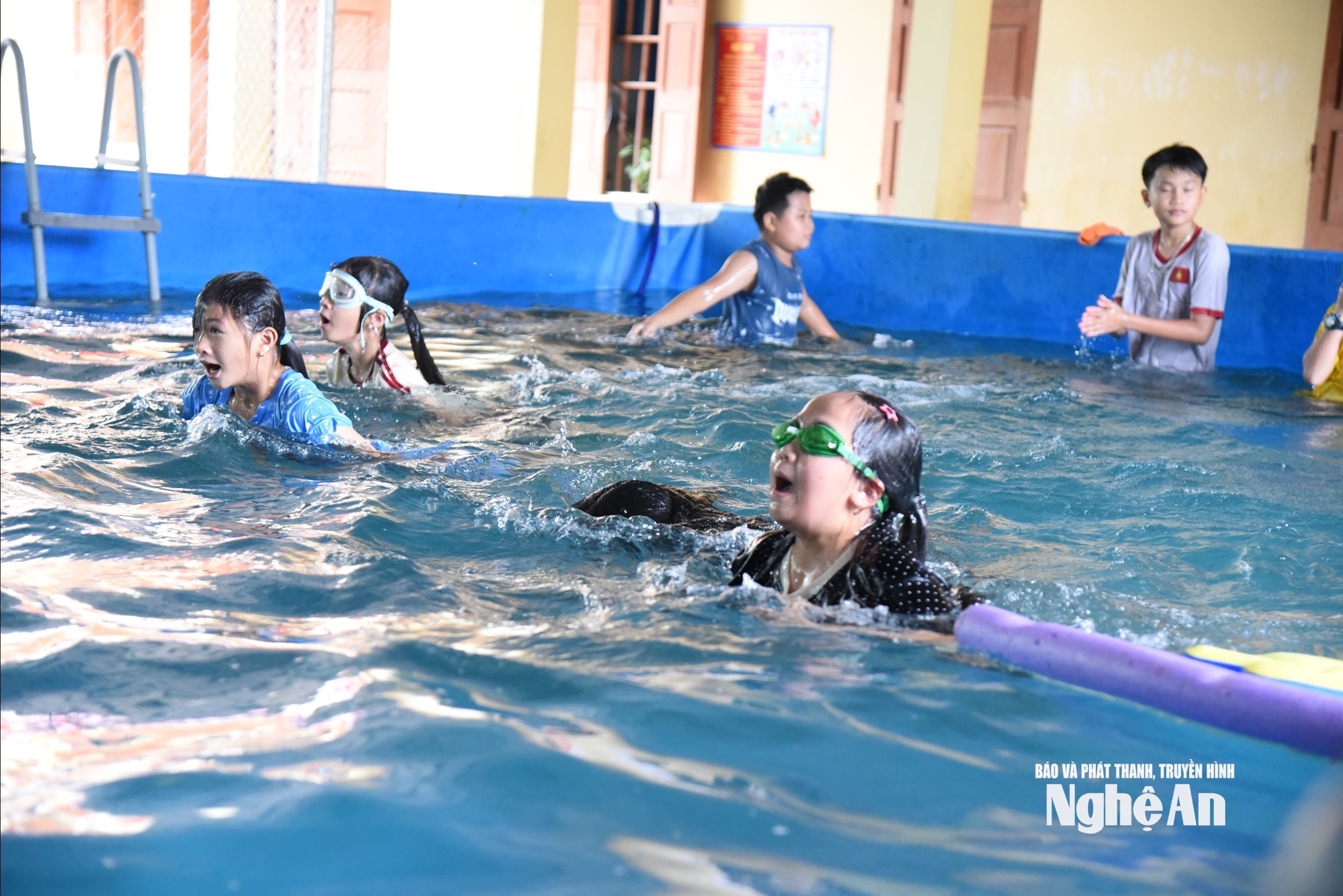
Policies need to be improved to ensure the goal of reducing child drowning incidents is pursued in a more profound and sustainable way. (Photo: TP)
After more than two years of implementation, Resolution No. 09/2023/NQ-HĐND has shown practical effectiveness in expanding opportunities for children to learn to swim and equip them with water safety skills. Based on these results and the difficulties arising from practice, further research to refine the policy will be crucial for achieving the goal of reducing child drowning in a more profound and sustainable way.
Source: https://baonghean.vn/mo-rong-co-hoi-hoc-boi-cho-tre-10340944.html