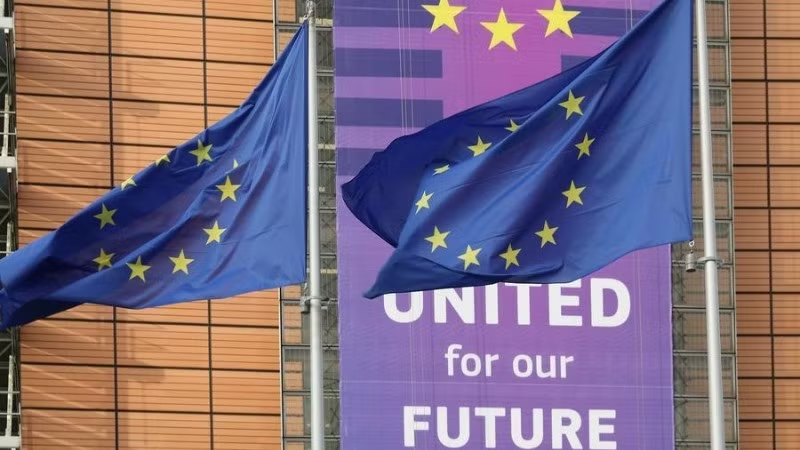
EU expansion is a strategy aimed at strengthening the bloc's power and influence amidst the current complex geopolitical situation, but this journey will not be smooth, with disparities in development levels, differing viewpoints, and conflicting interests being the core reasons.
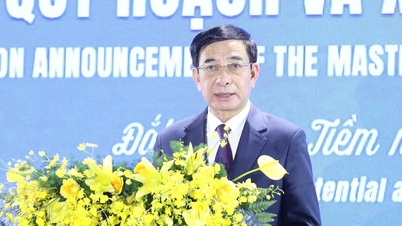
The EU-Western Balkans summit recently held in Montenegro discussed accelerating the process of Western Balkan countries joining the bloc.
The six candidate countries – Albania, Bosnia and Herzegovina, Kosovo, North Macedonia, Serbia, and Montenegro – have all long pursued the goal of joining the EU but are currently in the process of finalizing the union's standards.
Montenegro is considered to have made significant progress on its integration path. At the conference, Germany and France proposed an initiative to simplify the EU accession negotiations for Western Balkan countries as well as Moldova.
Western media outlets have likened the EU's admission of new members to "opening a challenging Pandora's box."
Experts have long warned about the difficulties and potential risks involved in realizing the dream of EU expansion.
The reality is that the more members a bloc has, the more difficult it becomes to find common ground and action within the bloc, due to differences in viewpoints and interests among the countries.
Increasing the number of members could also put more pressure on the EU budget, given the uneven economic development of member states.
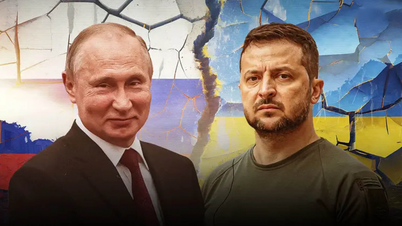
This has deepened disagreements over financial contributions to the EU budget. One example of this difficulty is the situation in Ukraine.

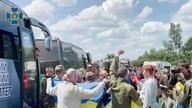

Ukraine, despite pursuing EU membership for many years and receiving strong political support from many EU countries, is still struggling to implement reforms, combat corruption, and improve economic governance in order to meet the EU accession requirements.
The Blue Flag Alliance also faces considerable pressure in its move toward admitting a country with enormous reconstruction needs like Ukraine, especially given that the conflict in Ukraine shows no signs of ending.
There have been internal disagreements within the EU regarding the manner and timing of Kyiv's accession. Opposition from Hungary has been a significant obstacle to realizing the dream of bringing Ukraine into the EU "common home."
Recently, Hungary signaled its intention to relinquish its long-standing veto power over Ukraine, marking a significant step forward for Kyiv in its EU accession process.
However, despite facing many challenges, it is undeniable that EU expansion will make the bloc a more influential and stronger partner on the international stage.
European Council President Antonio Costa affirmed that admitting new members is not only a political goal but also a strategic interest of Europe in the current context. He stated that this is an investment in the long-term peace, stability, and security of the entire continent.
Experts believe that the war in Ukraine has completely changed the way the EU views its expansion policy.
Ukraine's granting of candidate status in June 2022, just months after the conflict in Ukraine erupted, reflected the geopolitical urgency of EU enlargement.
The EU has also just approved a decision to launch negotiations on eliminating mobile roaming charges between the EU and Western Balkan countries.
This offers a practical benefit to people in the Western Balkans because they can make calls, send text messages, and use mobile data while traveling within EU countries without paying extra roaming charges.



However, the path to EU accession still presents many challenges, forcing candidate countries to strive to promote reforms, including institutional reforms, and gradually synchronize their foreign policies with the EU's overall direction.
European Council President Antonio Costa noted that accelerating the process of admitting new members does not mean lowering the professional standards of the EU accession process.
Source: https://nhandan.vn/mo-rong-eu-hanh-trinh-nhieu-thach-thuc-post967698.html

![[Photo] "Hanoi Lotus Festival" honors the lotus flower that has been associated with Vietnam for thousands of years.](https://vphoto.vietnam.vn/thumb/1200x675/vietnam/resource/IMAGE/2026/06/27/1782516943048_sen-ha-noi-2026-minh-duy-1-jpg.webp)





















![[Infographic] 16 fireworks display locations to celebrate the 50th anniversary of Ho Chi Minh City being honored with the name of President Ho Chi Minh](https://vphoto.vietnam.vn/thumb/402x226/vietnam/resource/IMAGE/2026/06/27/1782539591308_man-ban-phao-hoa-ruc-ro-dem-khai-mac-638jpg-17242995540161175940469.jpeg)