 |
In 2018, Cristiano Ronaldo and Luka Modric were almost at the same peak. They had just won the Champions League for the third consecutive time with Real Madrid. Modric then led Croatia to the World Cup final, while Ronaldo finished the club season with 44 goals. The race for the Ballon d'Or that year became a story between the two former teammates, before Modric won.
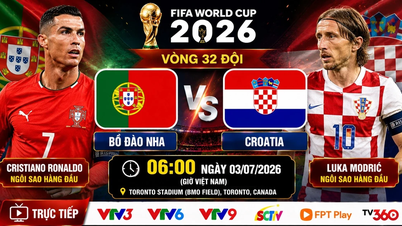
Eight years later, they meet again in the Round of 32 of the 2026 World Cup, in the match between Croatia and Portugal. Both are still leaders, still icons of their respective national teams, still carrying on their shoulders the immense legacy of a golden generation. But that common ground is no longer enough to mask the vast differences: Modric is defying age in an incredible way, while Ronaldo is beginning to be pulled back by time itself.
Their combined age is 81. For one of them, this is likely their last appearance on the biggest stage in world football. But while Modric enters the match as a maestro still in top form, Ronaldo faces a more difficult question: can he save Portugal as he has saved Real Madrid , Manchester United, or the national team so many times before?
Modric still bends time.
Croatia started the World Cup with a 2-4 defeat against England, but Modric quickly got the team back on track. In the two victories against Panama and Ghana, the 40-year-old midfielder continued to be the central figure in Croatia's operation. He doesn't need to score to be the most important player. At this age, Modric still controls the tempo, initiates attacks, and creates a sense of security for the entire team.
The match against Panama is the clearest example. No player completed more accurate passes than Modric, with 69. He also made the most through passes in the team, creating space in front of the opponent's five-man defense. These aren't just impressive statistics; they're proof that Croatia still relies on his ability to read the game and control the tempo.
That performance was all the more meaningful as it took place in Modric's 200th match for the Croatian national team. After the game, his teammates lifted him into the air in celebration, his shirt bearing the words "Infinite Legacy," signifying an enduring legacy. For Modric, it wasn't just a decorative slogan; it truly reflected his standing in Croatian football.
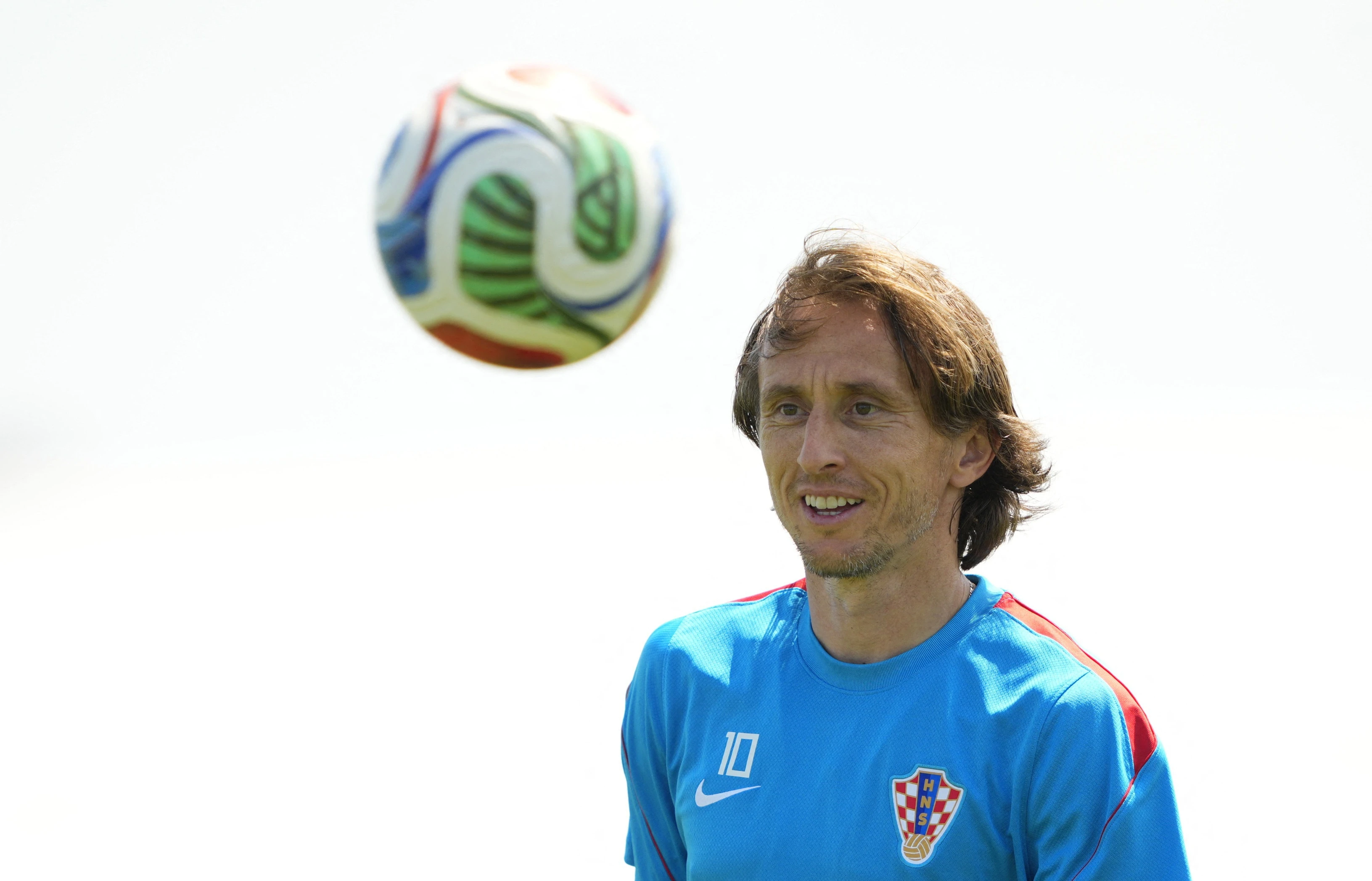 |
Modric remains central to Croatia's style of play at the age of 40. |



Coach Zlatko Dalic understands that value. He said Modric is aware this is his last World Cup and is doing everything he can. That praise is not just politeness. In this World Cup, no Croatian player has averaged more passes per 90 minutes than Modric. Nor has anyone created more chances than him.
What's remarkable is that Modric didn't just win with his head. He also excelled in many physical metrics compared to the 2022 World Cup. Despite being four years older, he covered 770 meters more per game than he did in Qatar, and his average speed was higher. For a 40-year-old midfielder, that's a fact that defies any preconceived notions about age.
Modric may no longer be as explosive as he was during his peak at Real Madrid, but he still knows how to be in the right place at the right time. He doesn't defy time with sheer brute force, but with intelligence, rhythm, and maximum efficiency in every move.
Ronaldo before his own test
Ronaldo used to be the definition of endurance. For many years, age was a secondary factor. But at this World Cup, the numbers are telling a less than pleasant story for the Portuguese captain.
Apart from his two goals against newly promoted Uzbekistan, Ronaldo hasn't made much of an impact. He played every minute of Portugal's campaign but hasn't created any chances. With an average of 19.4 passes per 90 minutes, Ronaldo even ranks lower than goalkeeper Diogo Costa, whose main task is to prevent goals. In 300 minutes, Ronaldo has only completed 65 passes, just 4 fewer than Modric's total in the match against Panama.
The difference in position might explain it partly. Ronaldo is a striker, Modric is a midfielder. But that doesn't explain everything. Because even in physical attributes, where Ronaldo once boasted the most, Modric is still superior. Modric's average speed and distance covered at high speed are both higher than Ronaldo's.
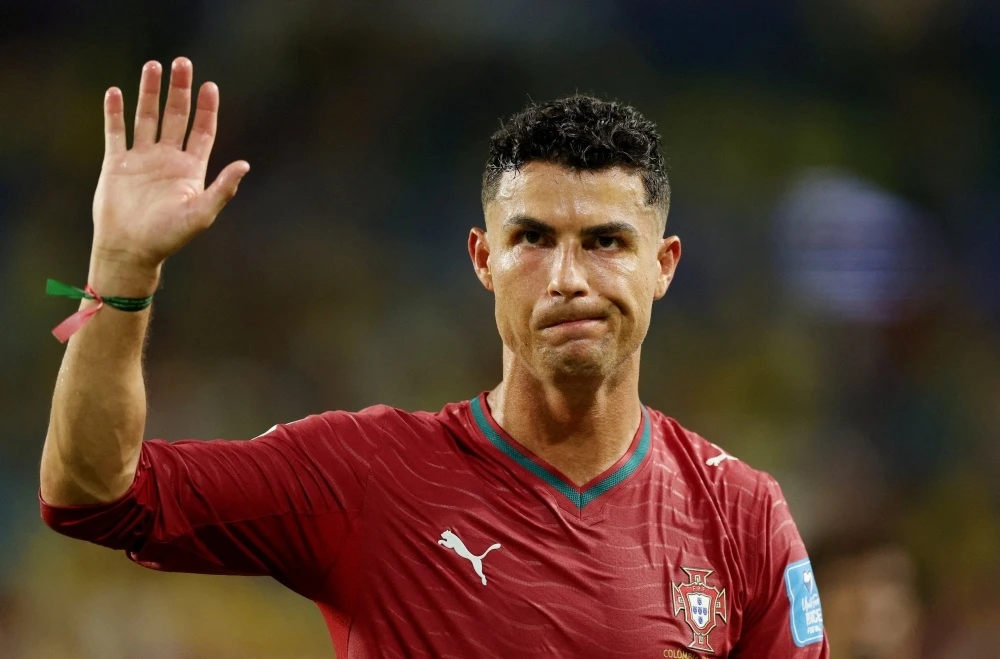 |
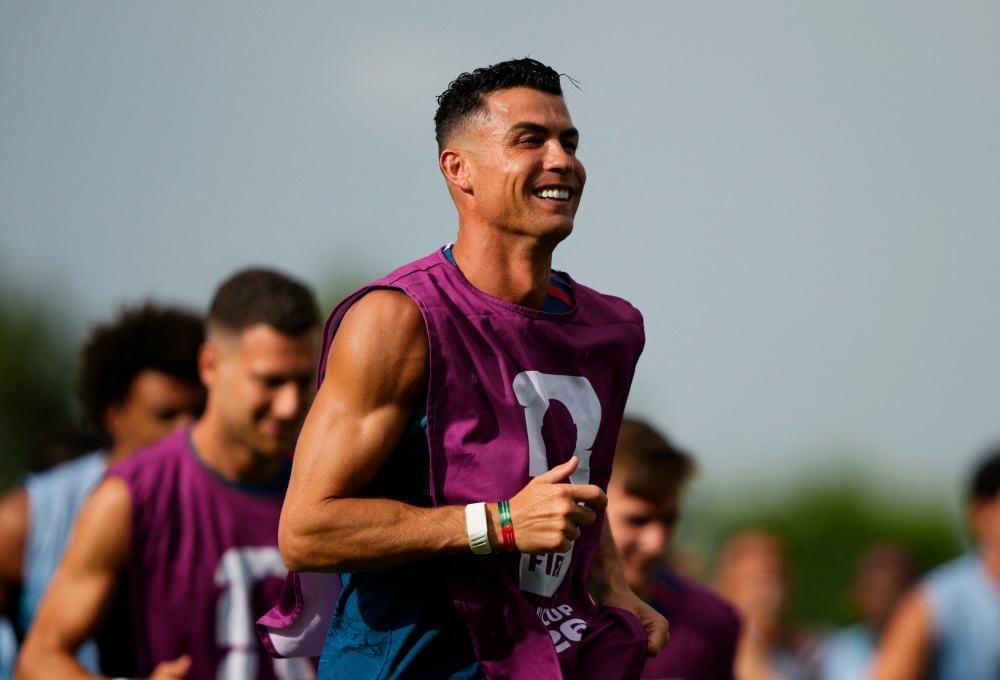
Ronaldo needs to make a bigger impact if he wants to help Portugal overcome Croatia. |
Compared to the 2022 World Cup, Ronaldo's decline is even more apparent. He covers 1.5 km less per match, and his average speed has decreased by almost 1 km/h. At the highest level, that's a significant decline that cannot be ignored. Ronaldo can still score goals, he can still create moments, but his overall influence on Portugal's playing style is being questioned.
This is the biggest paradox ahead of the Croatia-Portugal match. Modric, whose first reaction at Real Madrid was to seek out Ronaldo whenever he received the ball, now enters the game as a player with a more obvious influence. Ronaldo, on the other hand, who was once the answer to every deadlock, now needs to rediscover his role.



Football doesn't always follow the data. Ronaldo understands that better than anyone. His career is built on moments that defy logic, goals that come when everyone has already concluded that his time is over. Therefore, Ronaldo cannot be excluded from any knockout match, especially when Portugal needs an icon to carry the team forward.
But this time, the challenge for him is much tougher. Ronaldo isn't just facing Croatia. He's facing Modric, the memories of Real Madrid, an old friend, and above all, the inevitable effects of time.
One side is still defying age with its superior playing style. The other needs to prove it hasn't been subdued by it.
In Toronto, Ronaldo had to step up. If Portugal wanted to survive, their captain needed a performance worthy of his legacy. Even if the price was forcing Modric to end his final World Cup on disappointment.
Source: https://znews.vn/modric-van-bay-ronaldo-phai-tu-cuu-minh-post1665380.html