

Therefore, upon hearing the news that workers at PouYuen Vietnam Co., Ltd. (PouYuen Company, located in Tan Tao Ward, Binh Tan District, Ho Chi Minh City) had lost their jobs and their wages were affected, vendors at the informal market also expressed considerable anxiety…
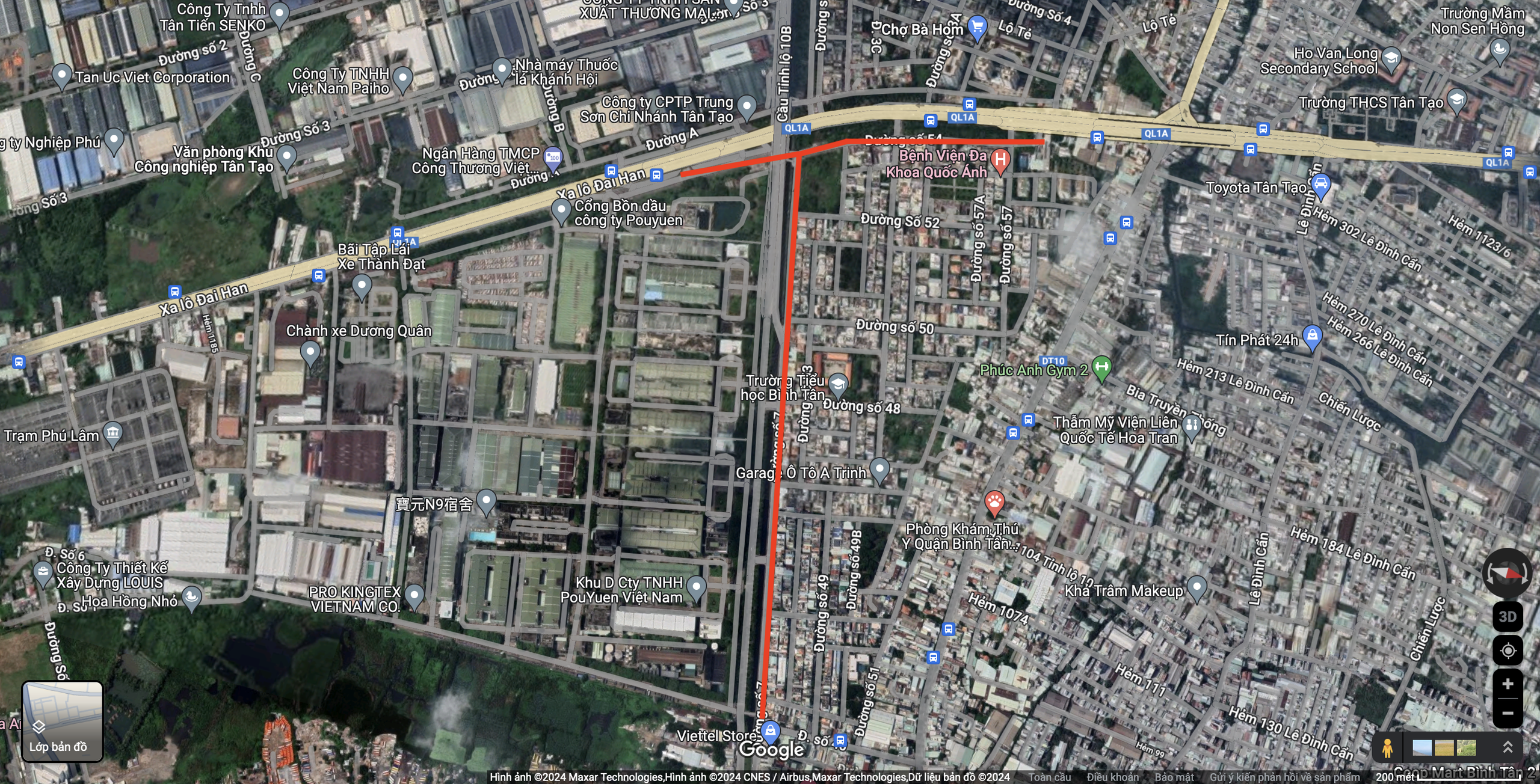
From 4 PM to 4:30 PM, PouYuen workers finish their shifts, and the streets become crowded with people. The afternoon market is bustling. Street vendors and pushcarts surround PouYuen Company. Car horns blare loudly. Workers quickly stop their vehicles to buy food for their evening meal. Meanwhile, vendors spread out tarpaulins and display all kinds of food on the sidewalks and roads. Everyone calls out to buy goods and constantly glances around, ready to "run" when urban order enforcement officers appear.
The road around PouYuen Company is bustling with wholesale vendors.
SCREENSHOT GOOGLE MAPS
Ms. Nguyen Thi Ut (38 years old, from Bac Lieu province) and her husband spread a tarp on the sidewalk along Highway 54, selling a few meager vegetables. Ms. Ut recounted that in the past, she and her husband struggled to make a living farming in their hometown, but they constantly suffered from crop failures. Seeing that the work was unstable, five years ago, after hearing a recommendation from an acquaintance, they moved to Ho Chi Minh City, rented a room near PouYuen Company, and intended to work as factory workers. However, they weren't hired, so they decided to sell their goods at PouYuen market.
"I didn't say anything during the Covid-19 pandemic, but for the past two years, sales have been very difficult due to competition and because workers don't have the money to buy. I've never seen a year like this. Now, you see crowds of workers leaving work, but it's not as bad as it used to be," Ms. Ut said.
"In the past, we couldn't keep up with the demand, but now it's just a few people selling. Sometimes I wonder if there are ever more sellers than buyers here, because there are so many itinerant vendors. Some women who work at home doing garment manufacturing might get a job selling pots and pans, and they'll set up their stalls to sell whatever space they can find," Ms. Ut added.
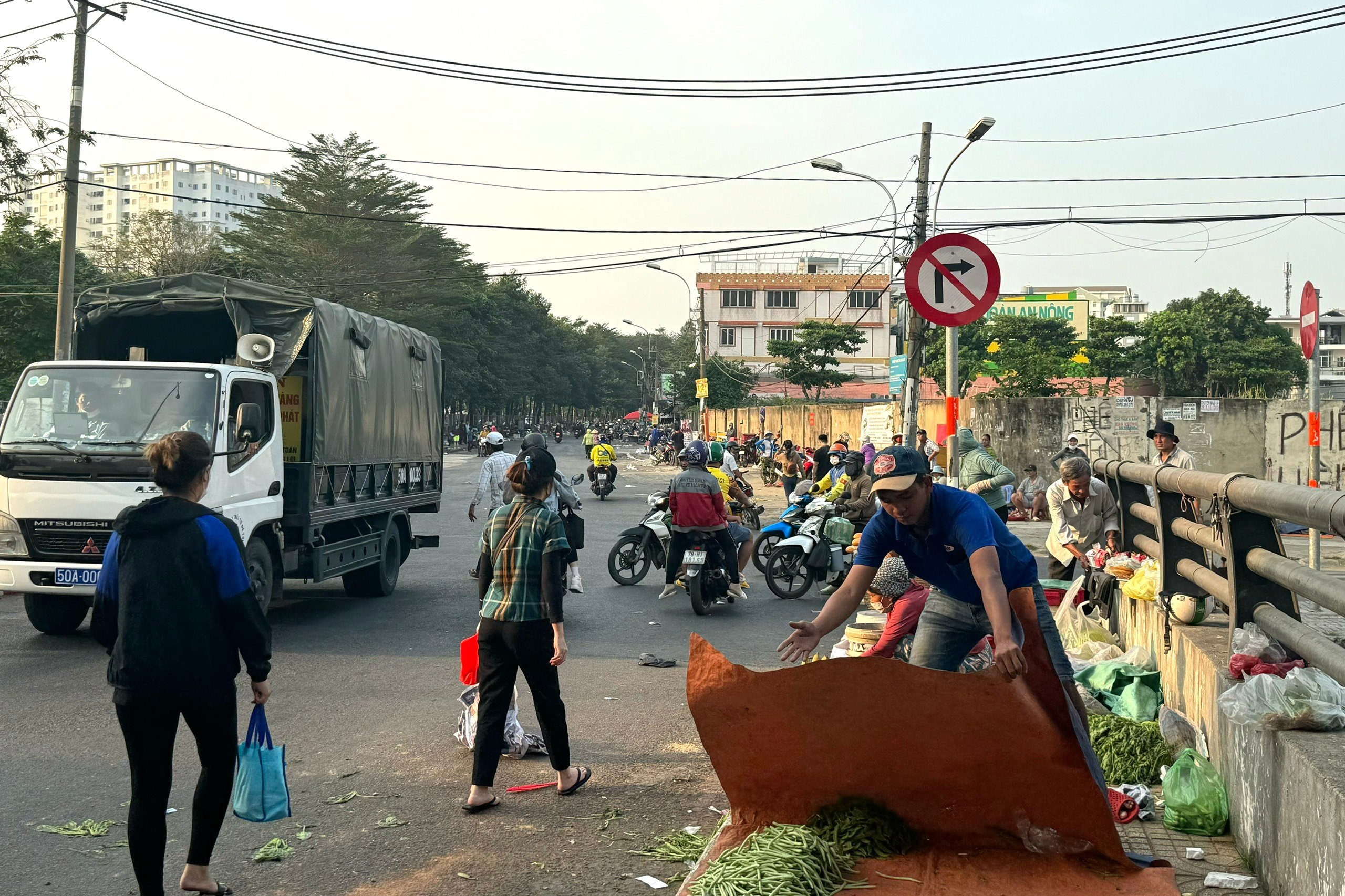
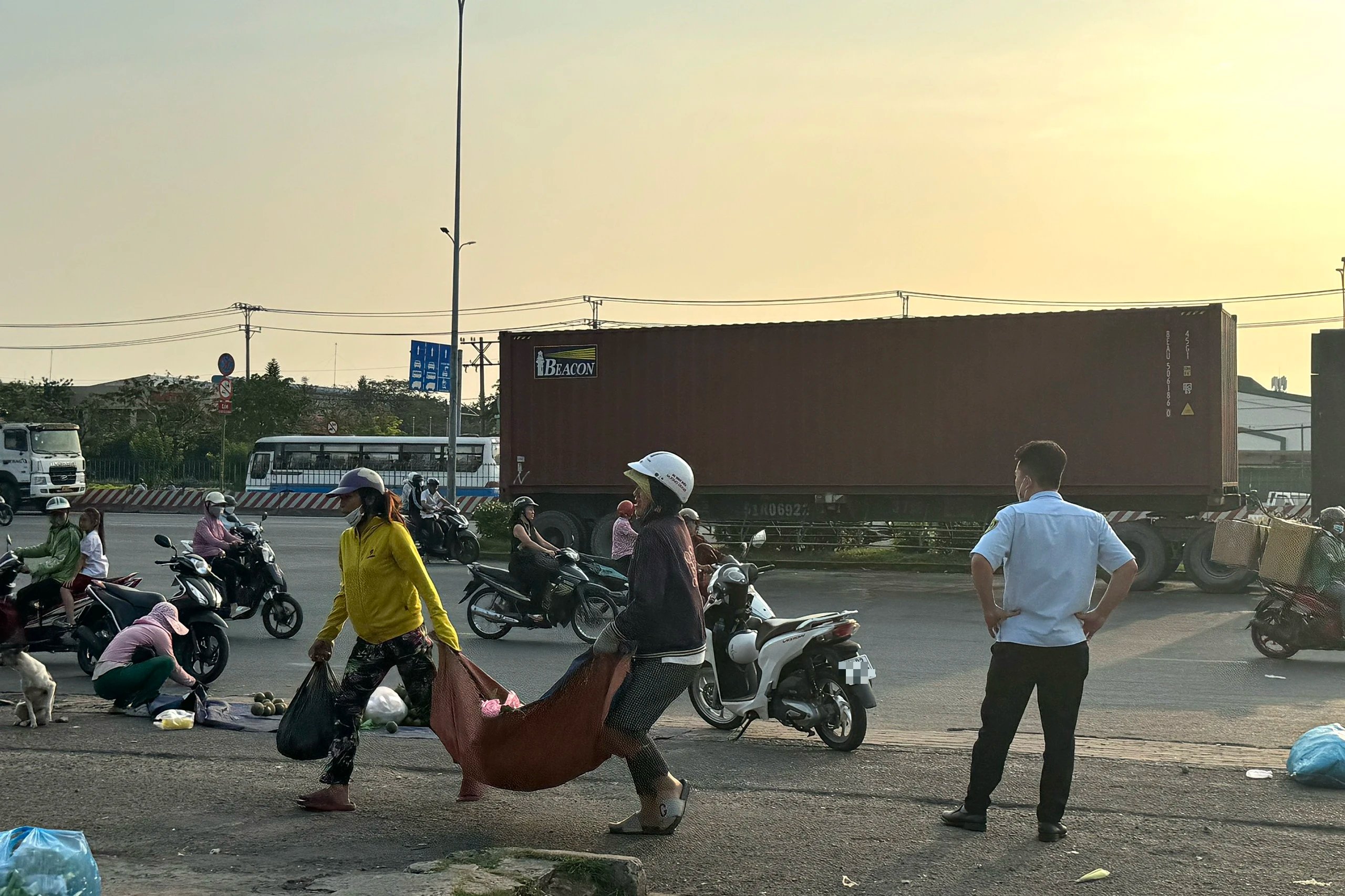
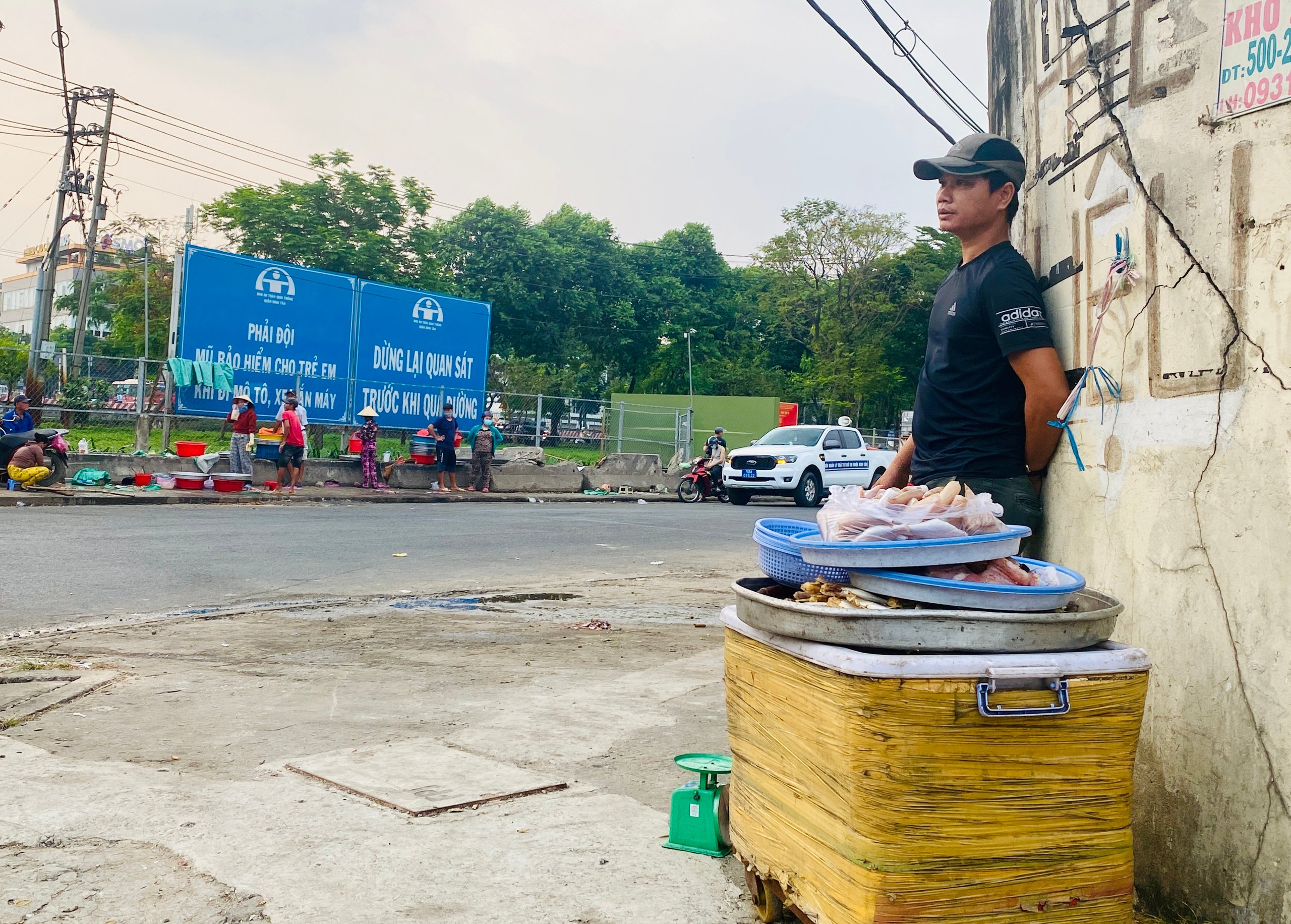
People selling goods around PouYuen Company "fled" when urban order enforcement officers appeared.
Just as she finished speaking, the clock struck 4:39 PM, and Ms. Ut saw a patrol car from the urban order team approaching from the direction of the foot of the bridge on Provincial Road 10B. The couple quickly grabbed the tarp containing the vegetables, wrapped it up, and loaded it onto the motorbike seat. When the patrol car passed, Ms. Ut took it down and spread it out to sell.
With quick movements, Ms. Ut said: "For the past few months, I haven't dared to stock up on too much, partly because the workers buy less, and partly because sometimes the urban order enforcement is strict, and we're selling spontaneously. At the end of the day, if there's any leftover stock, I eat it; if not, I have to throw it away and take a loss."
When asked if she planned to go back to her hometown for Tet (Lunar New Year), Ms. Ut replied: "I'm not really looking forward to Tet anymore. I want to go back home, but then I think about where the money would come from. Just thinking about the daily expenses for food is exhausting."
After selling vegetables to about two more workers, around 4:49 PM, Ms. Ut and her husband had to "run" again because the urban order enforcement team turned their vehicle around. Around Ms. Ut, many people gathered their goods, carried them away, and fled, turning their backs. A few people put their goods into styrofoam boxes, leaned against the wall, and held tightly to the boxes next to them.
Not far from Ms. Ut's stall, Ms. Tran Kim Hanh (43 years old, from Binh Dinh province) pulled up the collar of her coat, set up a tray, and prepared to carry it away. Ms. Hanh said: "I only sell when things are difficult, and even then it's not stable. Some days I carry it around until my toenails are broken."
According to Ms. Hanh, the busiest time for vendors at this market is around 4-5 PM, when workers finish their afternoon shifts. Ms. Hanh is aware that her business encroaches on the sidewalk, affecting traffic.
"But what can I do? I'm unemployed now. Selling wholesale might only bring in about 100,000 dong a day, but finding a place to sell now costs 60,000-70,000 dong a day, so what will I live on? If they confiscate my stall today, I'll have to find capital again tomorrow. Now the government collects sidewalk fees of 200,000-300,000 dong a month, and I'm trying to pay that too, just to avoid having to run away again," Ms. Hanh said.
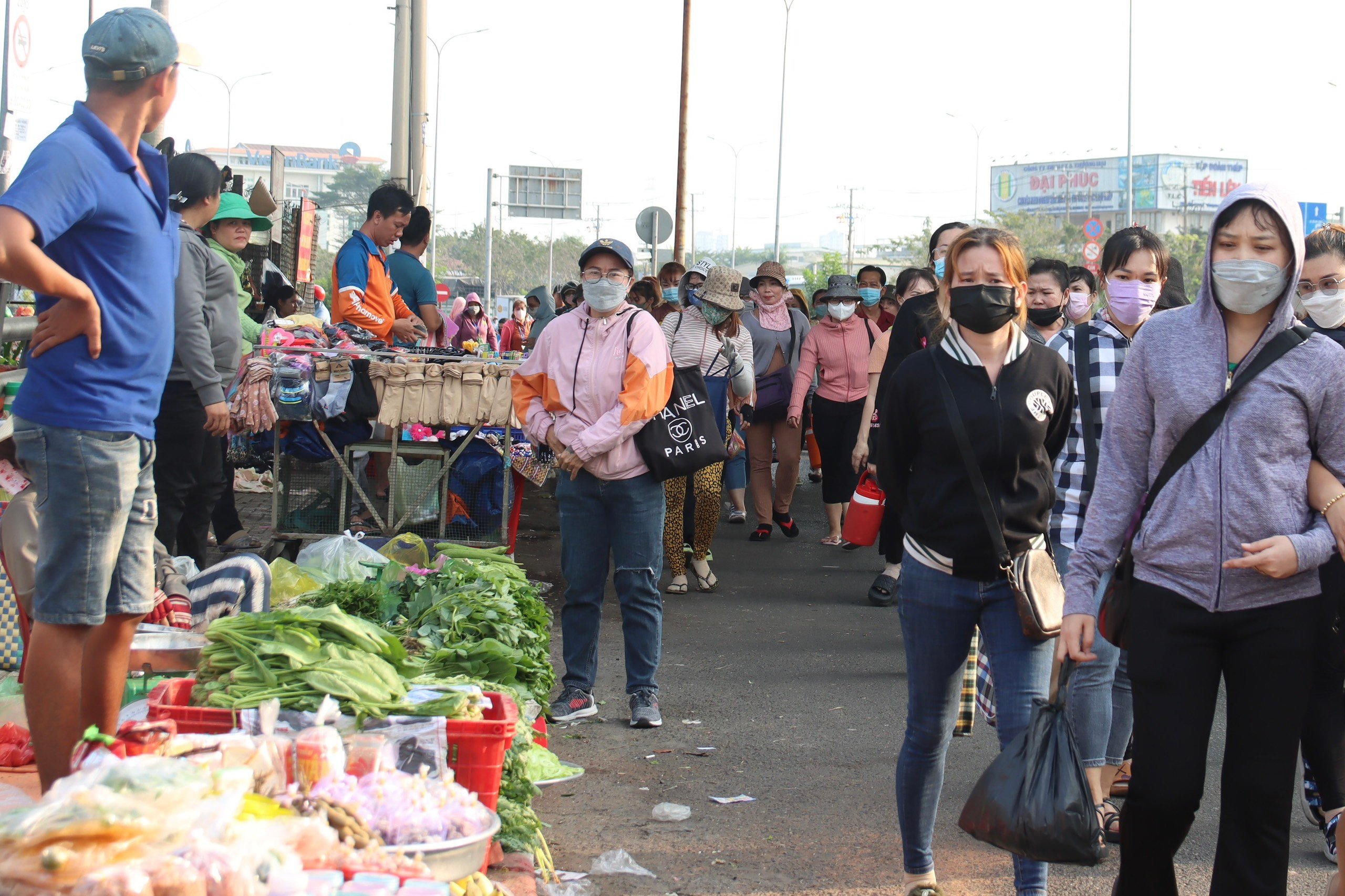
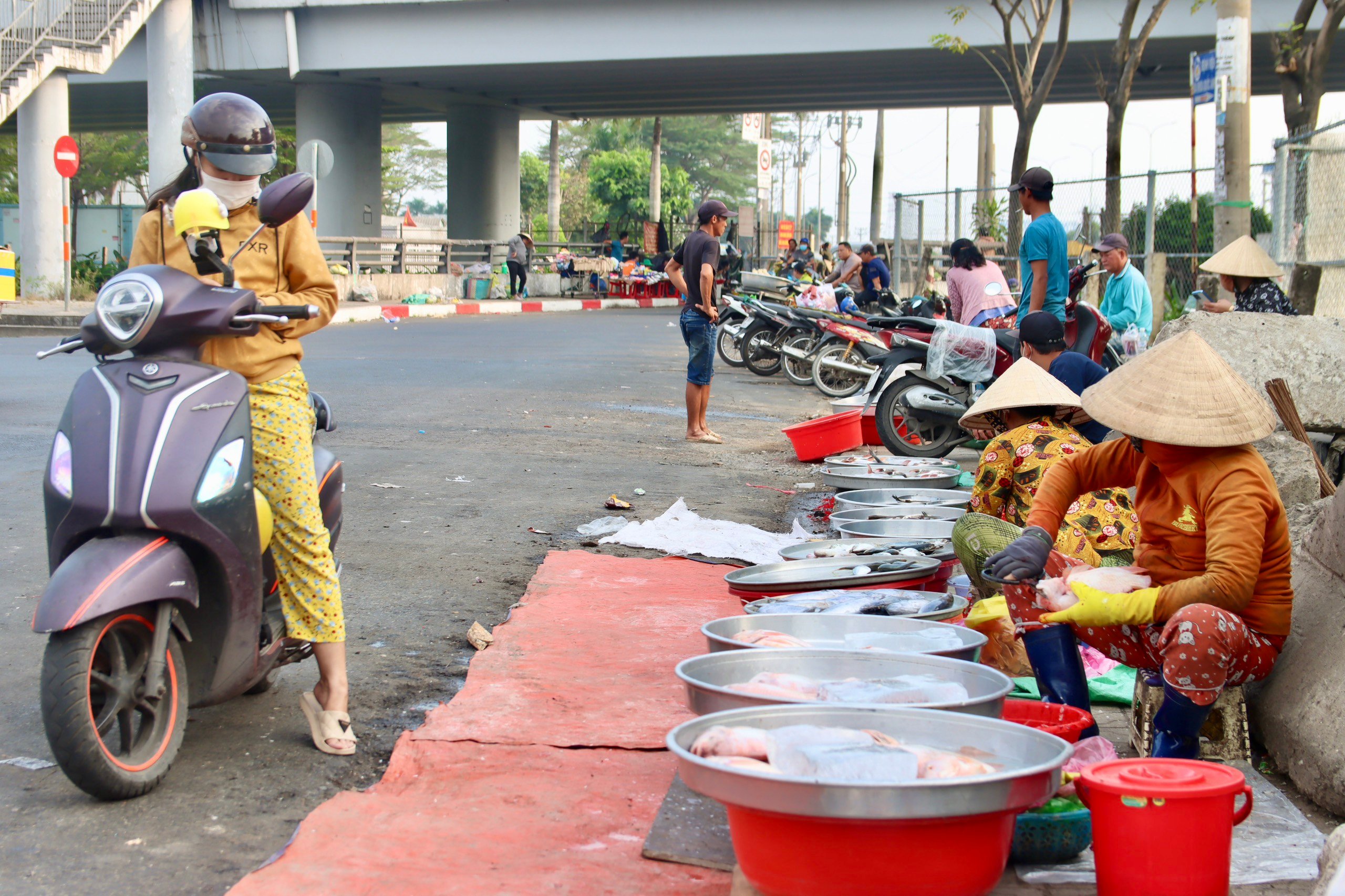
This makeshift market caters to workers during their afternoon shift changes.
According to Mr. To Thanh Tam, Deputy Head of the Urban Management Department of Binh Tan District, Ho Chi Minh City recently issued Decision 32 on the temporary use of roadbeds and sidewalks, which assigns districts and counties to delegate management of certain roads, allowing their use for parking, cultural and artistic activities, business, and construction material storage.
Subsequently, the Ho Chi Minh City People's Council issued Resolution 15 stipulating the fee rates. The Ho Chi Minh City Department of Transport issued a guiding document stating that for roads managed by the Infrastructure Center, the Department of Transport would issue permits, while for roads managed by the districts, the districts would issue permits.
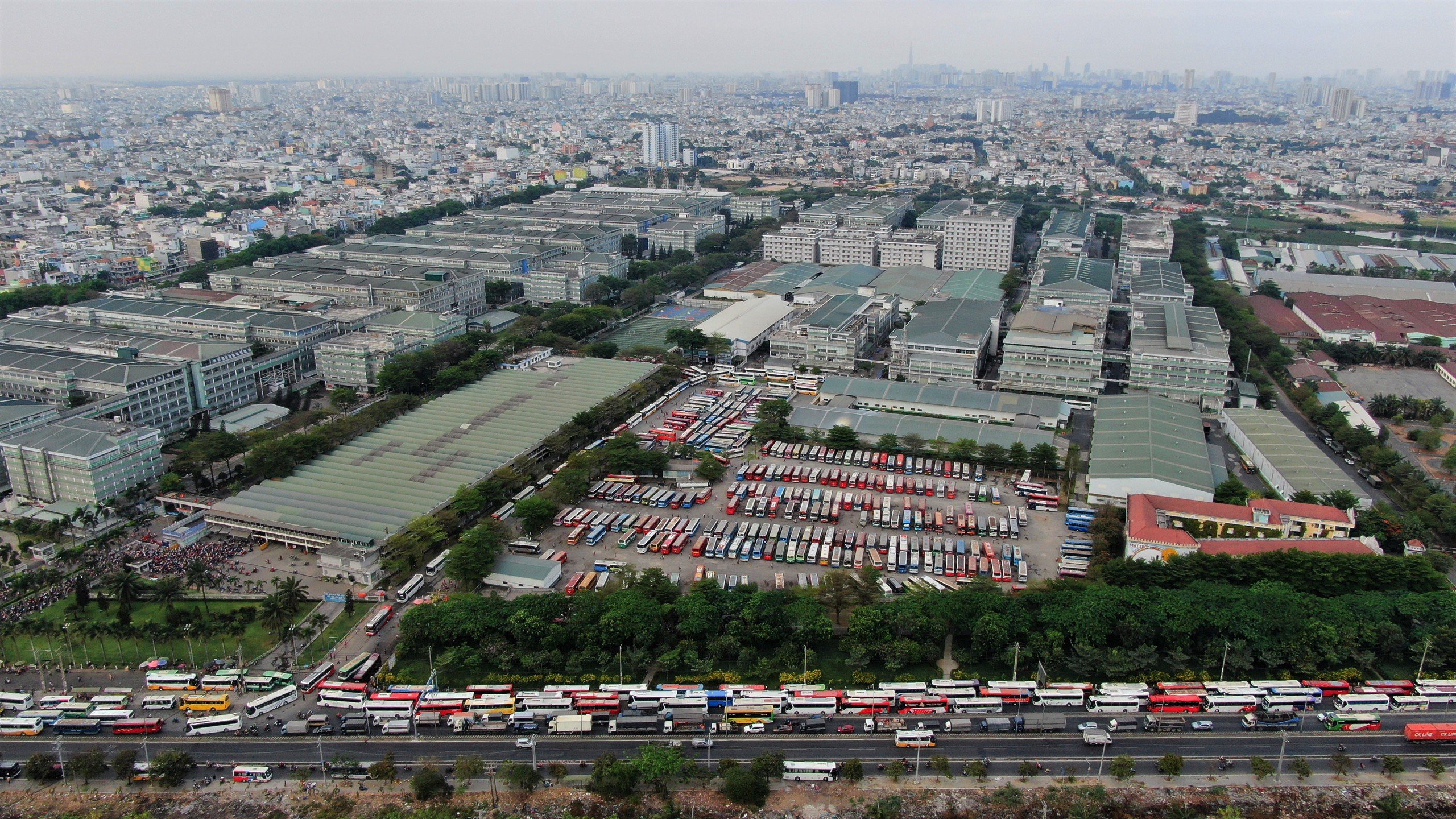
PouYuen Company in Binh Tan District
To date, Binh Tan District has been assigned by the Department of Transport to manage road infrastructure assets. According to statistics, the district has 548 roads, of which 352 have sidewalks wider than 3 meters, meeting the conditions for temporary use outside of traffic purposes. Based on this review, the district has developed a plan to ensure that the primary purpose of the sidewalks remains traffic, while using them for parking, storing construction materials, or commercial activities is considered an additional exploitation.
Regarding the process, the district must assess each route, determine the mileage (which section, how long, starting from which house number), and propose implementation solutions. Simultaneously, a list of proposed solutions must be compiled and sent to the police, the traffic safety committee, the Department of Transport, and other relevant organizations for their input.
After gathering feedback, the district then issues a list of permitted road sections and their intended uses. Only then can residents submit applications to the district's People's Committee's reception office, specifying details such as the width and length of the sidewalk in front of their house.
Regarding the residents' proposal to set up a makeshift market next to PouYuen Company, the district has acknowledged it and is currently developing a plan. Only after that will the specific routes be determined and for what purpose. Binh Tan District will not implement this on a large scale but will start with approximately 20 routes.
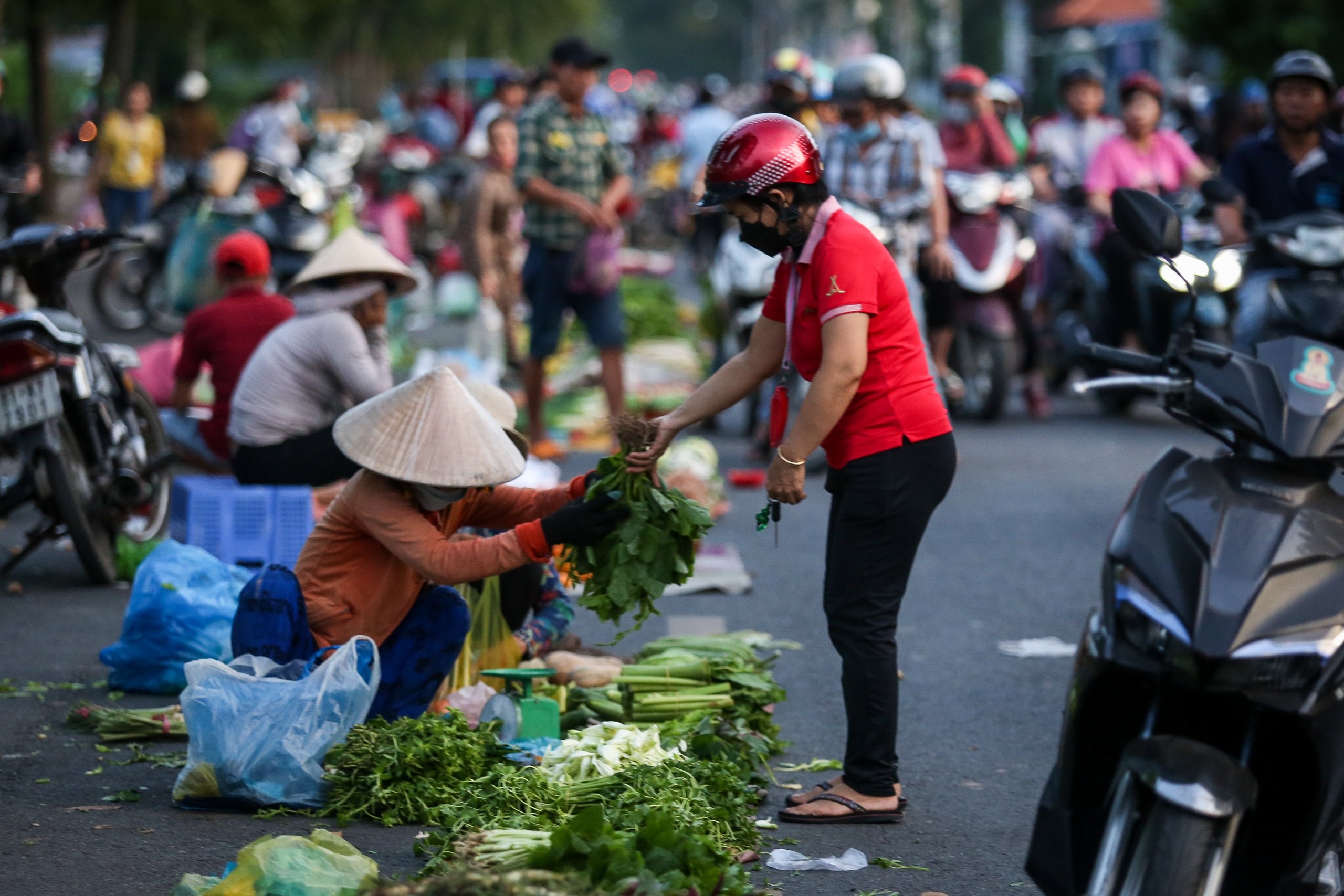
People spread out tarpaulins and sell their goods wholesale in the middle of the road.
"This makeshift market has existed for a long time. It operates during certain hours, mainly serving workers during their afternoon shift, and doesn't do business at lunchtime. It's become a routine, and we need to organize it to bring it into order, creating pathways for pedestrians and vehicles. Ho Chi Minh City has given its approval, and the urban management department will advise on that direction to manage it in an orderly manner," Mr. Tam said.
Currently, around the PouYuen area, there are approximately 7 streets designated for use as construction material staging areas, which homeowners must rent to use. For other purposes such as parking or retail, only a few existing streets with spontaneous trading are expected to be used. The Urban Management Department will coordinate with the Ward People's Committee, the Economic Department, and the Urban Order Management Team to conduct a comprehensive assessment and then propose solutions to the Binh Tan District People's Committee.
Source link
![[Photo] General Secretary and President To Lam works with the Party Committee of the Ministry of Health on the work of Vietnamese traditional medicine.](https://vphoto.vietnam.vn/thumb/1200x675/vietnam/resource/IMAGE/2026/05/20/1779294323718_a1-bnd-2978-3319-jpg.webp)

![[Image] "Journey of Hope" promotes the organ and tissue donation movement in Vietnam.](https://vphoto.vietnam.vn/thumb/1200x675/vietnam/resource/IMAGE/2026/05/20/1779294400833_1-8910-jpg.webp)





























![[Photo] National Assembly Chairman Tran Thanh Man working with the Standing Committee of the National Assembly's Delegation Affairs Committee.](https://vphoto.vietnam.vn/thumb/1200x675/vietnam/resource/IMAGE/2026/05/20/1779294340023_ndo_br_1-1691-jpg.webp)






















































Comment (0)