

About three years ago, even public schools in Ho Chi Minh City found it very difficult to recruit English teachers, not because of a lack of applicants, but because very few people applied. From 2018 to 2023, Ho Chi Minh City implemented a policy to attract and recruit outstanding graduates and young scientists , but according to a summary by state agencies in early 2023, throughout the five years of implementing the policy, Ho Chi Minh City did not recruit a single outstanding graduate or young scientist.
There are many reasons, but the most important is that capable individuals feel there are few opportunities for advancement in the public sector due to its restrictive and stifling environment. In addition, the salary and bonus policies are not truly commensurate with their abilities.
About 3-5 years ago, one of the reasons Ho Chi Minh City always lacked primary school English teachers was that graduates in this field had too many opportunities to choose from in the private sector or abroad with flexible working environments and high incomes. Similarly, in an interview with Thanh Nien newspaper at the end of 2023, an outstanding graduate in Ho Chi Minh City said that they did not choose to work in state agencies because "the environment outside will be more dynamic, allowing for more freedom to express oneself and develop oneself."
There has been a significant shift in trends. In Ho Chi Minh City's teacher recruitment drive this September, many subjects have a competition ratio of 1 in 14.7. While public schools are preparing to welcome carefully selected, high-quality teachers, private schools report an increasing number of teachers leaving to join public schools, with some schools seeing a nearly 40% increase.
According to many private school principals, the reason is that in recent years the public school system has undergone significant changes in terms of facilities, remuneration, and, importantly, an open mindset. Especially since the implementation of the 2018 General Education Program, due to the innovation in educational goals, focusing on assessing students' skills rather than just knowledge, public school teachers have been able to develop their creativity and break free from rigid educational frameworks—something that was previously only possible in private schools.
Although the private school sector is facing challenges, this is a positive change as it creates momentum for both systems to improve and develop together.
A similar trend is also occurring at the university level, where the gap between public and private universities is gradually narrowing. Alongside prestigious public universities, private universities with their own distinct brands in various fields are emerging. While the world has renowned private universities like Harvard and Stanford (USA); Keio and Waseda (Japan); and Yonsei (South Korea), with significant changes in higher education policies promoting competition between the public and private sectors, we still have confidence that Vietnam will develop high-quality private universities that are on par with prestigious public universities.
Clearly, with proper investment, appropriate compensation policies, a strong shift in educational philosophy, open-minded thinking, and empowering teachers with creativity, both public and private education systems will experience growth.
Eventually, the practice of parents scrambling to find schools or classes at the beginning of each school year will cease. At that time, parents and students will choose schools, and teachers will choose where to teach, not based on whether it's public or private, or in a city center, but on suitability.
Source: https://thanhnien.vn/mot-tin-hieu-vui-185251018221221565.htm





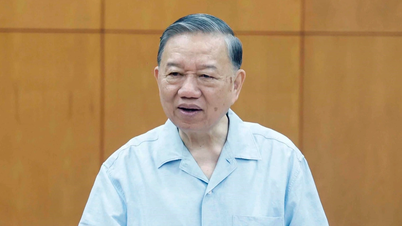
![[Photo] General Secretary and President To Lam presides over a meeting on assessing national development resources.](https://vphoto.vietnam.vn/thumb/1200x675/vietnam/resource/IMAGE/2026/05/20/1779253785852_a1-bnd-2943-8519-jpg.webp)






























































Comment (0)