My baggage on this return trip includes the novels "The Blue Sea the Color of Leaves" and "I Tell You the Story of Truong Sa," both of which have been reprinted many times. There is also a book without a physical form, a book called "aspiration" and "nostalgia," which I wrote in my heart.
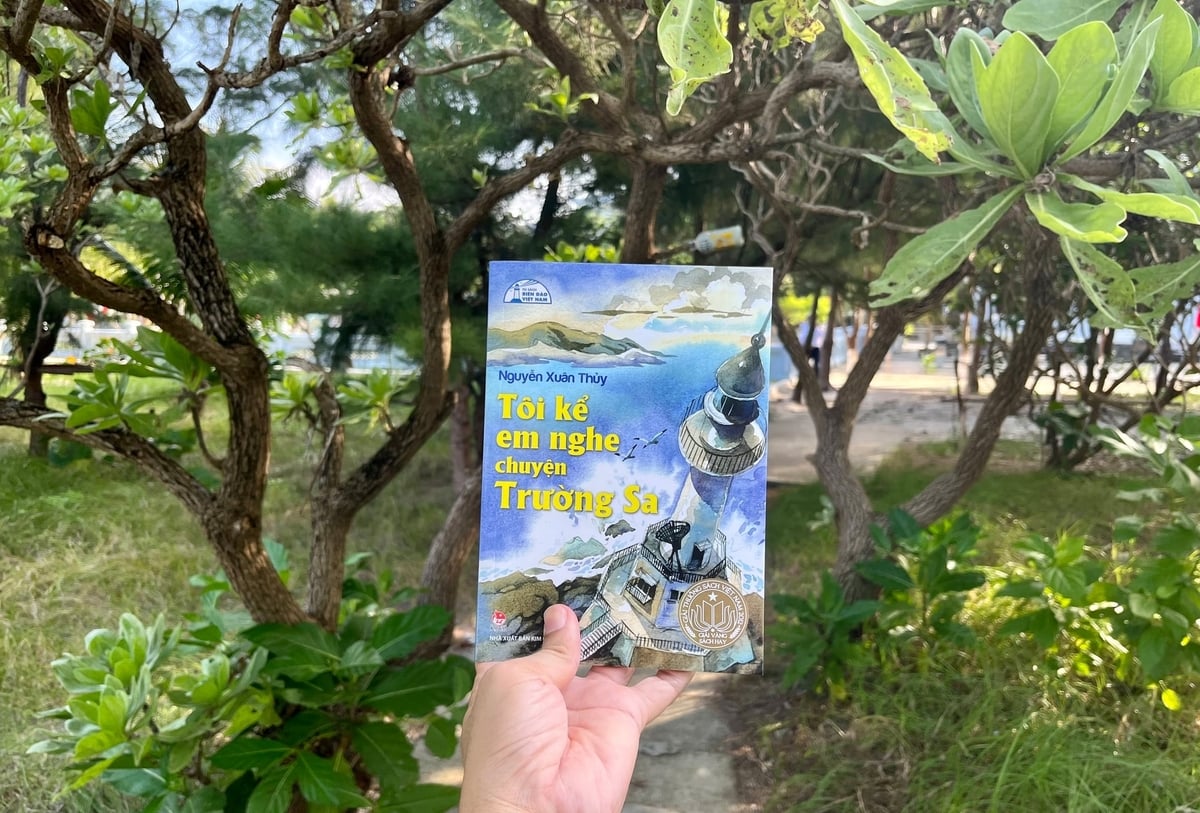
"I'll tell you the story of Truong Sa," following soldiers to Truong Sa. Photo: Xuan Thuy.
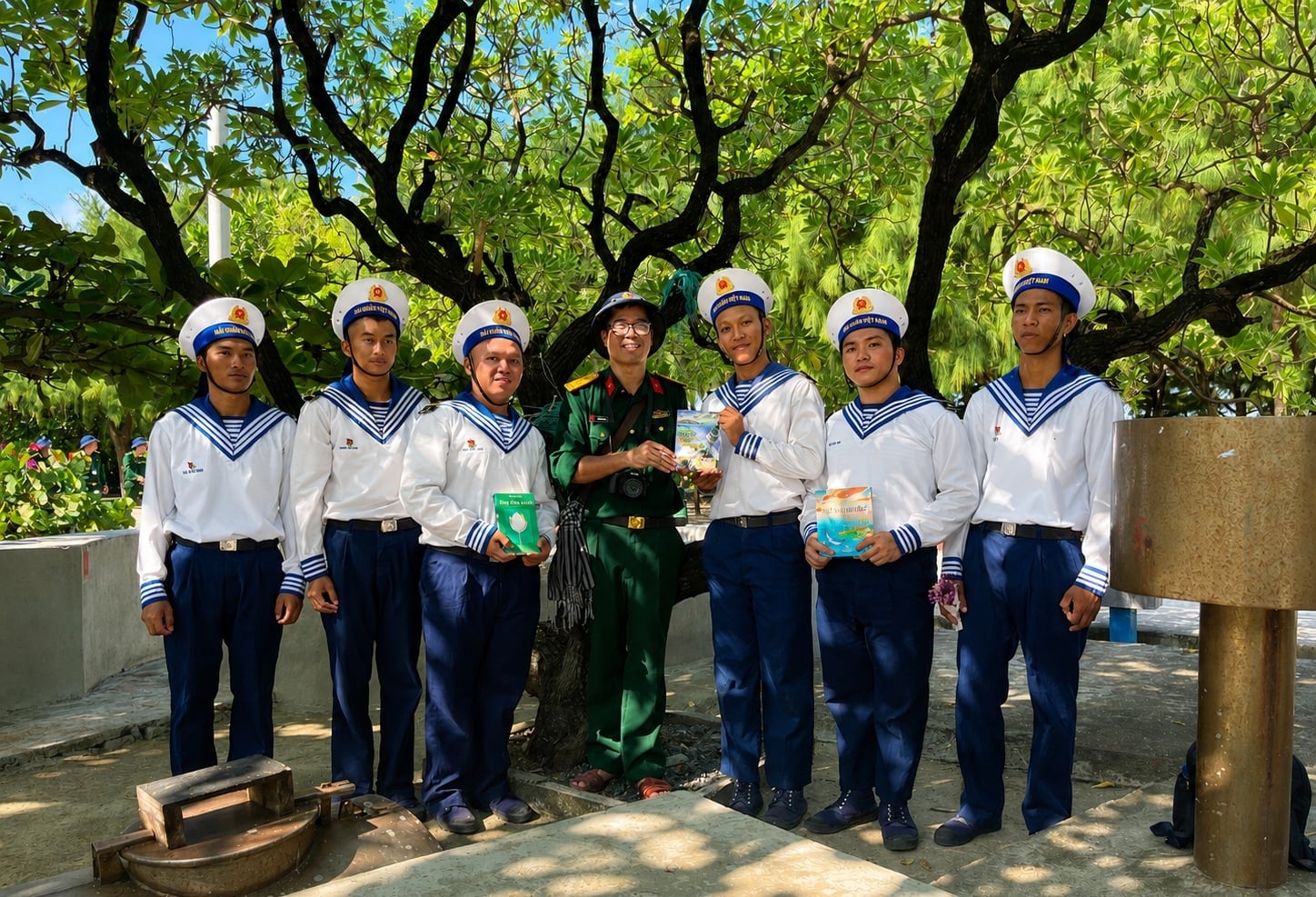
The author (standing in the middle) presents a book to a soldier in Truong Sa. Photo: TGCC.
The rule... three steps forward, two steps back, and the story of the square-leaved mangrove.
From the first time I left the island after two years (2000-2001) working there until my return in 2025, almost two and a half decades have passed. Time and human efforts have changed Truong Sa so much.
Perhaps, not only those who have been to Truong Sa but also those who have never set foot there know about the shortages on the island, of which greenery is a prime example. Back then, planting a tree in Truong Sa was incredibly difficult, a feat that could be described as a monumental undertaking. Even planting a tray of vegetables or a vine of gourds or pumpkins was challenging, let alone trees. The difficulties stemmed from storms, harsh sun and wind, but most importantly, the coral reef soil was not ideal for plant growth.
Formed from coral rock, what is called "soil" in the Spratly Islands is actually dead coral broken into sand fragments, and the pigment on it is simply bird droppings, accumulated over time by the birds that inhabit the islands. The green ecosystem in the Spratly Islands is therefore composed entirely of endemic plants, naturally selected and filtered by nature. Because of this, the plants that survive in the Spratly Islands have very distinctive names, such as "storm-resistant tree" or "storm tree"—a system of names that symbolizes these storm-prone islands.
During my time in Truong Sa, besides the storms and typhoons on the islands, there were also a few Terminalia catappa and Terminalia catappa trees. These trees nestled against the houses and structures, providing some protection from the wind. In front of the Communications Platoon's room at Radar Station 11 on Truong Sa Island, where I was stationed, there was a Terminalia catappa tree. That's where we hung our hammocks; outside of duty hours, the soldiers often sat there to enjoy the cool breeze. The other trees around the houses were similar; there was usually a makeshift table where the soldiers could sit and relax. Teapots and cigarettes sent from the mainland were shared under the trees. Each structure that sprang up provided a place for the trees to lean on. The Truong Sa Island Command Post was the tallest, and it was also a shelter from the storms and strong winds for the Terminalia catappa trees, allowing them to grow tall and strong.
In Truong Sa, the Barringtonia alatus tree is incredibly precious; each time it blooms, it's a significant event. For journalists and photographers, capturing a photo of the Barringtonia alatus blossoms in Truong Sa is a great achievement. The three Barringtonia alatus trees, tens of meters tall, are a popular spot for journalists to take pictures, providing invaluable shade where visitors from the mainland can sit and chat with the soldiers on the island, and where islanders can pass by, and children can ride bikes and play. When the television crew needs to interview someone, they always pull the Barringtonia alatus tree aside to frame the shot and hold up the microphone.
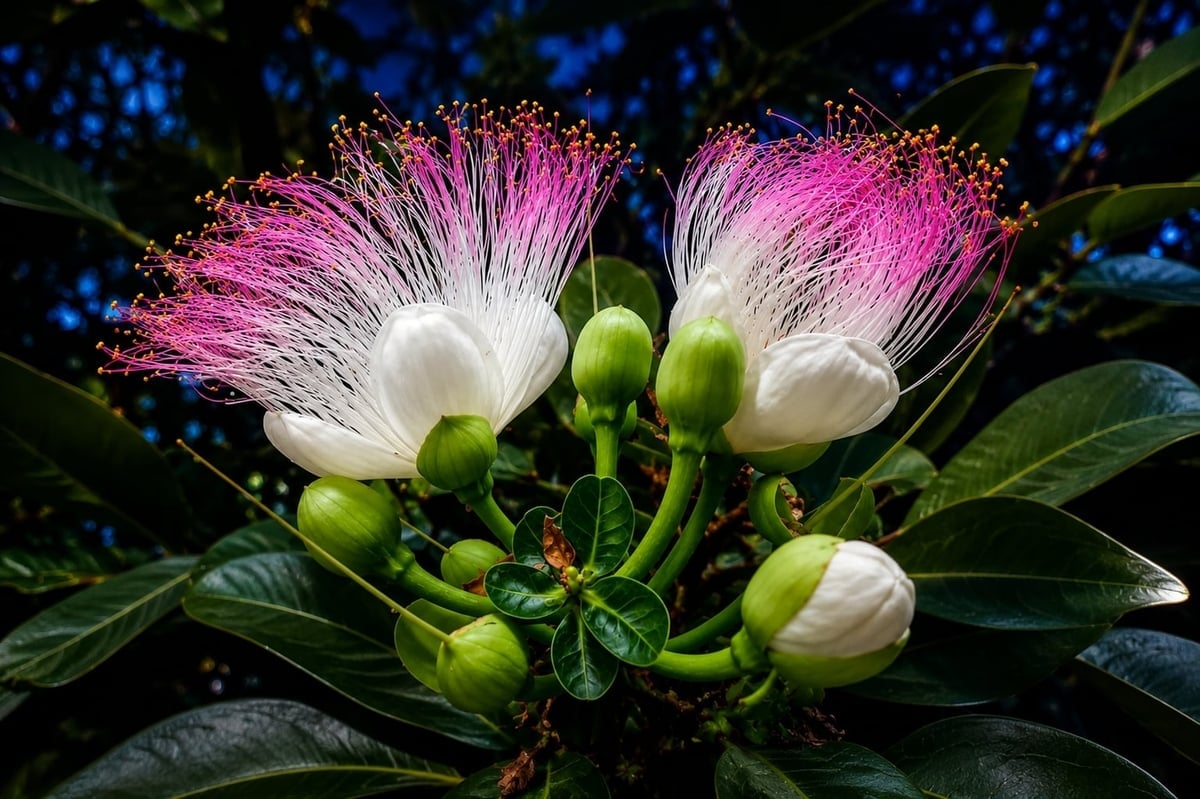
Each time the Terminalia catappa tree blooms, it's a significant event. Photo: Xuan Thuy.
The square-leaved mangrove blooms at night, so people call it the "sea night-blooming cereus." The nighttime blooming of the square-leaved mangrove is likened to a queen stepping out of a fairy tale, stunningly beautiful and magnificent. After a few hours of reign, the queen sheds her robes and departs from the flower. From the flower's calyx, young fruit begins to form. The square-leaved mangrove fruit, curved and hanging on the branches like fists, defies the sun, wind, and weather.
Back then, we had a custom where each soldier leaving the island would plant a commemorative tree. Planting a tree was a monumental task. First, we had to dig the hole. In Truong Sa, the planting holes had to be dug into the coral bed. Two or three of us had to dig together to have enough strength and not get discouraged. The island stipulated that the hole had to be one cubic meter submerged. One cubic meter submerged equals three cubic meters above ground, meaning three cubic meters of broken coral rock were extracted to create the space. Next came the process of filling that space with compost and bags of soil brought from the mainland. This was necessary because the tree would mainly grow in that "submerged pot," as it was surrounded by hard coral rock, almost like concrete. Digging a large, wide hole was essential to ensure the tree received enough nutrients to grow tall and spread its branches wide.
Now that I've returned, those saplings were only just reaching a certain height back then. Little by little, the trees in Truong Sa are growing, slowly and patiently.
The way trees grow here is unlike anywhere else. After the stormy season, if you observe carefully when you go to Truong Sa, you'll see that at the tips of the branches and canopies are dry, brittle sticks, because the weak young buds are killed by the storms, and the salty wind makes the leaves mushy like pickled cucumbers. Every spring, the trees sprout and grow to five parts, but during the stormy season, three parts are stripped away. Yet the sailors say they're still lucky, because they still have two parts left. The trees grow in this pattern of three parts forward and two parts backward, so each tree has a rough, gnarled, sturdy, and crooked trunk.
Compared to my first visit (2008), this time I found Truong Sa greener and more lush with vegetation. The islands are no longer as barren as they used to be.
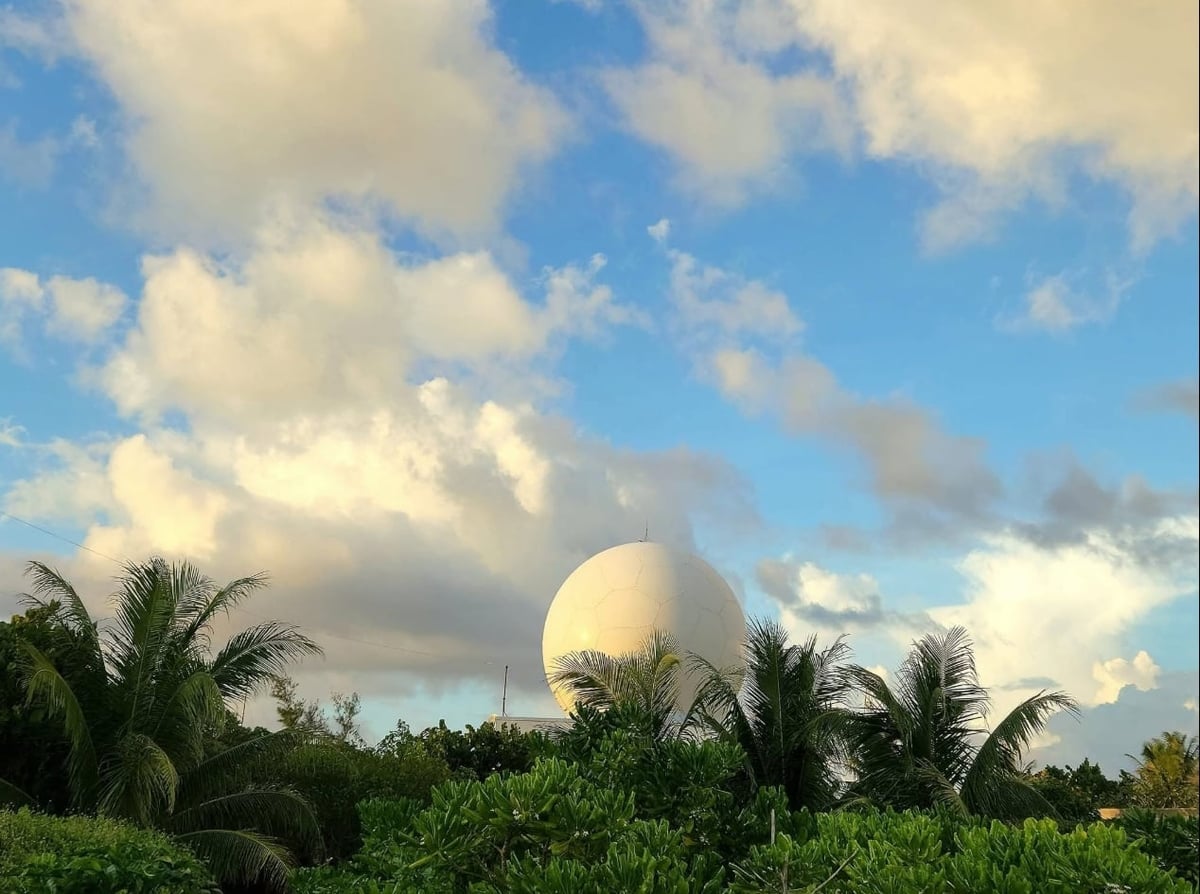
The green ecosystem on Nam Yet Island. Photo: Quang Phan.

Instead of a few Barringtonia trees, a few Morinda trees, and patches of sea morning glory clinging to coral reefs in vibrant purple blossoms, a thriving ecosystem has developed, transforming Truong Sa into a verdant haven. Besides the familiar species, beside the temples are frangipani trees, just like on the mainland, adorned with colorful bougainvillea plants, found on both large and small islands. And the Barringtonia tree has now become a romantic symbol of Truong Sa, its vitality and resilience defying storms and strong winds.
Tree museums
In the past, we built gardens to grow water spinach, enclosing them with high walls to protect against the salty wind and retain water. The gardens, situated next to the precious well, were a lifeline for fresh vegetables for the soldiers during stormy seas. Now, returning to Truong Sa, I am more than surprised by the fact that each garden here is a masterpiece. The vegetables are enclosed in greenhouses, planted in a diverse and lush green mix. Looking at the gardens at Da Tay and Sinh Ton, I can't help but be moved; the different types of vegetables are intertwined, layered, top and bottom, like a miniature vegetable museum created by the hands of soldier-artists. Rows of jute, amaranth, sweet potato leaves, and hedges of spinach and sweet potato leaves are interwoven at varying heights, inside and out, nothing is missing. Even more surprising are the herbs and spices: betel leaves, onions, cilantro, lemongrass, chili peppers, ginger...
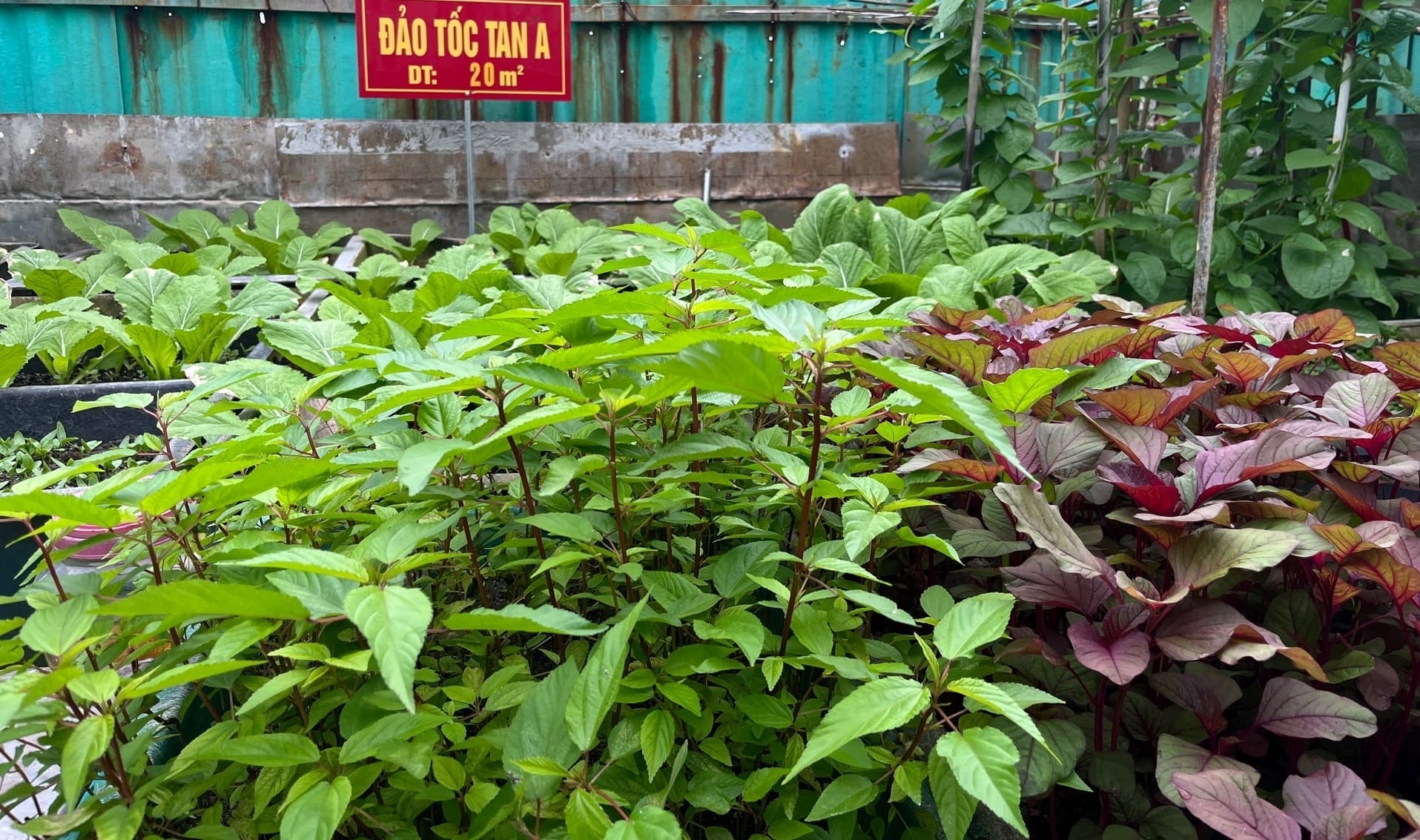
Vegetables on Toc Tan A Island. Photo: Xuan Thuy.
I came across an entire row of bottle gourds, which are excellent for both leafy greens and lowering blood cholesterol; and a patch of centella asiatica, something that seemed so rare, but they were all gathered here.
I encountered lemon trees. (In Truong Sa in the past, boiled chicken didn't have fresh lemon leaves sprinkled on top). I saw the water storage system, filtering saltwater to produce freshwater. And, the wells. Some islands have wells as a gift from nature. Song Tu Tay has five wells, the most abundant in water, while Truong Sa has one brackish water well. Although the sweetness varies with the seasons and the ebb and flow of the tides, having usable water is incredibly precious. During the rainy season, these wells become a source of cool, fresh water for daily life, for irrigating plants and vegetables, contributing to the greenness of Truong Sa today.
Now, the Barringtonia trees on Son Ca Island, perhaps at least several decades old, have been designated Heritage Trees. These trees, with their indomitable vitality, thick leaves, and excellent resilience against salt winds and storms, stand there calmly and confidently, their gnarled trunks like a protective shield. The coconut groves on Nam Yet Island add to the island's monotony. The rows of casuarina trees and coconut palms make each soldier feel closer to the mainland, closer to their homeland. The casuarina grove on Sinh Ton Island is even used as an outdoor stage. Performing arts troupes perform there, dressed in traditional costumes and hip-hop outfits, singing and dancing, filling a corner of the sea with vibrant sounds. Humans and nature harmonize, the rustling sea breeze through the casuarina trees joining in the soldiers' fun. The same is true on Da Tay Island; the shady casuarina tree-lined path, the image of fishermen cycling with blocks of ice from the ice factory to the pier to keep their catch cold, is as beautiful as a scene from a music video. Fishery logistics on the Truong Sa islands have served as an on-site support base for fishermen venturing out to sea.
The verdant green of Truong Sa today did not come about naturally. It has been nurtured and cared for day by day by generations of soldiers stationed there. It is the result of innovation and a more scientific and methodical approach to improving the quality of crops.
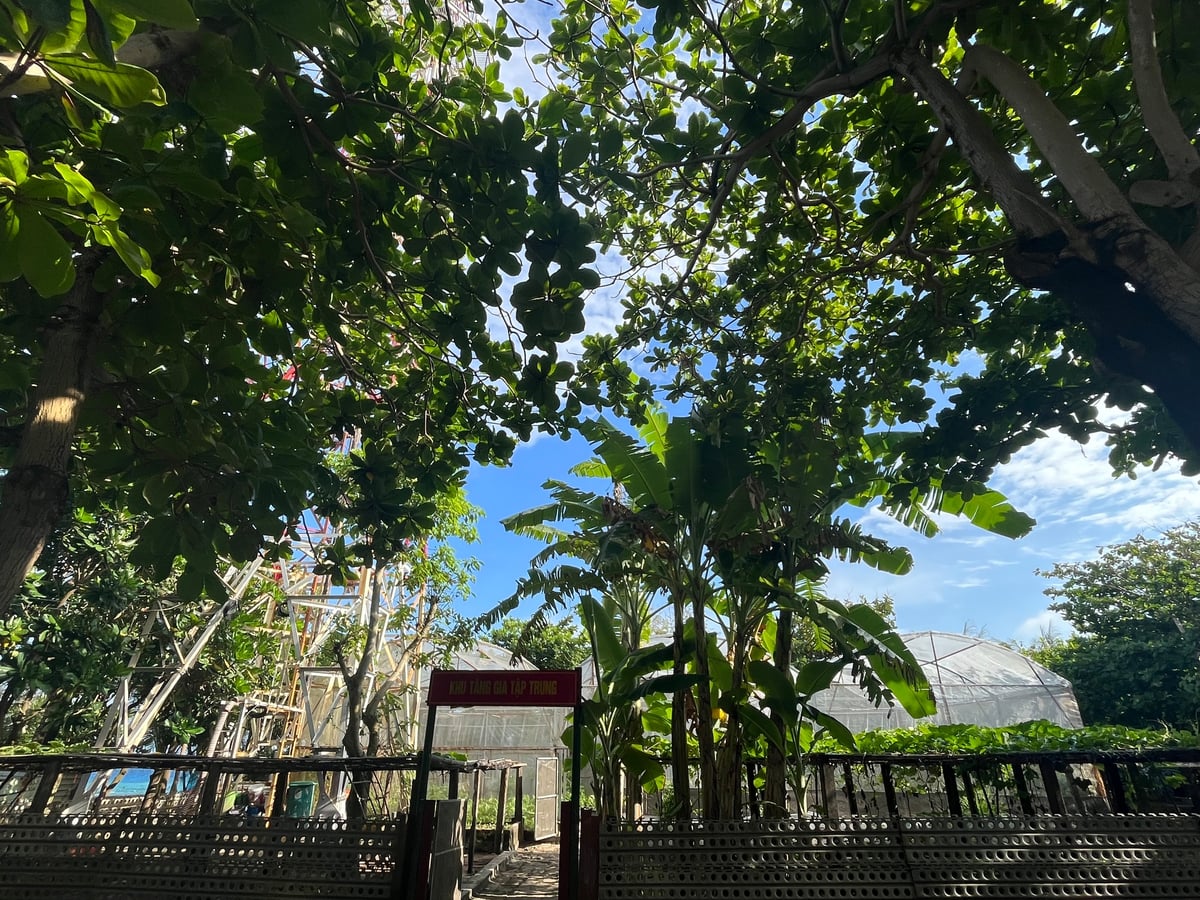
Bananas in Truong Sa Dong. Photo: Xuan Thuy.
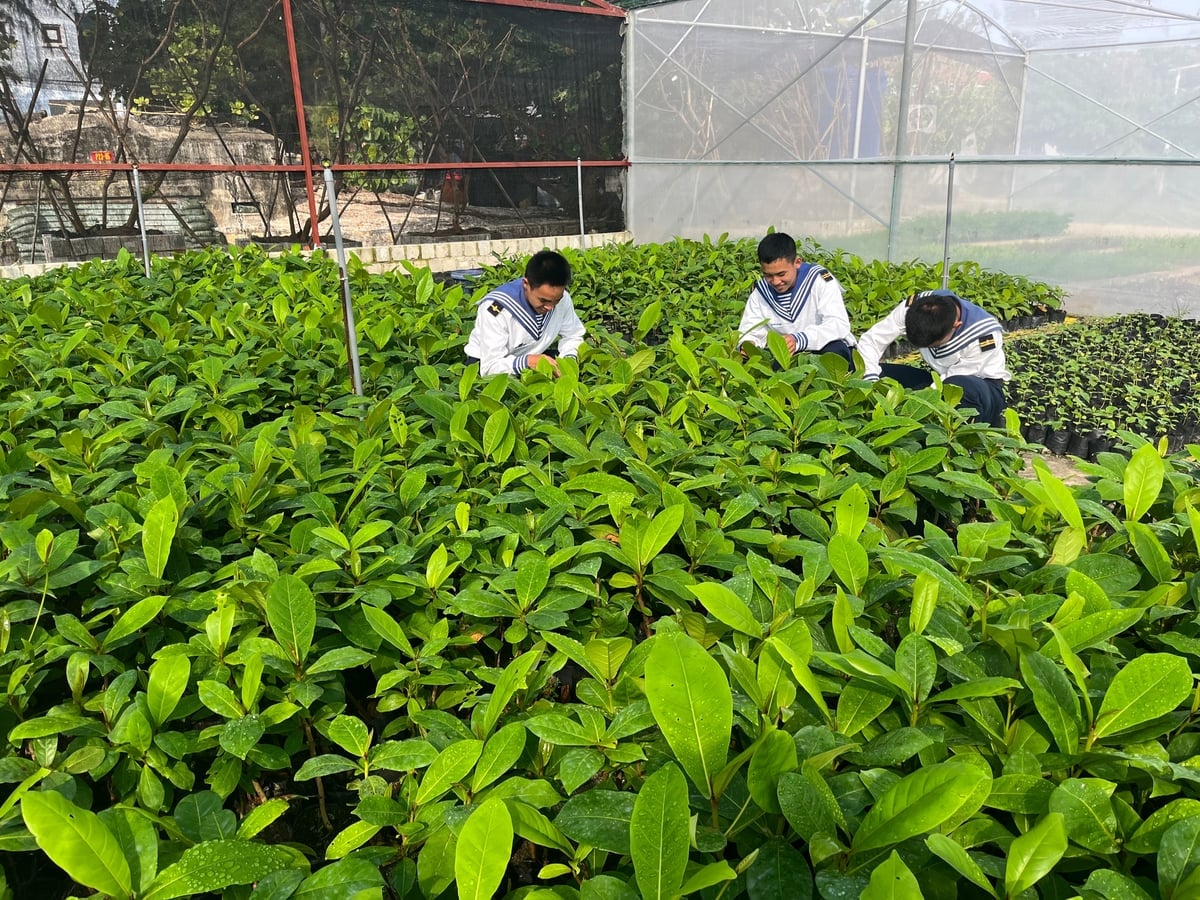
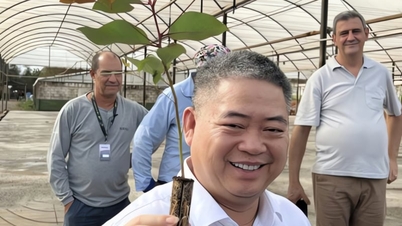
A tree seedling nursery in Truong Sa. Photo: Xuan Thuy.
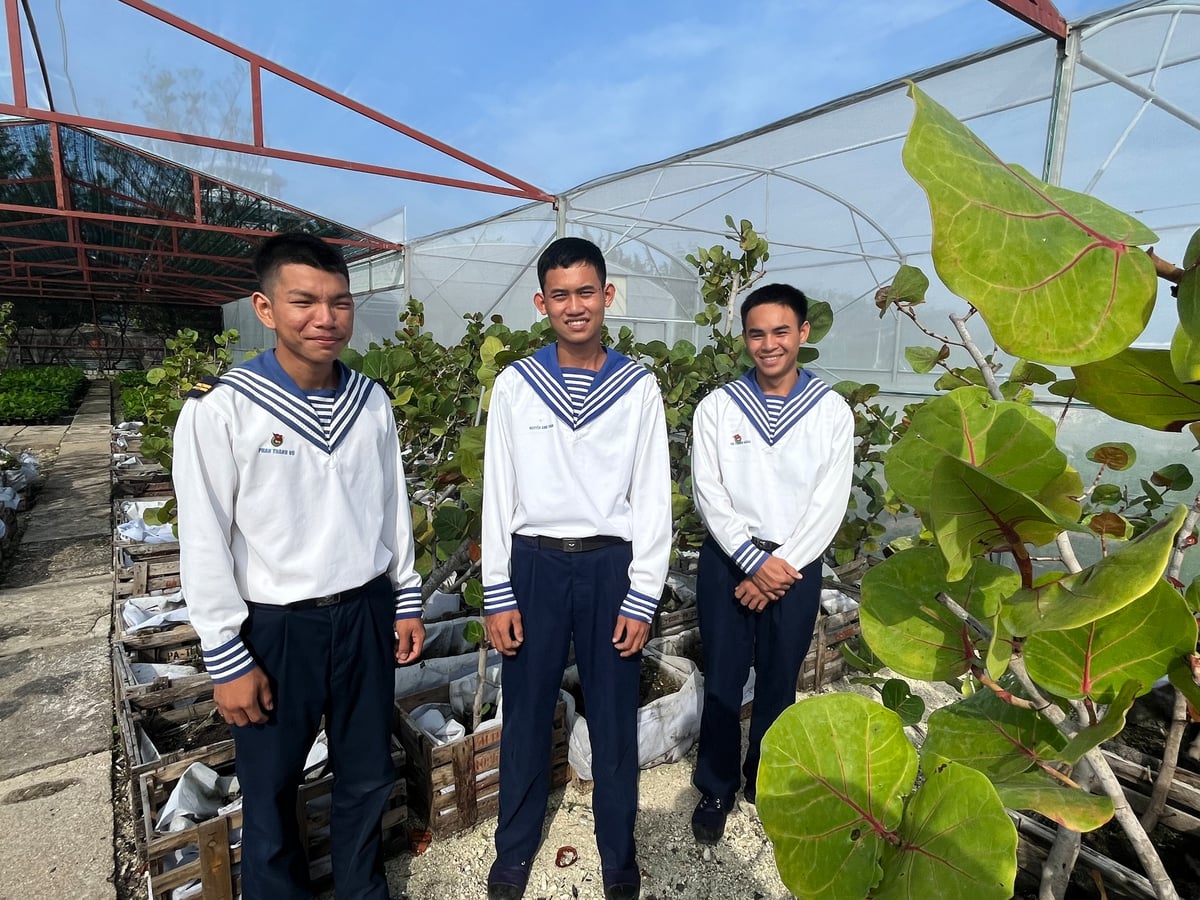
A tree seedling nursery in Truong Sa. Photo: Xuan Thuy.
The Spratly Islands are becoming greener, more beautiful, and their vegetation richer. This is the result of a long journey of human effort and the "intervention" of agricultural science, meteorology, hydrology, geology, and more.
In Sinh Ton and Son Ca islands, there's now a nursery for seedlings for the islands, with various types of Terminalia catappa and Terminalia trees being propagated in greenhouses. I've seen Casuarina, Ficus microcarpa, Terminalia catappa, Terminalia chebula, Terminalia catappa... Here I also saw dragon fruit plants, watermelon vines, pumpkins, bitter melons – plants that I thought would be hardy to survive on a remote island, but now they're present as they naturally are. In Truong Sa Dong, I even came across a fairly tall banana tree. And the trellises of gourds and loofahs, pumpkins, cabbage, and water spinach are no longer unfamiliar; the soldiers now have fresh vegetables to eat on the spot, with varied meals, unlike in our time, when during rough seas, the soldiers suffered from constipation due to a lack of vegetables, sometimes even having bloody diarrhea. Each trip out, amidst the anticipation of letters from home and news from the mainland, also included the hope of replenishing vitamins.
During my return trip to Truong Sa in 2025, I was part of the General Political Department delegation. I witnessed the red banyan and square-leaved mangrove saplings being brought to Phan Vinh Island by female soldiers. During that trip, the Army Women's Committee implemented a plan to plant 100 trees in Truong Sa. This practical action was a collective effort to add more greenery to the islands. That green symbolized the aspiration for Truong Sa, blending with the blue of the sea. That green, cultivated by the hands of soldiers, stemmed from a green aspiration, a yearning for peace, a love of nature, and the creation of an ecological and humane world in this remote sea region of our homeland.
Visiting Truong Sa today, I saw some visitors being given small square-leaved mangrove saplings as gifts to take back from the island. I also saw two soldiers exchanging potted square-leaved mangrove saplings from one island to another. I saw a pot of square-leaved mangrove seedlings on the small desk of a five-year-old girl on Da Tay Island, their tender red leaves glistening like the color of a child's eyes. Aspirations continue to be nurtured for tomorrow, for a green Truong Sa, and the message of a green Truong Sa will continue to spread, so that this green color will forever remain in the hearts of everyone, representing this sacred sea and island region of our homeland.




The joy of harvest season. Photo: Xuan Thuy.
Epilogue
A year after my trip to Truong Sa in 2025, I recently received news that the island of Tien Nu has successfully grown corn.
In the past, Tien Nu Island was a submerged coral reef. The sun, wind, salt spray, and nutrient-poor coral substrate made growing a single plant a feat of engineering. To ensure the survival of a vegetable patch, a trellis of gourds, or a square-leaved mangrove tree, generations of soldiers on the island had to carefully conserve every bag of soil, every scoop of fresh water, and every handful of organic matter. And yet now, corn has appeared.
That presence hasn't yet brought about a harvest, but it's a sign of a different future, a future where remote islands will develop agricultural ecosystems adapted to island conditions. That's my vision, and I think, perhaps the next book after "The Green Sea," "I Tell You the Story of Truong Sa," will be "The Golden Season in Truong Sa"...

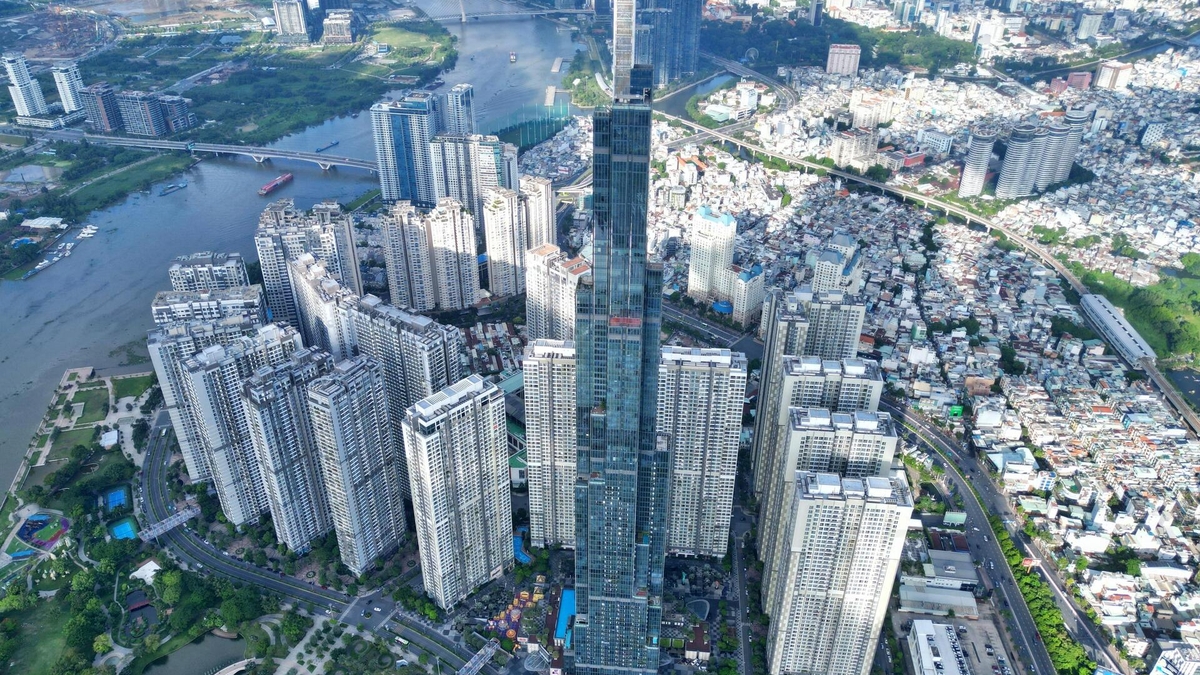
The lush green of Truong Sa Lon (Great Truong Sa). Photo: Le Son.
Source: https://nongnghiepmoitruong.vn/mua-vang-o-truong-sa-d815479.html






















![Teaching swimming to rural children: [Part 3] Effective if given the right attention](https://vphoto.vietnam.vn/thumb/402x226/vietnam/resource/IMAGE/2026/07/01/1782875620087_5955-12-145425_971-145427.jpeg)