

Spring – the season of blooming flowers – is also the time when the white plateau of Bac Ha (Lao Cai province) awakens after its long winter slumber. On the gently sloping hillsides, the golden hues of mustard flowers, the pristine white of pear and plum blossoms, interspersed with the pale pink of peach blossoms, are at their most vibrant, creating a lively natural landscape amidst the mountains of Northwest Vietnam. Not only captivating tourists, these spring flower fields also open up new economic development opportunities for the local people.
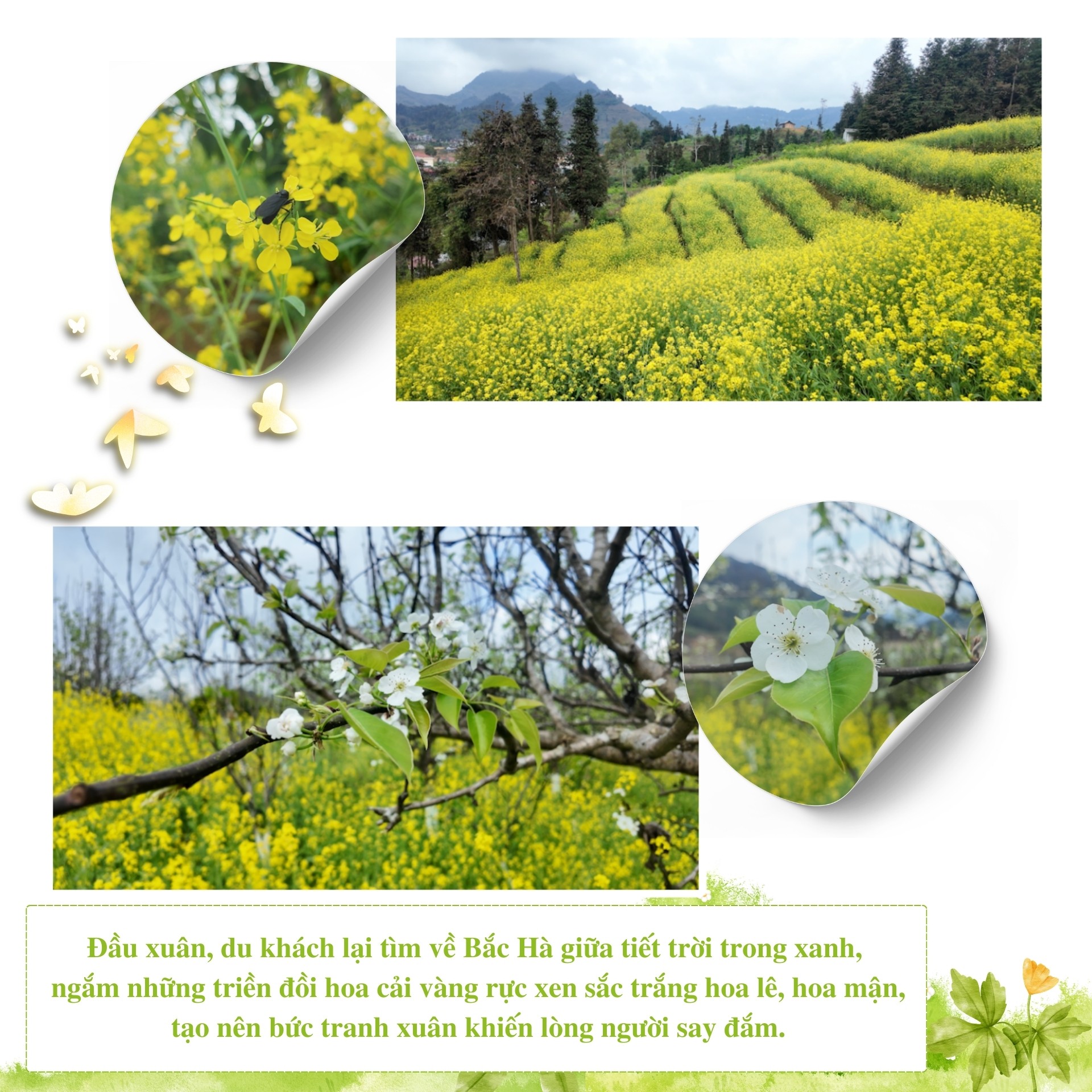
In the early days of the year, when the weather is mild and the sky is clear and blue, streams of tourists flock to Bac Ha to immerse themselves in a space overflowing with colorful flowers. On the hillsides, mustard flowers bloom into shimmering golden carpets, radiant in the sunlight.
Amidst that golden hue, the pristine white of pear and plum blossoms stands out against the deep green mountain backdrop, creating a scene that leaves anyone who sets foot there in awe.
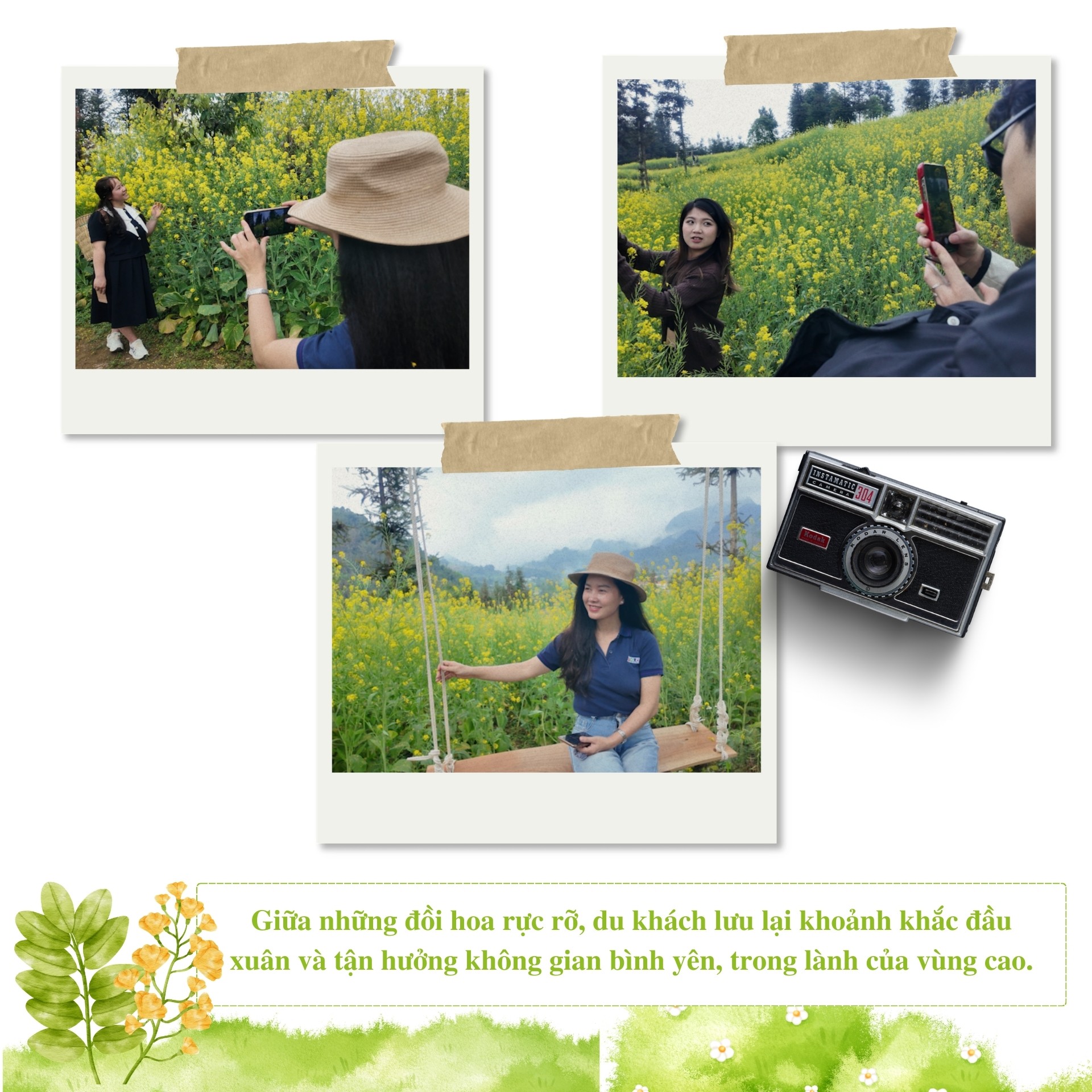
The atmosphere at the flower-covered hills is always lively with laughter and conversation. Tourists, dressed in vibrant outfits, pose amidst the sea of flowers, capturing memorable moments of spring in the highlands.
Many families and groups of young people choose Bac Ha as their early-year destination not only for spring outings, but also to enjoy the peace and fresh air that nature offers.
The bustling influx of tourists each spring not only brightens the highland landscape but also opens up optimistic signs for a new direction of local development. Based on the increasing number of visitors, Bac Ha is gradually shaping its tourism development path, linking it with agriculture and the exploitation of natural landscapes – a direction suitable to its current conditions and possessing rich sustainable potential.
Blessed with a cool climate year-round, stable temperatures, fertile soil, and undulating hills and mountains, Bac Ha possesses advantages not found in every locality. The gently sloping hills, wide valleys, and clear blue skies create an ideal backdrop for large-scale flower cultivation.

Taking advantage of these conditions, many households have boldly converted a portion of their land previously used for growing food crops to cultivating seasonal flowers, combining this with opening their doors to visitors for sightseeing, photography, and hands-on experiences.
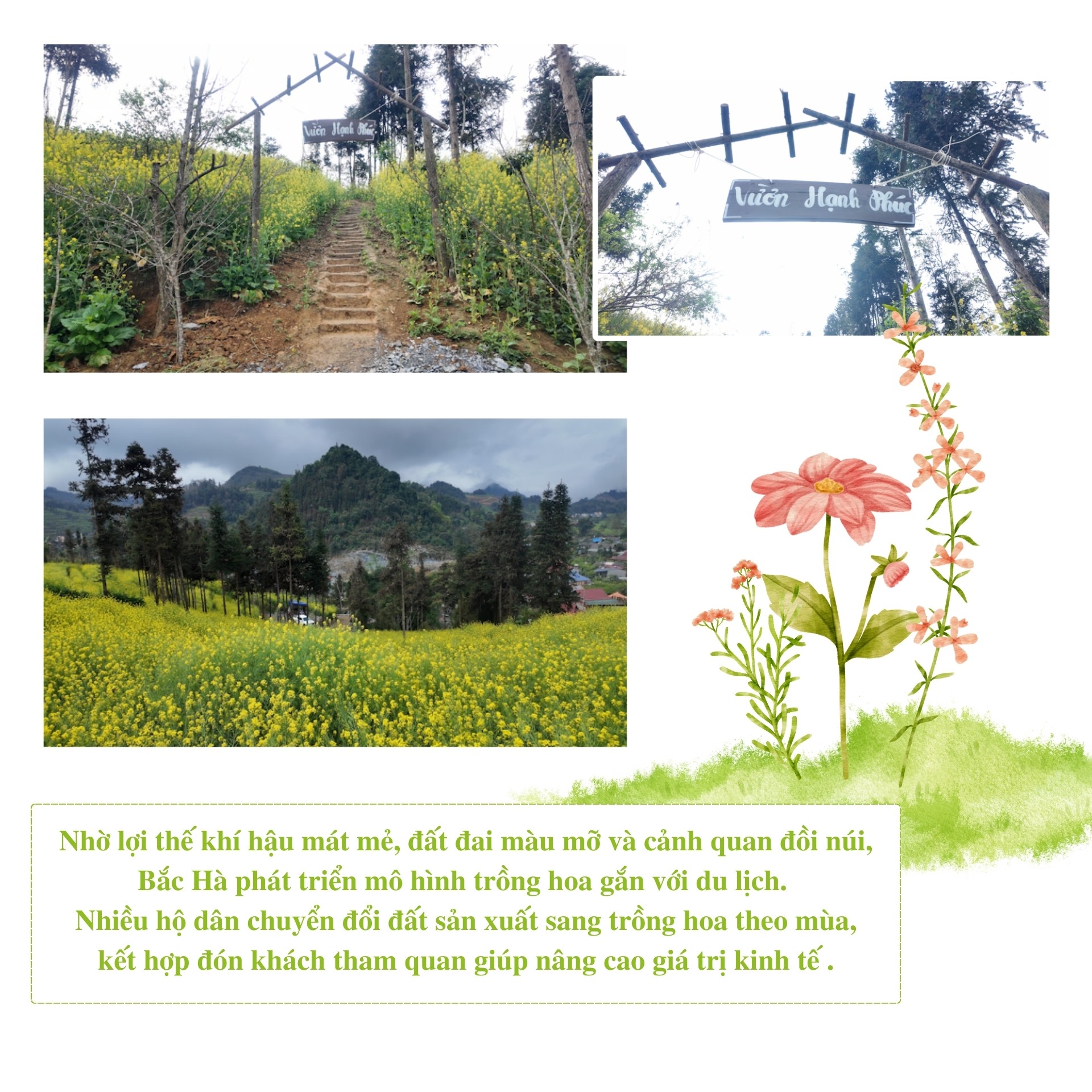
This transformation is not simply a change in crop structure, but also a shift in production mindset – from "pure agriculture" to "agriculture combined with services." People no longer rely solely on productivity and output, but are beginning to focus on landscape elements, spatial layout, and the timing of flowering to cater to the needs of tourists for sightseeing and photo opportunities. As a result, the value obtained from the same area of land can increase significantly.
It can be said that the vibrancy of tourists during the spring days has further motivated the local people to confidently invest in and expand the model. From familiar rice fields, vibrant flower-covered hills have now been formed – beautifying the white plateau while creating new livelihoods right on their homeland. This is considered an important step in the journey of building Bac Ha into a unique eco-tourism and experiential destination of the Northwest highlands.
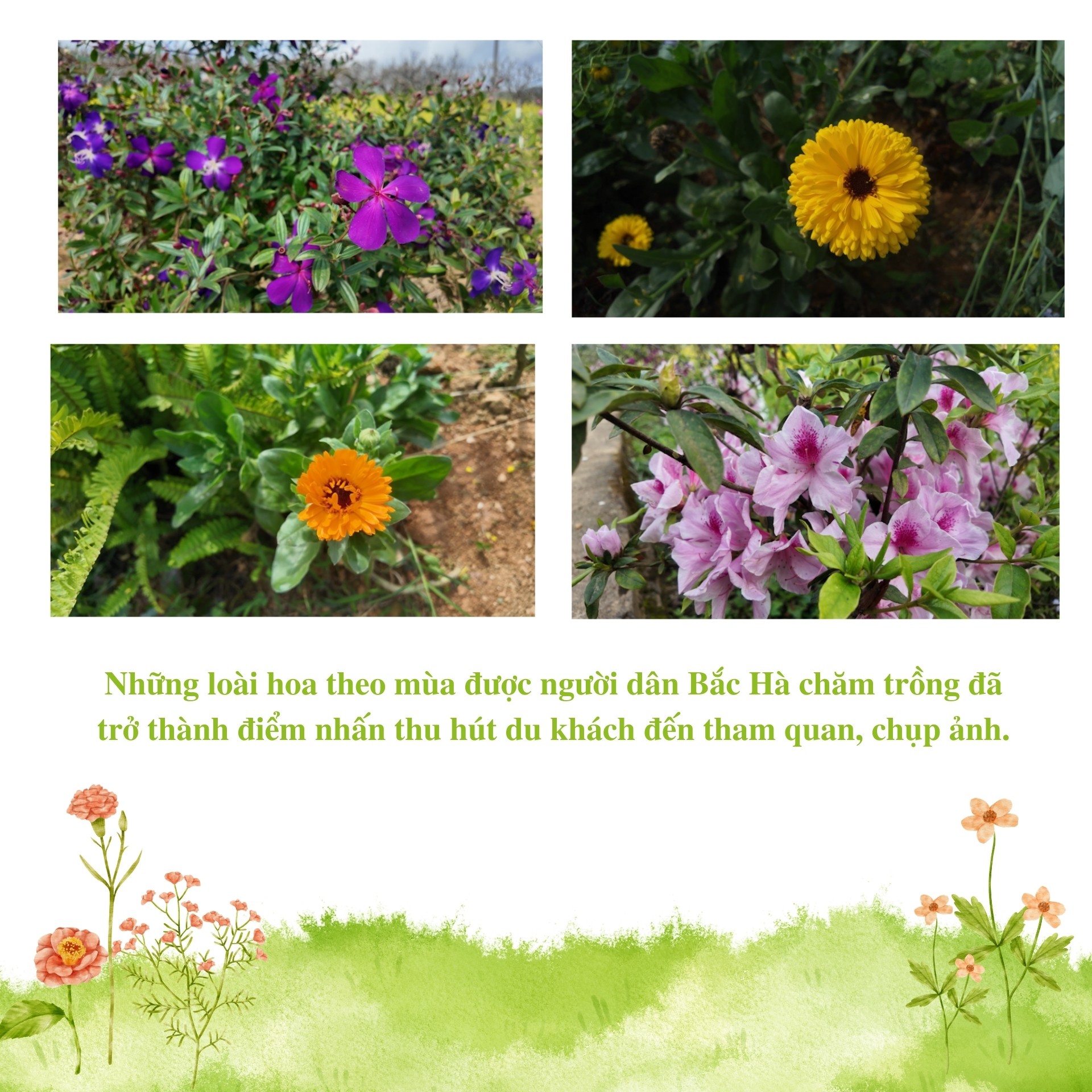
In Na Hoi Tay village, the fields that were previously mainly used for growing corn and rice are now covered with the golden color of rapeseed flowers.
Mr. Thang Van Hung is one of the pioneers in building a model of flower hills combined with tourism. He said that this idea stemmed from a desire to innovate the way he exploits his homeland's land.
According to him, in addition to income from agricultural production, his family also earns extra income from hosting tourists for sightseeing and photography. More importantly, this model helps promote the image of their homeland and create additional livelihoods right on the land that is already familiar to the people of the highlands.
Based on that reality, the local authorities have also determined that developing flower hills in conjunction with experiential tourism is a suitable direction in the context of Bac Ha gradually diversifying its tourism products.
Mr. Ha Tat Dinh, Head of the Culture and Social Affairs Department of Bac Ha commune, said that in recent years, people have been proactive and flexible in utilizing available potential.

According to local guidelines, the development of the flower hills should not only focus on their "beauty to admire," but also aim to create seasonal tourism products, forming a closed-loop experience: sightseeing, photography, learning about the cultivation process, enjoying local specialties, and exploring the indigenous culture. This will extend the length of stay and increase economic value for the local people.
From simple rice paddies serving food production, Bac Ha has transformed into a new experiential space where nature and people blend together in a changing rhythm of life. The golden hues of mustard flowers and the white blossoms of pear trees not only beautify the white plateau but also ignite hope for sustainable development.
Spring in Bac Ha is therefore not only the season of blooming flowers, but also the season of aspiration and progress. The vibrant flower-covered hills tell the story of the transformation of a land that knows how to exploit its natural advantages to enrich its homeland. Every step taken by visitors not only brings back beautiful photos and memorable moments, but also contributes to further motivating the white plateau to continue shining brightly every spring.
Source: https://baolaocai.vn/mua-xuan-danh-thuc-nhung-doi-hoa-post894749.html





































![[Video] Sunset at Lap An Lagoon – Where the sun sets over the fishing nets](https://vphoto.vietnam.vn/thumb/1200x675/vietnam/resource/IMAGE/2026/05/31/1780192137701_beach-landscape-sea-water-nature-grass-745871-pxhere-com.jpeg)






















Comment (0)