

Legally, the Law amending and supplementing certain articles of the Law on Education stipulates that specialized schools can be established at the high school level for students who achieve excellent academic results. However, in the process of developing and perfecting specific mechanisms and policies for the capital city, the draft Law on the Capital City (amended) has raised the issue of expanding Hanoi's authority in organizing certain educational models; including the establishment of a system of specialized schools from junior high school upwards.
This proposal is seen as a step forward in strengthening local autonomy, in line with the policy of promoting decentralization and delegation of power in state management. However, it also requires careful consideration and comprehensive evaluation to ensure the unity of the national education system and to harmonize the unique characteristics of the capital city with general management principles.
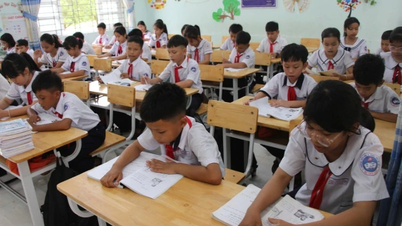
On mainstream media forums, experts, educators, and education administrators have expressed diverse perspectives on this proposal. Many opinions suggest that, given its large student population, leading educational quality nationwide, and the growing need to nurture gifted students, Hanoi has grounds to research the model of specialized schools from the junior high school level as an option to expand choices for learners.
From this perspective, creating a specialized training environment from an early age can contribute to systematically identifying and nurturing individual abilities, ensuring continuity between educational levels from lower secondary to upper secondary. Particularly in fields such as natural sciences , foreign languages, and technology, systematic and continuous investment is expected to enhance the effectiveness of developing high-quality human resources.
From another perspective, many opinions express caution regarding the establishment of specialized schools at the lower secondary level, emphasizing the psychological and physiological characteristics of this age group. This is a stage where students need a harmonious learning environment that focuses on holistic development in terms of intellect, physical health, emotions, and social skills. In-depth specialization too early could increase academic and exam pressure, potentially leading to unbalanced learning and negatively impacting holistic education.
Besides professional expertise, the issue of ensuring fairness in access to education has also been raised by many. Accordingly, if the establishment of specialized schools from the lower secondary level is not accompanied by clear criteria and strict control mechanisms, the risk of early differentiation among students is possible, leading to competitive pressure and a "school-hopping" mentality in society.
Conversely, some argue that, if properly designed and transparently managed, this model would only serve as an additional option within the public education system, without disrupting the overall standard or affecting the right to education for the majority of students.
It is noteworthy that, despite approaching the issue from different angles, the majority of opinions agree on the need to conduct a comprehensive policy impact assessment before making a decision.
Allowing a locality to adopt an educational model with unique characteristics, going beyond the general regulatory framework, if approved, must be based on a solid scientific and legal foundation, and be linked to mechanisms for monitoring, evaluating, and making timely adjustments during implementation.
Furthermore, the unified management role of the Ministry of Education and Training in ensuring quality, overall direction, and consistency in general education remains a key factor in ensuring that all innovations operate within the overall framework of the system.
It is clear that the proposal to establish specialized schools from the lower secondary level in Hanoi is an issue that needs further scientific and careful discussion, in a spirit of openness and listening to diverse opinions. Any adjustments, if considered for implementation, must be based on a clear legal foundation, have social consensus, and aim for the highest goal of ensuring the sustainable and comprehensive development of learners.
Source: https://giaoducthoidai.vn/muc-tieu-cao-nhat-vi-nguoi-hoc-post769045.html

![[Photo] Tran Cam Tu, Standing Member of the Secretariat of the Central Committee, presides over the first meeting of the Central Steering Committee on the Development of Vietnamese Culture.](https://vphoto.vietnam.vn/thumb/1200x675/vietnam/resource/IMAGE/2026/03/19/1773895004549_ndo-br-bnd-1195-2-jpg.webp)










![[Photo] The General Secretary and the Prime Minister attend the groundbreaking ceremony for multiple-level boarding schools in border areas.](https://vphoto.vietnam.vn/thumb/1200x675/vietnam/resource/IMAGE/2026/03/19/1773888999705_vna-potal-tong-bi-thu-va-thu-tuong-du-le-khoi-cong-dong-tho-dong-loat-cac-truong-noi-tru-lien-cap-bien-gioi-8649904-3885-jpg.webp)







































Comment (0)