

China wants to "make domestic demand the main driver and anchor of growth," while the shift in the private sector will be the breakthrough.
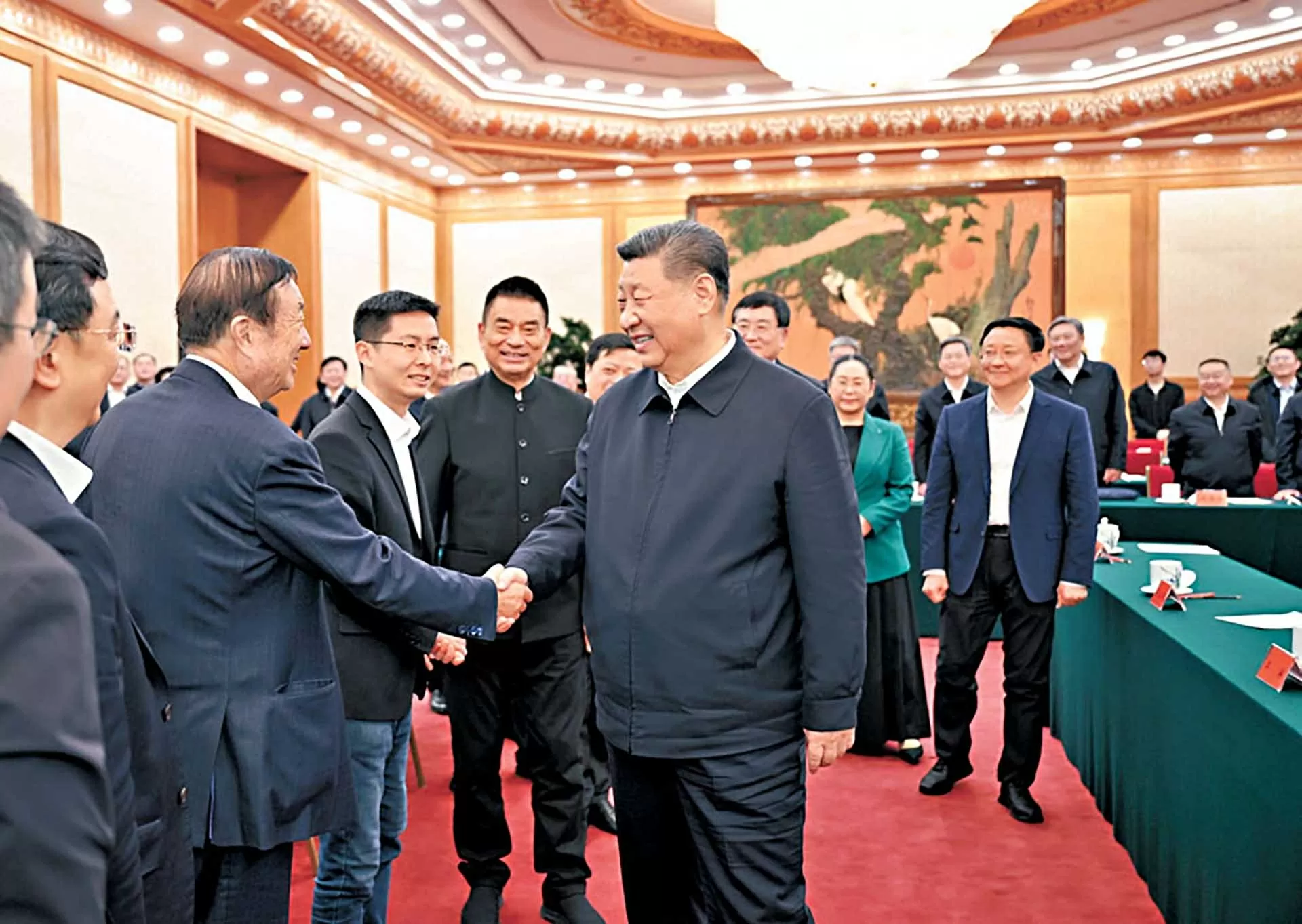 |
| Chinese President Xi Jinping met with top private business leaders on February 17. (Source: THX) |
The 14th National People's Congress (NPC) and the Chinese People's Political Consultative Conference (CPPCC) recently concluded in Beijing, leaving behind many new priorities and policy directions, as well as a new development perspective for the world's second-largest economy in its 15th Five-Year Plan.
"Anchoring" in the water
2025 marks the final year of China's 14th Five-Year Plan and is a significant milestone marking the beginning of its 15th Five-Year Plan.
At the opening session of the National People's Congress, Premier Li Qiang announced China's GDP growth target for 2025 at "around 5%". In the government's annual work report, the Chinese Premier noted that the world is witnessing "unprecedented changes in a century," with the world's second-largest economy setting out plans to stabilize growth by boosting domestic demand.
Economists comment that the 5% growth target, equivalent to that of 2024, will be challenging. China achieved last year's target with a last-minute export surge – exports jumped 10.7% in December, pushing the trade surplus to a record $1 trillion.
In 2024, China achieved a growth rate of 5%, but retail sales increased by only 3.4%, a sharp decline from 7.1% in 2023. Meanwhile, the real estate crisis continued, with investment falling by 10.6% year-on-year.
Beijing's target of 5% GDP growth, amidst the burgeoning US-China trade war, suggests that boosting the economy through trade will be difficult. US President Donald Trump, the 47th president, announced a doubling of tariffs on most Chinese goods to 20%, with some reaching as high as 45%. China quickly retaliated with tariffs of up to 15% on agricultural products.
“This target is very ambitious,” said Alicia García-Herrero, chief economist for Asia-Pacific at investment bank Natixis. She even frankly stated that this target is “unattainable” without greater stimulus, especially in the context of rising tariffs.
China's challenge in 2025 is to protect its economy from the impact of the trade war. Economists are urging policymakers to step up stimulus measures, particularly by giving consumers more money to boost domestic demand.
In the report, Premier Li Qiang stated that Beijing wants to “make domestic demand the main driver and anchor of economic growth.” However, details on how this will be implemented have been largely omitted, except for a commitment to issue 300 billion yuan (US$41.2 billion) in special treasury bonds to subsidize programs that encourage trade-in of used consumer goods and household appliances.
Beijing will also increasingly focus on the need to develop innovative and high-tech industries – areas that Chinese President Xi Jinping calls “new quality productive forces.”
Speaking before nearly 3,000 delegates at the Great Hall of the People, Premier Li Qiang emphasized that the government will establish mechanisms to increase funding for future industries such as artificial intelligence and 6G, while also promoting a "new quality workforce" in areas such as electric vehicles, batteries, and related products.
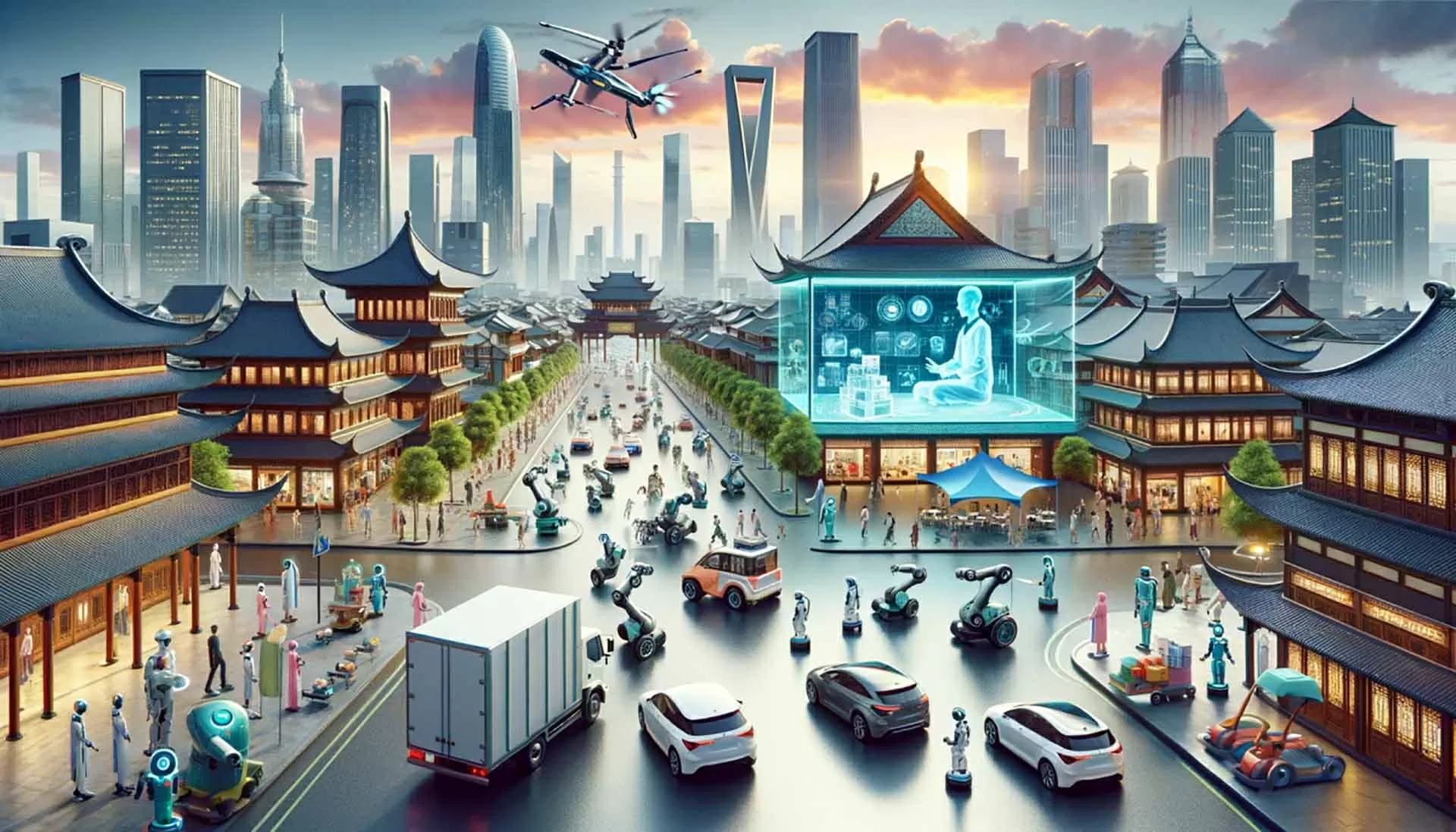 |
| China's private sector currently generates over 50% of government revenue, over 60% of economic output, and accounts for 70% of technological innovation. (Image created by AI) |
The private sector is a breakthrough.
According to estimates, China's private sector currently generates over 50% of government revenue, over 60% of economic output, and accounts for 70% of the economy's technological innovation.
At a symposium on the private economy, President Xi Jinping delivered an important speech, emphasizing the vast and promising development prospects of the private sector in the new era. He also expressed his hope that entrepreneurs would showcase their talents and become drivers of China's modernization process.
In the context of an economic transformation and model upgrade, private enterprises face numerous challenges. The government hopes to reaffirm its support for this sector through the Congress, particularly emphasizing the role of private enterprises in innovation and high technology. President Xi Jinping stressed the need to remove barriers and create a level playing field for the private sector.
This is the second time in less than a month that Beijing has shown clear signs of a "breakthrough" in the private sector. Previously, on February 17th, at the Private Enterprise Conference, President Xi Jinping personally met with leading private sector business leaders in China, emphasizing their role in reform, opening up, and technological progress. Sharing the difficulties and challenges facing the private sector, Xi Jinping acknowledged that "internal factors" outweigh "external issues."
American media outlets believe that this Party Congress could mark a major turning point for the private sector in the world's second-largest economy. President Xi Jinping asserted that the current difficulties facing the sector stem from the process of reform, development, and model transformation, and are localized rather than comprehensive, temporary rather than long-lasting.
President Xi Jinping set requirements for private enterprises, emphasizing their role in promoting modernization along the Chinese model. The leader urged businesses to stick to their core industries, develop in a high-quality direction, improve governance, strengthen internal supervision, and perfect risk prevention mechanisms.
At the same time, Xi Jinping made several clear commitments to private sector leaders, including removing barriers to fair competition, addressing financial difficulties, supporting debt resolution, and strengthening law enforcement oversight to protect the legitimate rights of businesses.
These first meetings since 2018 have fueled speculation that Beijing will grant the private sector more freedom in the face of the US-China trade war, while also supporting the private sector's rapid progress in innovation, laying the groundwork for China to establish a new technological position.
Morgan Stanley's chief economist, Robin Xing, commented, "Beijing is repositioning the private sector, viewing it as a pillar of national competitiveness amid economic and geopolitical headwinds."
Source: https://baoquocte.vn/mui-dot-pha-2025-cua-trung-quoc-307395.html


![[Photo] General Secretary To Lam receives the Special Envoy of General Secretary and President of China Xi Jinping](/_next/image?url=https%3A%2F%2Fvphoto.vietnam.vn%2Fthumb%2F1200x675%2Fvietnam%2Fresource%2FIMAGE%2F2026%2F01%2F30%2F1769759383835_a1-bnd-5347-7855-jpg.webp&w=3840&q=75)


![OCOP during Tet season: [Part 3] Ultra-thin rice paper takes off.](/_next/image?url=https%3A%2F%2Fvphoto.vietnam.vn%2Fthumb%2F402x226%2Fvietnam%2Fresource%2FIMAGE%2F2026%2F01%2F28%2F1769562783429_004-194121_651-081010.jpeg&w=3840&q=75)

![OCOP during Tet season: [Part 2] Hoa Thanh incense village glows red.](/_next/image?url=https%3A%2F%2Fvphoto.vietnam.vn%2Fthumb%2F402x226%2Fvietnam%2Fresource%2FIMAGE%2F2026%2F01%2F27%2F1769480573807_505139049_683408031333867_2820052735775418136_n-180643_808-092229.jpeg&w=3840&q=75)





Comment (0)