

In my memory of the last afternoon of the year, an old wooden chest often comes to mind. Like a secret box opened every Tet holiday, as the lock clicks and the lid slightly ajar, a strong fragrance immediately wafts out. Tet brings so many strange scents that we can't smell on ordinary days.
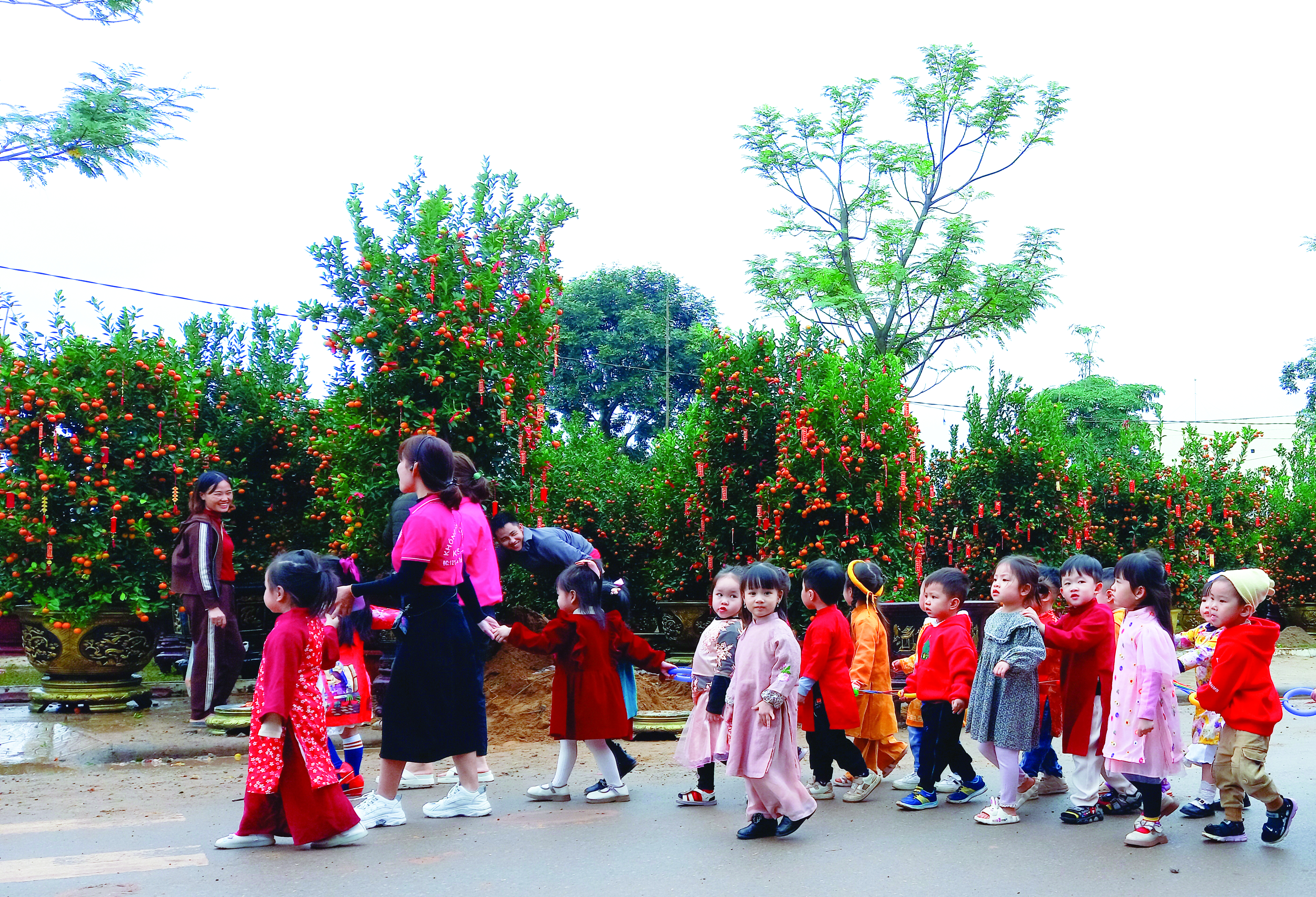
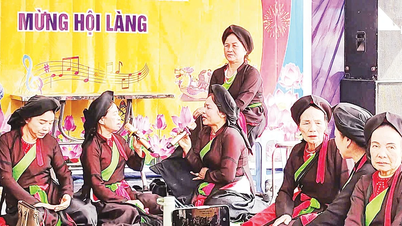
Dressed in new, elegant clothes, enjoying the spring festivities - Photo: HCD
1. In the past, every house in my hometown had one or two wooden chests. The chests were about the size one person could carry, or at most two people could carry them if they were full. They were light because they were made from a thick type of American plywood.
Peace had been restored for over a decade by then, but the plywood from the wartime era was still there. Some were even intact and in excellent condition. The larger planks could be used to make benches for sitting or lids for storing rice. The smaller ones were taken to carpenters to be made into chests. These planks were made from pine wood, bonded together in thin layers with glue, making them very durable, resistant to warping, and completely impervious to termites due to their natural oils.
A chest was used to store clothes, personal belongings, and valuables like gold and silver. Of course, the clothes had to be beautiful, luxurious, and only worn occasionally before being stored in the chest. There was an old man who had the finest clothes, which the people of Quang Tri used to call a "preserved" set, and he kept them in the chest year after year, not daring to wear them for fear of them becoming worn out or people criticizing him for being rich. So he told his children and grandchildren to take out the "preserved" set for his burial when he passed away. Truly, he lived by saving for the dead. Sometimes, if he kept them for too long, lizards would soil them, ants would build nests, or cockroaches would gnaw holes through them.
To preserve the contents of the chest, my mother placed several camphor balls inside. These green, pink, and white balls looked like lozenges. Every time we opened the chest, the strong smell of camphor filled the air. To us children, it seemed strange, yet pleasantly fragrant. But my mother said it was toxic and we shouldn't inhale it. The camphor was put in the chest to repel insects, cockroaches, and ants. We had to put several more camphor balls in the chest each year because they released their fragrance and gradually evaporated, a state that physics calls sublimation when a solid changes to a gas.
The wooden chest had an iron lock. Sometimes, out of curiosity, my siblings and I would find the key and open the chest. It turned out to contain not only clothes but also many mementos of our parents. A butterfly hair clip, a handkerchief embroidered with two doves, a wedding invitation from 1985 with a picture of two glasses of wine... The metal part of the hair clip was speckled with rust, the handkerchief had turned a yellowish-ivory color, the paper was a pale pinkish hue; everything looked old and worn, probably unwanted, yet our mother still put them in the chest and locked it.
A sky-blue dress embroidered with white lace – that was the wedding dress my mother wore when she married my father. Besides that, there was a newer, more modern outfit, her "old" one. At the end of the year, she would open the chest and take out that outfit to wear for Tet (Lunar New Year).
2. Every Tet holiday, my mother would buy clothes for my siblings and me. The mothers in the countryside said that when making children's clothes, you shouldn't use good quality fabric, but instead regularly make them in poor quality fabrics. Children don't know the difference between good and bad; they're happy to have new clothes and grow faster. For Tet, they absolutely had to have a nice outfit. In the countryside, any child who liked to wear nice clothes would be called "mần đị" (meaning "dressing up"). Perhaps the word "đi" is a play on words from the idiom "đĩ" in the language of dressing up, meaning flamboyant or pretentious. I don't know where it came from, but people say that those with single eyelids tend to dress stylishly and cleverly, like the rhyme: "The one with single eyelids is the most 'mần đị' in the village." During Tet, you'd see people dressed up like that everywhere!
My mother didn't have any newly made clothes, just the same outfit she wore year after year. It wasn't until the afternoon of the thirtieth day of the lunar month that country folk like my mother had time to worry about what to wear, because before that she had to rush to the market and prepare cakes and sweets. Eating and dressing came first, then dressing.
The shirt, taken out of the chest, bore distinct wrinkles and creases. My mother went around the village trying to borrow a small iron to iron the shirt flat. Only well-off families could afford a copper iron. Each village had about five or three, and they had to be passed around, sometimes only returning them to the owner's house just before New Year's Eve. She put red-hot coals in the iron, let it sit for a while until the underside heated up, then it was ready to use. Every now and then, she had to open the lid of the iron to fan the coals so they wouldn't go out. Sometimes, careless sparks would fly out through the vents, burning a few small holes in the shirt.
Even after ironing, the scent of camphor still lingers on the clothes. Some people find the smell unpleasant, only good for repelling rodents. Yet I find it fragrant; whenever I accidentally catch a whiff somewhere, it reminds me of the plywood chest in my old house. I remember the last day of the year when my mother opened the chest, and the scent of camphor wafted out, subtly lingering. Perhaps it's the scent of a soul that has settled into sediment, not fading over time but becoming even stronger.
Hoang Cong Danh
Source: https://baoquangtri.vn/mui-huong-trong-ruong-go-191570.htm















































































Comment (0)