Doha: Dialogue is taking place, but there has been no US- Iran meeting.
Reuters reported on June 30, citing a statement from the US government, that two White House envoys, Steve Witkoff and Jared Kushner, had traveled to Doha to work with Qatari mediators and officials in an effort to maintain diplomatic momentum on the Iran issue after the two countries reached a framework agreement, known as the Islamabad Memorandum, on June 17.
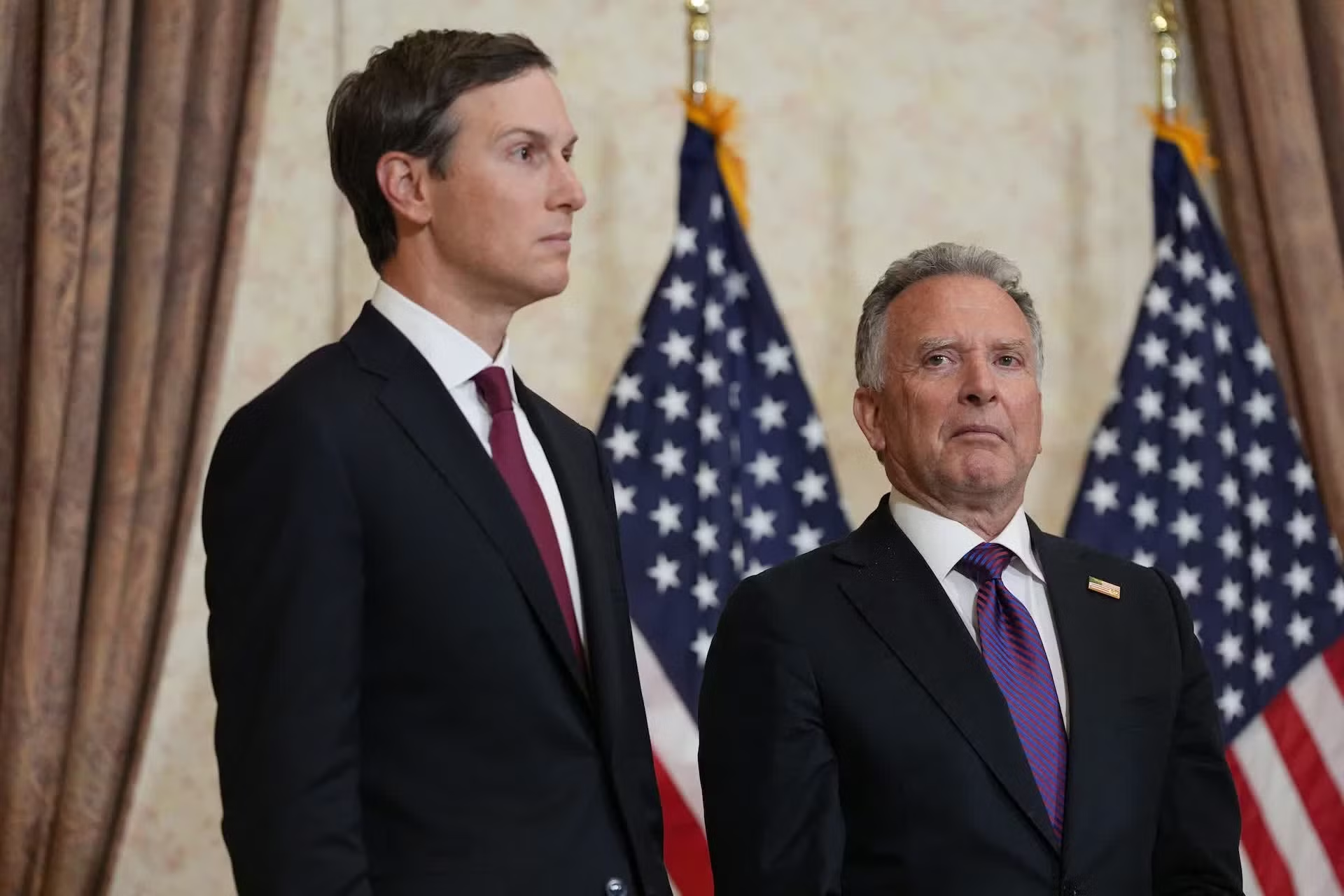
According to Qatari Foreign Ministry spokesman Majed Al Ansari, the US delegation's agenda focused on the US-Iran negotiations, the situation in Lebanon, and regional security issues. Doha reiterated its mediating role, stating it would continue to support dialogue between Washington and Tehran.
On the same day, CNN reported that Prime Minister and Foreign Minister Sheikh Mohammed bin Abdulrahman bin Jassim Al Thani met with Witkoff and Kushner to discuss US-Iran talks and recent developments in the region. The meeting also reviewed steps to implement the memorandum of cooperation between the two sides, efforts to promote regional stability through dialogue and diplomacy, and the maintenance of the ceasefire in Lebanon.
Conversely, Tehran has sent a more cautious message. On the morning of July 1st (Hanoi time), Iran announced it would send delegations to Qatar this week but rejected the possibility of direct meetings with US officials.
Iranian Foreign Ministry spokesman Esmaeil Baghaei stated: "No meetings at any level with the US side are scheduled in the coming days."
Instead, any contacts, if they occur, will take place at the technical level through Qatar as an intermediary. The Guardian quoted Iranian officials as saying that the immediate focus is on finalizing the technical aspects of the framework agreement, particularly the release of at least $6 billion in frozen Iranian assets abroad and the lifting of sanctions targeting oil exports.
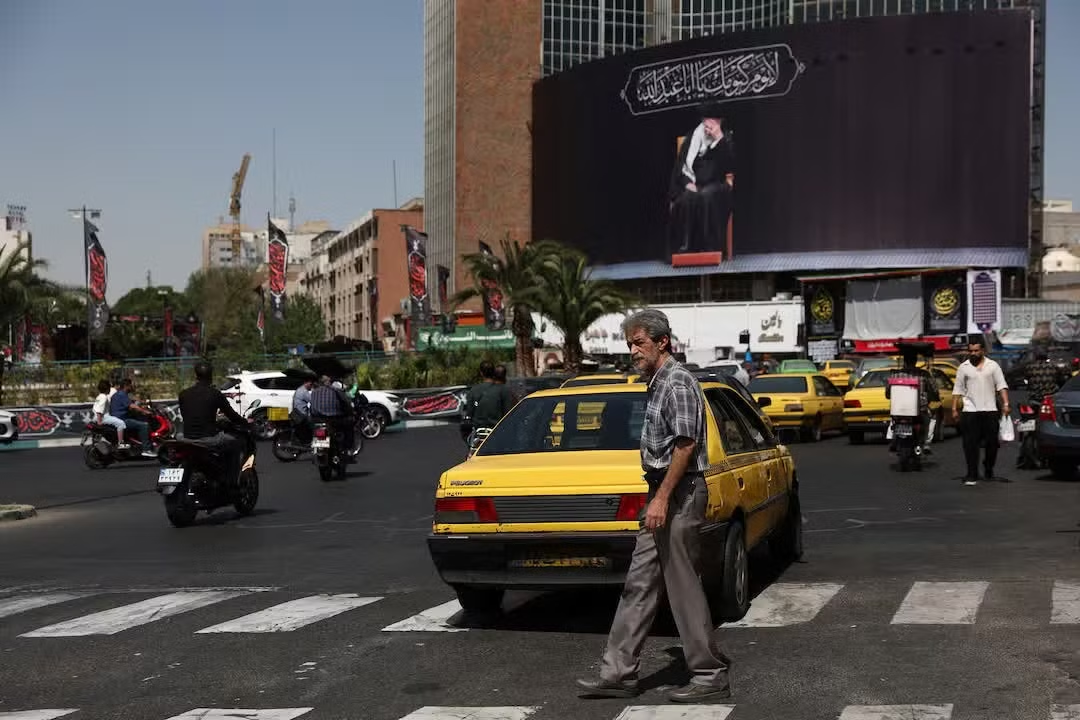
Meanwhile, before the delegation departed for Doha, US President Donald Trump had stated that Iran had offered to hold a meeting with US officials on June 30th. However, he later expressed reservations, saying the meeting "may be important, or it may not," and that they would have to wait for the actual results.
Washington's mention of a face-to-face meeting, while Tehran publicly rejects the possibility, shows that the two sides have yet to agree even on the form of dialogue.
Reuters noted that the gap between the two sides also lies in their differing understandings of the roadmap for implementing the agreement. Iran argues that it is necessary to first finalize the ceasefire terms and economic commitments before moving on to more difficult topics such as limiting its nuclear program.

Meanwhile, the US wants to quickly move the process to a more comprehensive negotiation phase aimed at building a lasting peace agreement.
Hormuz and Lebanon continue to be "bottlenecks".
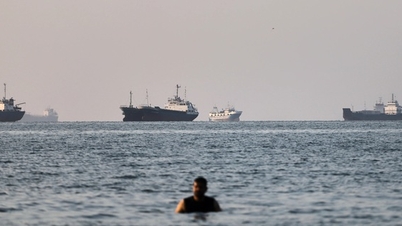
Besides differences in diplomatic procedures, developments on the ground continue to strongly impact the US-Iran process. One of the key issues remains the Strait of Hormuz – a shipping lane that transported approximately 20% of the world's oil and liquefied natural gas before the conflict erupted.
According to Reuters, Iran insists it retains control over traffic in the strait along with Oman. Iranian Parliament Speaker Mohammad Baqer Qalibaf reiterated on June 30th that sovereignty over Hormuz "belongs to Iran and Oman," and that traffic will be subject to regulations set by Tehran.
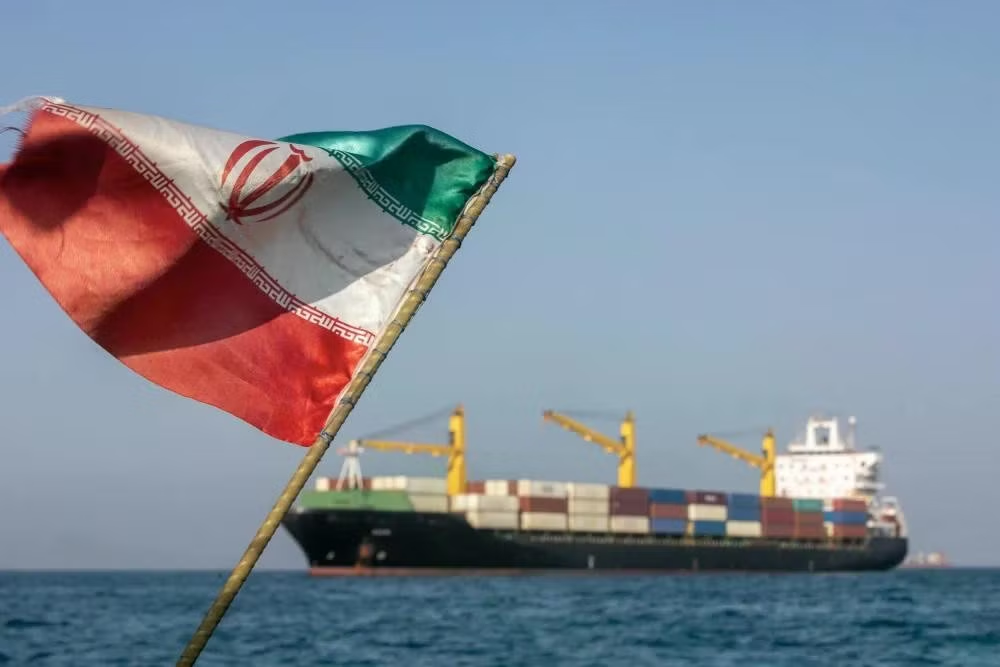
Iranian officials also said the country plans to implement a fee mechanism for ships when the 60-day negotiation period ends in mid-August 2026. The US opposes this plan and has repeatedly warned Iran against imposing fees on the Strait of Hormuz.
Data from the maritime tracking service MarineTraffic shows that shipping traffic through the Strait of Hormuz has only partially recovered since the US-Iran signed the Islamabad Memorandum. In the last 24 hours, 32 ships passed through the strait, including 17 entering the Persian Gulf and 15 leaving the area. This is significantly lower than the average of around 110 ships per day before the outbreak of hostilities.
Analysis by TankerTrackers indicates that since the US-imposed blockade of Iranian ports was lifted two weeks ago, Iran has exported approximately 50 million barrels of crude oil, but many Gulf countries are still struggling to get their oil to international markets.
One positive sign is that GPS signal interference for ships in the Hormuz region has significantly decreased compared to previous months, contributing to more stable maritime operations. However, analysts believe this is only a temporary improvement because the provisions related to Hormuz are the most important pillar of the US-Iran agreement.
Alongside the Hormuz crisis, the situation in Lebanon remains complex. One of the key points emphasized by Iran in the Islamabad Memorandum is the goal of reducing conflict between Israel and Hezbollah.
According to CNN, the meeting between the parties in Doha also devoted considerable time to discussing the maintenance of the ceasefire in Lebanon. Qatar emphasized the need to protect its sovereignty and stability through dialogue.
However, on the ground, fighting has not completely ended. The Israeli military said it carried out an airstrike targeting a Hezbollah member in the Manzala area of southern Lebanon, citing threats against Israeli forces.



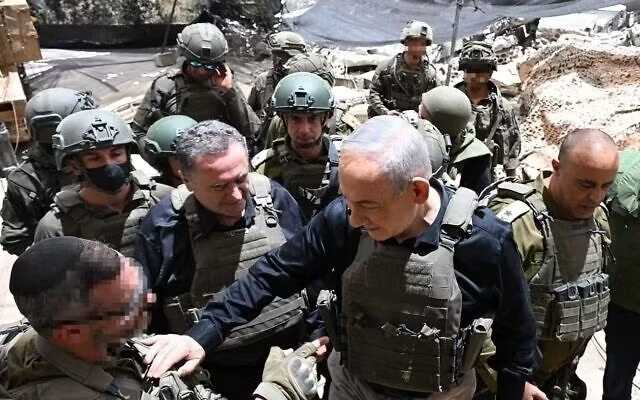
On June 30, Israeli Prime Minister Benjamin Netanyahu visited the area controlled by Tel Aviv in southern Lebanon and declared that Israeli troops would not withdraw "until the threat from Hezbollah is eliminated." He also instructed soldiers to "act immediately" if they detected any threat to the safety of Israeli forces.
Meanwhile, Lebanon's national news agency (NNA) accused the Israeli army of continuing to damage infrastructure in several towns in southern Lebanon, including Markaba, Beit Yahoun, and Aita al-Jabal. The Lebanese Ministry of Health estimates that more than 4,200 people have been killed in Israeli attacks since March 2026.
Overall, the developments in Doha show that diplomacy between the US and Iran is still ongoing but has not yet achieved a breakthrough. Both sides are willing to continue dialogue, but there are significant differences on the order in which commitments are being fulfilled, the level of direct contact, and priorities on the negotiating table.
With hotspots like Hormuz and Lebanon still posing a risk of escalation, progress toward a comprehensive peace agreement will likely depend on the ability to narrow these "gaps" in the upcoming rounds of technical negotiations.
Source: https://cand.vn/my-iran-lech-pha-บน-ban-dam-phan-post815409.html