
 |
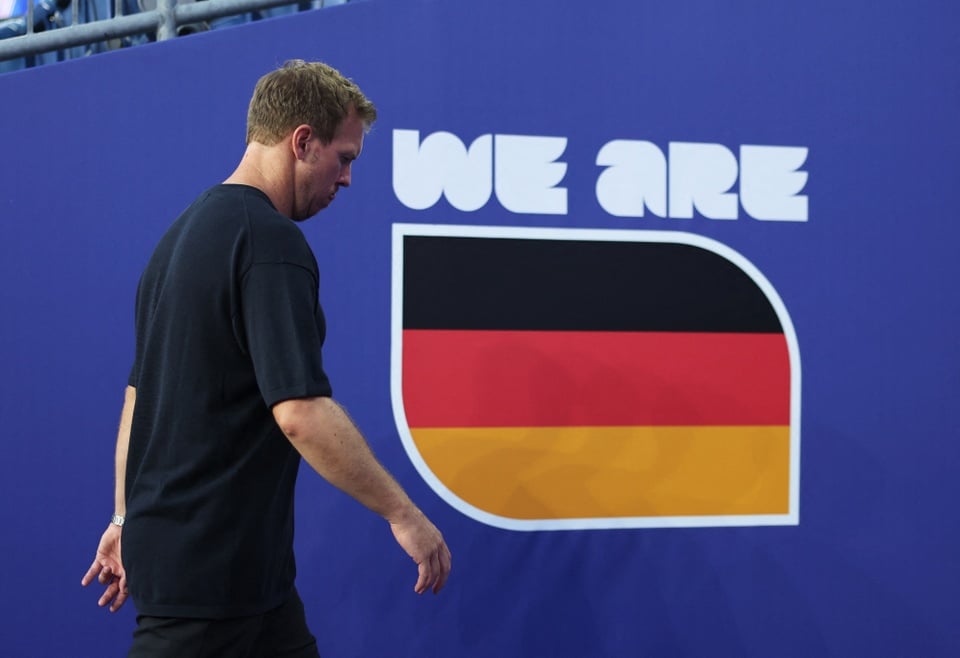
Julian Nagelsmann faced significant scrutiny after Germany's elimination by Paraguay in the Round of 32 of the 2026 World Cup. |
Germany exited the 2026 World Cup in the round of 32 after a 1-1 draw against Paraguay and a 3-4 defeat on penalties. In theory, this could be seen as a tragic loss of luck. But considering the 120 minutes leading up to that, the defeat was not surprising at all.
Germany had more possession, more shots, and more corners, but still couldn't finish off a disciplined and pragmatic Paraguay side.
The inexplicable belief in Sane
Julian Nagelsmann's team controlled 75% of the possession, took 21 shots, and had 16 corner kicks. Those numbers usually belong to a dominant team. But Germany's dominance was only superficial. They had possession, but lacked speed. They had many shots, but lacked sharpness. They constantly pushed the ball into Paraguay's half, but failed to create the feeling that the game was under their control.
That's what makes this defeat a disaster. Germany wasn't eliminated by a superpower. They were eliminated by a team that knew they were weaker, opted to play deep, lock down the midfield, contest aggressively, and drag the game into a tense situation. Paraguay played within their limits. Germany, on the other hand, couldn't find a way to overcome their own limitations.
The responsibility, therefore, doesn't lie solely with the player who missed the penalty. It must begin with Nagelsmann. In a knockout match, the coach is judged by their personnel choices and their ability to turn the game around. Against Paraguay, Nagelsmann failed in both areas.
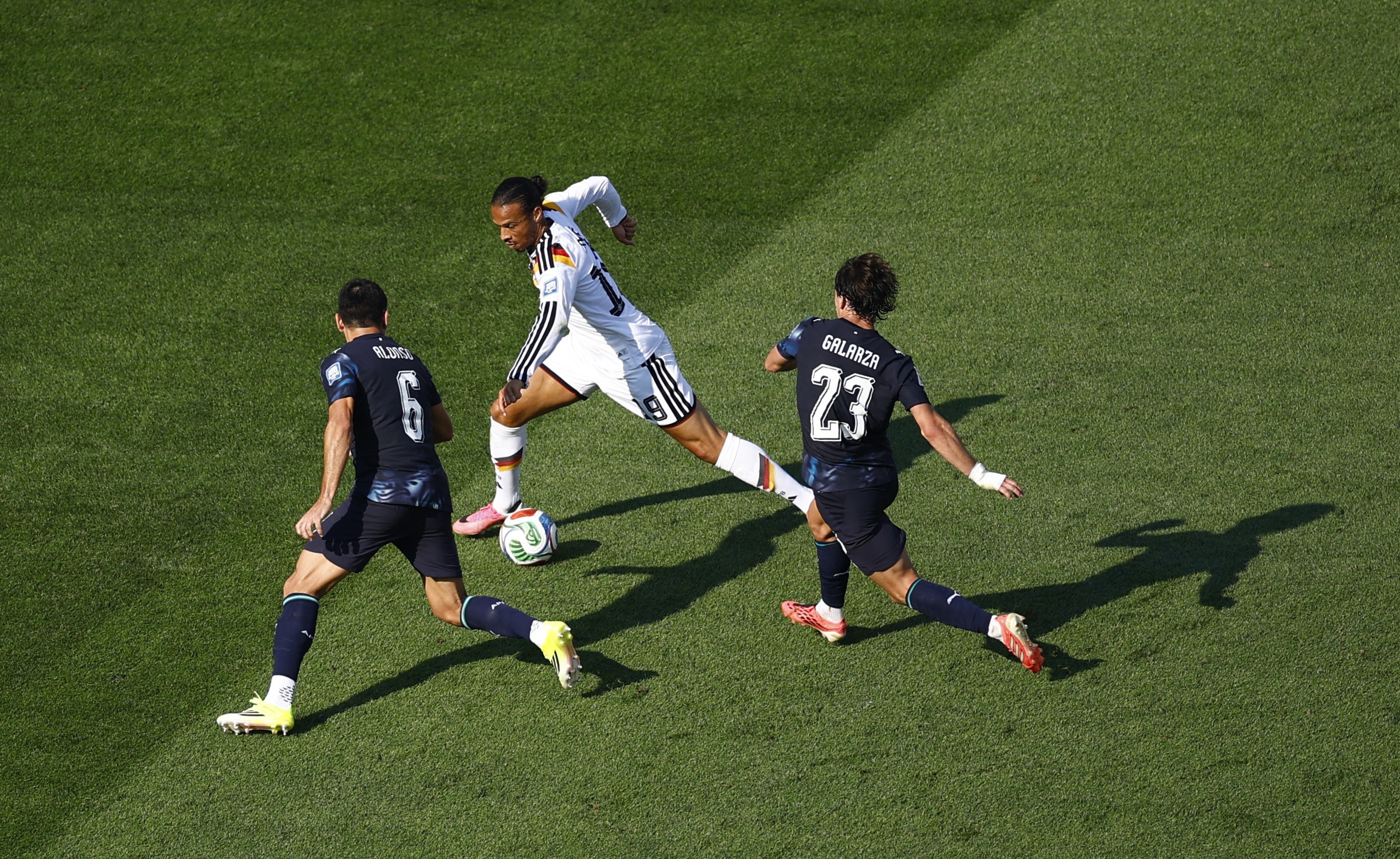 |
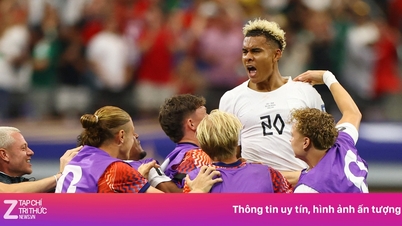
Nagelsmann's decision to put faith in Sané and leave Musiala on the bench drew much criticism after the defeat. |
Leroy Sane was the epitome of Germany's deadlock. He played 88 minutes, but only had one shot and failed to create any game-changing moments. In the first half, Sane completed 32 out of 36 passes and delivered 5 crosses. On the surface, those aren't bad statistics. But football isn't just about the number of accurate passes.
The problem is the practical impact. Sane lost possession 15 times in the first half and was caught offside once. For an attacking player expected to unlock the game, that's a worrying sign. Germany doesn't need a player who just receives the ball, makes safe passes, and occasionally crosses into the box. They need someone who can make a difference against Paraguay's deep defense.
Sane failed to do that. He didn't disrupt the Paraguayan defense. He didn't draw the opponent out of their structure. He didn't create the feeling that Germany had a sufficiently dangerous attacking threat on the wing. When an attacking player plays almost the entire match but only has one shot, the question is no longer about individual performance. It must be directed at the coach who kept him on the field for so long.

Nagelsmann may have faith in Sane's speed and experience. But in a specific match, faith must be tested by results. When Germany became increasingly frustrated and Paraguay retreated more and more defensively, continuing to place expectations on Sane became a puzzling choice.
This wasn't a case of Germany lacking possession. They had too much of it. They just lacked someone to turn that ball into real pressure. Sané couldn't solve that problem.
The lineup lacks a solution.
Nagelsmann's mistake wasn't limited to Sane. Leaving Jamal Musiala on the bench and using Deniz Undav also made Germany's attacking structure more cumbersome.
Against a low-lying Paraguay defense, Germany needed players who could handle tight spaces, dribble past opponents, create space between the lines, and provide cover. Musiala was the closest fit for that need.
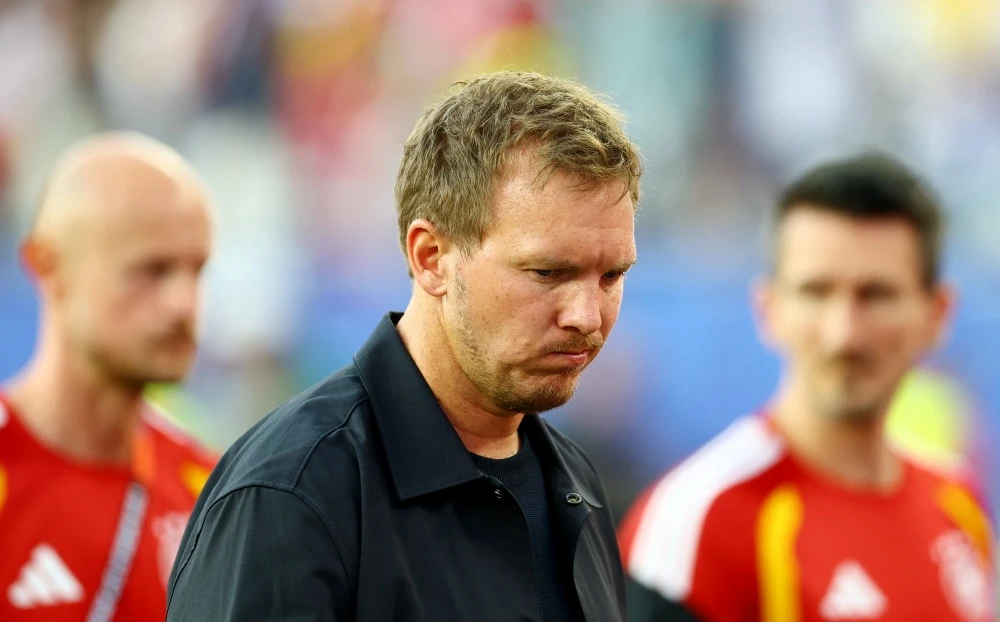 |
Germany dominated possession, but Nagelsmann's personnel choices didn't make a difference. |
Undav can bring weight to the penalty area, but this isn't a game where you just need one more player waiting for the ball. Germany needs someone to disrupt Paraguay's defense before the ball gets into danger. Undav failed to do that. He didn't draw the opposing defense out of position, didn't help Germany increase their tempo in midfield, and didn't create a clear connection with Kai Havertz.
Havertz's equalizer showed that Germany still possesses individual quality. Wirtz delivered a good cross, Havertz positioned himself perfectly, and headed the ball delicately. When good players are in the right roles, things become simpler. But moments like that are too rare. Germany lacks a strong enough attacking structure to replicate those quality plays.
This is where Nagelsmann is responsible. He had enough time to see what Paraguay wanted. The opponent dropped deep, locked down the midfield, and forced Germany to move the ball to the flanks. But Germany lacked sufficiently innovative solutions to break through that defensive block. They passed a lot, crossed a lot, and shot a lot, but the more they played, the more their lack of ideas became apparent.
Jonathan Tah's disallowed goal in extra time was a controversial detail. If it had been allowed, Germany could have progressed. But VAR cannot be the cover-up for the entire match. VAR cannot explain why a team that controlled 75% of the ball, had 21 shots, and earned 16 corners still couldn't beat Paraguay in 120 minutes.



Germany didn't just lose on penalties. They lost because they chose the wrong approach, the wrong players, and didn't fix the game well enough. Paraguay won because they understood their limitations. Germany lost because they still thought possession could replace creativity.
After setbacks at the 2018 and 2022 World Cups, Germany needed a tournament to prove they had emerged from their crisis. But the defeat against Paraguay only extended that nightmare. This time, the problem was clear: the team had more possession, but fewer solutions.
And when a big team shoots itself in the foot with unconvincing personnel choices, failure is no longer an accident.
That is Nagelsmann's responsibility.
Source: https://znews.vn/nagelsmann-sai-tu-dau-post1664512.html


![[Photo] Strengthening character and expertise: Intense training for artillery soldiers.](https://vphoto.vietnam.vn/thumb/1200x675/vietnam/resource/IMAGE/2026/06/30/1782815602541_lu-368-1875-4571-jpg.webp)