 |
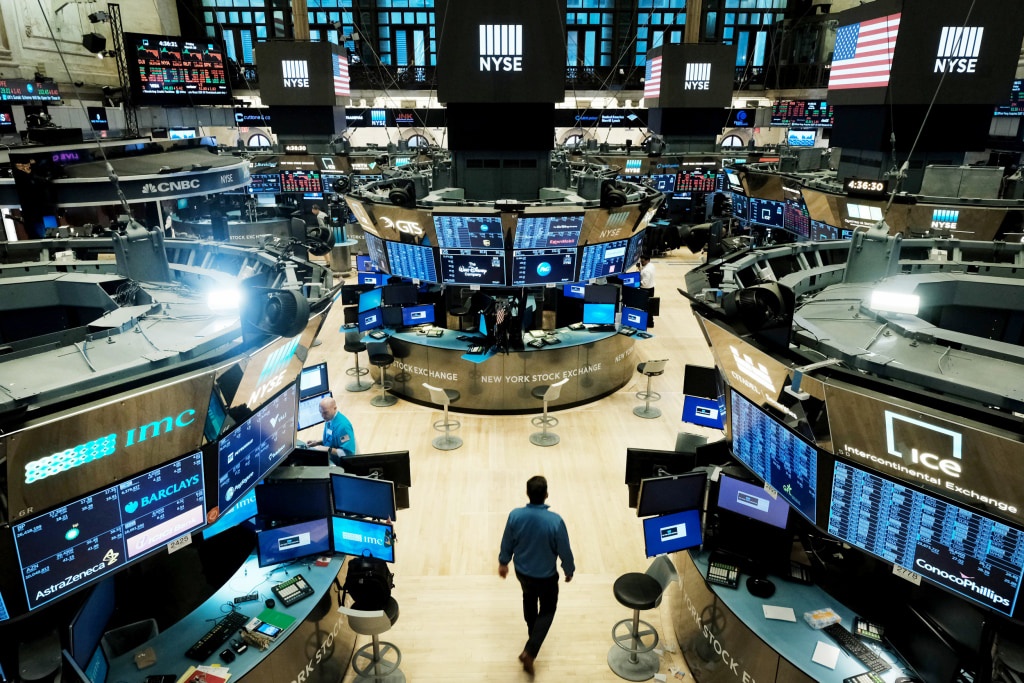
| Technology and semiconductor stocks surged, helping the Nasdaq rise nearly 2%, leading a strong Wall Street rally on June 18. |
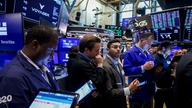
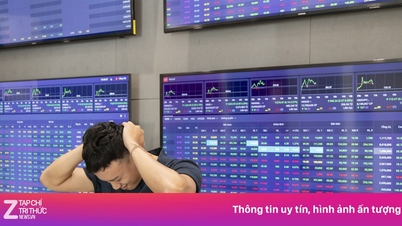
The trading session on June 18th (early morning of June 19th, Vietnam time) closed with gains across most major Wall Street indices, marking a strong recovery after the previous correction. The growth was primarily driven by technology and semiconductor stocks, amid temporarily easing concerns about inflation and geopolitical tensions.
At the close of trading, the S&P 500 rose 1.1% to 7,500.58 points. The Nasdaq Composite surged 1.9%, or nearly 500 points, closing at 26,517.93 points. Meanwhile, the Dow Jones Industrial Average edged up 72.15 points, or 0.1%, to 51,564.70 points. The Russell 2000, representing small-cap companies, also recorded an impressive 2.1% gain.
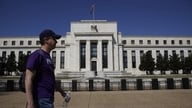
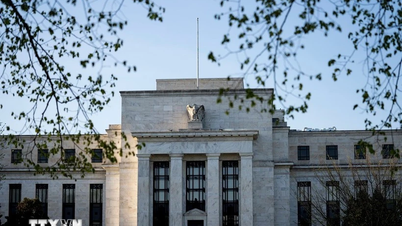
This positive development occurred just one day after the market was under heavy selling pressure due to hawkish signals from the Fed. In its most recent meeting, the Fed indicated the possibility of continuing to raise interest rates this year to control inflation, causing US Treasury yields to rise and stock indices to fall across the board.
However, on June 18th, investor sentiment improved significantly as Treasury bond yields cooled and oil prices plummeted. These are considered important factors in easing inflationary pressure on the US economy .
One of the strongest pieces of news supporting the market was the temporary peace agreement reached between the US and Iran, along with the agreement to reopen the Strait of Hormuz to international oil shipping. The Strait of Hormuz is a vital energy shipping route for the world , through which approximately 20% of global crude oil flows.
The removal of the risk of energy supply disruptions has driven oil prices down to their lowest level since March. Investors expect lower energy prices to help cool inflation, thereby reducing pressure on the Fed to continue raising interest rates.
According to Brian Jacobsen, Chief Economic Strategist at Annex Wealth Management, falling energy prices will greatly benefit consumers and businesses.

"The pressure on consumers will ease. This also means the Fed will have less reason to carry out the interest rate hikes they had previously signaled," he said.
In this context, money quickly flowed back into growth stocks, especially in the technology and artificial intelligence (AI) sectors.
The highlight of the trading session was the semiconductor sector. The Philadelphia Semiconductor Index surged 6.4%, becoming the best-performing sector in the market.
Notably, Intel shares rose more than 10% after announcing a partnership with Apple to design and manufacture chips in the US. This news had a positive ripple effect on many other semiconductor companies, contributing to the sharp rise in the Nasdaq.
Analysts believe that the appeal of the AI sector remains a key driver in helping technology companies maintain their market leadership. Despite the potentially risky interest rate environment, investors continue to place their trust in the long-term growth prospects of the semiconductor and artificial intelligence industries.
Besides industry factors, recent US economic data has also contributed to bolstering market confidence. According to Reuters, the number of unemployment benefit claims remains low, indicating that the US labor market continues to be stable and the world's largest economy remains relatively resilient to a high-interest rate environment.
Nevertheless, investors have not completely dismissed concerns related to monetary policy. CME Group's FedWatch tool shows that the market is still betting on the possibility of the Fed raising interest rates in the final months of the year. The probability of a 25 basis point increase in December is currently close to 39%, while the probability of a total increase of 50 basis points is over 32%. This means that volatility could still occur at any time if economic data or inflation figures do not unfold as expected.
Wall Street experts believe the market is gradually shifting to trading based on fundamental factors such as economic growth, corporate earnings, and industry prospects, rather than focusing solely on Fed decisions as in the past.
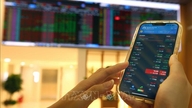

In the short term, the sharp drop in oil prices and easing inflationary pressures may continue to create favorable conditions for riskier assets. However, investors still need to closely monitor monetary policy developments, inflation trends, and global geopolitical situations.
Closing out a shortened trading week ahead of the Juneteenth holiday, the Nasdaq continued to be the top performer on Wall Street. The strong gains in technology and semiconductors indicate that capital continues to favor high-growth sectors, reflecting investor confidence in the long-term prospects of the ongoing global AI revolution.
Source: https://thoibaonganhang.vn/nasdaq-dan-dat-da-hoi-phuc-cua-pho-wall-183702.html
![[Photo] General Secretary and President To Lam receives Palestinian Ambassador Saadi Salama](https://vphoto.vietnam.vn/thumb/1200x675/vietnam/resource/IMAGE/2026/06/25/1782365384740_a1-bnd-9423-8322-jpg.webp)
![[Image] Ho Chi Minh City: Ma Lang area, Chicken-Rice Market about to change its appearance](https://vphoto.vietnam.vn/thumb/1200x675/vietnam/resource/IMAGE/2026/06/25/1782377698627_ndo_br_m1-jpg.webp)

![[Image] Schools organize meetings and introduce teaching models to students admitted to grade 10.](https://vphoto.vietnam.vn/thumb/1200x675/vietnam/resource/IMAGE/2026/06/25/1782368077271_ndo_br_z7970052192242-1ec8daeb77a6eed1a4e9f58c564ddd3e-jpg.webp)






























![[Infographic] Cross-exchange rates for determining taxable value from June 25th to July 1st](https://vphoto.vietnam.vn/thumb/402x226/vietnam/resource/IMAGE/2026/06/22/1782094958030_156205398517027320260622090938.jpeg)