1. Protein is the building block of life.
- 1. Protein is the building block of life.
- 2. Health risks of protein deficiency
- 3. Common sources of protein-rich foods
- 3.1 Chicken: A source of lean protein and low calories.
- 3.2 Pork: A complete protein source rich in B vitamins
- 4. So, which is better for protein, chicken or pork?
When it comes to protein, many people immediately think of gym-goers or athletes. However, in reality, protein is an essential nutrient that plays a central role in the structure and function of most tissues in the body.
Proteins are present in muscles, bones, skin, hair, and almost every organ; they are involved in the structure of enzymes, hormones, and hemoglobin – the molecule that carries oxygen in the blood. According to Harvard Health, there are at least 10,000 different types of proteins that make up the human body and maintain basic life functions.
The body's ability to synthesize protein depends not only on protein intake but is also closely related to an individual's overall health and level of physical activity.
The National Academy of Medicine recommends that adults consume a minimum of 0.8 grams of protein per kilogram of body weight per day. This is considered the minimum level for maintaining normal physiological functions.
2. Health risks of protein deficiency
Protein plays a vital role in maintaining the structure and function of cells. When the body does not receive enough protein from the diet, it is forced to break down muscle mass to obtain the amino acids needed for vital functions.
In the long term, protein deficiency can lead to many health problems, including:
- Prolonged fatigue and weakness, reduced energy for daily activities.
- Thinning hair, brittle nails, and peeling skin reflect a deterioration in tissue structure.
- Fluid imbalance can lead to swelling in the legs, feet, or abdomen.
- Loss of muscle mass and strength affects mobility and the ability to work.
- A weakened immune system makes the body more susceptible to infections and illnesses.
- Mood swings, irritability, or depression.
- Wounds heal slowly because proteins are essential for tissue repair.
3. Common sources of protein-rich foods
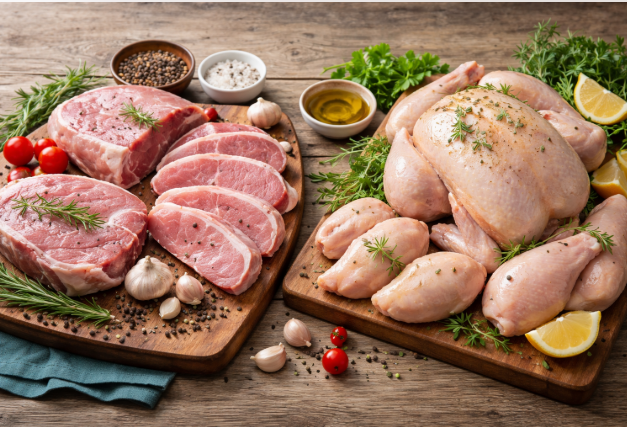
Pork and chicken are common sources of protein and many essential micronutrients for the body when prepared properly.
Protein is found in many different foods, but their nutritional value lies not only in the protein content but also in the accompanying nutrients. According to Harvard Health, good sources of protein include:



- Types of beans: Young soybeans, kidney beans, peas…
- Nuts and seeds: Almonds, walnuts, pumpkin seeds, flax seeds, sesame seeds, chia seeds…
- Whole grains: Wheat, quinoa, brown rice, oats, buckwheat…
- Vegetables: Corn, broccoli, asparagus, Brussels sprouts…
- Animal protein: Chicken, eggs, beef, pork, lamb…
Of these, chicken and pork are two of the most commonly consumed, easily accessible, and frequently compared types of meat.
3.1 Chicken: A source of lean protein and low calories.
Chicken is one of the most popular meats, easy to prepare and suitable for many diets. Besides protein, chicken also provides many important micronutrients such as niacin, selenium, phosphorus, and vitamins B6 and B12 – nutrients essential for energy production, DNA synthesis, and brain health.
According to the U.S. National Institutes of Health (NIH), protein from chicken meat is classified as a high-quality complete protein, providing all 20 amino acids, including 9 essential amino acids that the body cannot synthesize on its own.
A major advantage of chicken is its low calorie content but high protein content. On average, 100 grams of cooked chicken provides about 31 grams of protein, which helps create a feeling of fullness, supports weight management, and maintains healthy muscle mass.
Regarding preparation methods, experts recommend prioritizing the following:
- Boiled or steamed chicken.
- Grilled chicken.
- Chicken stir-fries with just the right amount of oil, combined with vegetables...
Conversely, you should limit your consumption of deep-fried chicken, heavily marinated chicken, or processed chicken products.
3.2 Pork: A complete protein source rich in B vitamins
Pork is a widely consumed red meat, particularly popular in East Asian countries. Many familiar products such as bacon, ham, sausages, and cold cuts are derived from pork.
According to experts, 100 grams of cooked pork provides approximately 25.7 grams of protein, along with all nine essential amino acids needed for growth and maintenance. Healthline states that pork is one of the most complete sources of protein in the diet.
Besides protein, pork is also rich in B vitamins, which play an important role in cell function and development. Some studies show that pork can help protect muscle mass after exercise and contribute to improved athletic performance.
However, the World Health Organization (WHO) warns that processed pork products such as sausages, bacon, or ham may increase the risk of cancer if consumed regularly.



4. So, which is better for protein, chicken or pork?
Nutritionally, both chicken and pork are high-quality sources of protein, providing essential micronutrients for the body. The choice of which type of meat is more suitable largely depends on personal taste, eating habits, cultural factors, and health goals.
However, thanks to its higher protein content and lower calorie count, chicken is often considered a healthier option for those looking to increase their protein intake while still managing their weight.
Ultimately, the important thing is not just choosing chicken or pork, but also the cooking method and the appropriate amount to consume within the overall daily diet.
Readers are invited to read more:
Source: https://suckhoedoisong.vn/nen-bo-sung-protein-tu-thit-ga-hay-thit-lon-169260208113633606.htm





![[Image] Overview of the construction site for the underground station of metro line 5 at the Hanoi Ring Road 1 intersection.](https://vphoto.vietnam.vn/thumb/1200x675/vietnam/resource/IMAGE/2026/07/03/1783065595682_ndo_br_z7974930852369-100ca093c306e72675f1d3700966a86b-jpg.webp)