

Currently, the highest regional minimum wage is 4.96 million VND/month and the lowest is 3.45 million VND/month, but on average, the income of salaried workers in 2024 reached approximately 8.5 million VND/month. While this is higher than the regional minimum wage, it still does not guarantee a decent standard of living for workers.
Specifically, according to a survey by the Institute of Workers and Trade Unions (now the Institute for Strategic Studies and the Labor-Trade Union Magazine), Vietnam General Confederation of Labor , the average monthly expenditure of each working-class household reaches 14.059 million VND and tends to be higher towards the end of the year. In the expenditure structure, three major expenses are food, tuition fees, and debt repayment. With current individual incomes only covering 63% of family expenses, a working-class family needs at least two working members to cover basic living costs…
Thus, it can be seen that increasing the regional minimum wage is always necessary; the remaining question is how much to increase it and whether it will be increased at all? According to the analysis of Le Dinh Quang, Deputy Head of the Policy, Law and Labor Relations Department of the Vietnam General Confederation of Labor, the average increase rate of the minimum wage was about 9% during the period 2015-2020, but from 2020 to the present, the rate has been lower, only about 5-6%. Therefore, the minimum wage must increase at a faster pace to meet practical needs and be in line with the nation's development in this era.
Another opinion suggests that with a GDP growth rate of over 8% in 2025, higher than in 2024, the minimum wage can be adjusted upwards. Therefore, it is necessary to strengthen the roles of representatives of employers, employees, and the State in negotiating minimum wage adjustments in 2025. Simultaneously, businesses that achieve high efficiency in production and business should be encouraged to negotiate minimum wage increases between the two parties and implement them within their companies.
In reality, negotiations on minimum wage increases have never been concluded in one or two sessions, except for 2020, when both sides agreed not to increase the wage due to the impact of the Covid-19 pandemic. Both employee and employer representatives have their own arguments for proposing or rejecting the increase suggested by the employee representatives.
However, it must be clear that wages are a motivator for workers to contribute. The regional minimum wage serves as a floor to ensure a minimum standard of living for workers. And investing in wages is an investment in development, an investment in human resources. Therefore, when the minimum wage is increased, the overall income of workers will also be raised. This not only helps improve the lives of workers but also creates motivation to boost productivity, contributing to economic growth, and when the economy develops, workers will benefit from that achievement.
Former Deputy Chairman of the Committee on Social Affairs (now the Committee on Culture and Society) Bui Sy Loi once stated that for businesses to retain employees, the most important issue is income and wages. Therefore, adjusting the minimum wage upwards at a reasonable level would have a "double benefit": it would benefit both employees and businesses by motivating them to increase productivity and remain committed to the company.
Therefore, although adjusting the minimum wage will have direct impacts on businesses such as increased product prices, higher production costs, and potentially reduced profits, it will lead to more harmonious labor relations within businesses. In the long run, this will benefit the production process, limit supply chain disruptions, and prevent labor shortages. The remaining issue is to ensure a reasonable adjustment level that guarantees the livelihoods of workers while avoiding negative impacts on businesses and the economy. Workers always want a wage increase, but this must be carefully considered and based on a balance of interests between both parties.

![[Photo] General Secretary and President To Lam meets with National Assembly delegates from ethnic minorities.](https://vphoto.vietnam.vn/thumb/1200x675/vietnam/resource/IMAGE/2026/04/20/1776696701056_a1-bnd-8331-3342-jpg.webp)
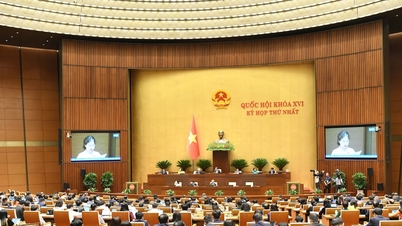
![[Image] National Assembly discusses the implementation of the socio-economic development plan.](https://vphoto.vietnam.vn/thumb/1200x675/vietnam/resource/IMAGE/2026/04/20/1776696707422_ndo_br_img-20260420-185419-jpg.webp)




![[Infographics] Information on the 34 Chairpersons of Provincial and City People's Councils for the 2026-2031 term](https://vphoto.vietnam.vn/thumb/402x226/vietnam/resource/IMAGE/2026/04/21/1776727949303_package-media-53613504261372558961610-84744387961269657917369.png)




































































Comment (0)