

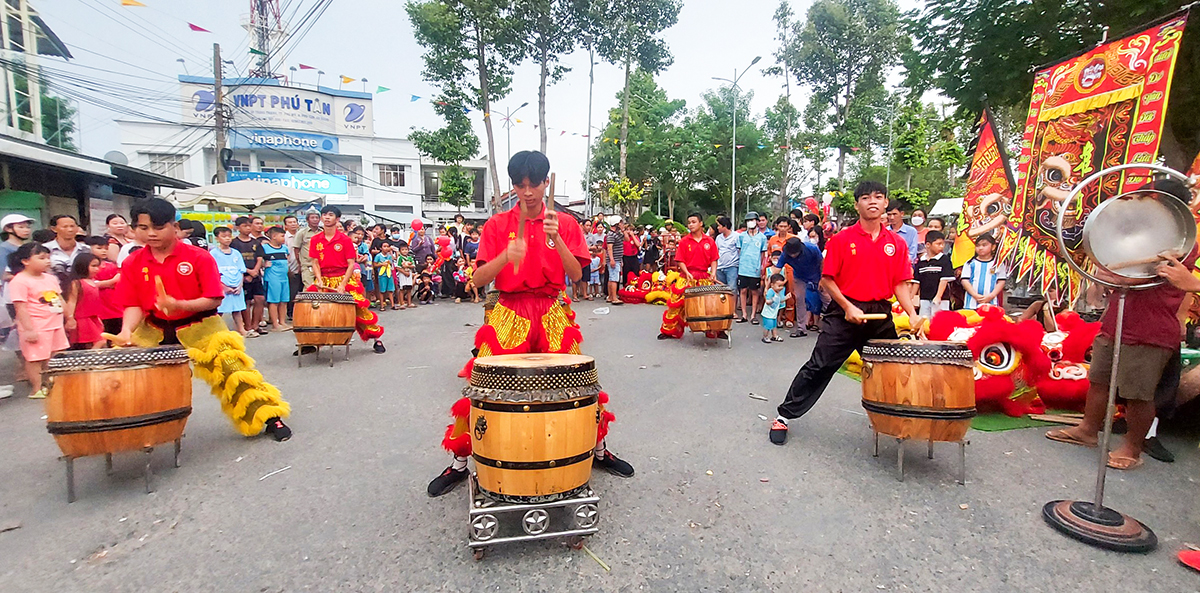
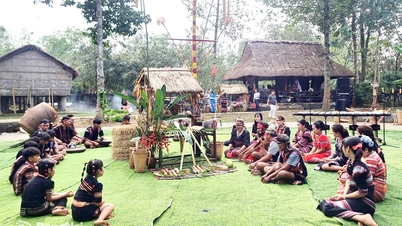
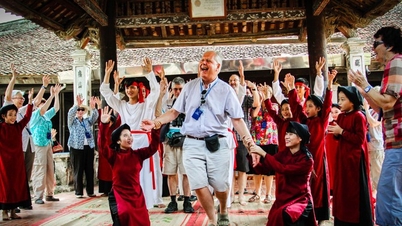
People had the opportunity to immerse themselves in the joyful and lively festivities.
Meaningful spiritual life
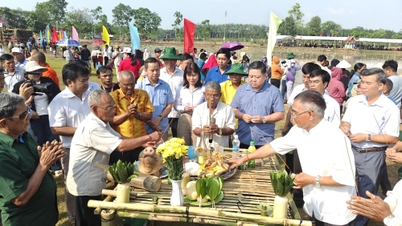
Almost every region has a tutelary deity – a figure who contributed to the development and preservation of the land. In many temples today, the "Tutelary Deity" is not just a general deity, but may be a historical figure who made great contributions to protecting the villagers in the past, such as Nguyen Huu Canh, Thoai Ngoc Hau, etc. According to tradition, villagers hold annual temple ceremonies, also known as the peace-praying ceremony, to remember and thank the tutelary deity, the God of Agriculture, the God of the Tiger, etc. A typical example is the Ky Yen Festival at Nhon My Temple (Cho Moi District), which takes place from April 16th to 18th (lunar calendar), with folk rituals that still deeply reflect the traditional culture of this agricultural region that has existed and developed to this day.
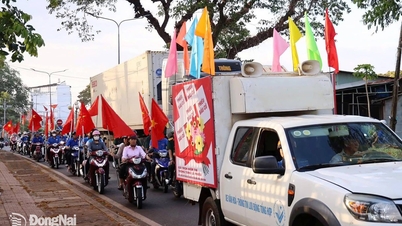
Mr. Nguyen Hoang Nhon, Deputy Head of the Management Board of Nhon My communal temple, said that every year, the temple worship ceremony is maintained with the aim of praying for "national peace and prosperity," "favorable weather," "bountiful harvests," and happiness and well-being for all families. To date, the ceremonial committee still maintains the traditional rituals, such as: inviting the sacred decree, announcing to Heaven, offering sacrifices to the God of Agriculture, paying respects, building the altar, and paying respects to the village elders... However, the timing of the ceremony has been slightly changed to suit current conditions. In particular, the sacred decree is paraded through the local streets to inform the people about the upcoming main ceremony. Previously, the sacred decree was kept at the temple caretaker's house, but now it is kept inside the temple, and the invitation has been replaced by a parade.
In addition, there is the ceremony of worshipping the God of Agriculture – the deity associated with the people's agricultural work; the ceremony of offering incense by local authorities, the temple management board, the commune's departments and organizations, and the people, expressing their respect and remembrance of the merits of the famous deities, heroes, martyrs, and ancestors who contributed to building and protecting the country and homeland. After the ceremonies, people freely offer prayers, seeking peace for their families, success in their work, and good health… Visitors from all over also gather in large numbers, including those from outside the province, sometimes people who were born and raised here and return to visit their hometown, contributing to the construction of bridges and roads, and donating gifts to the poor…
Solidarity Day
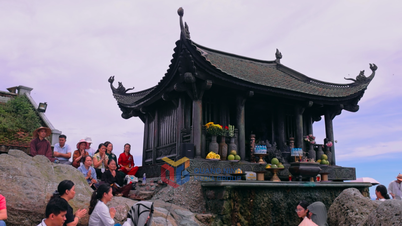
Besides preserving traditional values, local people also contribute funds to renovate and repair communal houses and temples after they have deteriorated, preserving structures that hold significance in their spiritual lives. Over the years, the provincial budget has also allocated a large portion to support localities in repairing and upgrading communal houses and temples, especially those recognized as historical and architectural relics at the provincial and national levels; and to provide copies of royal decrees… Over time, the low-lying roofs of communal houses, nestled beneath ancient trees, remain sturdy, standing at the edge of the village and by the riverbank, evoking characteristic images of their homeland for every person born and raised there.
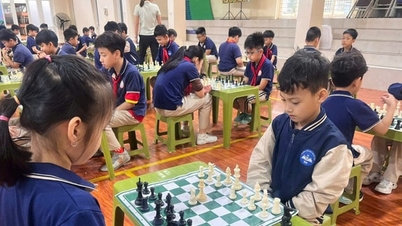
On ordinary days, the cool space inside the communal house becomes a close-knit gathering place for many people, from young to old. Around the large, shady Bodhi tree in the courtyard of Vinh Nguon communal house (Chau Doc City), several chess boards are set up every day, a meeting place for those who love this intellectual sport . Students and children also choose the communal house courtyard as a place to play folk games, engage in group activities, and practice dances for school performances.
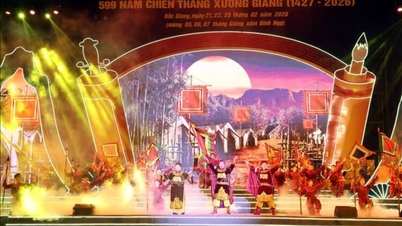
The festival at the communal temple is even more joyful, with the celebratory part eagerly awaited by the people because it features many cheerful and lively activities. “During the festival, there will be sports competitions, contests, folk games; and traditional opera (Hát Bội, Hát Chầu) performed first to worship the gods, then to entertain the villagers. The opera plays are carefully selected, carrying meanings of loyalty and filial piety, such as: San Hậu, Tiêu Anh Phụng Cứu Chúa, Quang Trung Đại Thắng Quân Thanh… Some places will also organize performances of traditional folk music and modern folk songs…” – Mr. Năm Định, a representative of the elderly in Khánh Hòa commune, Châu Phú district, shared.
Immersing oneself in the village festival also allows one to watch duck-catching competitions on the river, pot-smashing games, chess, stick pushing, and more. These games not only create a lively atmosphere for the ceremony but also contribute to strengthening community bonds, especially team competitions such as tug-of-war, sack racing, and boat racing. Modern sports suitable for young people, such as football and volleyball, are also included. It's a harmonious blend where the older generation proudly preserves centuries-old values, while the younger generation embraces and nurtures their love for their homeland.
The competitions during the festival are not focused on winning or losing, or on high or low prizes, but rather on the joy of meeting, chatting, and inquiring about each other's lives and businesses. Some visitors come from afar to see what it's like, or people who have left their hometown return to worship the village guardian deity… At these times, people in the village feel immense pride, seeing the temple worship ceremony as a very meaningful and necessary event to educate future generations about local culture and remember their roots…
HOAI AN
Source: https://baoangiang.com.vn/net-dep-van-hoa-tinh-than-cua-lang-xa-a418078.html

![[Photo] The Prime Ministers of Vietnam and Russia witness the signing ceremony on cooperation in building a nuclear power plant.](https://vphoto.vietnam.vn/thumb/1200x675/vietnam/resource/IMAGE/2026/03/23/1774278492322_vna-potal-hai-thu-tuong-viet-nam-va-nga-chung-kien-le-ky-ket-hiep-dinh-ve-hop-tac-xay-dung-nha-may-dien-hat-nhan-8658380-jpg.webp)





































Comment (0)