

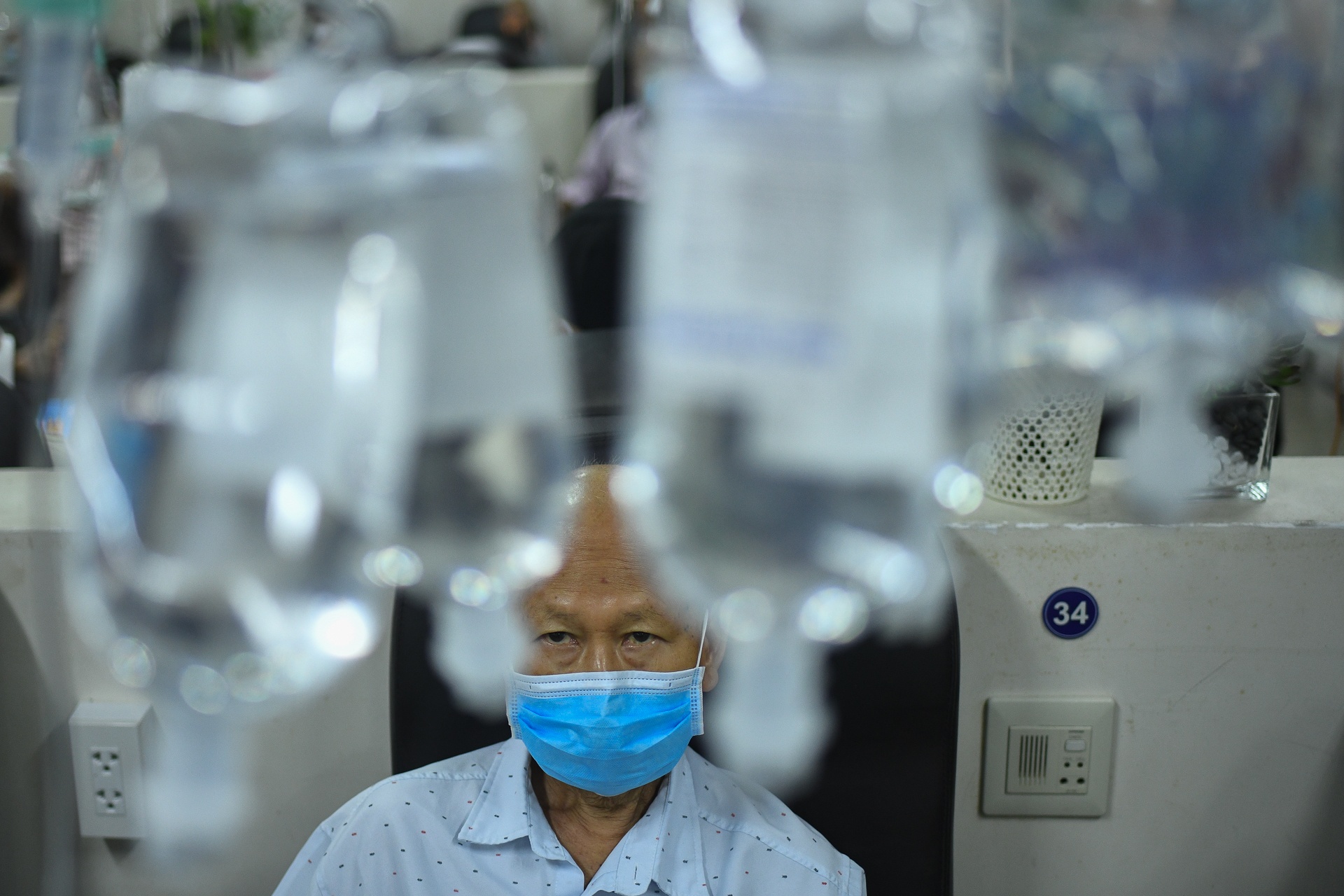
In his book *Eastern Stories, Western Stories* , scholar An Chi argues that the correct spelling should be "chronic". According to him, "chronic" means slow, gradual, prolonged, so "chronic" is used to refer to diseases that progress over a long period and require long-term monitoring and treatment.
Meanwhile, "mãn" carries meanings such as complete, full, or finished, often appearing in expressions like "term completion," "term completion," or "month completion." Because they have completely different meanings, these two words cannot be used interchangeably.

Some ancient Chinese dictionaries, such as the Kangxi Dictionary, also record that "man" means slow or gradual, while "man" means complete or finished. Therefore, linguists generally do not consider "man tinh" and "man tinh" to be equivalent spellings.
This understanding is similar to current medical terminology. In English, the group of diseases that last a long time are called "chronic disease" or "chronic condition," where "chronic" means prolonged or persistent. Many other languages also use similar terms to refer to diseases that progress slowly and persist for a long time.
In short, diseases such as chronic hepatitis, chronic obstructive pulmonary disease, or chronic respiratory failure... all use the term "chronic" instead of "chronic".

Source: https://znews.vn/neu-noi-benh-man-tinh-ban-da-sai-post1656590.html
























































![[Video] Sunset at Lap An Lagoon – Where the sun sets over the fishing nets](https://vphoto.vietnam.vn/thumb/1200x675/vietnam/resource/IMAGE/2026/05/31/1780192137701_beach-landscape-sea-water-nature-grass-745871-pxhere-com.jpeg)






































Comment (0)