


On the morning of October 15th, the US dollar exchange rate at commercial banks recorded an increase for the week. Specifically, Eximbank bought at 24,230 VND and sold at 24,620 VND, an increase of 100 VND compared to the end of the previous week. Similarly, Vietcombank added 65 VND after a week, bringing the buying price to 24,245 VND and the selling price to 24,615 VND.
Similarly, the euro also increased. For example, Vietcombank bought euros at 25,106 VND and sold them at 26,484 VND, an increase of 95 VND compared to the end of last week. However, the Japanese yen depreciated, with Vietcombank buying at 158.67 VND and selling at 167.96 VND, lower by 0.36 - 0.38 VND...
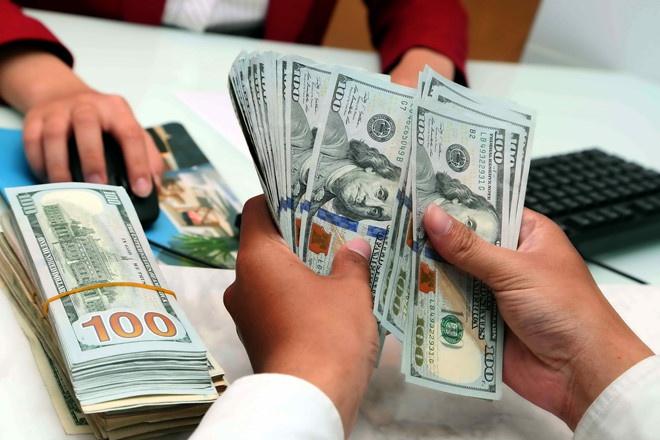
The US dollar rose sharply this week.
The international USD exchange rate experienced several sessions of decline, but the overall rate for the week remained higher. At the end of the week, the USD-Index reached 106.65 points, 0.56 points higher than the previous week's closing rate. The Japanese Yen also continued to fall compared to the previous week's closing rate, with 1 USD equivalent to 149.56 yen; the euro also declined against the USD, with 1 euro equivalent to 1.0516 USD...
The US dollar rose after a report showed that the US consumer price index for September increased more than expected. This boosted expectations that the Federal Reserve will keep interest rates high for an extended period.
Meanwhile, the yield on 10-year US Treasury bonds fell by about 9 basis points to 4.62%, nearly 2 percentage points lower than the end of last week. The yield on 2-year bonds also dropped by about 1 basis point. However, some investors believe that yields will remain high for an extended period. This is also a reason why the US dollar is maintaining its high level.
Bipan Rai, a North America foreign exchange specialist at CIBC Capital Markets, said the Fed is preparing to raise interest rates again, most likely in December.
Furthermore, the Hamas-Israel conflict continues to raise questions about the possibility of an oil supply crisis, leading to dire consequences for the global economy as a whole. The US dollar is also seen as one of the safe-haven assets amid investor anxieties about the future of the global economy...
Source link


![[Photo] National Assembly Chairman Tran Thanh Man visits and works with the National Assembly Committees and the State Audit Office.](https://vphoto.vietnam.vn/thumb/1200x675/vietnam/resource/IMAGE/2026/02/23/1771848141941_ndo_br_bnd-6798-jpg.webp)















































































Comment (0)