

Folk culture and arts clubs are considered the "nucleus" of the mass arts movement, promoting the "National Unity in Building a Culturally Rich Life" campaign. The vibrant and active participation of these clubs has significantly contributed to the preservation and promotion of traditional cultural values, including the art of Cheo (traditional Vietnamese opera).
Thanh Hoa is a land rich in history and cultural traditions, home to seven ethnic groups living together, creating a diverse and vibrant tapestry of cultural identity. It preserves many unique traditional and folk cultural values. According to preliminary statistics, Thanh Hoa currently has approximately 1,535 historical sites and scenic spots, 755 intangible cultural heritage items, and nearly 300 festivals, folk games, and performances.
People from Thanh Hoa province, "mounting horses to hold the reins, letting go to hold the pen," are deeply passionate about culture and arts; this is easily noticeable. Wherever you go in Thanh Hoa, you can immerse yourself in its vibrant and distinctive cultural and artistic atmosphere. This love and passion is the "reason" and motivation for the establishment of numerous folk culture and arts clubs throughout the province, from the mountainous regions to the midlands, plains, and coastal areas. Currently, the province has hundreds of active folk culture and arts clubs with thousands of active members. If we liken these folk culture and arts clubs to a symphony, then Cheo (traditional Vietnamese opera) is the most impressive highlight.
Mung Village, also known as Con Son (or Con Minh), is located on the right bank of the Lang Giang River (Trung Thanh Commune, Nong Cong District, Thanh Hoa Province). Besides its charming and rustic rural scenery, it also preserves many significant historical and cultural values. Among them, the Mung Temple Festival has been recognized as a National Intangible Cultural Heritage. This is a traditional festival of the people of Con Son village, held twice a year in January and March, to commemorate the merits of Saint Luong Tham Xung Ta Quoc (Chang Ut Dai Vuong) – who, along with his brothers and father, rose up to fight against the Tang Dynasty invaders in the 7th century. The Mung Temple Festival is a religious activity with rituals, customs, performances, and folk games. One of the most distinctive features and attractions of the Mung Temple Festival is the worship of Cheo (traditional Vietnamese opera).
The ritualistic Chèo singing of Mung village has many distinctive features. This is because the ritualistic Chèo singing is closely linked to the worship of Saint Luong Tham Xung Ta Quoc, and is performed only once a year on the anniversary of the saint's death. Regarding the singing style, while Chèo melodies from the Northern Delta region often focus on the embellishment of the 'i' note, the ritualistic Chèo singing of Trung Thanh commune focuses on the embellishment of the 'a' note (often called 'Chèo a'). The content of the ritualistic Chèo singing here is diverse in melody, including: long songs, arranged songs, evening songs, historical songs, skewed songs, spoken songs (recitation, recitation, spoken verses), and comedic songs. Previously, there were four regularly performed plays: Thuc Van, Tuan Khanh, Luu Quan Binh, and Tong Tran - Cuc Hoa. In addition, there were other songs dedicated to the saint, but today only two plays, Luu Quan Binh and Tong Tran - Cuc Hoa, remain regularly performed. The traditional folk opera performances at Mung village have many forms: dry-land opera (performed in the courtyard of Mung temple) and underwater opera (performed on the Lang Giang river).
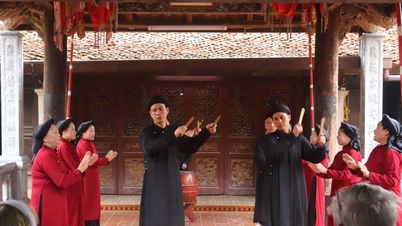
The "Chèo cạn" performance style is similar to "Chèo Chải" in some other localities. Accordingly, a beautifully decorated boat is prepared and placed in the courtyard of the Mưng Temple. The singing and dancing troupe consists of female performers wearing traditional costumes, standing in two rows, each holding an oar. Their feet move gently, stepping up and down rhythmically and gracefully, their hands moving the oars in time with the singing. "Although the melodies in 'Chèo cạn' are not numerous, each melody has its own distinct tune. The melodies of 'Chèo cạn' are not embellished or soaring, but the structure and form of the songs are complete like a song, and all of them bear the influence of Thanh Hoa folk music, making them easily appealing to the audience" (Thanh Hoa Folk Music, Nguyen Lien (editor) – Hoang Minh Tuong).
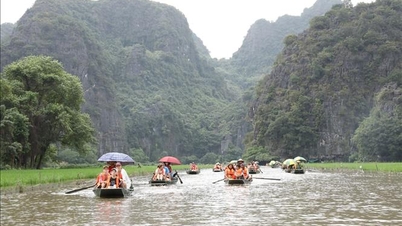
Rowing on the Lang Giang River carries with it joy and hopes, imbued with the vibrant colors of spring. From the leisurely drifting boats, the sounds of "rowing," "racing," and "competitive rowing" echo. "Singing from the shore teases, and the voices from the boats respond," further enhancing the festive atmosphere with lively sounds and bright colors.
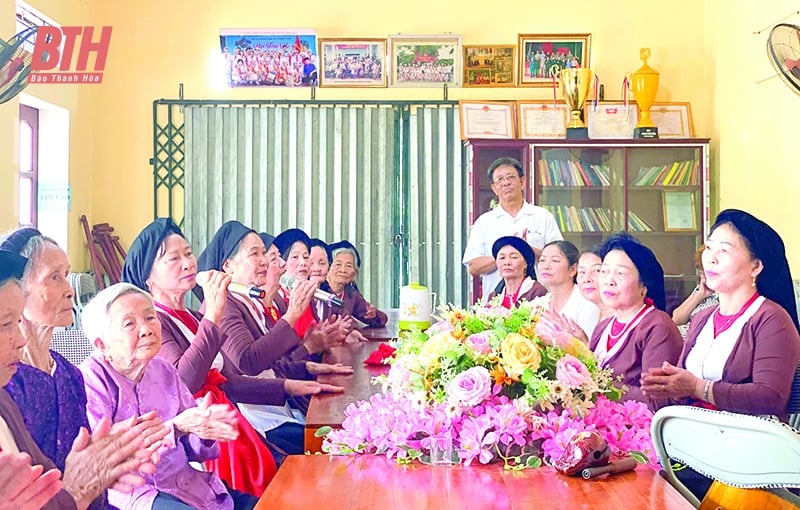
Anyone who has ever listened to the traditional folk singing of Mung village, or participated in the activities of the Mung Temple Folk Singing Club in Trung Thanh commune, will truly understand the beauty, love, respect, and awareness of preserving and promoting the traditional cultural values of their homeland. The club currently has 32 members, most of whom are in their sixties or older, many of whom are of advanced age, gathering together in the village's cultural center to sing and perform. It is known that although the Mung Temple Folk Singing Club in Trung Thanh commune was established not long ago, it has always been a positive force contributing to and promoting the mass cultural and artistic movement, regularly participating in major local events.
While chatting with guests, Mr. Le Huy Cam, Chairman of the Mung Village Rowing Club in Trung Thanh Commune, beat the drums, and the club members enthusiastically sang, sometimes in a gentle, leisurely tone, other times in a soaring, melodious style, combined with graceful, rhythmic movements of their hands and feet, leaving a lasting impression on the audience. What is most admirable and inspiring is the enthusiastic and serious spirit of the club members in their training. Although operating on a voluntary basis with self-contributions, the club members regularly hold activities and practice every Saturday and Sunday. These people, with their love and passion, have together illuminated the colors of heritage in their homeland.
Hoang Dong commune (Hoang Hoa district) is not the "cradle" of Cheo (traditional Vietnamese opera), but the love and passion for this art form is always present in the hearts of many people here. Especially during the process of building advanced and model new rural areas, with the goal of improving the spiritual life of the people and spreading the movement of national unity in building a cultured life, the Party Committee and People's Committee of the commune have encouraged the establishment of cultural and artistic clubs, folk song and dance clubs, and sports clubs. This has further motivated those who love and are passionate about Cheo in the commune to unanimously establish the Hop Xuan Cheo Cultural and Artistic Club.
In its early days, the club had about 13 members, aged 55-70. The club operates on a voluntary basis; most of the operating expenses, including the purchase of props and costumes, are contributed by the members themselves. The club holds regular meetings and practices with the desire to contribute attractive traditional opera performances and songs, enhancing the spiritual life of the community and enriching the local cultural and artistic movement. For the members, participating in the club is a way to enjoy their old age, living happily, healthily, and usefully. The club is both a place to share passions and to connect elderly friends, giving them opportunities to meet, chat, and socialize. With this purpose and meaning, after some time, the club now attracts about 30-40 members, with members from almost all villages in the commune. During festivals, holidays, or village events, the melodies of the traditional Vietnamese opera (cheo) sung by members of the Hop Xuan Cheo Cultural and Artistic Club resonate throughout the countryside. Besides traditional cheo melodies, the club members perform many new pieces with lyrics praising the Party, President Ho Chi Minh, and the changes in their homeland and country.
Love and passion are the core elements that give life to traditional Vietnamese opera (cheo) in particular, and traditional folk art clubs in general. However, nurturing this love and passion under conditions of limited, self-funded resources, with members mainly being elderly and younger generations not yet fully appreciating or understanding the value of traditional folk art, presents significant challenges. To ensure the enduring resonance of cheo singing and to promote the mass cultural and artistic movement, localities need to pay more attention to and invest more practically in clubs, outstanding artisans, and folk artists, creating more opportunities for interaction and connection. Clubs need to innovate and diversify their methods of operation to attract and encourage young people to participate...
Hoang Linh
Source: https://baothanhhoa.vn/ngan-nga-dieu-cheo-227948.htm


















































Comment (0)