

Five years ago, the coconut industry had no market ranking, but now it has risen to the top 4 in Asia in terms of exports, with a diverse range of products made from the fruit, leaves, and trunk.
Visiting Ben Tre for the first time, Ms. Thanh ( from Hanoi ) was impressed by the coconut tree because it not only provides sweet water and delicious jam but also creates a range of other commercial products. "I didn't expect that the trunk, leaves, branches, shell, and fiber of the coconut tree could be utilized to such an extent to produce so many unique gifts," she said.
She said that previously she could only enjoy traditional coconut candy, but now the market offers dozens of types of candy with different flavors made from coconut. Coconut cakes, ice cream, and jelly also have many variations in size and attractive designs.
Similarly, Ms. Hanh in District 5 also expressed interest in canned coconut water. "Previously, if I wanted to drink fresh coconut water, I had to buy it by the bunch and it only lasted for a week. Now, with the canned product, it's easier to store in large quantities," she said.
The diverse range of coconut products not only attracts domestic customers but is also increasingly demonstrating its advantages in the international market.
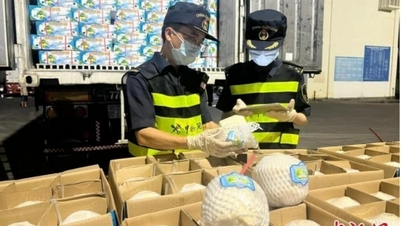
Mr. Nguyen Dinh Tung, General Director of Vina T&T Import-Export Company, said that the company is boosting exports of fresh coconuts to the US, Australia, South Korea, and Japan. In the first four months of the year, the company's export sales increased by 20%. Specifically for peeled fresh coconuts, the company exports approximately 15 containers per month to these four markets.
"If the US considers allowing the export of diamond-shaped coconuts in the second quarter, exports of this fruit will increase sharply this year," Mr. Tung said.
Meanwhile, Mr. Nguyen Van Thu, Chairman of the Board of Directors of GC Food Joint Stock Company - the owner of the largest coconut jelly processing plant in Vietnam - said that the company plans to bring coconut jelly and other coconut-based products to the world .
As part of its product diversification strategy, his company will produce coconut jelly in various sizes to reach consumers across all channels, from convenience stores and grocery stores to supermarkets. Additionally, the company plans to develop fruit-flavored jelly product lines.
"In the near future, GC Food will expand its investment to increase the capacity of its coconut jelly factory to 20,000-30,000 tons per year. The product price will be affordable for all customers, and exports to the Chinese market will be more competitive," Mr. Thu said.
Last year, this company's coconut jelly production reached over 6,500 tons, an increase of more than 40% compared to 2021. In the first four months of this year alone, production reached nearly 2,800 tons, an increase of more than 26% compared to the same period in 2022.
Besides the two aforementioned companies, at Ben Tre Import-Export Joint Stock Company (Betrimex), bottled coconut water is also gaining popularity in many countries around the world. The company is producing a range of coconut-based products such as dried coconut meat, oil, and milk for export.
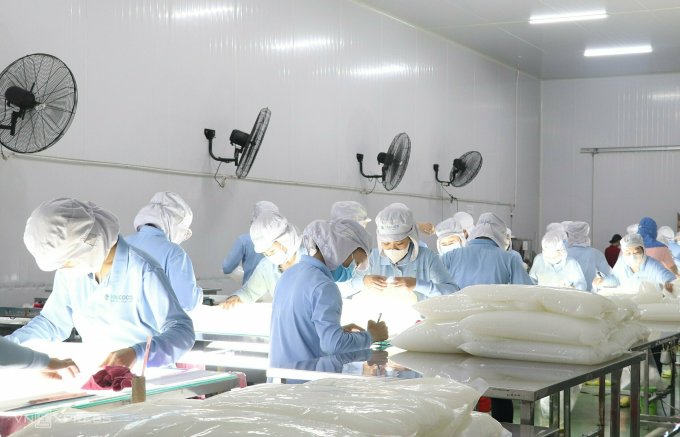
Workers at the Vinacoco factory are inspecting coconut jelly products for packaging and export. Photo: Linh Dan.
According to the Vietnam Coconut Association, Vietnam is currently the fourth largest coconut exporter in the Asia-Pacific region. Despite the impact of the Covid-19 pandemic, last year, exports of coconuts and coconut products exceeded $900 million. With China opening its market and increasing purchases of these products from the second quarter, the association expects the coconut industry to reach $1 billion this year.
Speaking to VnExpress, Mr. Cao Bá Đăng Khoa, Acting General Secretary of the Vietnam Coconut Association, said that the country has favorable conditions for developing this industry. China is currently interested in connecting and promoting the import of Vietnamese coconuts through official channels. Most coconut products are favored by China, such as dried coconut, coconut fiber, candy, coconut netting, jelly, dried shredded coconut, and coconut milk.
"In April, the Chinese Consulate General and the Ben Tre Provincial People's Committee held a trade networking event to facilitate the province's coconut industry. China hopes that Vietnamese goods will meet their requirements so that they can be officially exported soon," Mr. Khoa said.
Recently, the Plant Protection Department under the Ministry of Agriculture and Rural Development announced that US authorities have completed a pest risk assessment for diamond-shaped fresh coconuts (the type that still retain their spongy outer shell) exported from Vietnam to the US. The US is currently seeking feedback on the draft pest risk assessment report. After the report is finalized, the US will consider resuming coconut imports from Vietnam in the second half of the year.
Furthermore, according to Mr. Khoa, the government is developing a national brand identity for the coconut-based food industry; the Ministry of Agriculture and Rural Development has also included this crop in the Project for the Development of Key Industrial Crops until 2030.
The Vietnam Coconut Association is also building sustainable raw material areas to ensure coconut farmers receive higher prices and to enhance their competitiveness in the international arena. The association will support the promotion of coconut product exports to China and further penetrate the Japanese and EU markets. With the goal of sustainable development, the coconut industry encourages businesses to participate in deep processing.
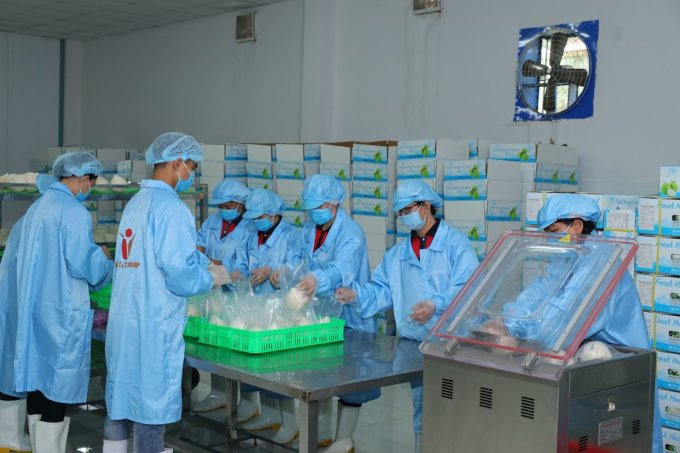
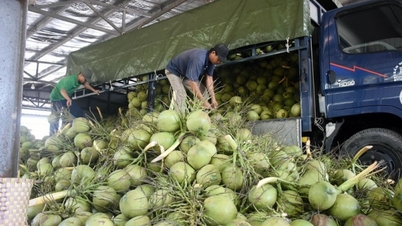
Workers are packing freshly peeled coconuts for export to the United States. Photo: Linh Dan.
According to statistics from the Ministry of Industry and Trade, the total coconut growing area nationwide is currently around 188,000 hectares, with a production of 1.9 million tons. However, the Vietnam Coconut Association believes that these statistics are not entirely complete because the coconut industry offers a wide variety of products. Some products using coconut materials are less commonly documented, such as paintings made from coconut shells (some works are worth billions of dong), but these are not publicly disclosed.
According to Mr. Khoa, this industry will experience significant breakthroughs as there is great potential for exporting food products made from coconuts. In particular, the world is increasingly favoring cosmetics and beauty products made from coconuts.
The World Coconut Association forecasts that the industry's growth rate could average 10% per year by 2025. Some products are expected to experience high growth, such as coconut ice cream, coconut water, coconut oil, and coconut jelly, which are projected to increase by 15-36%. Notably, consumers are still willing to pay higher prices for these plant-based, clean products.
Thi Ha
Source link

![[Photo] National Assembly Chairman Tran Thanh Man takes the oath of office](https://vphoto.vietnam.vn/thumb/1200x675/vietnam/resource/IMAGE/2026/04/06/1775453300886_ndo_br_1-2229-jpg.webp)





















![[Photo] Da Nang: A sea of people respectfully paying homage to the Bodhisattva Avalokiteshvara.](https://vphoto.vietnam.vn/thumb/1200x675/vietnam/resource/IMAGE/2026/04/06/1775454198203_ndo_br_lh24-jpg.webp)






















































Comment (0)