

The Vietnamese medicinal plant industry faces challenges in developing cultivation areas, applying science and technology, and ensuring quality standards to compete in the global medicinal plant market.
There are still many weaknesses.
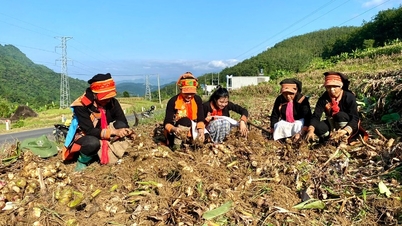
Currently, the demand for medicinal herbs and herbal products for health protection is increasing, such as Ngoc Linh ginseng, Lai Chau ginseng, and Bo Chinh ginseng. However, to develop the high-value medicinal herb industry, manufacturing businesses still face many difficulties regarding medicinal herb growing areas and fragmented production.
According to Dr. Ha Thi Loan, Deputy Director of the Ho Chi Minh City Biotechnology Center, Vietnam has 5,117 species of medicinal plants, most of which are used in traditional medicine, but the number of medicinal plants from which active ingredients are extracted for drug production remains modest, at only about 50 species.
 |
| Vietnam's potential for exploiting medicinal plants is still low. |
Furthermore, Vietnam harvests 10,000 tons of medicinal herbs annually but still imports 40,000 tons, with imports from China accounting for 80%. This shows that Vietnam's medicinal herb resources have not yet been exploited and developed to their fullest potential.
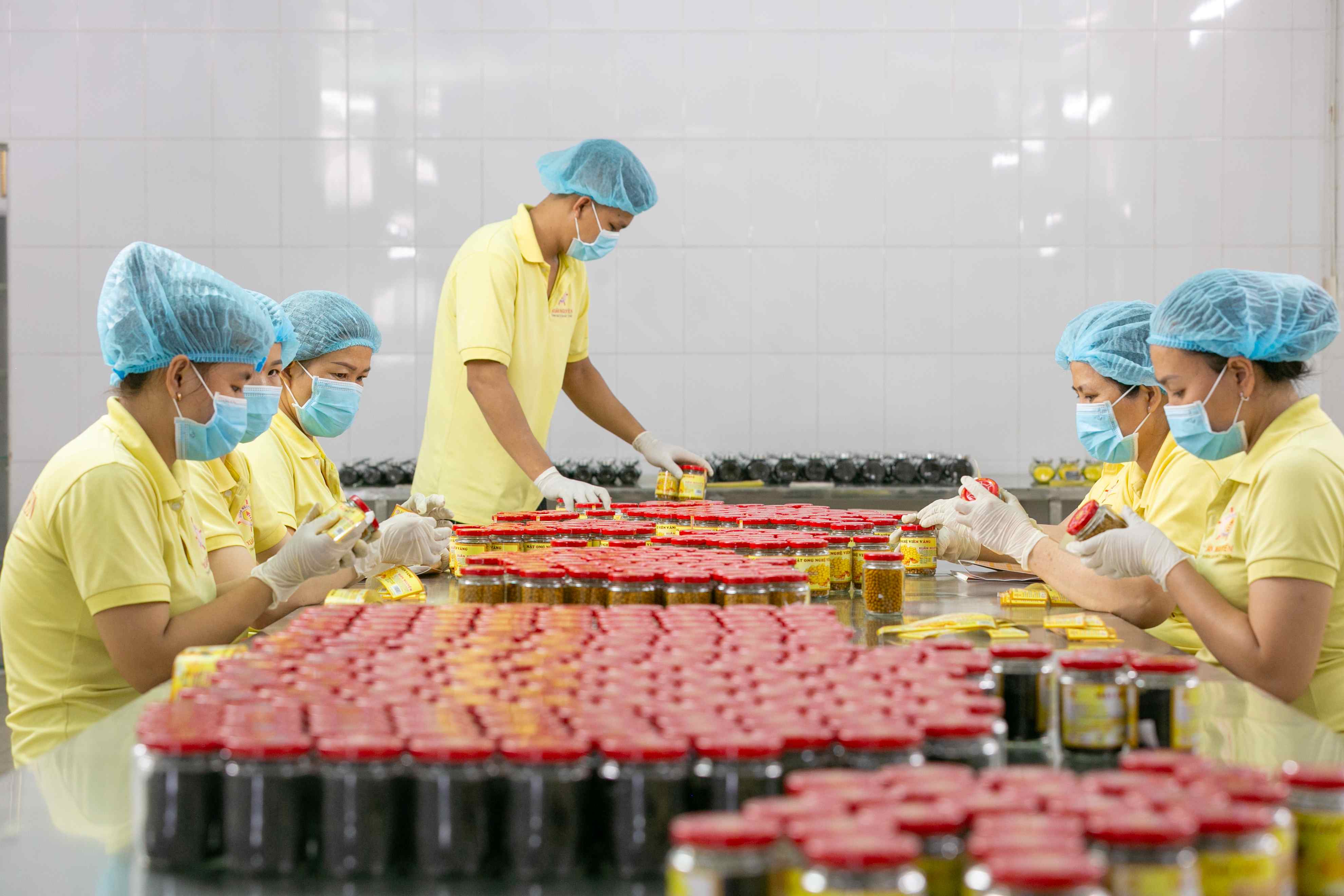
From the perspective of manufacturing businesses, Mr. Lu Nguyen Xuan Vu, General Director of Xuan Nguyen Group Joint Stock Company, believes that Vietnamese brands are still not widely known and trusted for their quality. A typical example is ginseng honey; consumers still seek out imported products from South Korea, even though many Vietnamese products are of comparable quality. This poses a challenge for businesses developing medicinal products in general, and Xuan Nguyen in particular.
Regarding honey products, Vietnam is the second largest honey exporter in Asia, exporting to South Korea, the United States, and many other countries. However, the current selling price of ginseng honey in Vietnam is only 35-40% of imported products, yet it is still difficult to sell.
Not only is it difficult to win over Vietnamese consumers, but one of the reasons why Vietnamese medicinal herbs only hold a very small market share in the global medicinal herb market is that most Vietnamese medicinal herbs are exported in raw form. In addition, a certain percentage of medicinal plants still do not meet the prescribed quality standards.
According to Mr. Vu, Xuan Nguyen currently exports to several markets such as China, Thailand, Indonesia, etc., and is looking for distributors to sell its products to the Vietnamese market in the US. However, raw materials account for up to 90% of exports, while branded products only make up 10%.
"The figures differ significantly. In terms of growing areas and standards, the company ensures sufficient quality and quantity. However, regarding machinery and equipment, the technology for deep processing in Vietnam in general, and Xuan Nguyen in particular, is still limited," Mr. Vu revealed.
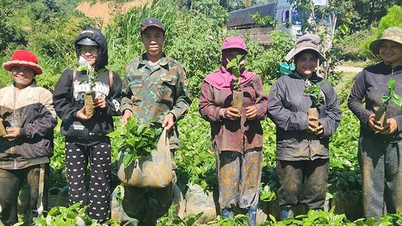
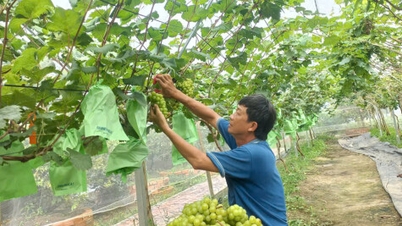
Furthermore, according to businesses, investing in establishing cultivation areas is difficult, but finding buyers is even more challenging. Ms. Tran Thi Lanh, a member of An Phuc Khang Cooperative (Quang Son district, Dak Nong province), shared: “Initially, we planted Angelica sinensis in Dak Nong province, but after harvesting, we couldn't find buyers. Out of 10 parts of the product, only 1 or 2 were sold, so we didn't dare invest further.”
 |
| Businesses are seeking investment policies for raw material sourcing areas, factories, and market expansion. |
Support policies are needed.
Currently, the global demand for medicinal herbs is approximately $200-$300 billion, but no Vietnamese enterprise has yet been able to participate in this potential market. Vietnam's medicinal herb exports only amount to a few hundred million USD per year.
Therefore, according to Dr. Ha Thi Loan, to increase the export value of medicinal herbs, Vietnam needs to establish specialized, concentrated, and sufficiently large-scale medicinal herb production areas. At the same time, these areas must be managed with traceability and product quality according to World Health Organization standards…
Currently, in order to proactively participate in the global arena, the Ministry of Health has advised and submitted to the Prime Minister for approval the Program for the Development of the Domestic Pharmaceutical and Medicinal Herb Industry until 2030, with a vision to 2045.
These include many specific policies to support pharmaceutical businesses such as: prioritizing investment in scientific research, producing high-quality herbal medicines, enhancing competitiveness, international cooperation and integration, information and communication… This will be an opportunity for Vietnamese pharmaceutical businesses to take advantage of opportunities and boost investment to exploit the market in the coming time.
According to Mr. Lu Nguyen Xuan Vu: “Just accessing loans to invest in cultivation and production is very difficult. Xuan Nguyen currently cannot borrow capital from banks in Ho Chi Minh City because the collateral is the medicinal herb and agricultural product cultivation areas in the locality. Therefore, our only solution is to access capital through private lenders with high interest rates and no preferential terms…”
To increase its market penetration, Xuan Nguyen has invested systematically in its production facilities and raw material sourcing areas, adopting a new production approach. Specifically, in the fourth quarter of 2024, the company will put into operation a new factory to focus on developing six lines of canned beverages. These include new herbal product lines based on previously concentrated products, such as ginseng honey and cordyceps honey.
"Therefore, we hope that the relevant departments and agencies will have policies to support Vietnamese businesses with capital and national-level brand communication to increase their competitiveness with international brands," Mr. Vu expressed his expectation.
Source: https://baodautu.vn/nganh-duoc-lieu-kho-giai-bai-toan-tieu-thu-d219949.html




















































































Comment (0)