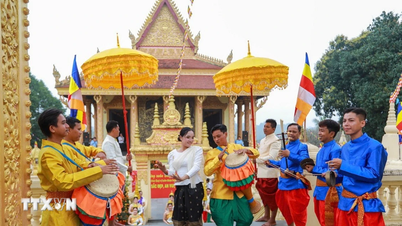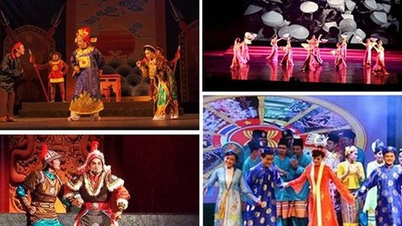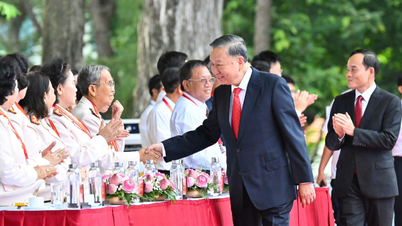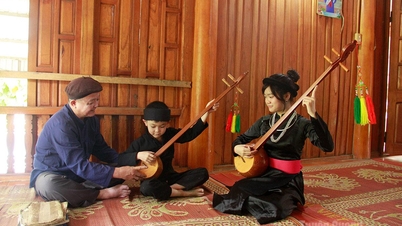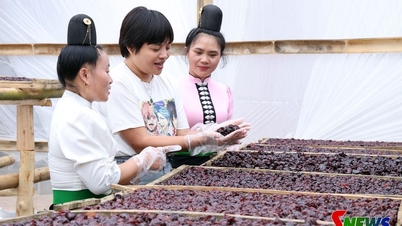
The March activities involved approximately 100 people from 16 ethnic groups (Nung, Tay, Dao, Mong, Muong, Lao, Thai , Kho Mu, Ta Oi, Bahnar, Xe Dang, Gia Rai, Co Tu, Raglai, E De, Khmer) from various localities across the country, as well as artists and artisans from the X'Tieng ethnic group from Binh Phuoc province and the Thai ethnic group from Son La province.
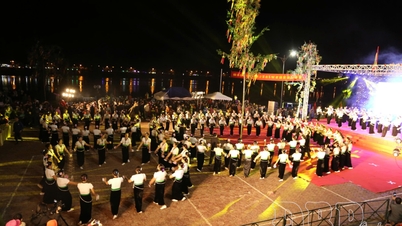
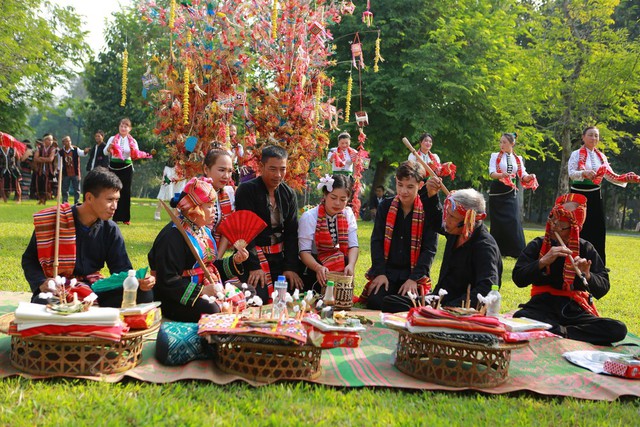
The highlight of the event is the cultural activities showcasing the vibrant culture of the Thai ethnic group in Son La province, with the "Ban Flower Festival". The Thai people will reenact the Xen Ban (Xen Muong) ceremony.


In March, when the bauhinia flowers bloom and bitter bamboo shoots sprout, and the weather warms up, the Thai people temporarily set aside their farming work and immerse themselves in the spring air to organize the "Xên bản" festival, to express gratitude to their ancestors, river gods, mountain gods, and earth gods... who have helped people live on earth, maintain national unity, and build a more prosperous and beautiful homeland.
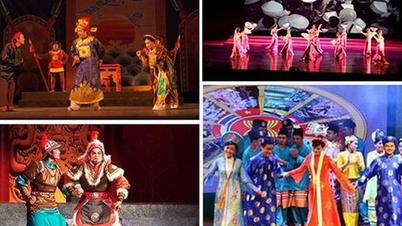
The folk song and dance exchange program "The Song of the Ban Flower Season" features a comprehensive art program by artisans of the Thai ethnic group through music and performances telling the story of the Ban flower, the beauty of the Northwest mountains and forests when the Ban flower blooms. It also introduces cuisine made from Ban flowers and showcases the beauty of the Ban flower through the image of Thai women.
Alongside that are cultural activities showcasing the colorful traditional culture of the X'Tieng ethnic group from Binh Phuoc province.
The X'Tieng ethnic group will reenact the Crac Băr mêy ceremony (the new rice harvest festival). This new rice offering ceremony is held once a year and is highly valued by the people.
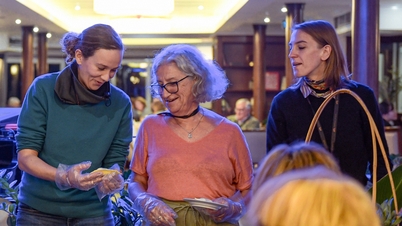
The X'Tieng people will also perform folk songs and dances with the theme: "The Intoxication of the Highlands"; introduce and showcase traditional X'Tieng costumes and silver jewelry with the theme: "The Fragrance and Beauty of Basalt"; recreate, demonstrate, and teach traditional X'Tieng weaving techniques; and introduce a culinary space and display of local products of the X'Tieng people with unique dishes and drinks such as rice wine and bamboo-cooked rice. Especially, they will introduce traditional X'Tieng delicacies such as Piêng plo and Piêng liet cakes, dried venison, smoked pork, smoked buffalo meat, etc.
In addition, there are daily and weekend activities, spring festivals, homestay tourism programs, culinary experiences, folk games, etc., aimed at introducing the culture, customs, and traditions of the ethnic groups, along with experiential activities at the "Common House" of the 54 ethnic groups of Vietnam, contributing to strengthening exchanges between ethnic groups and attracting tourists to the Vietnam Ethnic Culture and Tourism Village.
Source