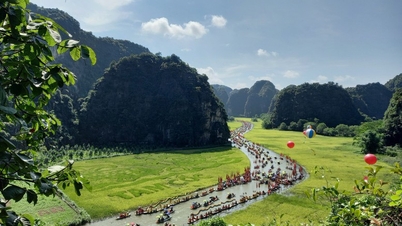
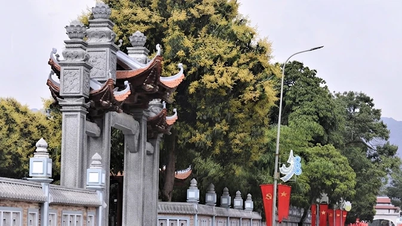
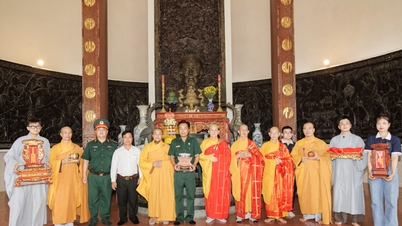
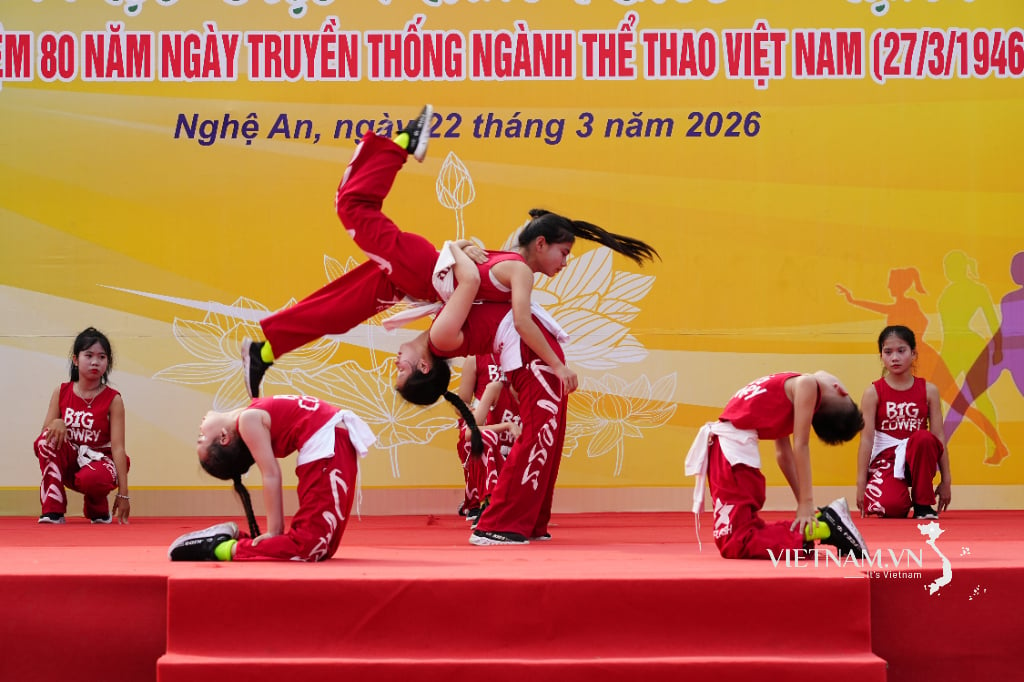
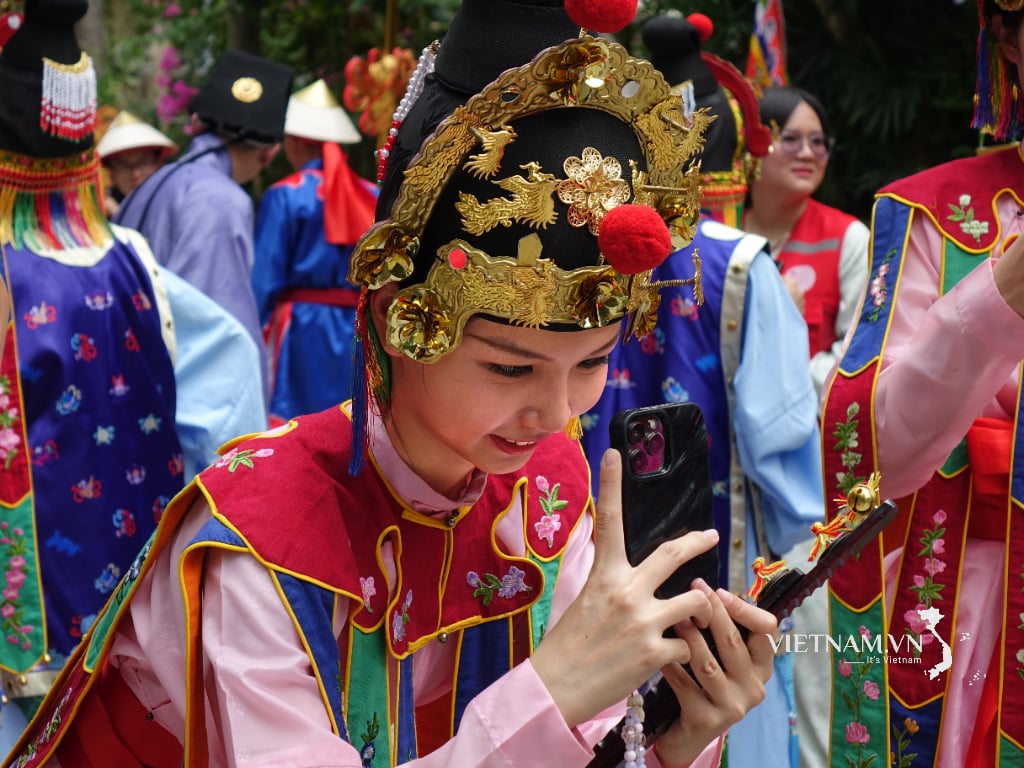
The festival was organized in a solemn, safe, and joyful manner, providing an opportunity for the people to express their gratitude to their ancestors and to preserve and promote the fine traditional cultural values of their homeland in the Đoài region.
The Mang Son Temple festival has been celebrated by the local people for generations with the saying: "Even if we eat rice mixed with cassava and sweet potatoes, we will not miss the festival at Mang Son Temple in the West."
According to Bui Huu Nam, Vice Chairman of the People's Committee of Doai Phuong commune, the Mang Son Temple festival in the old Doai region was formerly a joint festival of the people of 5 communes in Tuong Phieu district, including Son Dong, Son Trung, Tuong Phieu, Trach Loi, and Thuan My - a national historical and cultural relic located in the present-day Doai Phuong commune. This is an ancient temple dedicated to the Three Holy Deities of Tan, also known as Nam Cung.
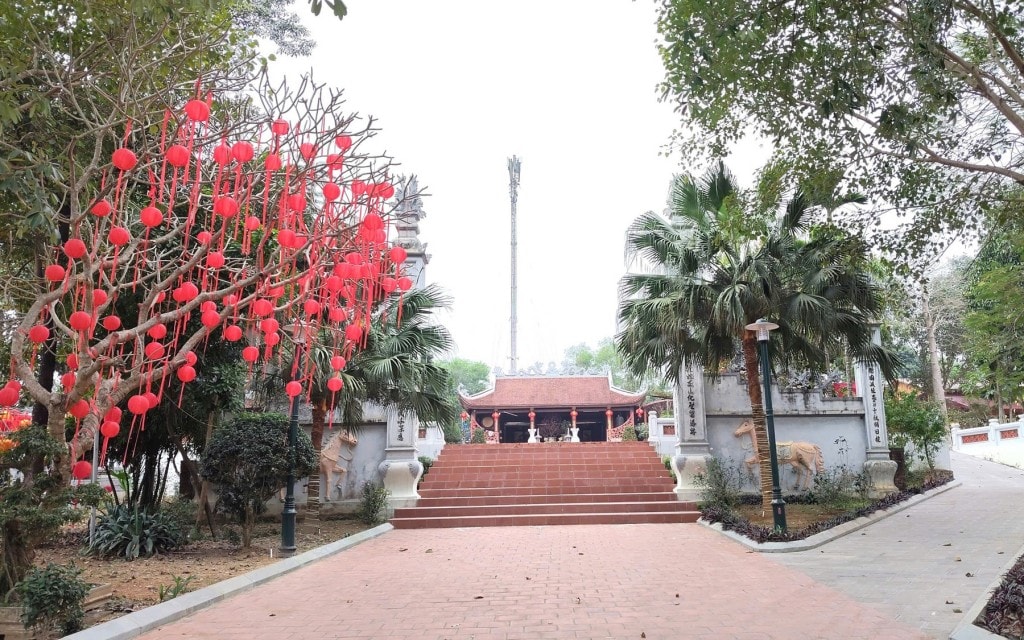
The story goes that, during his travels, Saint Tan Vien visited Son Dong. Impressed by the fertile and beautiful scenery and the kind-hearted people, he decided to stay and built a palace on Mang Son hill. In Son Dong, Saint Tan Vien taught the people how to hunt. After Saint Tan Vien left Son Dong, the villagers, remembering his contributions, built a temple to worship him and his two cousins, Cao Son and Quy Minh. Every year, they hold the Mang Son Temple Festival to commemorate them.
On the festival day, representatives from the five villages bring offerings, including an eight-tiered box of fruit carried by four people for the ceremony, and a platter of five kinds of fruit offered to the deity, featuring fruits readily available in the region. The fruit platter must include green jackfruit – a type of jackfruit characteristic of Son Dong, called "chiem jackfruit." In addition, there must be a feast, with the most important offering to Saint Tan being wild game meat. Nowadays, three pieces of raw pork are used as a substitute.

The chief priest, chosen by the entire community, must be an elderly man from a complete family, a resident of Son Dong village. Beside the chief priest are three assistant priests, one person to read the text, five people to carry the wine, and one person to carry the lamps. The chief priest will represent the entire Tuong Phieu community in reenacting the ritual of the villagers receiving the blessings bestowed upon them by Saint Tan after his hunting expeditions.
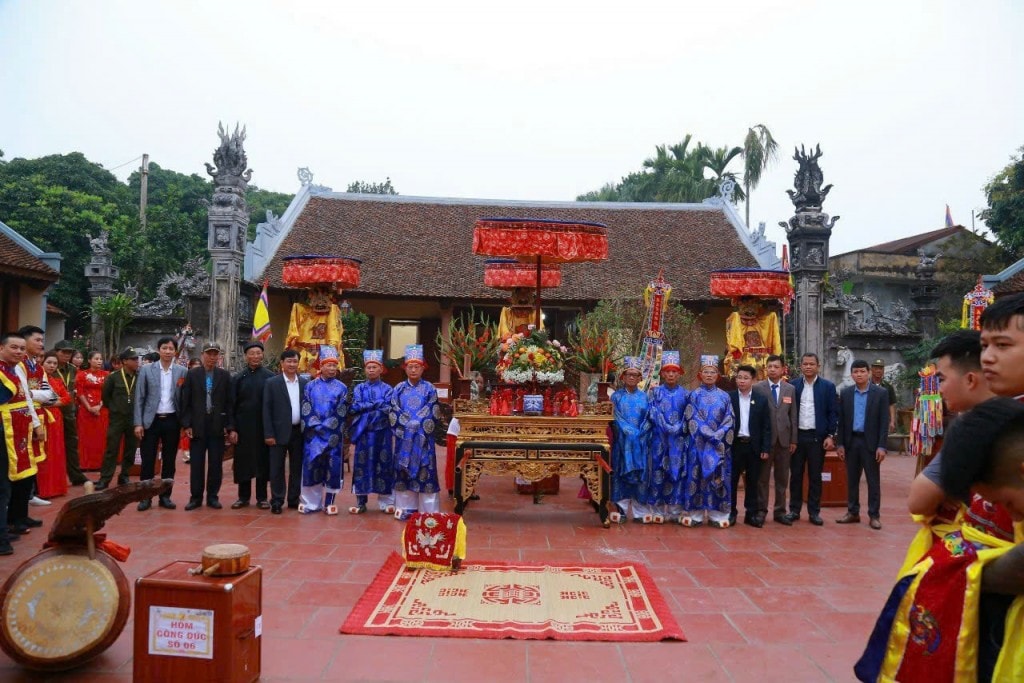
In the past, the Mang Son Temple festival, in addition to the rituals performed by the villagers of Tuong Phieu commune, also featured a very solemn and impressive procession of palanquins. Each village assigned young men to carry the palanquins. Three palanquins, each carrying the throne and ancestral tablets of the Three Holy Deities of Tan, were carried to the Mang Son Temple. Each palanquin was carried by eight people.
Outside, there was a person carrying an umbrella, another carrying a flag and leading the procession, and a person beating a drum to disperse the crowd. The palanquin of Saint Tan Vien was also flanked by two large fans. The three Saints sat on the palanquin, wearing golden crowns, white silk robes, red silk cloaks, and canary yellow imperial robes, with dragon-embroidered belts and tiger-footed boots.
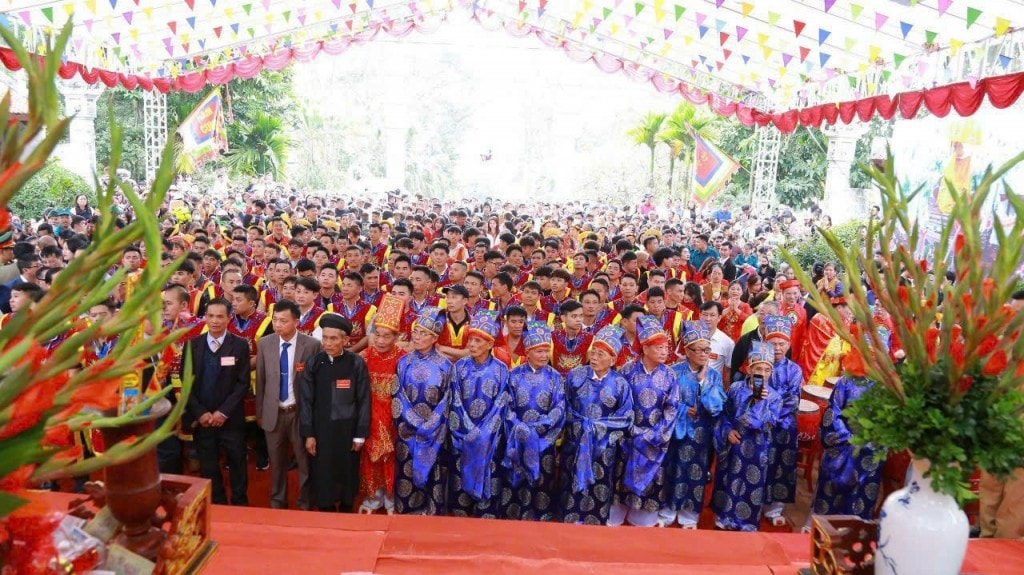
After the ceremonial rituals and the procession of the palanquin, the festival begins with many fun activities such as wrestling, archery, swinging on trees, and love songs. Finally, everyone carries the palanquin back at midnight. In the evening, there is a torch procession. A large torch is planted, illuminating the area, surrounded by many smaller torches carried by festival-goers, making the whole area bright and vibrant with cheers and shouts.


The torch procession aims to reenact the legend of Saint Tan going hunting, killing an animal, and spending the night at Thay beach. People from the surrounding villages bring wine, sing, celebrate, and rejoice in the victory…
Source: https://hanoimoi.vn/ngay-xuan-tray-hoi-den-mang-son-734157.html