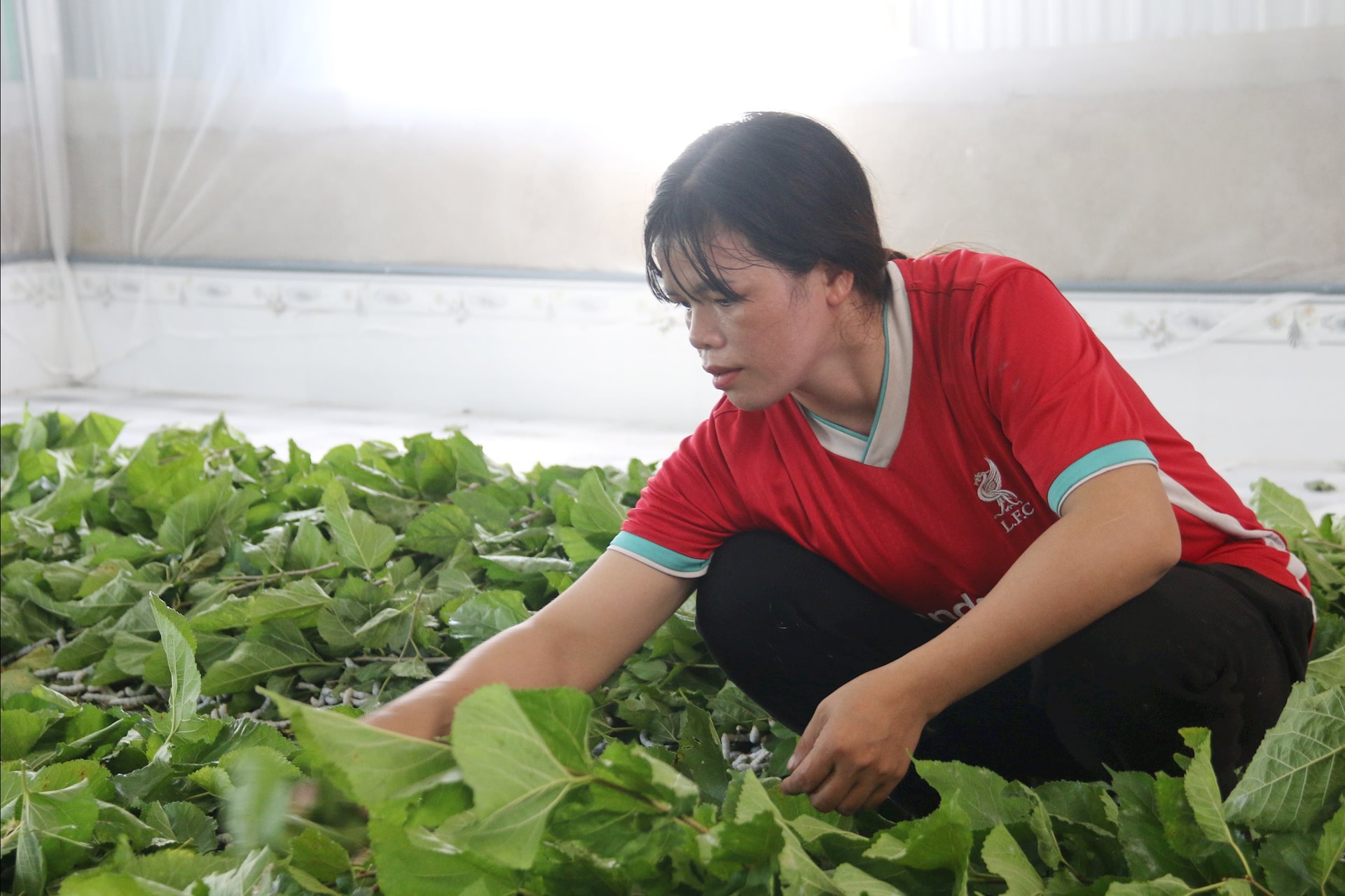
For nearly five years now, the family of Ms. Dam Thi Dep (village 8, Quang Hoa commune, Lam Dong province) has returned to the profession of mulberry cultivation and silkworm rearing. Although they were once involved in this profession, due to unstable market demand, Ms. Dep and her husband had at one point abandoned it to seek other work.
With government support, Ms. Dep's family was able to borrow capital to resume production through a closed-loop silkworm farming system.
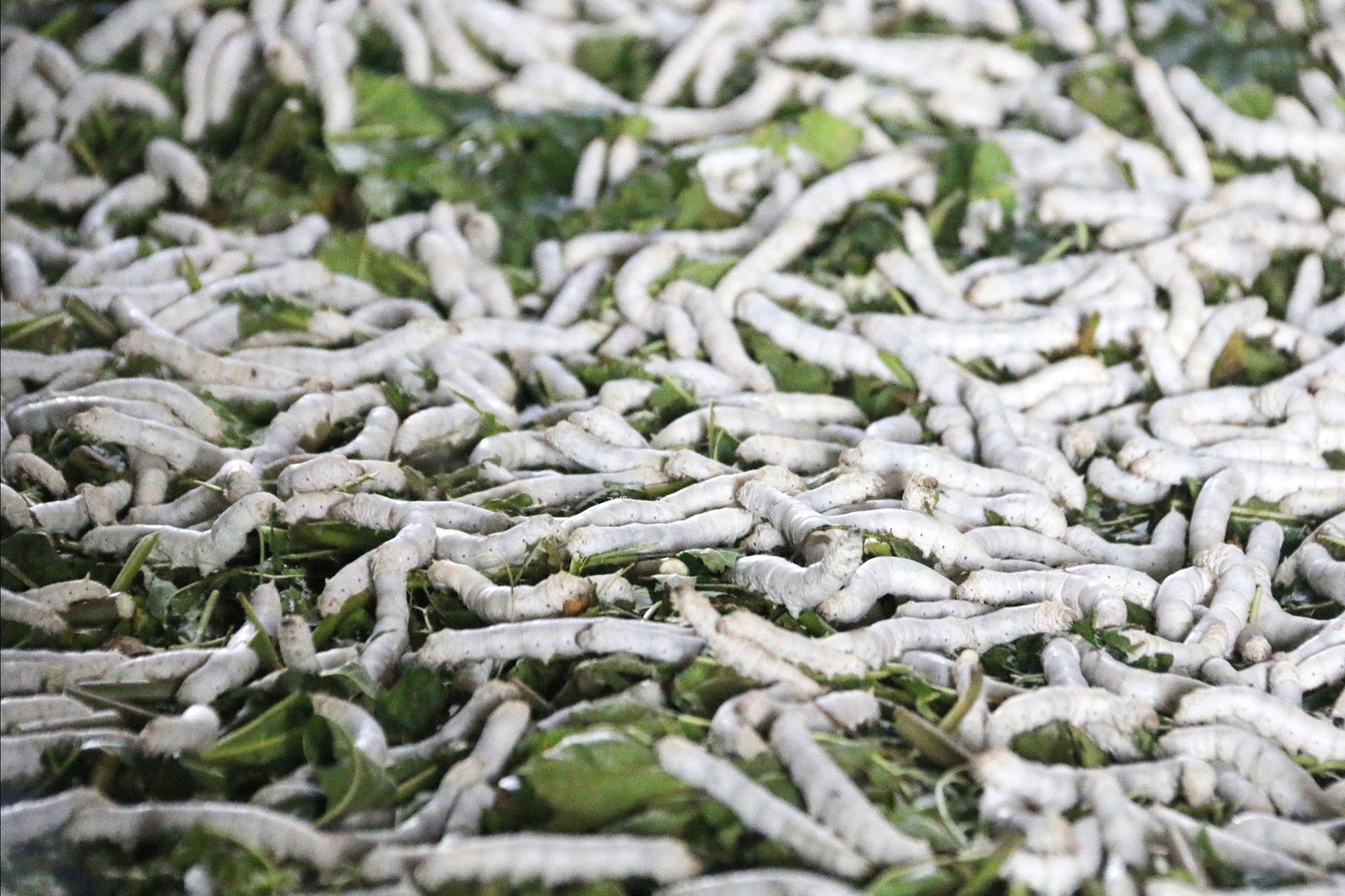
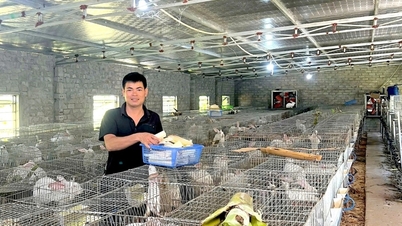
Instead of raising silkworms in temporary shelters as before, Ms. Dep's family built a single-story house, about 80 square meters in size, to provide them with a suitable space for growth. Thanks to this investment in upgrading the silkworm farm, the silkworms are thriving and yielding significant economic benefits.
"Silkworms are frequently attacked by flies. For the past three years, people in Quang Hoa commune have been sharing tips on how to 'install nets' for the silkworms. The silkworms are raised directly on the ground to avoid scratches and also save on cleaning and sanitation costs after each harvest," Ms. Dep shared her experience in raising silkworms.
In Quang Hoa commune, approximately 150 poor and near-poor households receive support for mulberry cultivation and silkworm rearing. The price of cocoons is currently fluctuating between 190,000 and 210,000 VND/kg. After deducting expenses, each box of silkworms yields a profit of over 10 million VND.
.jpg)



The mulberry cultivation and silkworm rearing model has only been implemented in the commune for about 5 years, but it has proven highly effective and has exploited the natural advantages and local labor force. Many households in this poor commune now have a stable income of 15 to 25 million VND per month.
Benefiting from livelihood projects under the National Target Program for socio-economic development in ethnic minority and mountainous areas, many households in the communes of Quang Khe, Quang Phu, Quang Son, etc., have chosen the model of mulberry cultivation and silkworm rearing.
.jpg)
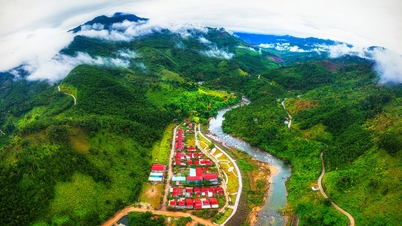
According to assessments, favorable climate and soil conditions have contributed to the strong development of mulberry cultivation and silkworm farming in the western part of Lam Dong province. Compared to many other crops, with low investment costs, a quick harvest time, and stable cocoon prices, silkworm farming is considered an effective way to generate wealth.
During their participation, households not only received financial and technical support but also regularly shared experiences and helped each other. As a result, most households have achieved stable incomes and risen out of poverty.
Ms. Doan Thi Loan, from Quang Long village, Quang Khe commune, said that in the past, silkworm farming was hard work, and silkworms were easily susceptible to disease, so the farming efficiency was not high.
.jpg)
Over the past five years, thanks to participating in the local silkworm farming cooperative and applying new silkworm farming techniques, Mrs. Loan's family income has improved significantly. The 60-year-old woman's family has also escaped poverty for more than three years now.



Ms. Loan happily said, "Compared to coffee farming, mulberry cultivation and silkworm rearing is less strenuous and more suitable for older people like my husband and me. In the future, our family plans to expand the mulberry cultivation area to increase the number of silkworms."
Mr. Tran Duy Trang, Vice Chairman of the People's Committee of Quang Khe commune, assessed that supporting mulberry cultivation and silkworm rearing is in line with the needs of the people and market trends. Silkworm rearing has low costs, a quick capital turnover, and stable cocoon prices, so in reality, many farming households have escaped poverty and become wealthy from this profession.
Source: https://baolamdong.vn/nghe-an-com-dung-giup-hang-tram-ho-dan-lam-dong-doi-doi-404340.html




![[Image] National conference summarizing one year of operation of the overall organizational model of the political system, the three-tiered government model.](https://vphoto.vietnam.vn/thumb/1200x675/vietnam/resource/IMAGE/2026/07/01/1782882811691_ndo_br_1-jpg.webp)