

From products used in the home
During their time living and adapting to the marine and island environment, the inhabitants of Cu Lao Cham have accumulated a wealth of experience and folk knowledge in their daily lives. More than 100 years ago, when industrial household products were not yet widespread, especially in Cu Lao Cham – an island far from the mainland – the people here had to be self-sufficient in many aspects. With their diligence, perseverance, and skillful hands, the inhabitants knew how to utilize readily available materials to create many valuable, artistic handcrafted products for their daily lives.
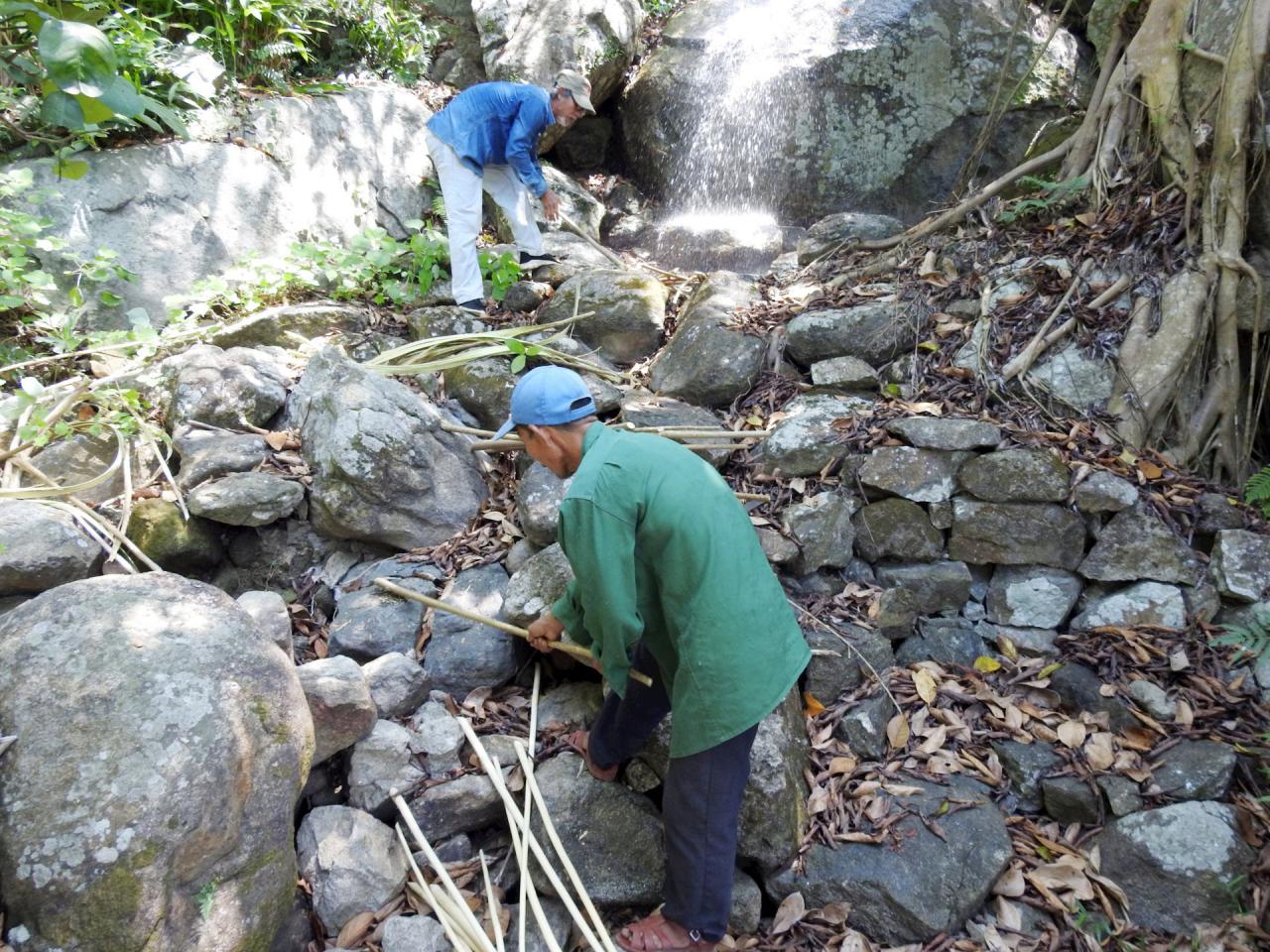
From quite early on, local residents knew that the fibers extracted from the bark of the red paulownia trees that grow abundantly on Cu Lao Cham Island have very tough, durable, soft, lustrous like silk, and strong tensile strength, so they were used to make traditional woven and braided handicrafts for household use.
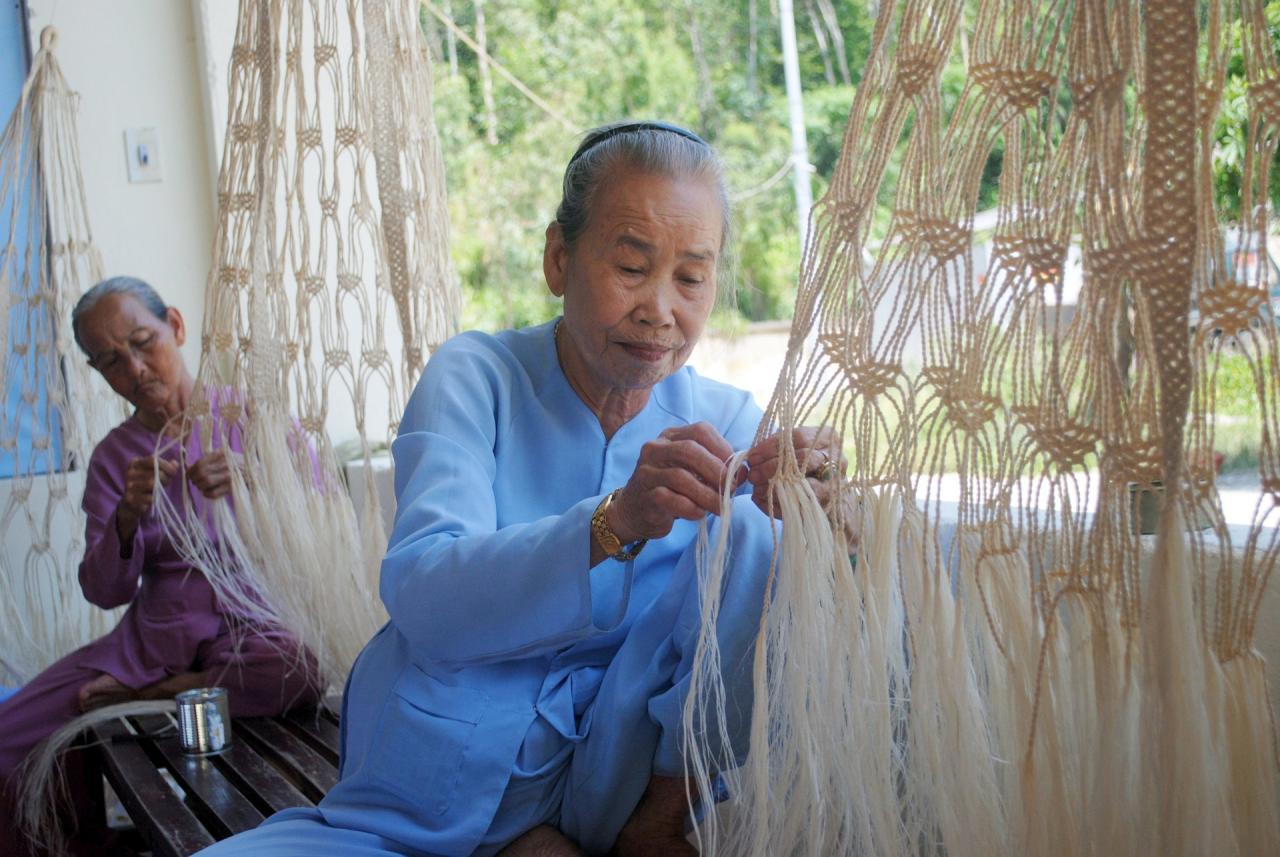
Locals have learned to process the bark of the paulownia tree, spinning it into fibers for tying/binding items and for securing swallows' nests for export. In particular, the fibers used to weave hammocks are quite durable and popular, thus making paulownia hammocks widely available in the area.
Most women living on Cu Lao Cham Island know how to weave hammocks made from paulownia wood. Girls are taught how to weave from a young age by their mothers and grandmothers, and they take advantage of their free time to weave hammocks. At this time, residents of Cu Lao Cham only weave hammocks for family use.
Developing a profession closely associated with the inhabitants of coastal and island areas.
According to local elders, weaving hammocks from paulownia wood is a traditional craft of the island's inhabitants, passed down from their grandparents' generation. However, to date, there is no documentation to determine the exact time of formation and development of the paulownia wood hammock weaving craft in Cu Lao Cham. In the complete works of Nguyen Tuan (works from 1940-1945), the writer Nguyen Tuan used "paulownia wood hammocks" as the title of his essays.
Later, this product was purchased and used by some residents in other localities, especially fishermen from the mainland who went out to sea. Over time, the demand for the product increased, and local people had the opportunity to develop the craft of weaving hammocks from paulownia wood.
Throughout its history, this traditional craft has at times seemed on the verge of disappearing due to the emergence and increasing popularity of industrial hammocks on the market. However, to preserve the experience, techniques, and indigenous knowledge in practicing this traditional craft, local people have strived for generations to maintain and pass on to their descendants the unique hammock weaving craft of this island region.
In particular, since being recognized by UNESCO as a World Biosphere Reserve in 2009, tourism in Cu Lao Cham has begun to develop, and the craft of weaving hammocks from paulownia wood has become more widely known to domestic and international tourists and is recognized for its unique products.
The tung tree hammock is one of the characteristic products of Cu Lao Cham, made from the red tung tree (Firmiana Colorata R. Br), also known as forest tung or colored tung - a type of woody tree with dark green leaves, bright red flowers in summer, growing abundantly on the steep cliffs of the island.
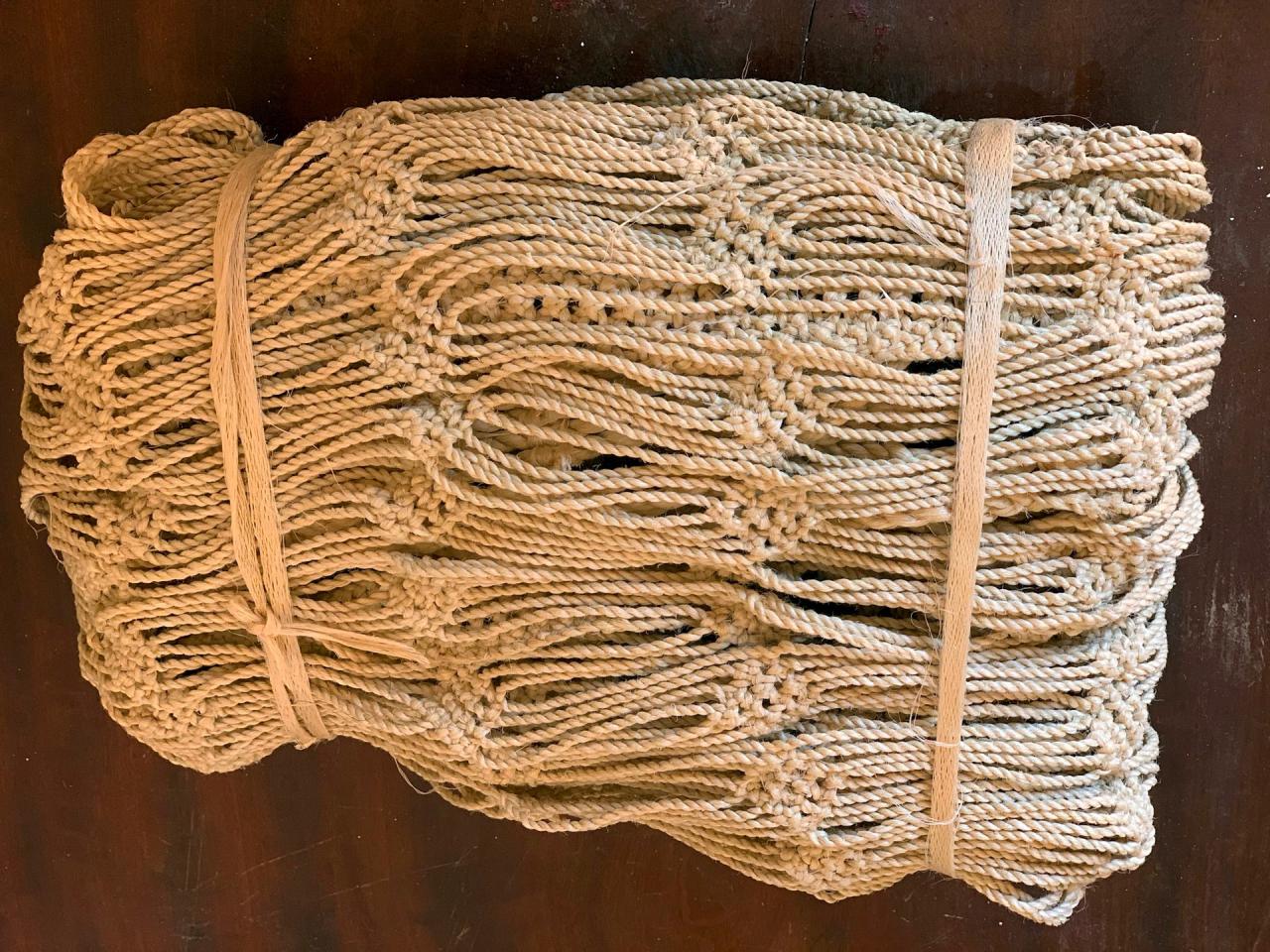
The paulownia hammock is woven from very strong paulownia fibers and has many knots. Depending on the size of the hammock, it is divided into three types: three-strand hammock, four-strand hammock, and six-strand hammock. A three-strand hammock has three strands of rope (three strands at each knot), a four-strand hammock has four strands of rope, and a six-strand hammock has six strands of rope.
Hammocks made from paulownia wood are quite durable; with proper care, they can last for 15-20 years.
What's special about lying on a paulownia wood hammock, made entirely of natural fibers, is that it massages acupressure points on the body and absorbs sweat, making it very good for people with rheumatism, arthritis, etc.
Unlike nylon hammocks, paulownia hammocks are cool in summer and warm in winter. These characteristics contribute to the unique value of paulownia hammocks in Cu Lao Cham, Hoi An.
Making a hammock involves many complex, entirely handcrafted steps. First, the weaver selects a straight paulownia tree, with a trunk about the size of a wrist or smaller. After cutting it down, they beat it to remove the outer bark, soak it in spring water to soften the hard outer layer, then extract the opaque white fibers (also called paulownia fiber) inside, wash them clean, and dry them in the sun for about a day. When the fibers are dry and turn pure white with a sheen, they are ready to be stripped, spun into threads, and woven into a hammock. It takes 1.5 to 2 months to complete one hammock.
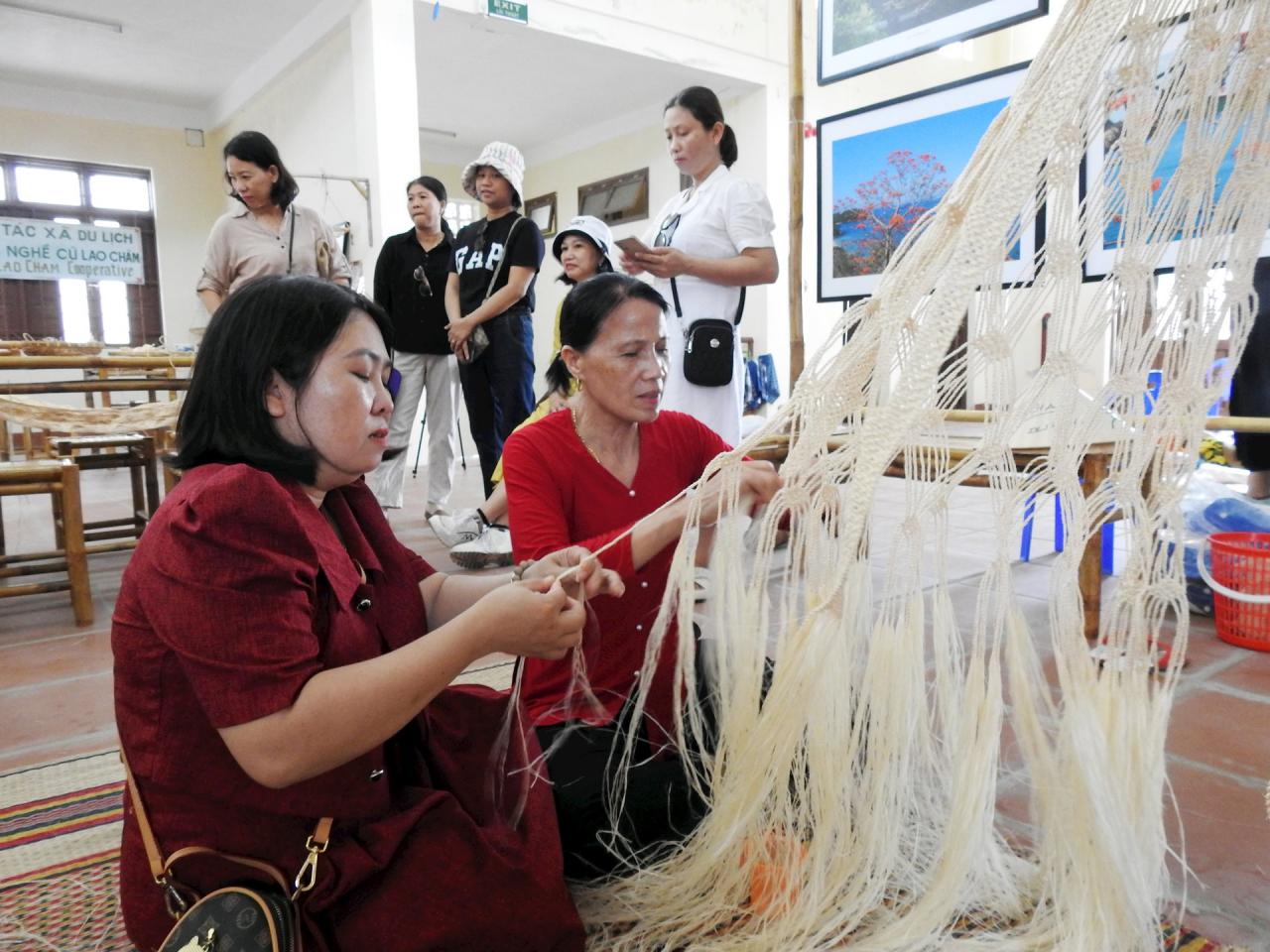
Weaving paulownia wood hammocks is a very arduous craft, requiring the craftsman to be patient, meticulous, skillful, and technically proficient in all stages. The process of weaving a hammock begins with stripping the paulownia fibers, trimming the hammock's ends, creating the connecting threads, making the base, weaving the hammock's body, making the edges, and tying the hammock together.
During the weaving process, the ends of the paulownia fibers thin out, requiring the weaver to continuously add more fibers as they braid. With meticulous, skillful hands and accumulated experience and knowledge, hammock weavers in Cu Lao Cham have developed a sophisticated technique for joining paulownia fibers, resulting in a very smooth finish where the joins are virtually undetectable. After joining the fibers, they are tightly twisted together to conceal the seams, ensuring both aesthetic appeal and durability, preventing unraveling.
Throughout the weaving process, as the paulownia fiber runs out, the weaver adds more, but absolutely no joints come undone; the paulownia fibers are very smooth and beautiful. During the weaving, the weaver must always keep their hands taut to ensure the paulownia fibers are strong, straight, and not twisted. Only then will the finished paulownia hammock not sag and achieve the right softness, ensuring the hammock is even, strong, and tight.
Each strand of paulownia wood is skillfully woven and twisted by the hands of mothers and sisters to create a strong and durable paulownia hammock with harmonious and delicate patterns. The paulownia wood becomes soft, providing a comfortable and pleasant feeling for the user.
Currently, the number of people in the Tan Hiep island commune community who know how to weave paulownia hammocks is not large, mainly consisting of elderly people. There are currently 7 people practicing this craft in the commune, concentrated in Bai Lang and Bai Ong villages. The average age is high, over 50 years old, with 4 people over 85 years old. Among them, the person with the longest experience has 54 years of practice, while the one with the least experience has 7 or 8 years.
A signature product of the island, a recognized heritage.
For centuries, the craft of weaving hammocks from paulownia wood has survived and thrived in the coastal island region of Cu Lao Cham.
Beyond its purely material value, the paulownia hammock is also closely linked to the formation and development of the land, embodying the thoughts and feelings of the island's people. It is a traditional craft with many complex steps and techniques, yet deeply rooted in folk traditions and craftsmanship, creating a distinctive local handicraft product. This craft not only provides income for those who practice it but also contributes to the unique tourism product, connected to the maritime culture of Cu Lao Cham Island.
The hammock-weaving craft of the Cham Island inhabitants, made from paulownia wood, is a form of folk culture containing much information. Therefore, through these products, we can understand something of the lifestyle of the local community. This shows that, since ancient times, the Cham Island inhabitants have known how to use readily available forest materials to meet their daily needs on this island.
Therefore, the craft of weaving hammocks from paulownia wood demonstrates the relatively early approach to and exploitation of forest resources by the local communities, in order to adapt to the island's coastal terrain.
Based on the distinctive values of the paulownia wood hammock weaving craft, closely associated with the long-standing history and culture of generations of inhabitants in Cu Lao Cham, the traditional craft of weaving paulownia wood hammocks in Cu Lao Cham, Hoi An, has been inscribed on the National List of Intangible Cultural Heritage according to Decision No. 381/QD-BVHTTDL, dated February 21, 2024, of the Ministry of Culture, Sports and Tourism.
This is an honor for the people of Hoi An, Quang Nam, and also one of the foundations for preserving, maintaining, and promoting traditional handicrafts associated with the sea and islands of Cu Lao Cham and Hoi An.
Source: https://baoquangnam.vn/nghe-dan-vong-ngo-dong-o-cu-lao-cham-tu-vat-dung-thuong-ngay-cho-den-di-san-phi-vat-the-quoc-gia-3138099.html
![[Photo] General Secretary and President To Lam meets with National Assembly delegates from ethnic minorities.](https://vphoto.vietnam.vn/thumb/1200x675/vietnam/resource/IMAGE/2026/04/20/1776696701056_a1-bnd-8331-3342-jpg.webp)

![[Image] National Assembly discusses the implementation of the socio-economic development plan.](https://vphoto.vietnam.vn/thumb/1200x675/vietnam/resource/IMAGE/2026/04/20/1776696707422_ndo_br_img-20260420-185419-jpg.webp)












































































Comment (0)