Following the defeats of many Asian representatives in the second round of matches, Japan's 4-0 victory over Tunisia served as an important reminder: Asian football still has a team with enough character, organization, and ambition to go far in the 2026 World Cup .
Asia has a foothold.
The 2026 World Cup began with many positive signs for Asian football. South Korea beat the Czech Republic, Japan drew with the Netherlands, Qatar earned a point against Switzerland, Iran drew with New Zealand, and Saudi Arabia shared points with Uruguay. These results created the feeling that Asia no longer approached the World Cup with an inferiority complex.

The 2026 World Cup kicked off with many positive signs for Asian football. South Korea beat the Czech Republic, Japan drew with the Netherlands... and Saudi Arabia (in blue) shared points with Uruguay.
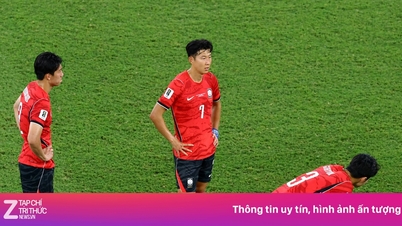
But the second round of matches brought many teams back down to earth. South Korea lost to Mexico 0-1. Qatar lost to Canada 0-6. Iraq lost to Norway 1-4. Australia, after their win against Türkiye, also lost to the USA 0-2. These results didn't bring Asia down, but they were enough to remind us that there's still a big gap between impressing in one match and having the strength to go the distance in the World Cup.
In that context, Japan's 4-0 victory over Tunisia means more than just a win in Group F. It not only brings Japan closer to the knockout stage, but it also affirms that Asia still has a reliable flagbearer.
Win the way the strong team does.
What's remarkable about Japan isn't just the 4-0 scoreline. Against Tunisia, they won through initiative, speed, organization, and efficiency. Daichi Kamada opened the scoring very early, Ayase Ueda scored two goals, and Junya Ito also found the net. Japan didn't need a nail-biting match to earn points. They controlled the game, applied pressure, knew how to finish off their opponents, and maintained their composure until the very end.

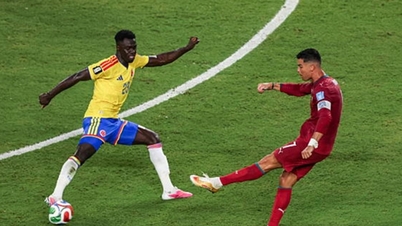
Japan (right) currently possesses the character, organization, and ambition to go far in the 2026 World Cup.
That's the difference between a team that can spring surprises and a team that has the foundation to go far. Many Asian teams can play well at a particular moment, a half, or even a whole match. But Japan is showing something bigger: they have structure, depth, and a habit of competing at a high level.
The 2-2 draw against the Netherlands in the first match showed that Japan can hold their own against a strong European opponent.
The 4-0 victory against Tunisia showed they also know how to handle must-win matches. A team aiming to go far in the World Cup needs both of these qualities: not being intimidated by strong teams, and not wasting opportunities against weaker opponents.
What's even more noteworthy is that Japan entered this tournament without a full squad. They were missing key players like Kaoru Mitoma, Takumi Minamino, and Wataru Endo due to injuries.



Before the match against Tunisia, Japan was also without Takefusa Kubo, who had suffered a knee injury in the opening match, a 2-2 draw against the Netherlands.
Yet, the Blue Samurai still knew how to overcome difficulties. Without their brightest attacking stars, they still won convincingly. Without their strongest lineup, they still played as a strong team. That's a sign of a team built on a system, not just on a few outstanding individuals.
Becoming a leading figure doesn't happen by chance.
Japan didn't become Asia's powerhouse thanks to a single generation of explosive players. They reached their current position through a long process: investing in youth development, developing the J-League, sending players abroad, building a tactical identity, and maintaining consistency across multiple World Cups.

Asia still has a strong enough flag to consider for a longer journey. And right now, that flag is Japan (left).
So when Japan beat Tunisia 4-0, it wasn't just a victory of 90 minutes. It was the result of a football system that knew where it wanted to go. They were no longer satisfied with just getting through the group stage. Nor did they see a World Cup win as the only historical milestone. For Japan, the goal now was to go further, even to break their own limits.
This is something that many Asian football nations still lack. Some teams may have a good generation of players. Some teams may produce surprises. But to maintain competitiveness across many matches and World Cups, football needs a broader foundation: a strong national league, good youth development, players honed in a demanding environment, and a national team with a clear philosophy.
Japan has those qualities. So, they're not just a good Asian team; they're also a role model for the rest of the continent.
Japan's victory also raises a big question for Asian football: do we want to be remembered for fleeting moments, or for sustained competitiveness?
The World Cup always offers opportunities for inspiration. A draw against a strong team, a beautiful goal, an unexpected victory—all can bring pride to fans. But to go far, inspiration alone isn't enough. Consistency is needed. Character is essential. The ability to adapt after each match is crucial. And squad depth is also necessary to avoid collapsing under a packed schedule, stronger opponents, and greater pressure.
Japan is showing they understand that. After the draw against the Netherlands, they didn't go into the Tunisia game complacent. After taking an early lead, they didn't let their guard down. And when the game was in their hands, they maintained their rhythm to turn the victory into a statement.
In a World Cup where Asia has more participating teams, Japan reiterated that quantity is not as important as quality. Having many representatives is a welcome development, but Asian football still needs teams capable of going deep into the tournament to elevate the continent's standing.
Calling Japan the flagbearer of Asia doesn't mean denying the efforts of South Korea, Iran, Saudi Arabia, Qatar, Australia, or other teams. Each team has its own circumstances, strengths, and the remaining matches will determine their own fate.
But at this point, Japan is the team that gives the most sense of stability. They're not just about the points. They have the look of a team that knows what they're doing. They're not playing the World Cup by luck, but with a football foundation that's been prepared to compete.



Therefore, the 4-0 victory against Tunisia was not just a cause for joy for Japan. It was also a reminder to Asia that the path to success lies not in empty slogans, but in patiently building a foundation. Japan has followed that path longer, more consistently, and more clearly than many other teams.
The 2026 World Cup is still a long way off. Japan hasn't achieved anything significant by just reaching the group stage. But after two matches, they've sent a clear message: Asia isn't just coming to the World Cup to find beautiful moments.
Asia still has a strong enough flag to consider for a longer journey. And right now, that flag is Japan.

Source: https://nld.com.vn/ngon-co-chau-a-mang-ten-nhat-ban-196260622003139335.htm