The soul of the countryside in every jar of fish sauce.
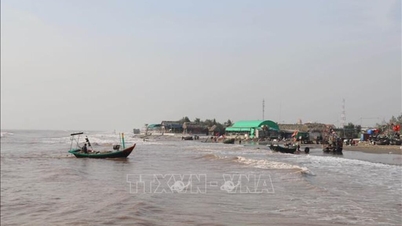
Mud crabs live in abundance along the banks of the Thai Binh River, often digging numerous burrows along the edges of rice fields. Catching them is quite simple; just set up homemade traps using plastic bottles and bait at the edge of the rice field, and after a few hours, you can harvest a batch of fresh mud crabs.
During the summer months, a bowl of reddish-brown fermented crab paste, mixed with lemon, garlic, and chili, is a common sight on the dinner table of the people of Chi Minh commune. A plate of boiled sweet potato leaves or water spinach, or a few pickled eggplants, is enough to create a rich and unforgettable flavor.
The family of Mr. Pham Dinh Bon, owner of the Bon Quyen crab paste production facility in An Dinh village, is one of the households with a long history of making crab paste in Chi Minh commune. According to Mr. Bon, the process of making crab paste is not too complicated but requires meticulousness and experience. Fresh, healthy crabs, after being cleaned, are soaked to remove mud and dirt. The producers keep the crab shells because this is the element that creates the characteristic aroma.
The crabs are then pounded or ground into a paste, mixed with salt in the appropriate ratio, and placed in sealed jars or containers for fermentation. Some households still maintain the traditional fermentation method by drying them in the sun during the day and in the dew at night, adding roasted rice flour or yeast to enhance the flavor.
During the fermentation process, the fish sauce is stirred regularly to ensure even absorption. Typically, it can be consumed after about two months, but many households ferment it for six months to a year to achieve the best quality. The finished product has a thick, reddish-brown color and a strong, characteristic aroma.
Ms. Pham Thi Hoa, owner of the Dien Hoa crab paste production facility, said that crab paste is not only a dipping sauce but also associated with childhood memories and simple country meals.



Currently, fermented crab paste from Chi Minh commune is widely consumed in many localities. In the last two months, Ms. Hoa's facility has sold about 50-70 liters per day, priced at 130,000-150,000 VND/liter, distributing to Quang Ninh, Hanoi , Ninh Binh, etc.
"Not everyone is immediately familiar with the smell of fermented crab paste, but once they've tasted it, they're easily captivated by its unique, rich flavor," Ms. Hoa shared.
Preserve the craft to build a brand.
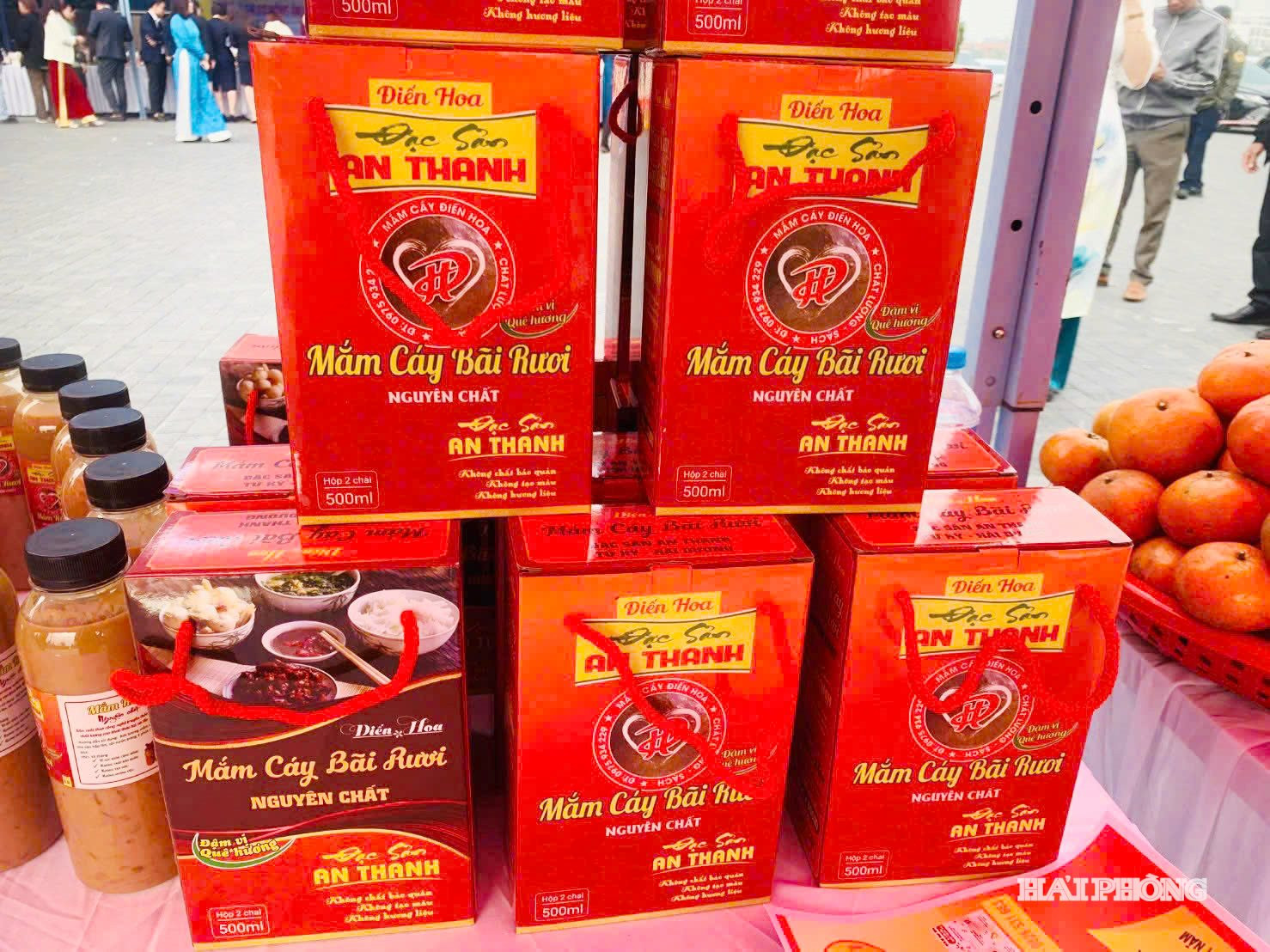
In recent years, the trend of consuming traditional, safe, and traceable food has opened up opportunities for the development of the crab paste making industry. Many households in Chi Minh commune have invested in expanding production, improving processing quality, and focusing on food safety.
Along with e-commerce, businesses are also stepping up online promotion and improving packaging and labeling to suit the modern market. This is an important step that helps local specialties reach a wider audience.
The crab harvesting season lasts from March to October each year, with the peak from May to July. The entire commune currently has 15 crab paste production facilities, providing stable jobs and income for many workers.




According to Comrade Duong Ha Hai, Secretary of the Party Committee and Chairman of the People's Council of Chi Minh commune, the locality has welcomed many groups of visitors to explore the area known for its mud crabs. Tourists are often impressed with dishes made from mud crabs and choose mud crab paste as a souvenir.
"Besides bringing economic value, the crab paste making profession also contributes to preserving local cultural identity. The secrets of the craft, passed down through many generations, help to preserve the unique flavor of crab paste," said Mr. Duong Ha Hai.
From simple earthenware jars of fermented crab paste, the fermented crab paste product of Chi Minh commune is gradually asserting its status as a specialty, contributing to preserving traditional crafts associated with local natural products.
NGUYEN THAOSource: https://baohaiphong.vn/nguoi-dan-xa-chi-minh-giu-lua-nghe-mam-cay-546498.html
![[Photo] General Secretary and President To Lam works with the Party Committee of the Government on the work of preventing and combating storms, floods, extreme natural disasters and climate change.](https://vphoto.vietnam.vn/thumb/1200x675/vietnam/resource/IMAGE/2026/06/29/1782729441945_a1-bnd-0385-9454-jpg.webp)
![[Photo] National Assembly Chairman Tran Thanh Man attends the Conference to announce the Master Plan for Hanoi Capital City with a 100-year vision.](https://vphoto.vietnam.vn/thumb/1200x675/vietnam/resource/IMAGE/2026/06/29/1782709639728_ndo_br_1-jpg.webp)

![[Image] A look back at the capital's preparations for the century-long master plan.](https://vphoto.vietnam.vn/thumb/1200x675/vietnam/resource/IMAGE/2026/06/29/1782750453122_quy-hoach-100-nam-minh-duy-1-2118-jpg.webp)


































































![[Image] Building an elevated road through the Ma Da forest.](https://vphoto.vietnam.vn/thumb/402x226/vietnam/resource/IMAGE/2026/06/29/1782724737750_anh-man-hinh-2026-06-29-luc-16-18-43.png)