Turn disadvantages into advantages.
Born and raised in Hang Kia village, Pa Co commune, over 1,200 meters above sea level, Vang A Nha is no stranger to the precarious, jagged limestone mountains that make climbers hesitant and weary. Early in the morning, mist blankets the area, clinging to the ground and seeping through cracks in the doors. The Hang Kia valley resembles a magical, ethereal cloud valley.
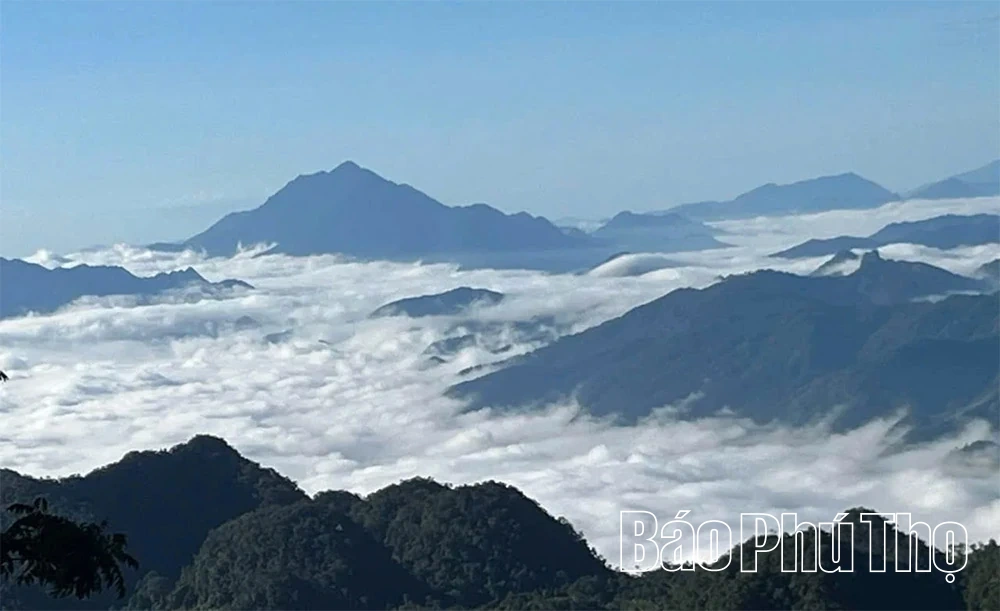
The magical Hang Kia Valley with its floating sea of clouds.
However, this place was once a drug hotspot, leading to many negative consequences. How to develop the economy , improve living standards, and help the people abandon drugs is a problem that Vang A Nha has always pondered. After learning from many places and noticing that some visitors to the Hmong village found it enjoyable, the idea of developing tourism was born from there.
“Developing cultural, ecological, experiential, and exploratory tourism is a new model for economic development in the Mong ethnic group and also the best way to preserve and promote ethnic identity. The mist, the precarious hills, and the pristine landscape—things the people often complain about—will be an advantage. What makes it unique is something we face challenges that others don't have. Combined with the unique Mong ethnic culture, it promises to attract tourists. That's the idea, but to get the villagers to believe in it and follow suit, we have to be bold and take the lead,” shared Vang A Nha.
Initially, visitors only came briefly and didn't stay long. The young couple, Sung Y Mua and Vang A Nha, asked themselves, "How can we keep them coming back?" Mua herself found the answer: they needed quality accommodation and unique tourism products. In 2013, her family mortgaged their land title to borrow capital to build a spacious wooden house for community vacationers, and later built seven more bungalows. The couple independently researched and created all the designs and decorations, reflecting the distinct ethnic culture of the Hmong people and a close connection with nature.
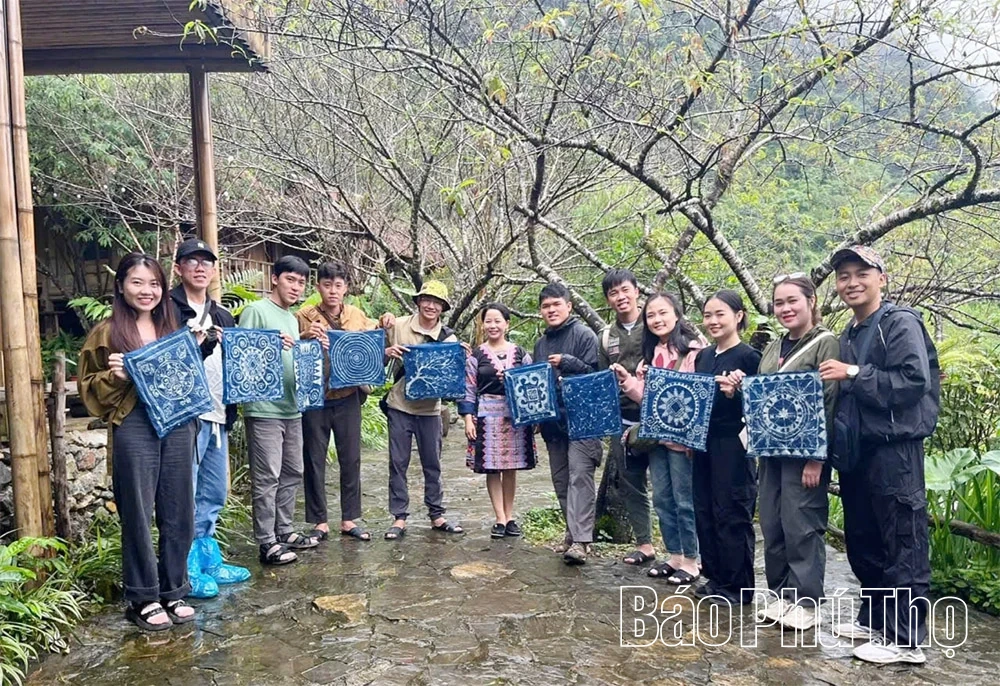
Ms. Sung Y Mua and tourists with the results of the beeswax painting experience.
Her family is committed to taking the lead in preserving and restoring traditional crafts such as embroidery, bamboo paper making, traditional flute music, folk dances, and folk games, as well as protecting the forest and maintaining a green, clean, and beautiful environment. Tourists can experience making sticky rice cakes, steamed cornmeal, weaving brocade, beeswax painting, and participate in the daily activities of the villagers, such as picking tea leaves, processing tea, and picking plums.
The vision was laid out, but implementation was not easy. Some villagers even said the family was being unrealistic, because the model was new both in thought and action among the Hmong people at the time. When they first started the homestay model, not many tourists knew about Hang Kia, and Ms. Mua's family fell into debt. They lost money with each single guest, and broke even with two guests, but the family still served wholeheartedly so that guests would recommend them to their friends. The family utilized the internet and social media to promote and facilitate bookings. All with the hope of "awakening" the tourism potential of the Hmong village.
"Awakening" community-based tourism in the Hmong villages.
Recognizing the tourism potential of Hang Kia village and the pioneering and innovative individuals involved in community-based tourism development, several major travel companies have surveyed the area and established tour routes. As a result, Hang Kia is gradually becoming a noteworthy destination on the tourism map.
Y Múa homestay consistently adheres to the principles of dedication, cultural identity, and community focus, resulting in a stable number of guests. It provides employment for 8 local workers, each earning 300,000 VND/day, with the head chef earning 400,000 VND/day. Local guides are paid 300,000-500,000 VND per trip, depending on the route. From the beginning of the year to November 2025, the homestay has welcomed over 1,000 domestic and international guests.
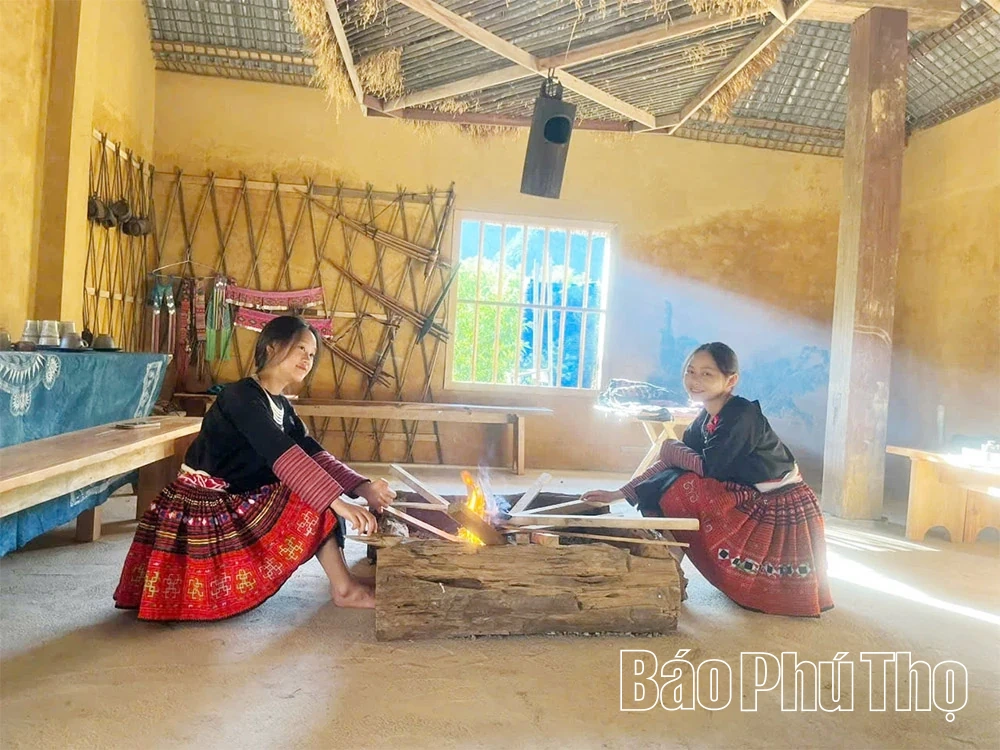
The Hmong cultural museum of the Vang A Nha - Sung Y Mua family has just been completed and is now open to visitors.
While running her homestay, Y Múa continues to learn and accumulate knowledge, studying English for communication and understanding the needs of each group of guests to provide attentive service. The cuisine is made from fresh, traditional ingredients such as black chicken, local pork, vegetables, and sticky rice cakes. This encourages the local people to develop commercial farming and livestock raising. In particular, her family is gradually realizing their dream of building a Hmong cultural museum right in their Hmong village. The museum's unique feature is that visitors can directly experience cultural activities, rather than just viewing exhibits.
Sung Y Mua believes that developing community-based tourism requires the entire community to work together for sustainability. From the initial model, many other families have now joined in running homestays, with 10 households participating in the former Hang Kia commune alone.
Developing community tourism has contributed to increasing the income of Y Múa's family and many other households in the village. Through tourism, visitors connect with and organize many cultural and charitable activities to help the local people. As Vàng A Nhà said: "The happiest thing is that the villagers have expanded their cultural exchange, changed their way of thinking and doing things, developed the economy, reduced poverty, and especially given up drugs."
Cam Le
Source: https://baophutho.vn/nguoi-danh-thuc-du-lich-cong-dong-ban-mong-243521.htm



![[Photo] The General Secretary, President and his wife begin their state visit to the Philippines.](https://vphoto.vietnam.vn/thumb/1200x675/vietnam/resource/IMAGE/2026/05/31/1780230559452_anh-man-hinh-2026-05-31-luc-19-28-11.png)
![[Photo] Admire the coral "masterpiece" amidst the million-year-old heritage of Dak Lak province.](https://vphoto.vietnam.vn/thumb/1200x675/vietnam/resource/IMAGE/2026/05/31/1780221235105_anh-man-hinh-2026-05-31-luc-16-53-27.png)
![[Photo] Solemn bathing ceremony and Buddha procession in Hue](https://vphoto.vietnam.vn/thumb/1200x675/vietnam/resource/IMAGE/2026/05/31/1780228263543_1-jpg.webp)










![[Video] Sunset at Lap An Lagoon – Where the sun sets over the fishing nets](https://vphoto.vietnam.vn/thumb/340x192/vietnam/resource/IMAGE/2026/05/31/1780192137701_beach-landscape-sea-water-nature-grass-745871-pxhere-com.jpeg)



























![[Photo] Admire the coral "masterpiece" amidst the million-year-old heritage of Dak Lak province.](https://vphoto.vietnam.vn/thumb/402x226/vietnam/resource/IMAGE/2026/05/31/1780221235105_anh-man-hinh-2026-05-31-luc-16-53-27.png)

























Comment (0)