

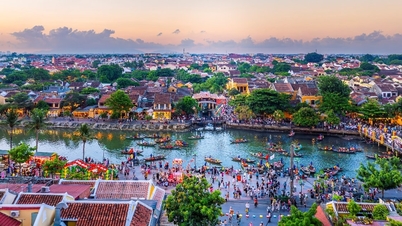
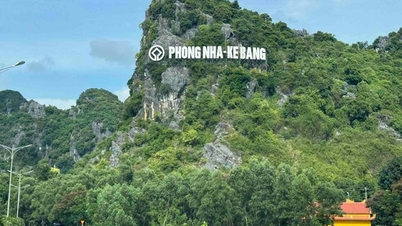
Our country in general, and Quang Ninh in particular, possesses invaluable relics, heritage sites, and assets that contribute to defining the national, ethnic, and local brand. These cultural heritage sites not only meet the spiritual needs of the people and contribute to affirming national pride, but also serve as a resource for socio -economic development, especially in the current period.
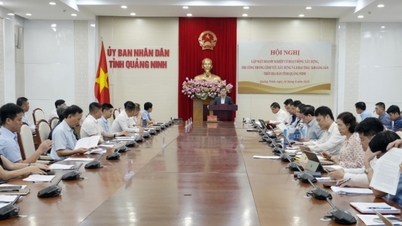
The concept of Heritage Economy was first introduced in Nghe An province in 2013. In May 2019, Nghe An province organized a scientific conference on "Preserving and promoting the value of cultural heritage associated with economic development" with the theme "Heritage Economy - A new growth driver". On December 21, 2024, in Van Don district, the Editorial Board of the Communist Magazine, the Central Theoretical Council, and the Quang Ninh Provincial Party Committee also jointly organized a scientific conference on "Some theoretical and practical issues on promoting new growth drivers - a perspective from the practical development of heritage economy in Quang Ninh province". Delegates, including scholars, experts, leaders, and managers from across the country, participated and offered many solutions and recommendations for Quang Ninh province in particular, and the whole country in general, to continue developing the heritage economy effectively, demonstrating the important role of this field.
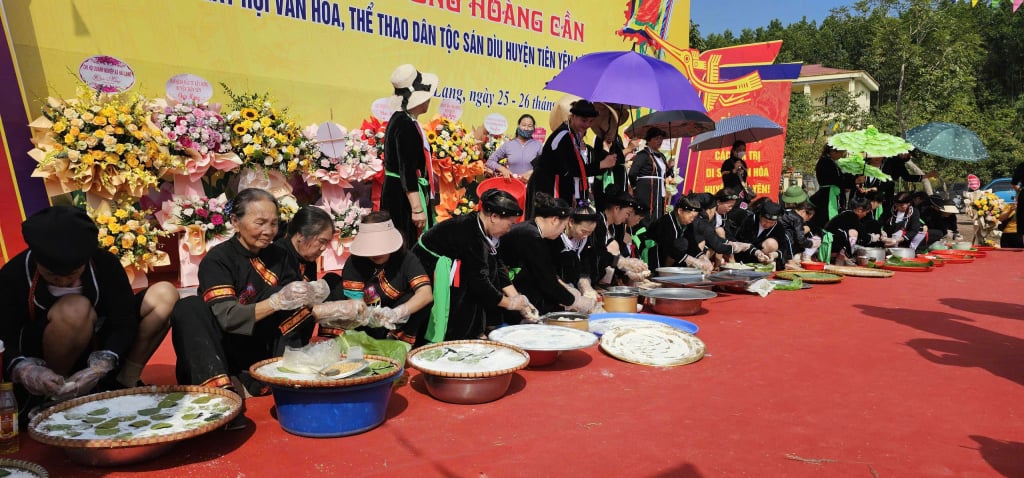
Heritage economy is understood as a field of study and practice focused on the use and exploitation of cultural, historical, and natural assets to create economic value. This includes activities such as cultural heritage preservation, heritage tourism development, and the use of heritage resources to promote economic growth and community development. In recent years, alongside development thinking based on economic, environmental, and social pillars, heritage managers, researchers, and practitioners have increasingly emphasized the importance of heritage as a crucial factor in sustainable development. According to economic and cultural experts, developing a heritage economy can contribute to heritage preservation.
Specifically, developing heritage tourism can generate revenue, thereby creating a financial source for investment in the preservation, repair, and maintenance of heritage sites. Along with this, economic activities related to heritage are often accompanied by education and awareness campaigns, helping locals and tourists better understand the value of heritage, thus strengthening their awareness of its protection. Economic development from heritage can also create jobs and opportunities for local people, encouraging them to participate in the preservation of their community's heritage. By developing sustainable tourism models, heritage preservation can be integrated with economic activities, reducing pressure on resources and protecting the environment. Furthermore, the development of the heritage economy can promote related industries such as cuisine, traditional arts and crafts, thereby creating a sustainable value chain. In summary, developing a heritage economy not only helps preserve cultural and historical values but also promotes sustainable development for local communities.
According to Associate Professor Dr. Le Thi Thu Hien, Director of the Department of Cultural Heritage (Ministry of Culture, Sports and Tourism), cultural heritage holds paramount importance in the construction and development of an advanced Vietnamese culture rich in national identity. The achievements in protecting and promoting the value of cultural heritage over the past period are a vivid reality, affirming the position of Vietnamese culture as both a goal and a driving force for development.
"Vietnam has enormous potential in terms of heritage, however, according to experts, how to awaken and fully utilize that potential, especially in the field of tourism, is not an easy task. It doesn't just depend on financial resources, but the fundamental issue probably lies in awareness and creative thinking," emphasized Associate Professor Dr. Le Thi Thu Hien.
Source
![[Photo] National Assembly Chairman Tran Thanh Man arrives in Türkiye to attend IPU-152](https://vphoto.vietnam.vn/thumb/1200x675/vietnam/resource/IMAGE/2026/04/15/1776261003665_tnk10-jpg.webp)
![[Photo] Mrs. Ngo Phuong Ly meets and exchanges views with Mrs. Peng Li Yuan](https://vphoto.vietnam.vn/thumb/1200x675/vietnam/resource/IMAGE/2026/04/16/1776277858080_phu-nhan-1-jpg.webp)
![[Photo] The General Secretary, President and his wife meet with Vietnamese-Chinese friendship leaders.](https://vphoto.vietnam.vn/thumb/1200x675/vietnam/resource/IMAGE/2026/04/15/1776264829725_vna-potal-tong-bi-thu-chu-tich-nuoc-to-lam-gap-mat-nhan-sy-huu-nghi-viet-nam-trung-quoc-8703641-3130-jpg.webp)
![[Photo] National Assembly Chairman Tran Thanh Man attends the opening session of IPU-152](https://vphoto.vietnam.vn/thumb/1200x675/vietnam/resource/IMAGE/2026/04/16/1776277863731_ctqh5-jpg.webp)
![[Photo] My Son at night: A thousand-year-old heritage site amidst the Milky Way](https://vphoto.vietnam.vn/thumb/1200x675/vietnam/resource/IMAGE/2026/04/15/1776261039184_ndo_br_chon6-jpg.webp)










![[Infographic Series] Red Addresses of Dong Nai: Location of the establishment of the Binh Phuoc - Tan Trieu Party Branch and the provisional Bien Hoa Provincial Party Committee, the site of the victory at Doc 31, the place where the 302nd Division was established.](https://vphoto.vietnam.vn/thumb/402x226/vietnam/resource/IMAGE/2025/9/26/1331532306fb4ad18e4a849e5c64202a)
































Comment (0)