

Barriers to prevent the spread of infectious diseases.
The 25th National Pediatric Conference, held in Hue City (Thua Thien Hue province) from October 31st to November 2nd, focused on the theme "From Science to Policy and Practice." This was an important opportunity for healthcare professionals to discuss advancements in pediatrics, particularly child nutrition. The conference brought together many leading experts, contributing to the development of policies and improvements in childcare practices in Vietnam.

According to Tran Minh Dien, President of the Vietnam Pediatric Association, pediatricians not only examine common medical conditions but also assess children's nutritional status.
Associate Professor Tran Minh Dien, Director of the National Children's Hospital and President of the Vietnam Pediatric Association, stated that pediatric diseases are becoming increasingly complex. Regarding nutrition, experts note that it is a factor related to the physical, intellectual, and height development of children. Given the continued prevalence of malnutrition among children in Vietnam across different regions, more attention needs to be paid to the group suffering from stunting.
Associate Professor Dien believes that new definitions of childhood malnutrition are needed. For example, childhood obesity should also be considered malnutrition. A broader perspective on childhood malnutrition is necessary, based on both phenotypic and causal criteria.
According to Associate Professor Dien, parents today pay a lot of attention to their children's health care. This is very encouraging. "However, I would also like to remind you that to ensure proper and adequate nutrition for young children, we need a system of consultations from pediatricians and nutritionists, avoiding online groups that encourage each other to use inappropriate or nutritionally inadequate foods and drinks. After receiving advice from pediatricians and nutritionists, mothers and families should pay attention to better care for their children's nutrition," Associate Professor Dien said.
Nutritional intervention is a whole process.
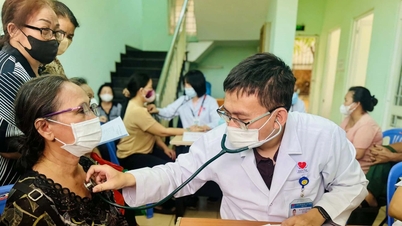
Regarding the role of pediatric clinicians in children's nutrition, Associate Professor Dien stated that pediatricians not only examine children's medical conditions but also assess their nutritional status.
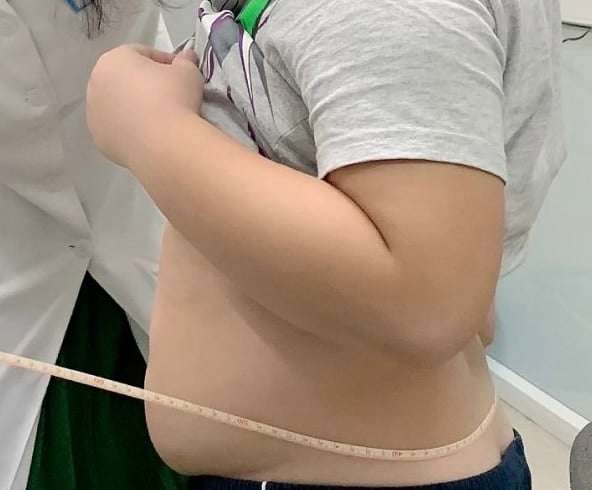
Poor nutrition can lead to malnutrition and stunted growth in children, or obesity.
"Another responsibility of pediatricians is to raise awareness among parents and caregivers about proper and adequate nutrition, both when children are sick and when they are healthy. This helps restore nutrition after illness and maintain it so children can catch up on their growth," shared the President of the Vietnam Pediatric Association.
According to Associate Professor Dien, the Vietnam Pediatric Association has recently held meetings to develop a unified version of the screening, assessment, and nutritional intervention procedures for children when they come for examination and treatment at hospitals. From there, hospitals can implement and apply this consensus, ensuring that every child visiting pediatric hospitals receives screening and assessment to determine appropriate nutritional interventions.
"Based on the assessment results, doctors will provide guidance to parents on nutritional interventions through diets and oral nutritional supplements suitable for each child, not only for severely malnourished children, but also for children at risk of malnutrition and stunting."
At the National Children's Hospital alone, 100% of inpatients undergo nutritional screening, and interventions are provided for approximately 30% of children showing signs of malnutrition.
Adult height requires intervention from early life.
According to information presented at the conference, compared to other countries in the world and the region, the average height of Vietnamese adults is still low, with men not reaching 1.7 meters and women not reaching 1.6 meters. Adult height depends on many factors, including physical development in early childhood; a malnourished and stunted child will likely have poor height later in life.
The rate of stunting among children remains high, at around 20%. In mountainous and highland areas, this rate is close to 30%. Meanwhile, the national target for 2030 is to reduce this rate to 15%.
Some argue that hospitals lack a standardized set of tools for screening and assessing the nutritional status of young children. Even when such tools exist, assessments primarily focus on acute malnutrition, often overlooking screening and intervention for stunted growth. Insufficient attention is paid to the risk of malnutrition in sick children, who are particularly vulnerable to malnutrition.
Based on this reality, the Ministry of Health , the Vietnam Pediatric Association, and various institutes need to coordinate with relevant units to develop a unified guideline for screening and intervention in pediatric nutrition. This guideline should include three steps to address nutrition issues in hospitals: identifying and diagnosing all at-risk patients; promptly implementing intervention and continuous monitoring; and developing a plan for nutritional education and care after discharge.
Source: https://thanhnien.vn/dinh-duong-qua-hoi-nhom-mang-nguy-co-cho-tre-nho-185241101163728043.htm





















































































Comment (0)