The "immunity gap" still exists.
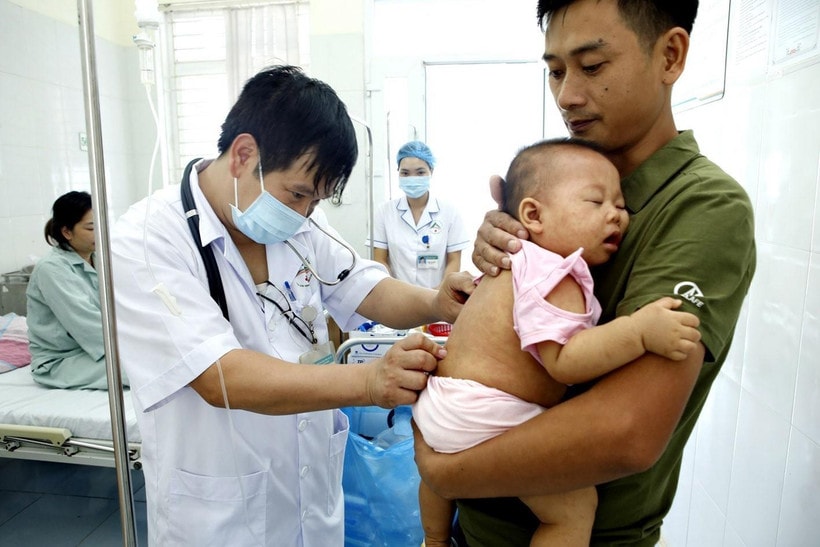
According to Dr. Nguyen Nguyen Huyen, Director of the Center for Disease Control and Prevention at the National Hospital for Tropical Diseases, measles cases typically increase during the winter and spring months, following epidemiological patterns. Since the beginning of 2026, the hospital has received nearly 30 cases of measles and suspected measles.
The number of cases at treatment facilities shows a somewhat positive trend. In January, 16 cases were recorded, decreasing to 11 in February, a drop of 5 cases compared to the previous month. However, many of these cases have tested positive, indicating that the measles virus is still circulating in the community and requires continued close monitoring.
Weather is also a factor that increases the risk of disease spread. The North is currently experiencing a humid period with high air humidity, creating favorable conditions for the measles virus to survive longer in the air and on the surfaces of objects.
Meanwhile, measles is a highly contagious respiratory disease. When people live in enclosed spaces, in crowded areas, or in poorly ventilated environments, the risk of an outbreak increases if appropriate preventive measures are not taken.
One notable point is the change in the age range of measles cases. In addition to infants under 9 months old who are not yet eligible for vaccination, the hospital has also recorded many cases of children aged 5 to 10 years, and even adults, contracting the disease.
According to experts, this indicates that "immunity gaps" still exist in the community. Children who have not received both doses of the measles vaccine, or adults who have been vaccinated but whose antibody levels have decreased over time, are at risk of contracting the disease when the virus is circulating strongly.


The nationwide measles vaccination campaign, implemented in 2025, has contributed to creating an important protective barrier for the community. However, the risk of outbreaks remains because each year there is a group of newborns who are either too young to be vaccinated or have not received all the necessary doses.
Furthermore, population movement between regions with varying vaccination rates can also allow pathogens to enter areas with low vaccine coverage. If vaccination efforts are frequently interrupted or catch-up vaccination rates do not exceed 95%, the risk of localized outbreaks remains.
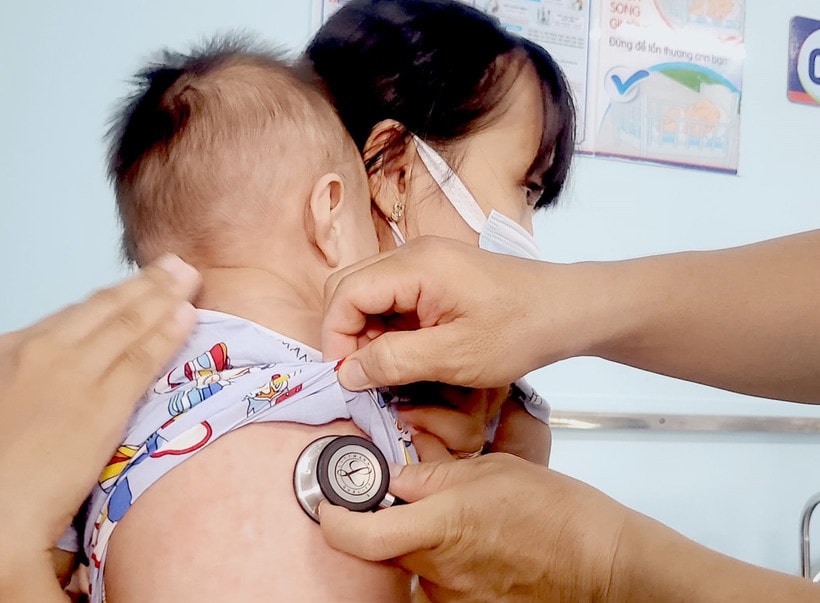
Recommendations for disease prevention
According to doctors, in the initial stage, the symptoms of measles can easily be confused with several other infectious diseases such as dengue fever, hand, foot and mouth disease, or respiratory viral infections.
However, measles still has characteristic signs. Patients usually exhibit the "respiratory triad" consisting of high fever, respiratory tract inflammation with symptoms such as cough and runny nose, and conjunctivitis causing red, watery eyes. When the rash appears, the measles rash usually follows a sequence starting behind the ears, spreading down the face, neck, chest, and then gradually down the arms and legs.
To accurately diagnose measles, healthcare facilities currently employ testing methods such as blood tests for IgM antibodies or nasopharyngeal swabs for Real-time PCR testing to detect the virus. These methods allow for rapid diagnosis and help differentiate measles from other forms of rash.
Health experts emphasize that the most proactive and effective preventive measure currently available is vaccination.



For children, parents should check their vaccination records and ensure their children have received both doses of the measles vaccine according to the schedule: the first dose at 9 months of age and the second dose at 18 months of age. Parents should also note that vaccination should not be delayed simply because of humid weather or when the child has a slight runny nose.
In the community, people need to pay attention to personal hygiene, wash their hands frequently, and maintain a well-ventilated and clean living environment. When children show signs of fever, cough, or rash, they should be proactively isolated and taken to the nearest medical facility for examination. Self-treating at home or allowing children to continue going to school or crowded places can increase the risk of spreading the disease.
In addition, both adults and children should wear masks when going to crowded places or healthcare facilities to reduce the risk of contracting respiratory infectious diseases, including measles.
Source: https://baohaiphong.vn/nguy-co-dich-soi-van-hien-huu-537599.html