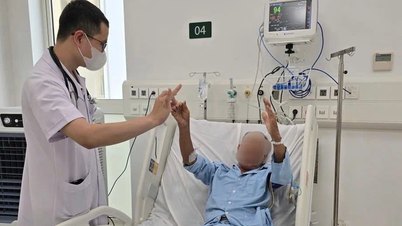
Illustration.
Dull aches and pains in the jaw and face, difficulty opening the mouth, or clicking sounds when moving the jaw are often overlooked. However, according to doctors at Hanoi Traditional Medicine General Hospital, these could be early signs of temporomandibular joint disorder (TMJ) – a condition that directly affects eating, chewing, communication, and quality of life.
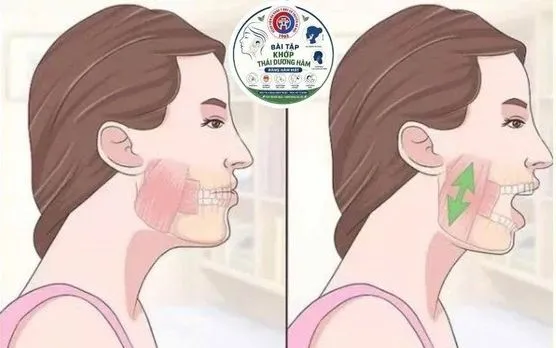
The temporomandibular joint (TMJ) is the joint connecting the lower jaw and the temporal bone, involved in most activities such as eating, speaking, swallowing, and facial expressions. When the joint or related structures are damaged, patients may experience pain in the area in front of the ear, pain when chewing, difficulty opening the mouth, jaw misalignment, morning stiffness, or crackling or popping sounds when moving the jaw.



Notably, the pain is not confined to the jaw area but can also radiate to the temples, head, neck, and shoulders, causing persistent headaches, insomnia, and decreased work performance. Many cases involve self-medication with painkillers or neglecting treatment, allowing the disease to silently progress to a chronic stage, limiting joint movement and making recovery more difficult.
Experts say that early treatment helps reduce pain, improve joint mobility, restore chewing ability, and limit the risk of recurrence. Those who frequently experience stress, grind their teeth while sleeping, have malocclusion, or work under high pressure should pay particular attention.
Doctors advise people not to ignore persistent jaw pain, difficulty opening their mouths, or unusual clicking sounds in the joints. They also recommend maintaining a healthy lifestyle, managing stress, avoiding prolonged one-sided chewing, limiting excessively wide mouth openings, and performing jaw muscle relaxation exercises as directed by professionals to protect joint function and prevent recurrence.



Source: https://vtv.vn/nguy-hiem-con-dau-ham-mat-keo-dai-100260612224111226.htm







































![[Photo] Thousands of people participate in a run to show their support for the campaign "Sharing a common determination to build drug-free communes, wards, and special zones".](https://vphoto.vietnam.vn/thumb/1200x675/vietnam/resource/IMAGE/2026/06/27/1782554475933_0673e2a3df7b5e25076a-8283-jpg.webp)