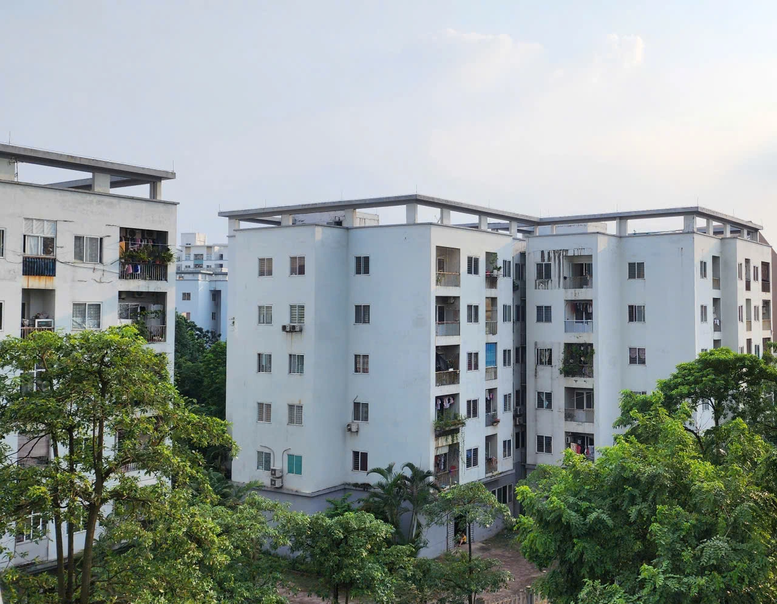
Developing rental housing has been identified as a strategic priority.
Clearly define the structure of the rental housing supply.
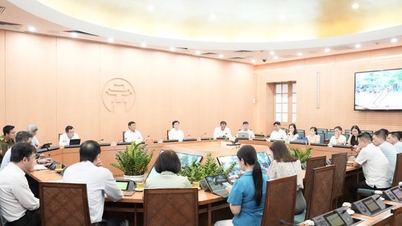
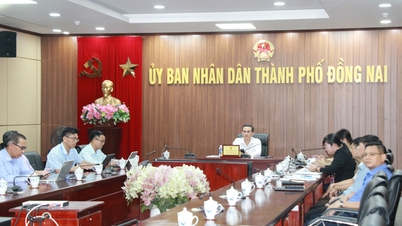
Developing rental housing has been identified as a strategic priority, along with ample policy space to realize this initiative. At a meeting with the Standing Committee of the Ho Chi Minh City Party Committee on June 13, 2026, Prime Minister Le Minh Hung requested that Ho Chi Minh City boldly propose specific mechanisms, policies, and approaches based on practical experience that are not covered by current regulations. The Prime Minister emphasized that, first and foremost, state capital should be utilized, while in the long term, strong solutions and policies are needed to mobilize private resources.
Indeed, to create a supply of rental housing that meets the urgent needs of society, capital from individuals and businesses plays a crucial role. This capital flow can be most effectively channeled, firstly, through transparency regarding demand linked to the planning of areas designated for rental housing construction within the overall urban plan, ensuring the synchronization of housing needs with cultural, educational , and healthcare facilities.
Secondly, mechanisms and policies to encourage businesses to develop rental housing should be designed to suit different tenant groups, the planning of each area and project, and the overall urban plan. Finally, fairness in project access and reasonable profit margins should be ensured to encourage investor participation.
According to Dr. Huynh Phuoc Nghia from the Ho Chi Minh City University of Economics , the key lies in clearly defining the structure of the rental housing supply. The first group consists of commercial rental housing, meaning that investors, based on market demand and urban planning, create projects for rent, either entirely or in a certain percentage, at agreed-upon prices.
The second group consists of rental housing with social housing characteristics, aimed at meeting the urgent housing needs of industrial zone workers, low-income individuals in urban areas, or as part of policies for civil servants and officials of ministries, departments, and localities.
"With commercial rental housing, because this is a market-based agreement, this segment only caters to a specific customer group, usually those with upper-middle incomes. Although, within this group, we must also mention a group of small-scale investors who own land near industrial zones or areas with a high concentration of workers and build rental housing complexes, these types of housing often do not meet technical standards and essential infrastructure requirements."

Dr. Huynh Phuoc Nghia, Ho Chi Minh City University of Economics



With rental housing designed as social housing, government support has always played a crucial role, and the current challenge is how to further enhance the contribution of the private sector.
"Based on the characteristics of each type of rental housing, incentive and support mechanisms need to be highly decentralized to best mobilize social resources, especially resources from those who indirectly benefit from the policy, such as businesses in industrial zones," recommended Dr. Huynh Phuoc Nghia.
A concise solution
Approaching from the perspective of rental housing structure, the resource mobilization map for rental housing development is gradually becoming clearer. An expert from the Ho Chi Minh City University of Economics pointed out that, for rental housing projects with social housing characteristics, especially those aimed at alleviating the urgent housing needs of workers in each locality, initial funding will still have to rely on the state budget, as directed by Prime Minister Le Minh Hung.
For subsequent projects, budget capital plays the role of seed capital. Support in terms of land, fiscal policy, credit, and policies for converting housing types after a certain rental period or when the demand for rental housing is replaced by the demand for home ownership… will encourage businesses to participate in investment alongside the government to bring to the market products that meet needs at rental prices suitable to the income of workers.
Dr. Huynh Phuoc Nghia argues that the proposed mechanisms and policies for developing rental housing must be tailored to the specific characteristics of each region and locality. Only then can resources be mobilized most effectively and efficiently. For example, for developing industrial zones, land should be allocated for social housing and rental housing with social housing characteristics right from the planning stage.
Businesses employing a large workforce and registered to operate in industrial zones are encouraged to participate in these projects from the outset, to provide stable accommodation for workers, increase employee loyalty, and support training and workforce development. Businesses investing in these projects have clearly identified potential customers and will therefore be willing to invest.
For these projects, state support lies in preferential policies regarding land, credit, coordination mechanisms between investors building and operating rental housing and businesses in need, and priorities for businesses contributing capital, rather than relying heavily on the state budget.
Or, for projects where rental costs are higher than the average worker can afford, the State can subsidize rental costs through operating expenses or encourage employers to partially support housing costs for their employees, in exchange for fiscal or credit incentives… In this situation, coordination between parties may have to go down to the smallest detail, but the support of technology will make this challenge feasible, analyzed Dr. Huynh Phuoc Nghia.
The support solutions for the remaining rental housing segment will be completely different. According to the expert, for housing targeting the upper-middle income group, due to its very distinct commercial nature, the State should only offer incentives to encourage investors to build projects in areas with real demand, such as airport cities, financial centers, and free trade centers.
The demand for rental housing needs to be identified from the outset, with the government investing in essential infrastructure and creating conditions for investors to access clean land, expediting procedures related to building construction and operation.


Investors are not required to build buildings solely for rent; they can register a certain number of rental units and, depending on the fluctuating demand in each area, may implement policies to switch between different types of accommodation.
"To encourage small-scale investors to build rental housing complexes, the government has introduced technical standards to ensure the safety and quality of life for workers, and added infrastructure such as schools, hospitals, playgrounds, etc."
"At the same time, there should be appropriate policies to help them transform into businesses, thereby enabling them to access credit to invest in building new apartments or renovating existing ones at reasonable interest rates," added Dr. Huynh Phuoc Nghia.
Hoang Hanh
Source: https://baochinhphu.vn/nha-o-cho-thue-kien-tao-de-dot-pha-102260616155732122.htm

![[Image] Schools organize meetings and introduce teaching models to students admitted to grade 10.](https://vphoto.vietnam.vn/thumb/1200x675/vietnam/resource/IMAGE/2026/06/25/1782368077271_ndo_br_z7970052192242-1ec8daeb77a6eed1a4e9f58c564ddd3e-jpg.webp)



![[Image] Ho Chi Minh City: Ma Lang area, Chicken-Rice Market about to change its appearance](https://vphoto.vietnam.vn/thumb/1200x675/vietnam/resource/IMAGE/2026/06/25/1782377698627_ndo_br_m1-jpg.webp)