From a highly anticipated vacation to a heartbreaking scam.
With only a few days left until the family trip they've been looking forward to for months, Ms. Tran TTL, residing in Tu Liem ward, Hanoi, believes she has completed all the preparations.
Through social media, she found a fan page advertising a resort tour with professional images, many interactions, and positive customer reviews. After talking with the consultant, she transferred the money as requested to reserve her spot.
However, as the departure date approached, she contacted the tour operator to request a service confirmation code, and everything unexpectedly changed.

"I called to ask them for the booking code for the trip, but no one answered. Texting didn't work either. Then I discovered I had been blocked from communicating. That's when I realized I had been scammed," she recounted.
Similarly, Ms. Pham Thi Thuy, residing in Kien Hung ward, Hanoi , also became a victim of an online tour booking scam.
"They offered many attractive promotions and asked me to transfer 40% of the contract value in advance to secure the best price. They promised to send the ticket codes and service confirmation for the whole family closer to the departure date. But when I needed to double-check the information, all communication channels were blocked," Ms. Thuy shared.
Such stories are becoming increasingly common every summer. According to a warning from the Ministry of Public Security , the increased demand for travel is creating favorable conditions for scammers to operate more actively online, especially in the areas of hotel bookings, airline tickets, and resort tours.
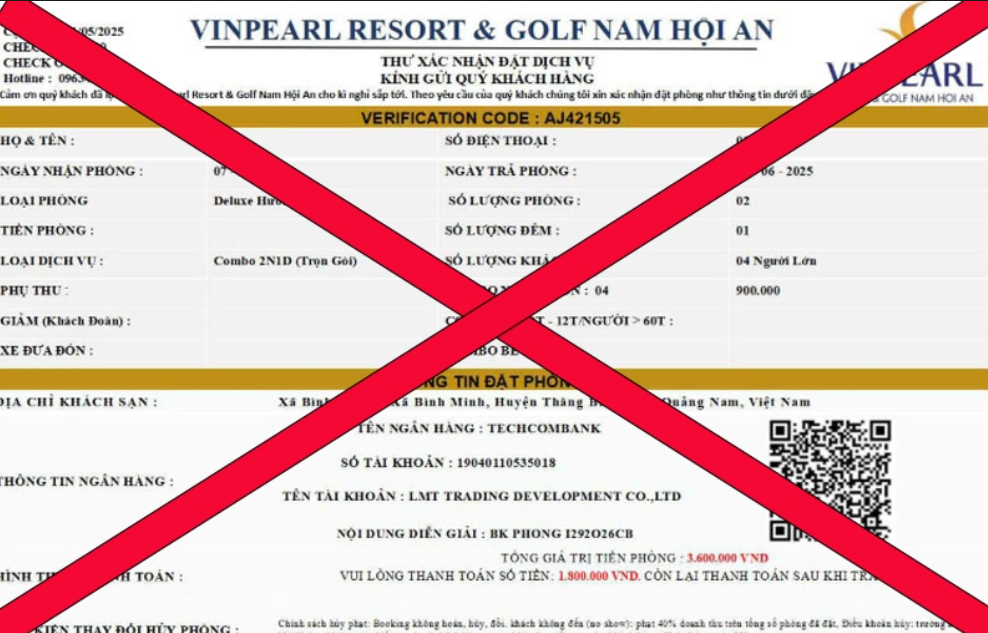


Interestingly, instead of using the unusually low prices as before, these scammers are now opting for a more sophisticated approach by listing prices equivalent to market rates, building professional fan pages, and copying almost verbatim the information of reputable travel businesses.
The script was prepared in advance.
According to Mr. Vu Ngoc Son, Head of the Research, Consulting, Technology Development and International Cooperation Department of the National Cybersecurity Association, the most dangerous aspect of current scams lies not in the technology itself, but in the ability to manipulate the psychology of victims.
Mr. Son stated that the perpetrators meticulously studied user behavior and developed detailed scenarios for each situation. "When people fall into such sophisticated schemes, it's like being led through each step, making it very difficult to defend themselves. From depositing a deposit, confirming the transaction, activating the booking code to refunds, every situation is pre-planned. Victims often think they are dealing with a transaction error rather than realizing they are being scammed," Mr. Son explained.
Notably, one of the new tactics emerging in 2026 is the use of verified social media accounts to build trust.
Many individuals acquire existing fanpages with a large following or verified badges, then rename them to resemble well-known hotels, resorts, or travel companies. On the surface, these pages look almost identical to the official channels of the businesses.
As an organization that frequently receives customer feedback about fake pages, Mr. Bui Thanh Tu, Marketing Director of BestPrice Travel, said that many people have been deceived by very well-invested fan pages. According to Mr. Tu, people can identify some unusual signs if they observe carefully.
"When needing to book services, people should check the activity history of the fanpage. If the page has recently changed its name or previously operated in a completely different field, its legitimacy should be questioned. In addition, it is advisable to visit the official website of the hotel or resort or call directly to verify the information before transferring money," Mr. Tu recommended.
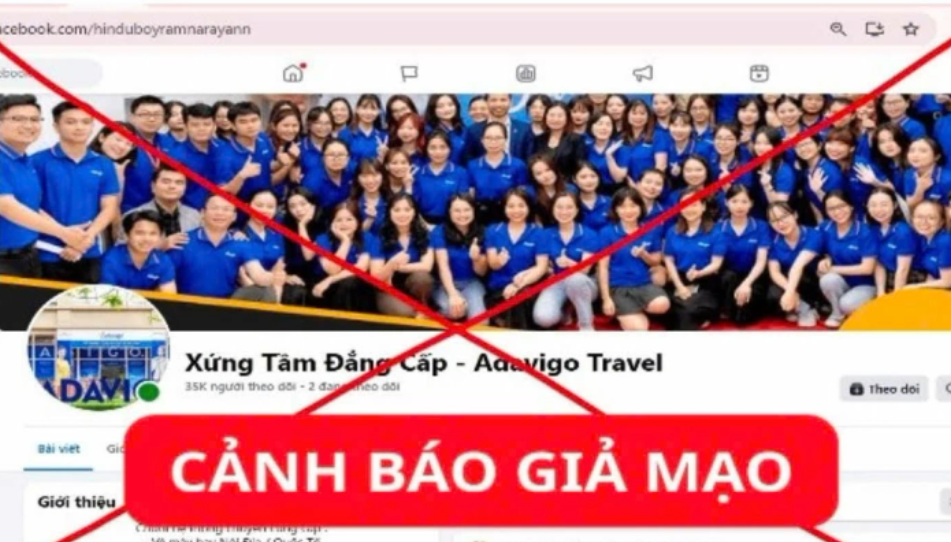
In reality, a simple check can help people avoid significant losses. However, in the eagerness to prepare for a trip or fear of missing out on a deal, many people skip this crucial verification step.



According to experts, the fight against online travel scams will continue to be complex as perpetrators increasingly effectively utilize digital technology and artificial intelligence to create fraudulent scenarios.
Meanwhile, millions of people search for and book travel services online every summer. This means that invisible traps are still being set every day, waiting for unsuspecting victims.
The reality is that sometimes, the difference between a memorable vacation and a painful scam is just a single bank transfer.
(To be continued)
Source: https://hanoimoi.vn/nhan-dien-thu-doan-lua-dao-mua-du-lich-bai-1-nhung-chiec-bay-vo-hinh-mua-du-lich-he-1159399.html
![[Photo] General Secretary and President To Lam attends the Central Public Security Party Committee Conference](https://vphoto.vietnam.vn/thumb/1200x675/vietnam/resource/IMAGE/2026/06/24/1782302063612_a1-bnd-9302-9166-jpg.webp)


![[Photo] Opening Ceremony of the 13th National Congress of the Ho Chi Minh Communist Youth Union](https://vphoto.vietnam.vn/thumb/1200x675/vietnam/resource/IMAGE/2026/06/24/1782286753905_ndo_br_1-8510-jpg.webp)
![[Photo] The 13th National Congress of the Youth Union conducts personnel work.](https://vphoto.vietnam.vn/thumb/1200x675/vietnam/resource/IMAGE/2026/06/24/1782299943080_ndo_br_1-6868-jpg.webp)