According to the 2017 Tourism Law, tourist accommodation establishments are places that provide services to meet the lodging needs of tourists. Types of tourist accommodation establishments include: hotels (resort hotels, roadside hotels, floating hotels, and city hotels); tourist villas; tourist apartments; tourist accommodation vessels; tourist guesthouses; houses with rooms for rent to tourists; and tourist campsites.
Breakthrough in accommodation infrastructure
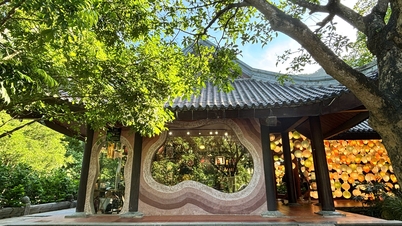
In recent years, the accommodation system in Lang Son has developed strongly. While there were only 220 accommodation establishments in the province in 2020, this number increased to 317 by 2026. The number of establishments has not only increased but also gradually improved in quality, with 2 five-star hotels, 1 three-star hotel, 5 two-star hotels, 16 one-star hotels, along with many other hotels, guesthouses, homestays, and campsites.
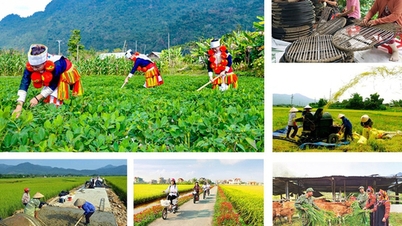
This growth is linked to the development speed of destinations, especially community-based tourism. Specifically, the province currently has 6 recognized community-based tourism destinations (Huu Lien, Yen Thinh, Quynh Son, Vu Lang, Mong An, Hoan Trung) with 60 assessed homestay businesses, an increase of 30 households compared to 2021. Notably, in 2025, the Huu Lien and Yen Thinh community-based tourism destinations will proudly receive the ASEAN Tourism Award; and the Quynh Son community-based tourism village (Bac Son commune) will be recognized by the United Nations World Tourism Organization as the "Best Tourism Village of 2025".
To effectively operate this tourism infrastructure system, human resource development is a core element. On August 15, 2024, the Provincial People's Committee issued Plan No. 196 on "Developing Human Resources for Tourism in Lang Son Province until 2030," with the goal of raising awareness and professional skills for both officials and people working in tourism. Various levels and sectors have proactively organized numerous training programs, professional competitions, and practical experience exchange programs.
Accordingly, the training of human resources for tourism has received attention. A clear example of this positive change is the increasing number of trainees participating in training programs over the years: while 1,015 people were attracted in 2024, this number increased to 1,200 in 2025. Training and refresher programs are designed to be diverse and closely aligned with practical needs, such as: tour guide training, hotel and restaurant management, tourism business management, culinary techniques, language training, etc. From 2021 to the present, the entire province has organized nearly 60 short-term training courses for officials, citizens, and businesses, focusing on raising awareness about sustainable tourism development, heritage protection, communication skills, and cultural and civilized behavior in tourism.
Professionalizing the team
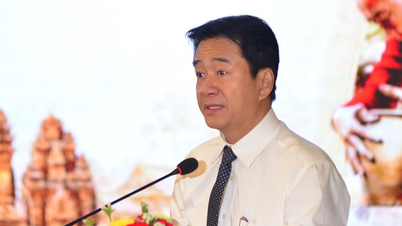
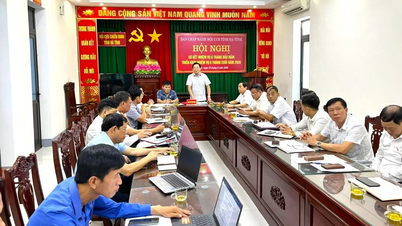
Recently, on June 19, 2026, the Department of Culture, Sports and Tourism (CST) organized a training program on management skills for tourism accommodation establishments. Nearly 100 participants, including owners and managers of tourism accommodation establishments in the province, attended the training. Ms. Ly Thi Ngoc Ngoan, Deputy Director of Quynh Ngoan Tourism Service Cooperative in Bac Son commune, shared: “We are very aware that management capacity is a vital factor for the survival of our cooperative. Through two days of serious study under the guidance of experts, we have acquired very practical management knowledge, especially the 7 minimum criteria for standardizing the quality of accommodation establishments, as well as the process of professional communication and interaction with tourists. After the training, I will definitely apply these standards immediately to improve the quality of accommodation and tourism services.”
Simultaneously, improving the quality and attracting professional human resources has also been a focus. Through competitions and training courses on tour guiding skills, qualified tour guides have been trained, becoming "ambassadors" promoting the image of Lang Son tourism. Notably, from 2021 to the present, the Department of Culture, Sports and Tourism has organized five competitions on professional skills in reception, room service, table service, and tour guiding for employees working at tourism establishments in the province.
In addition, relevant departments and agencies in the province also focus on sending tourism-related households to learn from the experience of managing and developing community tourism in other provinces. At the same time, households in community tourism villages receive direct guidance from experts on implementing criteria regarding housing, food safety and hygiene, communication etiquette, room service, table service, reception, etc.
This standardization has brought about significant changes at the grassroots level. Mr. Hoang Thanh Hieu, Head of the Culture and Social Affairs Department of Huu Lien commune, said: Thanks to training courses, experience sharing, and advice from tourism experts, many households involved in tourism in the commune now have stable incomes from improving service quality. Currently, the tourism village has 28 households registered to operate and receive guests, an increase of 23 households compared to 2021.
Thanks to the efforts of all levels and sectors, the direct workforce has grown in both quantity and quality. The total workforce in the tourism industry (including direct and indirect labor) in the province currently numbers over 8,500 people, specifically over 4,600 direct workers (an increase of over 1,000 compared to 2018). This workforce is primarily concentrated in tourism businesses throughout the province, with over 20% holding postgraduate, university, or college degrees (a 5% increase compared to 2018).
Improving the quality of human resources has directly boosted the development of the tourism industry. In 2025, the number of visitors increased to 4.4 million, with total revenue estimated at 4,500 billion VND. In the first six months of 2026, the province welcomed over 4.1 million visitors, a 33% increase compared to the same period in 2025; total revenue is estimated at over 3,700 billion VND.



Regarding future solutions, Mr. Luu Ba Mac, Deputy Director of the Department of Culture, Sports and Tourism, said: In the coming time, the department will focus on strengthening inspection and supervision of compliance with legal regulations for tourism establishments in the area, thereby promptly guiding, correcting, and improving the quality of management and services for tourists. At the same time, the department will continue to advise the Provincial People's Committee on developing specific plans and solutions for the development of human resources in tourism. This will focus on diversifying training and professional development methods such as: centralized training, organizing experience-sharing programs, vocational skills competitions, and tour guide training; Applying regional and global professional standards in training for state management officials and tourism sector employees, while simultaneously enhancing the responsibility of businesses and workers in self-training and development, gradually standardizing and comprehensively improving the quality of tourism services, and better meeting the needs of tourists visiting Lang Son.
We believe that, with the efforts of all levels and sectors, and the unity of businesses and people, favorable conditions will be created to realize the goal of continuing to make tourism a key economic sector and an attractive destination for domestic and international tourists, creating an even better impression for visitors to Lang Son.
Source: https://baolangson.vn/phat-trien-nhan-luc-tai-cac-co-so-luu-tru-du-lich-5097086.html


![[Photo] General Secretary and President To Lam works with the Party Committee of the Government on the work of preventing and combating storms, floods, extreme natural disasters and climate change.](https://vphoto.vietnam.vn/thumb/1200x675/vietnam/resource/IMAGE/2026/06/29/1782729441945_a1-bnd-0385-9454-jpg.webp)
![[Photo] National Assembly Chairman Tran Thanh Man attends the Conference to announce the Master Plan for Hanoi Capital City with a 100-year vision.](https://vphoto.vietnam.vn/thumb/1200x675/vietnam/resource/IMAGE/2026/06/29/1782709639728_ndo_br_1-jpg.webp)
![[Image] A look back at the capital's preparations for the century-long master plan.](https://vphoto.vietnam.vn/thumb/1200x675/vietnam/resource/IMAGE/2026/06/29/1782750453122_quy-hoach-100-nam-minh-duy-1-2118-jpg.webp)