

QR payments are booming.
Launched in 2021, the VietQR standard is a common brand identity for QR code-based money transfer services processed through the NAPAS network. In the last three years, VietQR payment scanning has permeated every aspect of life, from local markets to street vendors and parking lots, etc.
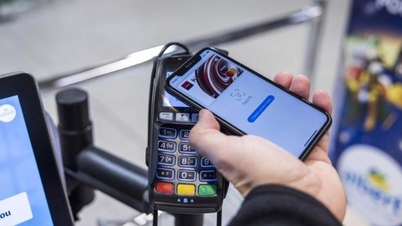
The convenience of VietQR has promoted cashless transaction habits among customers – using bank applications (mobile apps) to make payments for all types of goods and services.
According to NAPAS, as of October 2025, nearly 90 million accounts were using Mobile Banking to scan VietQR codes for daily money transfers. Money transfer transactions via VietQR codes recorded at the NAPAS system in the first 10 months of 2025 increased by over 52% in number (reaching 3.6 billion transactions) and 85% in value (9.2 million billion VND) compared to the same period in 2024.
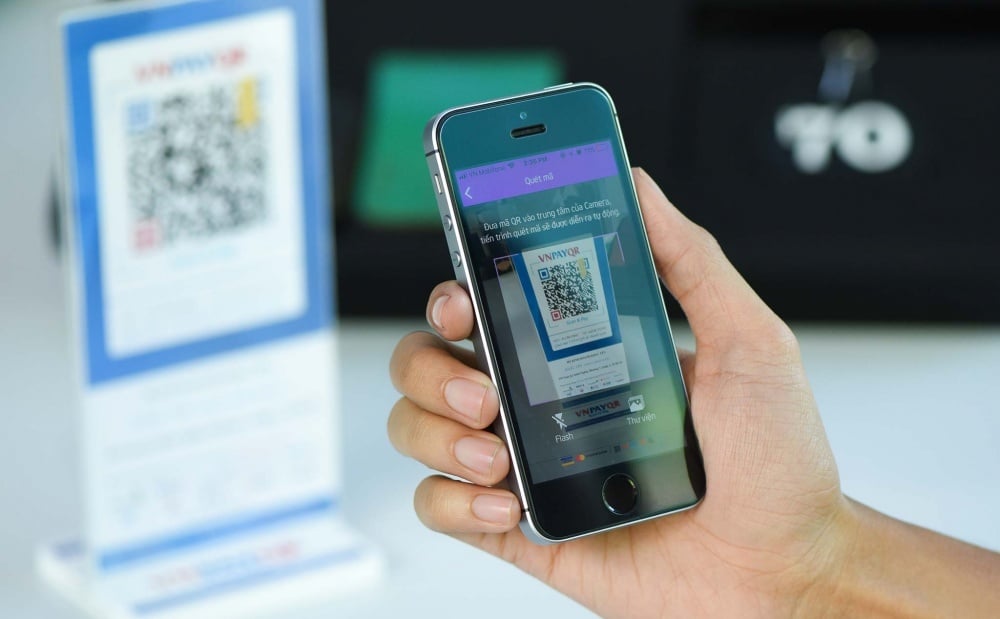 |
| QR code payments are booming, bringing many benefits to people and businesses. |
In fact, cashless payments in general, and QR code payments in particular, bring practical benefits to daily life. Mr. Nguyen Duc Le, Deputy Head of the Market Management Department, Domestic Market Management and Development Agency (Ministry of Industry and Trade), analyzed that cashless payments help eliminate physical barriers, increase transaction speed, and boost aggregate demand. Fast payments reduce friction in the buying and selling process, especially in small, high-frequency transactions. Simple payments encourage consumers to spend more, reducing the fear of paying with cash with just "one click" instead of waiting to exchange for larger denominations, and boosting consumption in retail, food, tourism , and personal services.
Regarding the investment costs for cashless payments, Mr. Le stated that the capital outlay is for small businesses. No POS machines or complex contracts are needed. Household businesses, street vendors, taxis, traditional markets, etc., can all implement it. As the number of sales points increases, the consumption of goods and services increases exponentially. QR codes are creating a consumer boom in micro-retail; food and beverage services; transportation; tourism and accommodation…
Above all, cashless payments build trust in transactions. Standard QR codes (such as VietQR, VietQR Pay) limit fraudulent transfers to the wrong account. Transparency is enhanced for both buyers and sellers. Consumers are willing to spend if they feel secure. Simultaneously, it promotes new sales models. QR codes pave the way for electronic invoices via QR code, static QR codes at the counter, dynamic QR codes for each order, QR codes linked to e-commerce, QR codes leading to product information (traceability), etc. Consumers become smarter, easier, and more transparent.
Quickly switch to QR code payment
QR code payments have boomed and are poised to transition to a new phase, from QR codes for money transfers to QR codes for payments. According to the State Bank of Vietnam, many businesses currently use personal QR codes to receive payments for goods and services. While this method offers convenience, speed, no fees, and no need for contracts with payment service providers, it also carries a number of risks, such as: inability to accurately track transactions for management purposes; lack of consumer protection in case of complaints; and inability to connect with bilateral QR code payment systems with other countries.
As an example, a financial expert stated: Company A signs a contract with Company B, but when making payment, they use a QR code (for money transfer) from a personal account. These habits have existed for decades, so although this payment method has developed rapidly and become widespread, it does not accurately reflect the nature of commercial payments. This is a loophole for tax evasion, money laundering, and fraud...
One of the troubling consequences of using QR codes for money transfers is the mixing of personal and organizational funds, making monitoring and tracing difficult. In particular, with the tax authorities implementing the roadmap to abolish lump-sum tax for business households from January 1, 2026, and applying regulations on issuing invoices generated from cash registers, many households have proactively circumvented the law by requiring customers to transfer money to multiple personal payment accounts without recording the transaction details. Similarly, many businesses use personal payment accounts to receive payments for goods and services.
With the goal of expanding international connectivity, combating money laundering, and controlling budget revenue, experts believe that Vietnam needs to accelerate the upgrade from QR code money transfers to QR code payments, in line with international practices and modern management requirements.
However, this will also face numerous challenges, especially the transition from QR codes for personal (P2P) money transfers to QR codes for payments (QR Pay/P2M). Ms. Phan Thi Thanh Nhan, Director of the Card and Operations Center at BIDV , noted that the biggest challenges to development revolve around costs and user habits, along with technical and regulatory barriers related to cross-border transactions.
Furthermore, the lack of close coordination and interconnectedness between payment service providers (such as e-wallets and banks) is also a bottleneck. Similarly, payment risks and risk management in AML (anti-money laundering) when implementing cross-border QR payments are also challenges faced by commercial banks and the State Bank of Vietnam.
From the perspective of the regulatory agency, Mr. Pham Anh Tuan also pointed out some challenges in the process of implementing QR code payments, namely that many payment acceptance units are accustomed to using personal QR codes to receive payments for goods and services from customers due to the advantages this payment method offers (convenience, speed, no fees, no need to sign contracts...).
Furthermore, the entities issuing QR code brands have not yet truly cooperated closely with each other to achieve interoperability in QR code payments, leading to inconvenience for customers when using QR code payment services; consumers are not protected in case of complaints or cannot connect with bilateral QR code payment systems with other countries.
Therefore, to develop a network of payment acceptance points using QR Pay, service providers and payment intermediaries need robust solutions to encourage acceptance points to switch, while also allocating resources to expand infrastructure.
Furthermore, when the transition from QR Code to QR Pay is implemented, many sectors will be involved and benefit: from developing the domestic market (Ministry of Industry and Trade), increasing sales transparency for taxable income calculation (Tax Department - Ministry of Finance ) to fintech companies providing supporting services.
Source: https://thoibaonganhang.vn/nhanh-chong-chuyen-tu-qr-code-sang-qr-pay-173916.html















































































Comment (0)