

Many businesses are trying to "evade taxes".
According to the Ministry of Finance , the business community, household businesses, individual business owners, and the general public have now largely complied with regulations and policies on taxes, invoices, and documents, and have benefited from the conveniences of electronic tax declaration, tax payment, tax refund, electronic invoices, and cashless payment solutions.
However, recently, tax authorities have received reports that some households and individuals conducting business require customers to pay in cash when selling goods or providing services, limiting or refusing payment methods such as bank transfers and electronic payments. According to the authorities, this may be a sign of concealing revenue and failing to fully fulfill their obligations to issue invoices and declare taxes as required by law.
 |
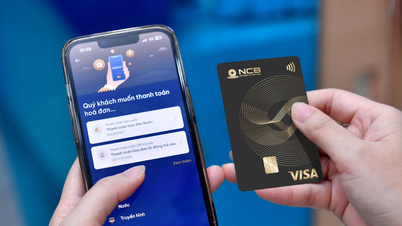
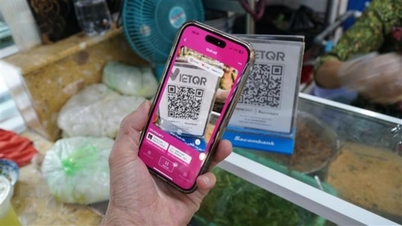
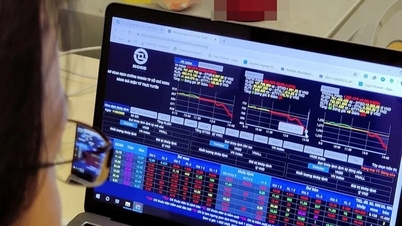
| Cashless payments are developing rapidly, thereby actively supporting the management and transparency of the digital economy . |
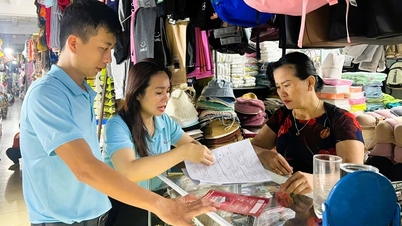
Observations at a confectionery shop in Hanoi revealed that when customers chose to pay by bank transfer, the seller cleverly suggested cash payment, citing the reason that "it's inconvenient to accept bank transfers." Similar situations occurred at some restaurants and beauty salons, where sellers proactively steered customers towards cash payments, avoiding formal transaction recording.
According to the tax authorities, current law does not prohibit households and individuals from receiving cash payments. However, in practice, the fact that some businesses, especially large-scale ones, proactively require customers to pay only in cash and do not issue invoices has become a high-risk indicator in tax management.
According to experts, "prioritizing cash" is no longer a solution to conceal revenue as it once was. Lawyer Nguyen Van Duoc, General Director of Trong Tin Tax Consulting Services Co., Ltd., argues that even if businesses use cash, split transactions into smaller amounts, or intentionally record ambiguous transfer details, authorities can still track and verify information through digitized and interconnected data systems. Platforms such as electronic identification, bank accounts, and electronic tax applications all generate sufficient data traces for authorities to assess tax obligations.
Current management practices show that tax authorities do not rely on a single source of information but utilize multiple layers of data, from banks, e-commerce platforms, shipping companies to electronic invoicing systems. Even transactions without specific details or those deliberately disguised with descriptions like "coffee money" or "repayment of a loan" cannot reduce tax obligations; on the contrary, they can become suspicious and warrant investigation.
Representatives from the Hanoi City Tax Department stated that even transfers made without a transaction description cannot "escape" the tax authorities, as they possess complete data on sellers and cash flows. According to the Hanoi City Tax Department, they will not only rely on transfer data to determine revenue but will also use the tax sector's database and collaborate with other ministries and agencies to apply data analysis techniques to identify potential cases of revenue concealment.
The Tax Department stated that taxes are not only a financial obligation for businesses but also a social responsibility. Tax revenue directly contributes to the development of infrastructure, healthcare, education, social welfare, and public services. Therefore, tax evasion not only violates the law but also harms the common good of the community.
According to the Tax Department, in the coming period, tax authorities will strengthen inspections and audits both in person and in the digital environment. Connecting and cross-referencing data from banks, e-commerce platforms, shipping companies, payment service providers, and electronic invoicing systems will help accurately determine the actual revenue of business operations. In cases where signs of organized tax evasion are detected, the case will be transferred to the police for criminal prosecution in accordance with the law.
The rapid development of digital payments supports tax administration.
According to experts, cashless payments are currently developing rapidly, thereby actively supporting the management and transparency of the digital economy. Infrastructure serving cashless payments and digital transformation in the banking sector is always prioritized for investment, upgrading, and development. The interbank electronic payment system operates smoothly, safely, and efficiently.
According to data from the State Bank of Vietnam, in the first two months of 2026 compared to the same period in 2025, non-cash payment transactions increased by 40.74% in volume and 13.41% in value; via the Internet increased by 73.09% in volume and 28.11% in value; via mobile phone increased by 34.37% in volume and 10.51% in value; transactions via QR Code increased by 20.22% in volume and 12.59% in value; via the Interbank Electronic Payment System increased by 9.5% in volume and 69.07% in value; and via the Electronic Financial Switching and Clearing System increased by 43.74% in volume and 11.66% in value.
By the end of February 2026, the market will have 20,772 ATMs, a decrease of 2.68%; and 761,793 POS terminals, an increase of 1.36% compared to the same period in 2025. In the first two months of 2026 compared to the same period in 2025, ATM transactions decreased by 6.40% in number but increased by 3.03% in value, indicating that the demand for cash payments and withdrawals via ATMs continues to decline and is being replaced by cashless payment methods and habits.
In addition, according to Circular 30/2025 of the State Bank of Vietnam (amending and supplementing some articles of Circular 15/2024), from April 1st, all payment account names at commercial banks must be consistent with the information recorded on the citizen identification card or national identity card.
This regulation means that banks will cease the service allowing customers to use nicknames (or iNick) to replace their real names on identification documents. This is seen as a step to tighten management, increase transparency, and improve transaction tracing, especially in the context of increasingly sophisticated financial fraud schemes through bank accounts.
Source: https://thoibaonganhang.vn/khong-the-ne-thue-bang-tien-mat-179917.html
![[Photo] The courage of new recruits of Brigade 144 on the training ground.](https://vphoto.vietnam.vn/thumb/1200x675/vietnam/resource/IMAGE/2026/05/27/1779881651341_anh-man-hinh-2026-05-27-luc-18-32-52.png)
![[Photo] The heat at the fireworks display site on the opening night of the Da Nang International Fireworks Festival 2026](https://vphoto.vietnam.vn/thumb/1200x675/vietnam/resource/IMAGE/2026/05/27/1779889741485_ndo_br_z7872039145157-fecaba5112f39e8352544099d7ef4738-5140-jpg.webp)






























































![[Photo] The courage of new recruits of Brigade 144 on the training ground.](https://vphoto.vietnam.vn/thumb/402x226/vietnam/resource/IMAGE/2026/05/27/1779881651341_anh-man-hinh-2026-05-27-luc-18-32-52.png)
































Comment (0)