

Buon Cham A village has 146 households of the Ede ethnic group, accounting for over 52% of the population. Previously, most men in the village knew how to play the gong; village and family rituals were regularly maintained. However, according to Mr. Ama Ngoc (nearly 80 years old), the number of people who know how to play the gong in the village is now very small.
Faced with this reality, the Party cell of Cham A village proactively held meetings and agreed on solutions to preserve this traditional culture. Based on the Party cell's resolution, Party members were assigned to mobilize artisans to participate in teaching, and at the same time, to promote and encourage young people to learn gong playing. Funding for the classes was raised through social contributions, donations from Party members residing in the area, support from the local government, and the village's fund. Thanks to this, the village opened three bronze gong classes with three artisans participating in teaching, attracting nearly 30 students of various ages. In the absence of gongs for practice, the village head, Y Win Êban, persuaded his family to lend him a valuable set of seven gongs to facilitate the teaching.
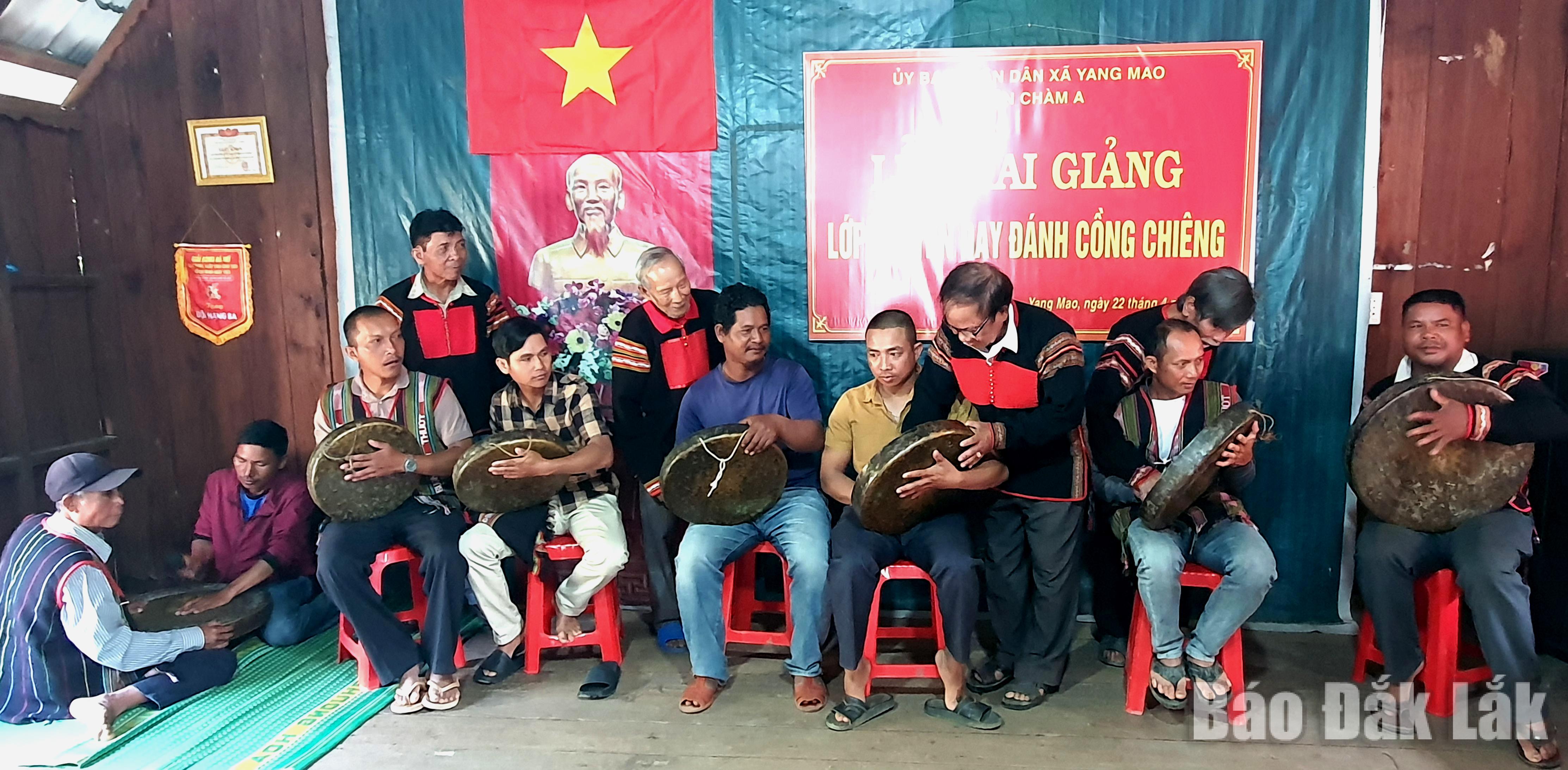 |
| The artisans teach the students of Cham A village how to play the bronze gongs. |
Not only Cham A village, but many other villages in the commune such as Tul village and Mghi village are also implementing gong-playing training classes for the younger generation. With the support of specialized agencies and the participation of artisans, kram gong classes for teenagers have been organized, initially creating positive changes. Artisan Ama Brai said: "The most difficult thing is how to prevent young people from turning their backs on traditional culture. When they have passion, teaching becomes easier."
A highlight in the preservation of gong culture in Yang Mao commune is the participation of teachers. At Yang Mao Primary School, Mr. Y Wan Niê ( music teacher, of the Ede ethnic group) has voluntarily opened two free classes teaching kram gong playing to third and fourth grade students.
In addition, many individuals in the community actively participate in cultural preservation. For example, Mr. Duong Van Tho (Cham A village) has independently encouraged students to participate in kram gong and dance classes, and has also personally funded inviting artisans to teach. The gong ensemble he established has performed at many events, contributing to the spread of traditional culture.
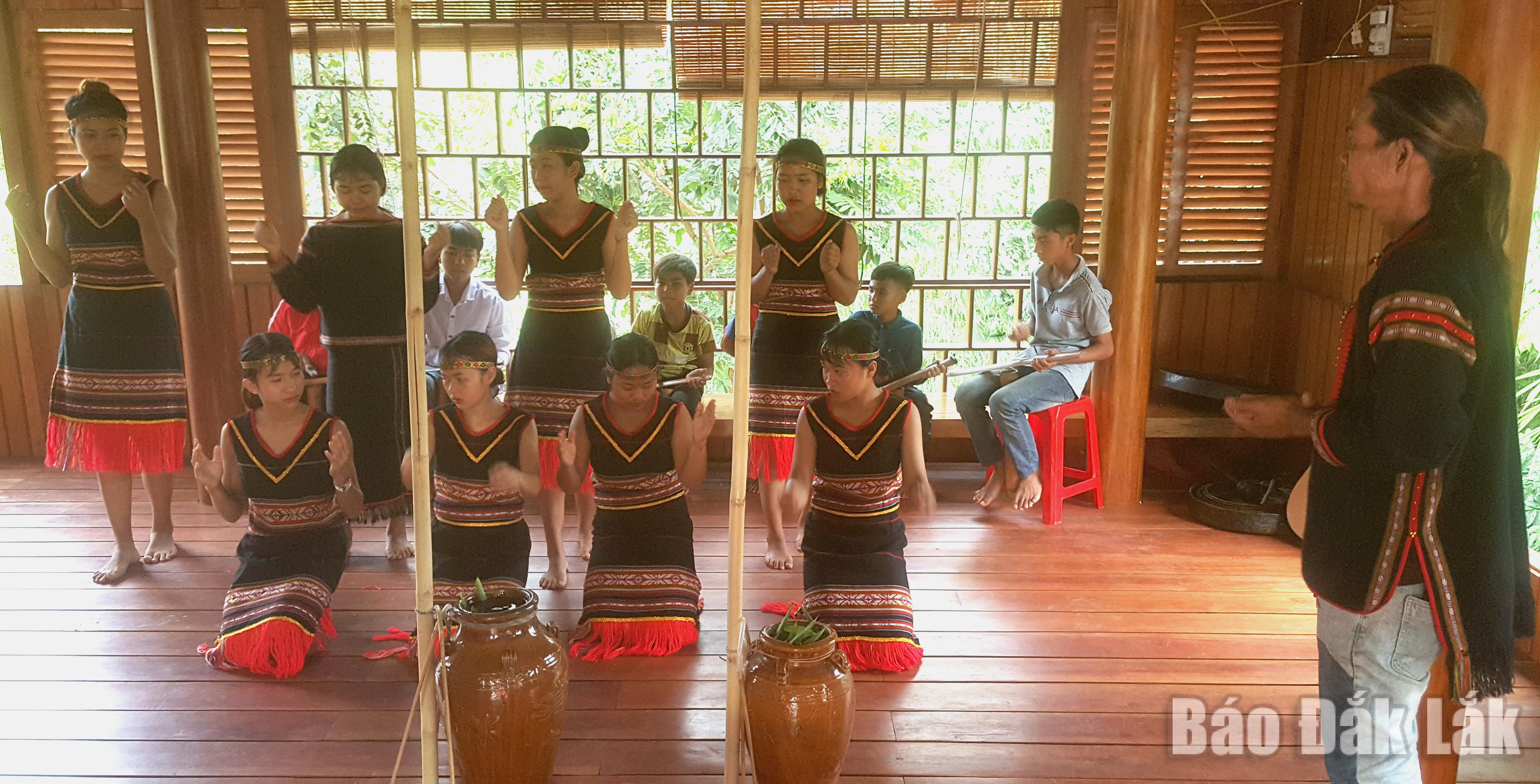 |
| The family of Mr. Duong Van Tho invited artisans to teach the kram gong and traditional dance to the children of Cham A village. |
In Buôn Kiều village, a noteworthy example is the traditional musical instrument group for children aged 10 to 15. The group was established at the request of the local people, with financial support from charitable organizations for teaching and providing musical instruments. To date, the children are proficient in playing several traditional instruments and participate in performances at various events.
It is evident that the gong culture heritage in Yang Mao commune is being effectively preserved and promoted with the joint efforts of the government and the community. Y Huấn Adrơng, Secretary of the Party Committee and Chairman of the People's Council of Yang Mao commune, stated: “In the coming time, the commune Party Committee will issue a specialized resolution on the preservation of traditional ethnic culture, with particular attention to the gong culture of the Êđê and M'nông people. Every year, the locality will organize cultural activities and competitions for playing gongs and other traditional musical instruments to maintain and promote the value of this heritage.”
Tung Lam
Source: https://baodaklak.vn/van-hoa-xa-hoi/van-hoa/202605/yang-mao-diem-sang-gin-giu-di-san-van-hoa-cong-chieng-a694d9d/


























































































Comment (0)